
Uncategorized
Why Is My Candle Tunneling?
Jun
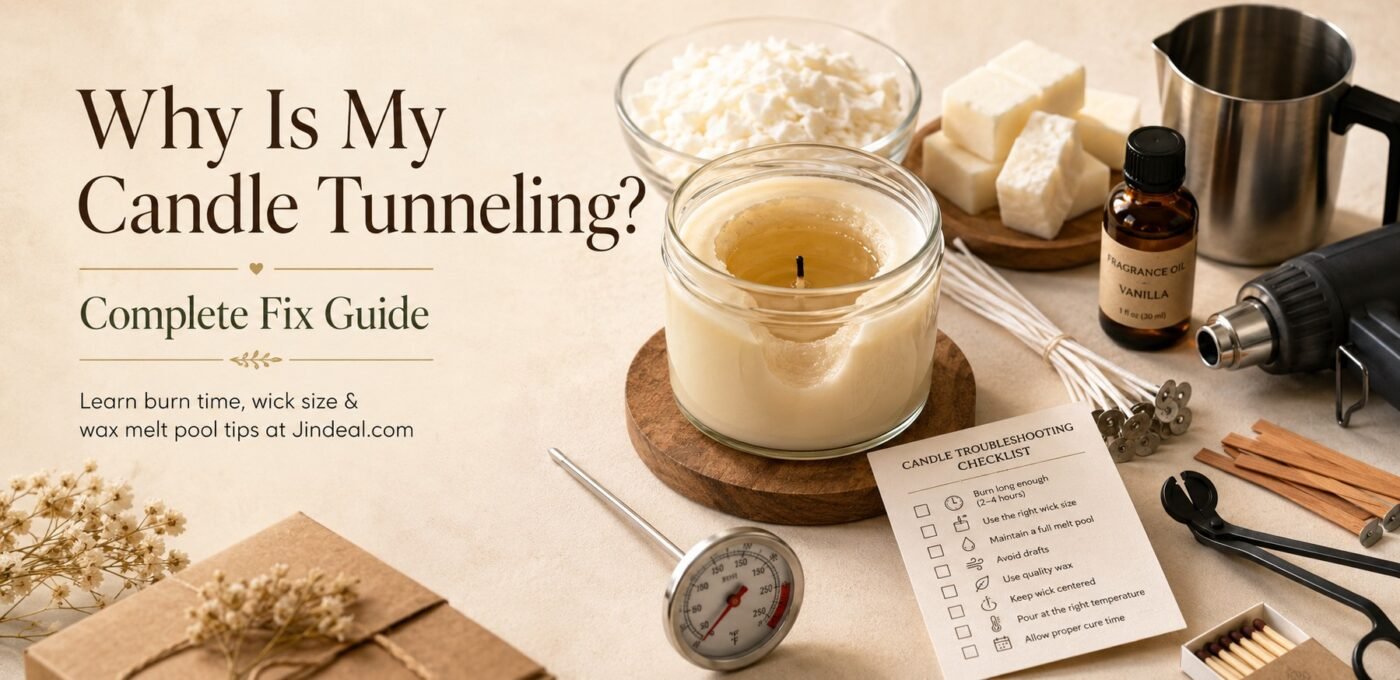
Why Is My Candle Tunneling? Complete Fix Guide
Learn why candles burn down the middle, leave wax on the sides, and form a tunnel — plus how to fix and prevent candle tunneling with correct wick size, first burn, wax choice, fragrance load, and jar selection.
Quick Answer
Candle tunneling happens when the wax melts only around the wick and leaves unmelted wax on the jar sides. It is usually caused by a short first burn, wrong wick size, poor wax-wick match, low flame, or incorrect jar diameter. Fix it by creating a full melt pool and testing wick size properly.
Table of Contents
What Is Candle Tunneling?
Candle tunneling is a candle-burning problem where only the wax near the wick melts, while a thick ring of unmelted wax remains around the sides of the jar. Over time, the candle burns down like a tunnel instead of melting evenly across the full surface.
This problem reduces burn time, wastes wax, weakens scent throw, looks unprofessional, and can make the candle difficult to burn properly. For candle businesses, tunneling can lead to customer complaints because the candle appears poorly made.
Tunneling is common in soy candles, paraffin candles, jar candles, scented candles, wax blends, and decorative candles when the wick, wax, fragrance load, jar diameter, and burn method are not balanced.
For candle wax, candle wicks, wick stickers, candle jars, fragrance oils, colors, silicone molds, thermometers, pouring pots, and DIY candle-making supplies, visit Jindeal.com.
What Causes the Problem?
Candle tunneling happens when the flame does not generate enough heat to melt wax across the full diameter of the candle. This can be caused by user burning habits or candle-making formula issues.
Common causes include:
- First burn was too short
- Wick size is too small for the jar diameter
- Wrong wick type for the wax
- Fragrance load is too high and weakens burn performance
- Wax is too hard for the selected wick
- Candle jar is too wide for one wick
- Wick was trimmed too short
- Flame is weak or drowning in melted wax
- Wax was poured or cured incorrectly
- Candle was burned in a cold room or strong airflow
- Color, mica, or additives affected wick performance
- No burn testing before selling
For example, if a 7 cm wide candle jar uses a wick that is too small, the flame may melt only the center area. The wax near the wall remains solid and a tunnel starts forming after repeated burns.
Candle Tunneling Fix Chart
Use this quick chart to identify the tunneling reason and best solution.
| Problem | Likely Cause | Best Fix |
|---|---|---|
| Tunnel forms after first burn | First burn was too short | Burn until wax melts near the jar edge |
| Wax remains on sides every time | Wick is too small | Test a larger wick size |
| Weak flame and small melt pool | Wick trimmed too short or drowning | Trim correctly and check wick size |
| Jar is wide and only center melts | Single wick not enough | Use larger wick or double wick after testing |
| Good flame but scent weak | Poor melt pool or low heat | Improve wick-wax match |
| Candle tunnels after adding fragrance | Fragrance load too high or unsuitable | Reduce fragrance and retest burn |
Step-by-Step Solution
Step 1: Check the First Burn
The first burn is very important. A candle should burn long enough for the melted wax pool to reach close to the jar edge. If the first burn is too short, the candle can develop a memory ring and continue tunneling in later burns.
Step 2: Check Wick Size
If tunneling happens even after a proper first burn, the wick may be too small. Wick size should match jar diameter, wax type, fragrance load, color, and candle design.
A small wick creates a small flame and a narrow melt pool. A larger wick creates more heat, but it must be tested carefully to avoid smoking, overheating, or high flame.
Step 3: Match Wick with Wax Type
Different waxes need different wick behavior. Soy wax, paraffin wax, beeswax, coconut wax, and wax blends do not burn the same way. A wick that works in one wax may tunnel in another wax.
Step 4: Check Fragrance Load
Too much fragrance oil can affect wick performance. If your candle tunnels after adding fragrance, test a lower fragrance percentage or use a fragrance oil suitable for candles.
Always measure fragrance by weight and follow wax/fragrance supplier recommendations.
Step 5: Check Jar Diameter
A wide jar may need a larger wick or two wicks. If the jar is too wide for one wick, the candle may always melt only the center. For business production, test each jar size separately.
Step 6: Fix a Candle That Already Tunneled
If a candle has already started tunneling, you can try to save it by gently melting the top wax surface evenly.
Common home fixes include:
- Use the foil method carefully to trap heat and melt side wax
- Use a candle warmer if available
- Remove excess side wax carefully if the wick is drowning
- Burn longer next time to create a wider melt pool
Step 7: Perform Burn Testing
For candle business, burn testing is necessary. Test flame height, melt pool, tunneling, smoking, jar temperature, scent throw, and total burn time before selling.
Step 8: Record Candle Formula
Write down wax type, jar diameter, wick size, fragrance percentage, color, pour temperature, cure time, and burn result. This helps repeat successful candles.
Step 9: Add Customer Burn Instructions
Include a small candle care card or label telling customers to allow the first burn to create a full melt pool and to trim the wick before each use.
Step 10: Retest Before Bulk Production
Any change in wax, wick, jar, fragrance, color, or additive can change the burn result. Retest before making candles in bulk.
Common Mistakes
1. Ignoring the First Burn
A short first burn is one of the biggest reasons candles tunnel.
2. Using a Wick That Is Too Small
A small wick cannot melt wax across the full jar diameter.
3. Choosing Wick Only by Guess
Wick choice must be tested with the exact wax, jar, fragrance, and color.
4. Adding Too Much Fragrance Oil
High fragrance load can weaken flame performance and cause poor burn.
5. Using a Wide Jar with One Wick
Very wide jars may need a larger wick or multiple wicks after testing.
6. Trimming Wick Too Short
If the wick is too short, the flame can become weak and tunneling may start.
7. Burning Candle in Strong Airflow
Fans, windows, or AC airflow can disturb flame and unevenly melt wax.
8. Not Curing Candles Properly
Some waxes perform better after proper cure time. Poor curing may affect scent throw and burn.
9. Using Too Much Mica or Additive
Some additives can clog the wick and reduce flame strength.
10. Selling Without Burn Testing
Every candle product should be tested before selling to customers.
Expert Tips
- Always test wick size with the exact jar and wax.
- Teach customers to burn the candle long enough on the first burn.
- Do not trim the wick too short.
- Use candle-grade fragrance oil within recommended percentage.
- Test wide jars carefully; they may need double wicks.
- Avoid too much mica or powder in candles.
- Keep candles away from strong airflow while burning.
- Record every candle formula and burn result.
- Check jar temperature during testing.
- Use proper warning labels and candle care cards.
- Retest after changing wax, wick, jar, fragrance, or color.
- Buy candle wax, wicks, jars, fragrance oils, colors, molds, and packaging from Jindeal.com.
FAQ
1. Why is my candle tunneling?
Your candle is tunneling because the wax is melting only around the wick. This is usually caused by a short first burn, small wick, wrong wick type, or poor wax-wick match.
2. How do I prevent candle tunneling?
Use the correct wick size, burn the candle long enough on the first burn, test your wax-wick combination, and avoid overloading fragrance.
3. Can a tunneled candle be fixed?
Yes, mild tunneling can often be improved using the foil method, candle warmer, or by carefully removing excess side wax if the wick is drowning.
4. What is the first burn rule for candles?
The first burn should be long enough to let melted wax reach near the jar edge. This helps prevent a memory ring and tunneling.
5. Does wick size cause tunneling?
Yes. If the wick is too small for the jar diameter and wax type, the candle will likely tunnel.
6. Can too much fragrance oil cause tunneling?
Yes, too much fragrance oil can affect wick performance and create a weak flame or poor melt pool.
7. Why does my soy candle tunnel?
Soy candles can tunnel if the wick is too small, first burn is short, fragrance load is high, or wax-wick match is not correct.
8. Should I use a bigger wick to stop tunneling?
A bigger wick may help, but it must be tested carefully. Too large a wick can cause smoke, high flame, and overheating.
9. Do wide candle jars need two wicks?
Some wide jars may need two wicks, but this depends on jar diameter, wax, fragrance, and burn testing.
10. Why is wax left on the sides of my candle jar?
Wax remains on the sides when the melt pool does not reach the jar walls. This usually means the wick is too small or the burn time is too short.
11. Can airflow cause uneven candle burning?
Yes, airflow from fans, windows, or AC can disturb the flame and cause uneven melting.
12. How long should I burn a candle each time?
Burn long enough to create a good melt pool, but do not burn for too many hours continuously. Follow candle safety instructions for your candle size.
13. Can mica powder cause tunneling?
Too much mica or powder can clog the wick and reduce flame performance, which may contribute to tunneling.
14. Is candle tunneling dangerous?
Mild tunneling is mainly a performance issue, but severe tunneling can drown the wick or cause uneven burning. Always follow candle safety instructions.
15. Where can I buy candle-making materials?
You can buy candle wax, wicks, fragrance oils, candle jars, colors, silicone molds, packaging materials, and DIY supplies from Jindeal.com.
Final Words
Candle tunneling happens when the candle does not create a full melt pool. The main fixes are proper first burn, correct wick size, balanced fragrance load, suitable wax, correct jar diameter, and proper burn testing.
If you are making candles for business, never skip wick testing. Test every wax, wick, jar, fragrance, and color combination before selling. For candle wax, wicks, jars, fragrance oils, colors, molds, packaging, and DIY candle supplies, visit Jindeal.com.
Fix Candle Tunneling with Better Candle Supplies
Shop candle wax, wicks, jars, fragrance oils, colors, molds, packaging, and DIY candle-making materials from Jindeal.com.
