
Uncategorized
Soap Color Usage Guide
Jun
Soap Color Usage Guide
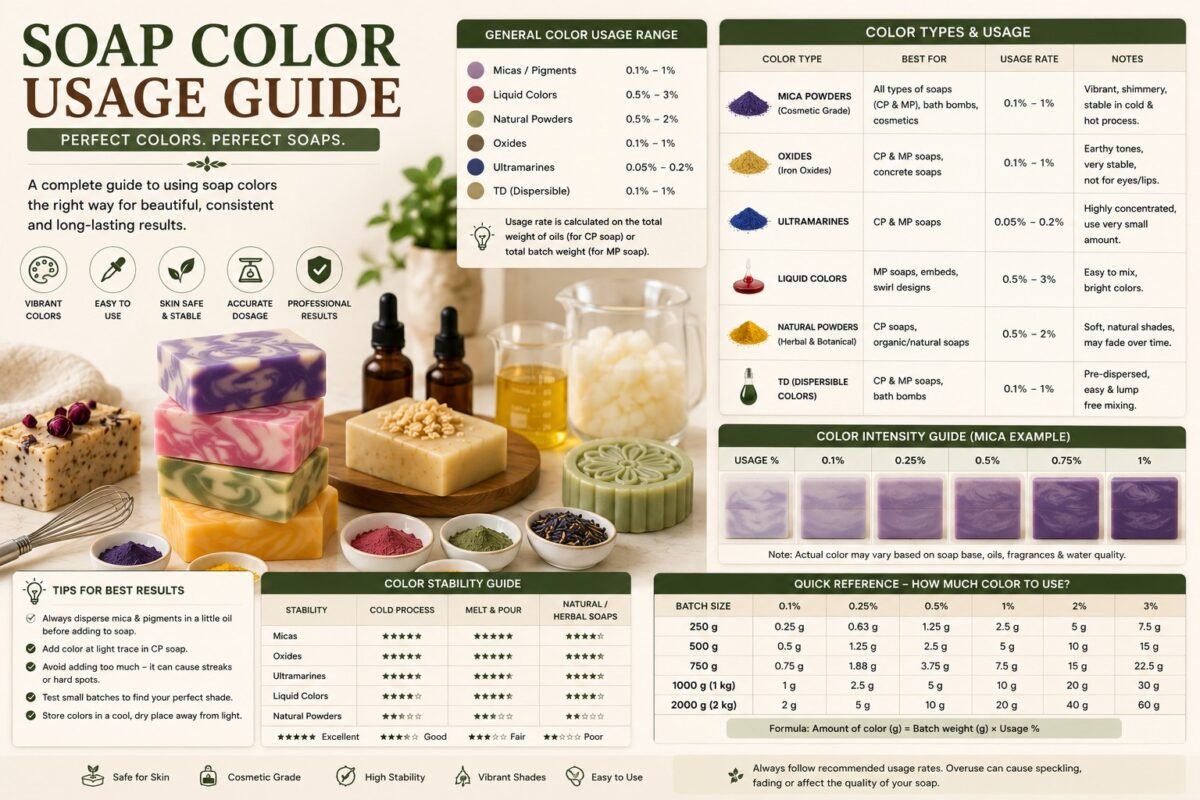
Learn how to use mica colors, liquid soap colors, pigments, clays, charcoal, herbal powders, and natural colorants in melt and pour soap and handmade soap without bleeding, fading, staining, or ruining lather.
Quick Answer
For melt and pour soap, start with a very small amount of soap-safe color and increase slowly. Mica gives shimmer and bright colors, liquid color is easy for beginners, pigments give stronger color, clays give natural earthy shades, and herbal powders give botanical appeal. Always use cosmetic-grade soap-safe colorants and test for bleeding, fading, staining, lather, and skin feel.
Table of Contents
Why Soap Color Matters
Soap color is one of the first things customers notice. A well-colored soap looks premium, gift-worthy, and professional. Color also helps communicate the product theme, such as rose soap, ubtan soap, charcoal soap, green clay soap, lavender soap, coffee soap, turmeric-style soap, or ocean blue soap.
In melt and pour soap making, color must be used carefully because too much color can bleed, stain, reduce clarity, create colored foam, or make the soap look artificial. The best result comes from using soap-safe colors in small measured quantities.
For soap colors, mica, liquid colors, pigments, clays, herbal powders, soap bases, fragrance oils, essential oils, silicone molds, and packaging, visit Jindeal.com.
Types of Soap Colors
Soap Color Usage Chart
This chart gives beginner-friendly starting points. Always test the color in your exact soap base because every color behaves differently.
| Color Type | Beginner Starting Range | Best Use | Important Note |
|---|---|---|---|
| Mica Powder | 0.1% to 0.5% | Bright, pearly, shimmery soap | Disperse first to avoid specks |
| Liquid Soap Color | Few drops per 100 g soap base | Quick beginner coloring | Too much may bleed or stain |
| Cosmetic Pigment | 0.05% to 0.3% | Strong solid colors | Needs proper dispersion |
| Kaolin Clay | 0.5% to 2% | Soft cream/white clay soap | Can reduce lather if overused |
| French Green Clay | 0.5% to 2% | Natural green clay soap | Color may look muted |
| Multani Mitti | 0.5% to 2% | Ubtan and herbal soap | Can feel gritty if coarse |
| Red Sandalwood Powder | 0.3% to 1.5% | Red-brown natural soap tone | May stain or change shade |
| Activated Charcoal | 0.2% to 1% | Black and grey soap | Too much may make black foam |
| Herbal Powders | 0.5% to 2% | Botanical natural soap | Can fade, brown, or feel gritty |
How to Use Soap Colors
1. Measure by Weight for Repeat Results
For business production, measure mica, pigment, clay, and herbal powders in grams. For small beginner batches, liquid color can be added drop by drop, but final formulas should still be recorded.
2. Disperse Powder Colors First
Mix mica, pigment, clay, or herbal powder with a small amount of glycerin, oil, alcohol, or melted soap base depending on your formula. This helps avoid specks, lumps, and uneven color.
3. Add Color After Melting Soap Base
Melt the soap base gently, then add color and mix slowly. Avoid overheating because high temperature can affect soap clarity, bubbles, and final finish.
4. Test in Clear and White Soap Base
The same color looks different in clear soap base and white soap base. Clear soap gives transparent jewel tones, while white soap gives pastel or creamy shades.
5. Test With Fragrance
Some fragrance oils can discolor soap or change the appearance of colors. Vanilla-style fragrances may turn soap cream, tan, or brown over time.
6. Check Foam and Staining
Too much color can stain skin, towels, sink, or create colored foam. Test before selling.
7. Record Every Batch
Write soap base type, color name, color percentage, fragrance name, temperature, mold type, and final result.
Soap Color Examples
| Soap Theme | Suggested Color | Suggested Additive | Design Idea |
|---|---|---|---|
| Rose Soap | Pink mica or rose shade liquid color | Rose petal powder | Pink swirl or floral embed |
| Ubtan Soap | Yellow/orange mica or clay tone | Multani Mitti, orange peel, red sandalwood | Traditional Indian herbal look |
| Green Clay Soap | French Green Clay or green mica | Kaolin clay, neem powder | Spa-style green bar |
| Charcoal Soap | Activated charcoal | Kaolin clay | Black and grey men’s soap |
| Lavender Soap | Purple mica or Brazilian Purple Clay | Lavender fragrance/essential oil | Soft purple luxury soap |
| Coffee Soap | Brown mica or cocoa-style shade | Coffee fragrance, fine coffee powder for body soap only | Layered latte design |
| Ocean Soap | Blue mica, aqua liquid color | Sea breeze fragrance | Blue transparent waves |
| Luxury Gold Soap | Gold mica | Sandalwood or oud fragrance | Gold shimmer top or swirl |
Bleeding, Fading and Staining
What Is Color Bleeding?
Color bleeding happens when color moves from one layer of soap to another or spreads into the soap base over time. Some dyes and liquid colors can bleed more than mica or stable pigments.
What Is Color Fading?
Color fading happens when soap loses brightness during storage or after exposure to light, heat, air, or fragrance reaction. Natural herbal powders may fade or brown faster than cosmetic pigments.
What Is Staining?
Staining happens when too much color transfers to skin, towel, sink, or foam. Strong colors, charcoal, red powders, and dark mica shades should be tested carefully.
- Use soap-safe non-bleeding colors for layered soap.
- Use mica for shimmer and stable decorative melt and pour soap.
- Use clay for natural muted shades.
- Use less charcoal to avoid black foam.
- Store finished soap away from direct sunlight and high heat.
- Test color after 7 days, 15 days, and 30 days before selling.
Common Mistakes
1. Using Food Color in Soap
Food color may bleed, fade, or stain. Use soap-safe cosmetic colors.
2. Adding Too Much Mica
Too much mica can create colored foam, staining, and dull soap texture.
3. Not Dispersing Powder Colors
Dry mica, pigment, clay, or herbal powder can make lumps and specks.
4. Using Non-Cosmetic Pigments
Industrial or craft pigments may not be safe for skin-contact products.
5. Expecting Natural Powders to Stay Bright
Herbal powders can fade, brown, or change shade in soap.
6. Not Testing in White and Clear Base
The same color looks very different in transparent and white soap bases.
7. Ignoring Fragrance Discoloration
Some fragrance oils, especially vanilla-style fragrances, can discolor soap.
8. Using Too Much Charcoal
Too much charcoal can make black foam or messy wash-off.
9. Not Recording Formula
Without batch notes, you cannot repeat the same color again.
10. Making Medical Claims
Do not claim colored soap cures acne, pigmentation, infection, skin disease, or any medical issue.
Expert Tips
- Use cosmetic-grade and soap-safe colors only.
- Start with a very small amount of color and increase slowly.
- Disperse mica, pigments, clays, and herbal powders before adding.
- Use clear soap base for transparent bright colors.
- Use white soap base for pastel and creamy colors.
- Use clays for natural earthy soap shades.
- Use mica for shimmer and luxury decorative soap.
- Test for bleeding, fading, staining, and colored foam.
- Record every formula with exact grams and supplier name.
- Keep finished soap away from heat and sunlight.
- Keep claims cosmetic-safe and avoid treatment claims.
- Buy soap colors, mica, clays, herbal powders, soap bases, fragrance oils, molds, and packaging from Jindeal.com.
FAQ
1. What colors can I use in soap?
You can use soap-safe mica, liquid soap colors, cosmetic pigments, clays, charcoal, and cosmetic-grade herbal powders.
2. Can I use food color in soap?
Food color is not recommended because it may bleed, fade, or stain. Use soap-safe cosmetic colors.
3. How much mica should I add to melt and pour soap?
Start around 0.1% to 0.5% and test color, staining, and foam before selling.
4. How much liquid color should I add to soap?
Start with a few drops per 100 g soap base and increase slowly after testing.
5. Why is my soap color bleeding?
Color bleeding can happen when dye migrates through soap layers. Use soap-safe non-bleeding colors for layered designs.
6. Why did my soap color fade?
Color can fade due to sunlight, heat, fragrance reaction, natural powder instability, or unsuitable colorant.
7. Why is my soap staining skin?
Too much color, dark mica, charcoal, or strong pigments can cause staining. Reduce color and test again.
8. Can I use clay to color soap?
Yes. Kaolin, French Green Clay, Multani Mitti, Rhassoul, Bentonite, and colored clays can give natural soap shades.
9. Can I use herbal powder to color soap?
Yes, but herbal powders may fade, brown, or feel gritty. Use fine cosmetic-grade powder and test first.
10. Which color is best for transparent soap?
Liquid soap colors and suitable mica shades work well in transparent soap. Test clarity and bleeding.
11. Which color is best for white soap base?
Mica, pigments, clays, and pastel liquid colors work well in white soap base.
12. Can fragrance oil change soap color?
Yes. Some fragrances can discolor soap, especially vanilla-style fragrances that may turn soap cream, tan, or brown.
13. Can I mix different soap colors?
Yes. You can mix mica, liquid colors, and pigments, but test shade, bleeding, and staining.
14. Can colored soap cure skin problems?
No. Do not make medical claims. Colored soap can be described by fragrance, design, cosmetic appearance, and cleansing use.
15. Where can I buy soap colors?
You can buy soap colors, mica, cosmetic clays, herbal powders, soap bases, fragrance oils, molds, and packaging from Jindeal.com.
Final Words
Soap color can make your handmade soap look professional, premium, and attractive, but it must be used correctly. Start with soap-safe colorants, use small amounts, disperse powders properly, and test every color in your exact soap base.
Check bleeding, fading, staining, colored foam, fragrance discoloration, and storage stability before selling. For soap colors, mica, clays, herbal powders, soap bases, fragrance oils, molds, and packaging, visit Jindeal.com.
Shop Soap Colors on Jindeal.com
Buy soap-safe mica colors, liquid soap colors, cosmetic pigments, clays, herbal powders, melt and pour soap bases, fragrance oils, silicone molds, and packaging materials from Jindeal.com.