
Candle Fragrance Oils
How to Choose the Right Wick for Any Candle Size
Jun
How to Choose the Right Wick for Any Candle Size
Learn how to select the correct candle wick for jars, tins, soy candles, paraffin candles, wax melts, scented candles, and different candle sizes using jar diameter, wax type, fragrance load, and burn testing.
Quick Answer
To choose the right wick for any candle size, measure the candle container diameter, select a wick recommended for that diameter and wax type, consider fragrance load and additives, then burn test. The correct wick creates an even melt pool, steady flame, good scent throw, and minimal smoke without tunneling.
Table of Contents
Why Candle Wick Size Matters
The candle wick controls how the candle burns. It affects flame size, melt pool, scent throw, smoke, tunneling, jar temperature, burn time, and overall safety. Even if you use premium wax and fragrance oil, the candle can fail if the wick size is wrong.
A wick that is too small may cause tunneling, weak flame, poor scent throw, and leftover wax on the jar sides. A wick that is too large may cause high flame, smoke, soot, mushrooming, overheating, fast burning, and unsafe jar temperature.
There is no single wick that works for every candle. The right wick depends on jar diameter, wax type, fragrance percentage, dye or mica, candle color, container shape, and final burn test.
For candle wicks, soy wax, paraffin wax, candle jars, fragrance oils, wick stickers, wick holders, colors, silicone molds, and candle-making supplies, visit Jindeal.com.
What Causes the Problem?
Most candle burning problems happen because the wick is selected by guesswork instead of testing. Candle makers often choose a wick only by jar size, but wax type and fragrance load also matter.
Common causes include:
- Using a wick too small for the jar diameter
- Using a wick too large for the candle size
- Changing wax type without retesting wick
- Adding too much fragrance oil
- Using mica, powder, or color that affects wick performance
- Using a wide jar with only one wick when two wicks may be needed
- Not trimming the wick correctly before burning
- Not checking flame height and melt pool
- Not checking jar temperature during testing
- Skipping full burn testing before selling
- Assuming the same wick works for all fragrances
- Using low-quality or inconsistent wicks
For example, a wick that works well in paraffin wax may tunnel in soy wax because soy wax often needs a different wick performance. Similarly, adding a heavy fragrance oil or too much color can change how the wick burns.
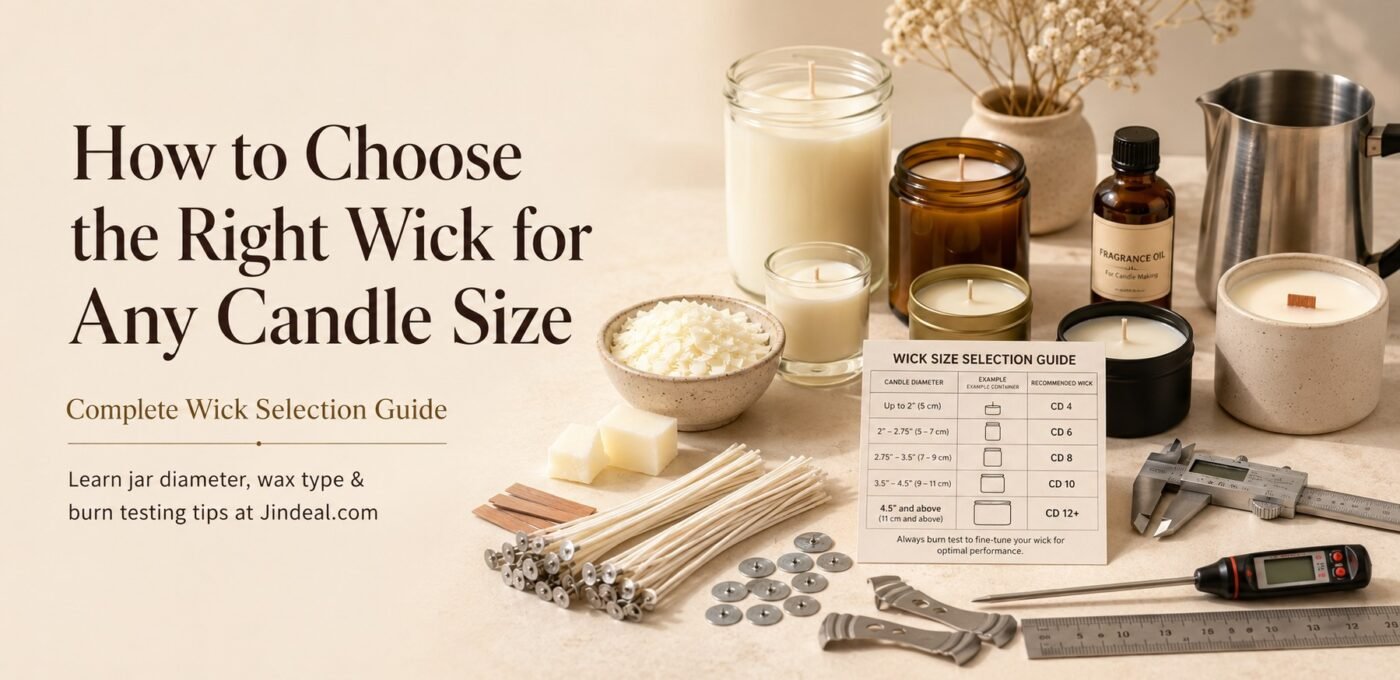
Candle Wick Selection Chart
This is a simple starting guide. Final wick selection must be confirmed by burn testing because every wax, fragrance, jar, and wick type behaves differently.
| Container Diameter | Common Candle Size | Wick Approach | What to Check in Burn Test |
|---|---|---|---|
| 3 cm to 4 cm | Small tealight / mini tin | Small wick | Stable flame, no drowning, no overheating |
| 5 cm to 6 cm | Small jar candle | Small to medium wick | Even melt pool, no tunneling, low smoke |
| 7 cm to 8 cm | Medium jar candle | Medium wick or tested larger wick | Melt pool reaches near edge without high flame |
| 9 cm to 10 cm | Large jar candle | Large wick or double wick after testing | Safe jar temperature and full melt pool |
| Above 10 cm | Wide bowl / large container | Usually multiple wicks after testing | Even melt pool, safe heat, balanced flame |
Step-by-Step Solution
Step 1: Measure the Candle Diameter
Measure the inside diameter of the candle jar or container at the widest burning area. Wick size is mainly selected according to the diameter, not only the wax weight.
For uneven or shaped containers, measure the widest area where wax needs to melt.
Step 2: Identify the Wax Type
Different waxes burn differently. Soy wax, paraffin wax, beeswax, coconut wax, and wax blends may need different wick sizes even in the same jar.
Step 3: Check Fragrance Load
Fragrance oil affects burn performance. Too much fragrance can weaken the flame, clog the wick, or create poor melt pool. Use candle-grade fragrance oil within recommended percentage.
Example: For 1000g wax at 8% fragrance load, use 80g fragrance oil.
Step 4: Select a Starting Wick
Use the wick supplier chart as a starting point based on container diameter and wax type. If you do not have exact data, test one wick size below, one recommended size, and one wick size above.
Step 5: Make Test Candles
Make small test candles with the exact wax, jar, fragrance oil, color, and wick you plan to sell. Do not test wick in plain wax only if your final candle will contain fragrance and color.
Step 6: Cure the Candle
Allow the candle to cure properly before testing. Cure time depends on wax type and fragrance. Testing too early may give inaccurate scent throw and burn performance.
Step 7: Do the First Burn Test
Burn the candle long enough to form a good melt pool. Watch flame height, wax melt pool, tunneling, smoke, mushrooming, scent throw, and jar temperature.
A good wick should create a steady flame and melt wax close to the container edge without overheating or heavy smoke.
Step 8: Read the Burn Result
If the candle tunnels and leaves too much wax on the sides, the wick may be too small. If the flame is too high, smoky, or jar is too hot, the wick may be too large.
Step 9: Adjust Wick Size
Change only one thing at a time. If you change wax, fragrance, color, and wick all together, you will not know what caused the result.
Step 10: Record Final Formula
Write down jar size, wax type, wick size, fragrance percentage, color, pour temperature, cure time, burn result, and final decision. This is very important for candle business repeat quality.
Common Mistakes
1. Choosing Wick Only by Wax Weight
Wick size mainly depends on container diameter and wax type, not only candle weight.
2. Using One Wick for All Candles
Different jar sizes, wax types, and fragrances may need different wick sizes.
3. Skipping Burn Testing
Wick selection is not complete until you burn test the candle.
4. Using a Wick Too Small
A small wick can cause tunneling, weak flame, poor scent throw, and leftover wax.
5. Using a Wick Too Large
A large wick can cause smoke, soot, mushrooming, high flame, fast burn, and unsafe heat.
6. Ignoring Fragrance Load
Fragrance oil affects wick performance. High fragrance load can cause poor burning.
7. Adding Too Much Mica or Powder
Too much mica, powder, or additive can clog the wick and disturb flame quality.
8. Not Checking Jar Temperature
A candle can look fine but still overheat the container. Always check safety during burn testing.
9. Burning in Strong Airflow
Fans, windows, and AC airflow can disturb the flame and make test results inaccurate.
10. Not Keeping Records
Without records, you cannot repeat your best wick result consistently.
Expert Tips
- Measure the inside diameter of the candle jar before choosing wick.
- Use the wick supplier chart as a starting point only.
- Test one wick size below and one size above if unsure.
- Use the exact wax, fragrance, color, and jar during testing.
- Do not overload fragrance oil.
- Avoid too much mica or powder in candles.
- Trim wick before each burn test.
- Check flame height, melt pool, smoke, scent throw, and jar heat.
- For wide jars, test double wicks if one wick cannot create an even melt pool safely.
- Change only one variable at a time while testing.
- Keep detailed burn test records.
- Buy candle wicks, wax, jars, fragrance oils, colors, molds, and packaging from Jindeal.com.
FAQ
1. How do I choose the right wick for a candle?
Measure the candle container diameter, check wax type, choose a starting wick from supplier guidance, and confirm with burn testing.
2. Is wick size based on jar diameter or wax weight?
Wick size is mainly based on jar diameter and wax type. Wax weight matters less than the area the wick needs to melt.
3. What happens if the wick is too small?
A small wick may cause tunneling, weak flame, poor melt pool, low scent throw, and leftover wax on the sides.
4. What happens if the wick is too large?
A large wick can cause smoke, soot, mushrooming, high flame, fast burning, and unsafe jar temperature.
5. Do soy candles need different wicks?
Yes, soy wax may need different wick testing because it can burn cooler than some other waxes.
6. Can fragrance oil change wick performance?
Yes. Fragrance oil can affect flame, melt pool, scent throw, and wick behavior.
7. Do candle colors affect wick selection?
Yes, some dyes, mica, and additives can affect wick performance, especially if used too much.
8. When should I use double wicks?
Double wicks may be needed for wide containers where one wick cannot create an even melt pool safely.
9. How do I test a candle wick?
Burn the finished candle and check melt pool, flame height, smoke, mushrooming, scent throw, jar temperature, and leftover wax.
10. Why is my candle tunneling even with a wick?
The wick may be too small, the first burn may be too short, the fragrance load may be too high, or the wax-wick match may be wrong.
11. Why is my candle smoking?
Smoking can happen when the wick is too large, wick is not trimmed, fragrance load is too high, or the candle is in airflow.
12. How long should I cure candles before wick testing?
Cure time depends on wax type and fragrance. Allow enough time for wax and fragrance to bind before final testing.
13. Can I use the same wick for all fragrances?
Not always. Different fragrance oils can change burn behavior, so retesting is recommended.
14. What is a good candle burn result?
A good burn has a steady flame, even melt pool, good scent throw, low smoke, safe jar temperature, and minimal leftover wax.
15. Where can I buy candle wicks and supplies?
You can buy candle wicks, wax, fragrance oils, candle jars, colors, silicone molds, wick stickers, packaging, and DIY candle-making supplies from Jindeal.com.
Final Words
Choosing the right wick is one of the most important parts of candle making. The correct wick depends on jar diameter, wax type, fragrance load, color, additives, and burn testing. Do not rely on guesswork if you are making candles for business.
Test carefully, record every result, and retest whenever you change wax, jar, fragrance, color, or wick type. For candle wicks, wax, jars, fragrance oils, colors, molds, wick stickers, and packaging supplies, visit Jindeal.com.
Choose Better Candle Wicks with Jindeal.com
Shop candle wicks, wax, jars, fragrance oils, colors, molds, wick stickers, packaging, and DIY candle-making materials from Jindeal.com.
