
Soap Base
Why Does Soap Lose Fragrance After a Few Weeks?
Jun
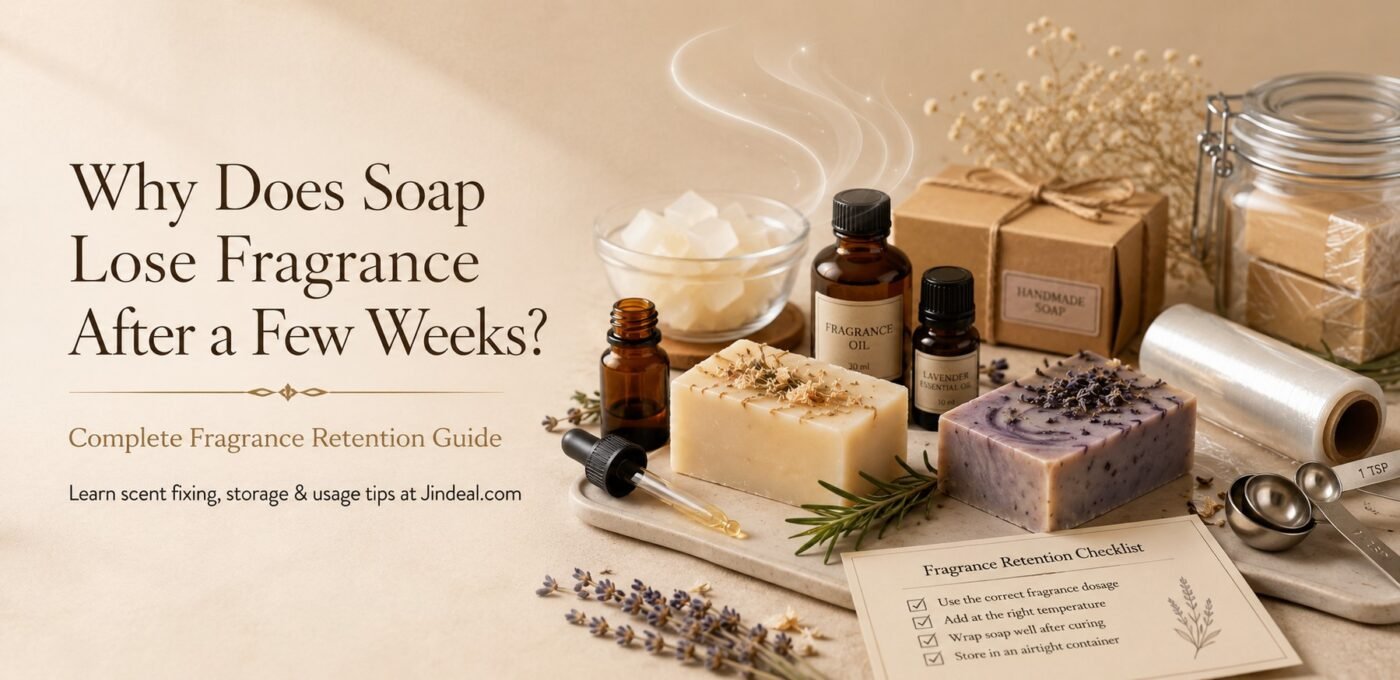
Why Does Soap Lose Fragrance After a Few Weeks?
Learn why handmade soap, melt and pour soap, glycerin soap, herbal soap, and luxury soap can lose scent after storage, and how to improve fragrance retention with better usage, temperature, curing, wrapping, and storage.
Quick Answer
Soap loses fragrance after a few weeks when fragrance oil is used too low, added at high temperature, not suitable for soap, stored open, exposed to heat, or packed poorly. To improve scent retention, use soap-safe fragrance, measure correctly, add at lower temperature, wrap properly, and store in a cool dry place.
Table of Contents
Why Soap Fragrance Fades
Soap fragrance fading means the soap smells strong when freshly made but becomes weak, dull, or almost unscented after a few days or weeks. This is a common issue in melt and pour soap, handmade soap, glycerin soap, herbal soap, and soap business production.
Fragrance oils and essential oils contain aroma components that can evaporate, fade, or change during heating, mixing, curing, wrapping, and storage. Some light scents naturally fade faster, especially citrus, fresh, and delicate floral notes.
Soap type also matters. Melt and pour soap needs proper wrapping to hold scent and prevent sweating. Cold process soap may need fragrance oils that can survive high pH and curing time. Herbal powders, clays, and additives may also change how fragrance performs.
For soap fragrance oils, essential oils, melt and pour soap base, silicone molds, soap colors, herbal powders, clays, carrier oils, and DIY soap-making supplies, visit Jindeal.com.
What Causes the Problem?
Soap loses fragrance when the scent is not strong enough, not suitable for soap, added incorrectly, or stored in a way that allows aroma to escape. The problem is usually a combination of formula, process, and packaging.
Common causes include:
- Using too little fragrance oil
- Using fragrance oil not suitable for soap
- Adding fragrance when soap base is too hot
- Overheating soap after adding fragrance
- Using light essential oils that fade quickly
- Not checking supplier or IFRA usage guidelines
- Leaving soap open after making
- Using loose paper packaging without barrier wrap
- Storing soap in hot areas or direct sunlight
- Using old or poorly stored fragrance oil
- Using too many herbal powders or clays that absorb scent
- Not testing fragrance retention before selling
For example, if you add a light lemon essential oil to very hot melt and pour soap and then store the finished soap open, the fragrance may smell good on day one but fade quickly within a few weeks.
Fragrance Loss Fix Chart
Use this chart to quickly identify why your soap fragrance is fading and how to fix it.
| Problem | Likely Cause | Best Fix |
|---|---|---|
| Soap smells strong first day but weak later | Light fragrance, poor wrapping, or heat exposure | Use stronger soap-safe fragrance and wrap tightly |
| Fragrance disappears after melting | Added when soap base was too hot | Add fragrance after base cools slightly |
| Only top of soap smells | Fragrance not mixed properly | Stir slowly but evenly before pouring |
| Soap smells weak after storage | Stored open, heat, sunlight, or loose packaging | Use airtight wrap and cool dry storage |
| Essential oil scent fades fast | Light top-note oils evaporate quickly | Blend with middle/base notes like lavender or cedarwood |
| Herbal soap fragrance is dull | Powders or clays absorbed/masked scent | Adjust fragrance and test with additives |
Step-by-Step Solution
Step 1: Use Soap-Safe Fragrance Oil
Not every fragrance oil is suitable for soap. Some oils are made for candles, diffusers, room sprays, or perfumes and may not perform well in soap. Choose soap-safe fragrance oils or essential oils suitable for wash-off cosmetic products.
Step 2: Use the Correct Fragrance Percentage
Too little fragrance oil can cause weak scent. For many melt and pour soaps, makers commonly test around 1% to 3%, depending on fragrance strength and supplier guideline.
Use this formula:
Example: For 1000g soap base at 2% fragrance, use 20g fragrance oil.
Step 3: Add Fragrance at the Right Temperature
High heat can make fragrance evaporate faster. Melt the soap base gently, allow it to cool slightly, then add fragrance oil. Do not boil or overheat the base after adding fragrance.
Step 4: Mix Slowly and Evenly
Fragrance oil should be mixed evenly into the soap base. Stir gently but completely. Fast stirring can create bubbles, while poor stirring can cause uneven scent distribution.
Step 5: Choose Stronger Fragrance Profiles
Some fragrance notes last longer than others. Citrus and light fresh notes may fade faster. Woody, musky, resinous, spicy, and deeper floral notes usually hold better.
Step 6: Blend Essential Oils Properly
If using essential oils, blend top notes with middle and base notes. A citrus oil alone may fade quickly, but citrus blended with lavender, cedarwood, patchouli-style notes, or sandalwood-style notes may last better.
Step 7: Wrap Melt and Pour Soap Properly
Melt and pour soap should be wrapped tightly after cooling. Good wrapping helps reduce fragrance loss, moisture absorption, sweating, dust, and handling damage.
Use shrink wrap, airtight film, sealed pouch, or box with inner wrapping. Paper wrap alone may look nice but may not hold fragrance well.
Step 8: Store Soap Correctly
Store finished soaps in a cool, dry, dark place. Avoid sunlight, heat, humidity, open shelves, bathrooms, kitchens, and strong airflow. Heat and open air can make fragrance fade faster.
Step 9: Test Fragrance Retention
Before selling, keep a sample soap for 2 to 4 weeks and check how the scent performs. Record fragrance name, usage percentage, soap base, additives, wrapping, and storage result.
Step 10: Improve Packaging for Business
If you sell soap, packaging is part of fragrance performance. Use proper wrap, label, box, and storage instructions so the customer receives a fresh-smelling product.
Common Mistakes
1. Adding Fragrance When Soap Is Too Hot
High temperature can evaporate fragrance and reduce scent strength.
2. Using Too Little Fragrance Oil
Very low fragrance percentage may smell good in the beaker but weak after the soap sets.
3. Using Candle Fragrance Without Checking
Candle fragrance oil may not be suitable for soap or skin contact unless the supplier confirms it.
4. Leaving Soap Open After Making
Open soap can lose fragrance faster and also absorb moisture from air.
5. Using Loose Paper Packaging Only
Paper packaging alone may not protect fragrance well. Use an inner barrier wrap.
6. Storing Soap in Heat or Sunlight
Heat, sunlight, and airflow can weaken fragrance over time.
7. Not Testing Essential Oils
Essential oils can fade differently in soap. Always test in the final soap base.
8. Using Old Fragrance Oil
Old or poorly stored fragrance oil may smell weak even before it is added to soap.
9. Adding Too Many Powders or Clays
Heavy additives may absorb or mask fragrance, making the final soap smell weaker.
10. Not Keeping Batch Records
Without records, it is difficult to repeat strong fragrance results consistently.
Expert Tips
- Use soap-safe fragrance oil or essential oil.
- Measure fragrance by weight, not by drops.
- Follow supplier and IFRA usage recommendations.
- Add fragrance after melted soap base cools slightly.
- Do not reheat soap repeatedly after adding fragrance.
- Use deeper fragrance notes for better long-term scent.
- Blend light essential oils with stronger base notes.
- Wrap melt and pour soap tightly after cooling.
- Store finished soaps in a cool, dry, dark place.
- Test scent retention for 2 to 4 weeks before selling.
- Keep batch records for fragrance percentage and performance.
- Buy soap fragrance oils, essential oils, soap bases, molds, colors, clays, herbs, and packaging from Jindeal.com.
FAQ
1. Why does my soap lose fragrance after a few weeks?
Soap loses fragrance because of low fragrance percentage, high heat, unsuitable fragrance oil, poor wrapping, open storage, sunlight, or fragrance oils that naturally fade faster.
2. How do I make soap fragrance last longer?
Use soap-safe fragrance oil, measure correctly, add at lower temperature, mix evenly, wrap tightly, and store in a cool dry place.
3. How much fragrance oil should I use in melt and pour soap?
Many makers test around 1% to 3% for melt and pour soap, depending on fragrance strength and supplier recommendation.
4. Can heat make soap fragrance fade?
Yes. High heat can evaporate fragrance and reduce scent strength. Add fragrance after the soap base cools slightly.
5. Why does essential oil fade in soap?
Some essential oils, especially light citrus and top-note oils, evaporate faster or do not hold strongly in soap.
6. Which fragrances last longer in soap?
Deeper notes like sandalwood, musk, amber, vanilla, cedarwood, lavender, rose, coffee, and woody blends often hold better.
7. Does packaging affect soap fragrance?
Yes. Airtight wrapping helps reduce fragrance loss and protects soap from air, moisture, and handling.
8. Can I use candle fragrance oil in soap?
Only if the supplier confirms it is soap-safe and suitable for wash-off cosmetic products.
9. Why does soap smell strong at first but weak later?
This happens when lighter fragrance components evaporate, the soap is stored open, or the fragrance percentage is too low.
10. Can too much fragrance oil solve fading?
No. Too much fragrance can make soap soft, oily, sticky, or unsafe. Use the correct recommended percentage instead.
11. Do herbal powders affect fragrance?
Yes. Some powders, clays, or botanicals can absorb or mask fragrance, so test fragrance with the final formula.
12. Should soap be stored open or wrapped?
Melt and pour soap should be wrapped after cooling to reduce sweating and fragrance loss.
13. Can old fragrance oil lose strength?
Yes. Old, oxidized, or poorly stored fragrance oil may become weaker or change smell.
14. How long should I test soap fragrance before selling?
Test fragrance retention for at least 2 to 4 weeks to understand how the scent performs after storage.
15. Where can I buy soap fragrance oils?
You can buy soap fragrance oils, essential oils, melt and pour soap base, molds, colors, clays, herbal powders, packaging, and DIY supplies from Jindeal.com.
Final Words
Soap fragrance fading is common, but it can be improved with the right fragrance oil, correct percentage, proper temperature, good mixing, airtight wrapping, and cool dry storage. Always test your soap for a few weeks before selling so customers receive a fresh-smelling product.
For soap fragrance oils, essential oils, soap bases, silicone molds, colors, clays, herbal powders, carrier oils, packaging, and DIY soap-making supplies, visit Jindeal.com.
Make Longer-Lasting Fragranced Soap with Jindeal.com
Shop soap fragrance oils, essential oils, soap bases, molds, colors, clays, herbs, packaging, and DIY cosmetic raw materials from Jindeal.com.
