
Candle Fragrance Oils, Uncategorized
Why Does My Candle Produce Black Smoke?
Jun
Why Does My Candle Produce Black Smoke?
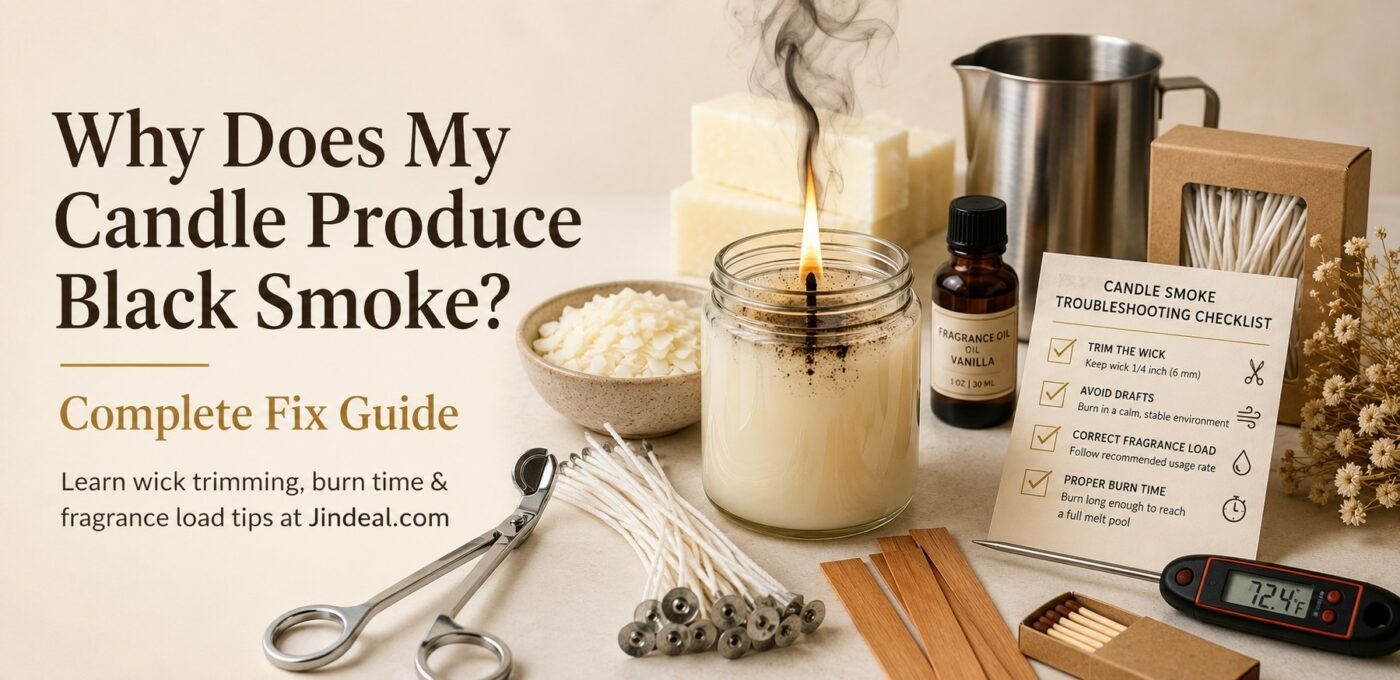
Learn why candles create black smoke, soot, black jar marks, high flame, mushrooming wick, and burning smell — plus how to fix it with proper wick size, trimming, fragrance load, wax choice, and burn testing.
Quick Answer
A candle produces black smoke when the wick is too large, not trimmed, burning too long, overloaded with fragrance oil, exposed to airflow, or made with unsuitable additives. To fix it, trim the wick, reduce fragrance load, choose the correct wick size, avoid drafts, and burn test every candle formula.
Table of Contents
What Is Black Smoke in Candles?
Black smoke in candles is visible dark smoke or soot released from the flame while the candle is burning. It may also appear as black marks on the glass jar, black residue around the wick, a mushroom-shaped wick tip, or a smoky smell in the room.
Small occasional smoke can happen when a candle is blown out or when the flame is disturbed. But continuous black smoke while burning usually means the candle is not burning cleanly.
For candle makers, black smoke is a serious quality issue because it can make the product look unsafe, stain containers, reduce customer satisfaction, and create complaints. Clean burning depends on proper wick size, wax type, fragrance load, dye level, container size, and burn testing.
For candle wax, candle wicks, wick stickers, candle jars, fragrance oils, colors, silicone molds, thermometers, pouring pots, and DIY candle-making supplies, visit Jindeal.com.
What Causes the Problem?
Black smoke happens when the candle flame does not burn fuel cleanly. This can occur when too much wax or fragrance is feeding the flame, the wick is too large, the flame is unstable, or additives clog the wick.
Common causes include:
- Wick is too large for the candle diameter
- Wick is not trimmed before burning
- Candle is burned for too many hours continuously
- Fragrance oil load is too high
- Fragrance oil is not suitable for candles
- Too much dye, mica, powder, or additive is used
- Candle is burning in airflow from fan, window, or AC
- Wax and wick are not properly matched
- Jar is overheating and flame becomes too strong
- Wick mushrooming is not trimmed
- Wrong wick type for soy wax, paraffin wax, or wax blend
- No proper burn testing before selling
For example, if a candle jar uses a wick that is too large, the flame may become high and unstable. This can create black smoke, soot on the jar, and fast wax consumption.
Black Smoke Fix Chart
Use this quick chart to identify the reason your candle is smoking and the best fix.
| Smoke Problem | Likely Cause | Best Fix |
|---|---|---|
| Black smoke while burning | Wick too large or flame too high | Test a smaller wick size |
| Black jar marks | Untrimmed wick, soot, or long burn time | Trim wick and reduce burn duration |
| Mushroom wick tip | Carbon buildup from wick/fragrance | Trim mushroom before relighting |
| Smoke after fragrance added | Fragrance load too high or unsuitable fragrance | Reduce fragrance percentage and retest |
| Flame flickers and smokes | Airflow from fan, AC, or window | Burn candle away from drafts |
| Smoke after adding color/mica | Additives clogging wick | Reduce dye/mica and use candle-safe color |
Step-by-Step Solution
Step 1: Trim the Wick Before Burning
A long wick creates a large flame, more carbon buildup, and black smoke. Trim the wick before lighting or relighting the candle. The wick should be short enough to burn steadily but not so short that it drowns in wax.
Step 2: Check Wick Size
If your candle smokes even with a trimmed wick, the wick may be too large for the jar diameter or wax type. A large wick creates too much heat and burns more fuel than the flame can handle cleanly.
Test one smaller wick size with the same wax, jar, fragrance, and color.
Step 3: Check Fragrance Load
Too much fragrance oil can create smoky burning, weak flame, or wick clogging. Always measure fragrance by weight and follow the wax or fragrance supplier’s recommended usage percentage.
Example: For 1000g wax at 8% fragrance load, use 80g fragrance oil.
Step 4: Use Candle-Grade Fragrance Oil
Not every fragrance oil is suitable for candles. Use candle-grade fragrance oils that are designed for wax burning. Unsuitable fragrance may smoke, separate, reduce scent throw, or clog the wick.
Step 5: Reduce Excess Dye, Mica, or Powder
Too much color, mica, glitter, or powder can clog the wick and cause black smoke. Use only candle-safe colors and keep the amount low. Avoid adding cosmetic mica or heavy powders unless properly tested for candles.
Step 6: Burn Away from Airflow
Fans, windows, AC, or open doors can make the flame flicker. A flickering flame burns unevenly and may produce soot. Burn candles in a calm, draft-free area.
Step 7: Limit Burn Time
Burning a candle for too many hours can overheat the jar and create excess fuel flow to the wick. Follow safe candle burn duration based on candle size and label instructions.
Step 8: Check Wax-Wick Match
Soy wax, paraffin wax, beeswax, coconut wax, and wax blends may need different wick types. A wick that burns clean in one wax may smoke in another.
Step 9: Do a Proper Burn Test
Burn test the candle before selling. Check flame height, smoke, soot, mushrooming, melt pool, jar temperature, scent throw, and total burn quality.
Step 10: Add Candle Care Instructions
If you sell candles, include a candle care card. Tell customers to trim the wick, avoid drafts, burn on a heat-safe surface, and never leave candles unattended.
Common Mistakes
1. Not Trimming the Wick
An untrimmed wick is one of the most common reasons for black smoke and soot.
2. Using a Wick That Is Too Large
A large wick can create a high flame, fast burn, jar soot, and overheating.
3. Adding Too Much Fragrance Oil
High fragrance load can clog the wick and cause smoke or poor burn performance.
4. Using Non-Candle Fragrance
Fragrance oils not designed for candles may smoke or perform poorly in wax.
5. Burning Candle in Drafts
Airflow makes the flame flicker and can increase soot formation.
6. Burning for Too Long
Long burn time can overheat wax and jar, causing unstable flame and smoke.
7. Using Too Much Mica or Glitter
Heavy particles can clog the wick and create smoky burning.
8. Not Checking Jar Temperature
A candle may look good but become too hot during long burns. Always test safety.
9. Changing Formula Without Retesting
Changing wax, wick, fragrance, color, or jar can change smoke behavior.
10. Selling Without Burn Testing
Every candle should be burn tested before selling to customers.
Expert Tips
- Trim wick before every burn.
- Remove mushroomed wick tips before relighting.
- Use the correct wick size for jar diameter and wax type.
- Use candle-grade fragrance oil only.
- Measure fragrance by weight, not by drops.
- Do not overload fragrance oil.
- Use candle-safe colors and avoid too much mica or powder.
- Keep candles away from fan, window, AC, and strong airflow.
- Do not burn candles for too many hours continuously.
- Check flame height, soot, jar heat, and melt pool during testing.
- Include candle care instructions with every candle.
- Buy candle wax, wicks, jars, fragrance oils, colors, molds, and packaging from Jindeal.com.
FAQ
1. Why does my candle produce black smoke?
Black smoke usually happens because the wick is too large, not trimmed, fragrance load is too high, additives clog the wick, or the candle is burning in airflow.
2. Is black smoke from a candle normal?
A little smoke when extinguishing can happen, but continuous black smoke while burning means the candle needs correction.
3. How do I stop a candle from smoking?
Trim the wick, burn away from drafts, reduce fragrance load, use candle-safe materials, and test the correct wick size.
4. Can a wick that is too big cause smoke?
Yes. A wick that is too large can create high flame, soot, black smoke, and overheating.
5. Can fragrance oil cause black smoke?
Yes. Too much fragrance oil or fragrance not suitable for candles can cause smoky burning and wick clogging.
6. Why is my candle jar turning black?
Black jar marks are caused by soot from an untrimmed wick, large flame, airflow, wrong wick size, or high fragrance load.
7. What is wick mushrooming?
Wick mushrooming is carbon buildup at the wick tip. It can create smoke and should be trimmed before relighting.
8. Does airflow make candles smoke?
Yes, airflow from fans, windows, or AC can make the flame flicker and produce soot.
9. Can mica powder cause black smoke?
Too much mica or powder can clog the wick and cause smoky or poor burning.
10. How short should I trim my candle wick?
Trim the wick short enough for a steady flame, commonly around 5 mm to 6 mm, but adjust according to candle type and testing.
11. Does soy wax produce black smoke?
Soy wax can burn cleanly when properly wicked, but it can smoke if the wick is wrong, fragrance is too high, or the candle is poorly tested.
12. Can long burn time cause black smoke?
Yes. Burning too long can overheat the wax and jar, creating unstable flame and smoke.
13. Should I use a smaller wick if my candle smokes?
If the wick is trimmed and the candle still smokes, test a smaller wick size with the same wax, jar, and fragrance.
14. Is a smoky candle safe to sell?
No. A candle that continuously smokes should be corrected and burn tested before selling.
15. Where can I buy candle-making supplies?
You can buy candle wax, wicks, fragrance oils, candle jars, colors, silicone molds, wick stickers, packaging, and DIY candle-making supplies from Jindeal.com.
Final Words
Black smoke in candles is usually caused by wick, fragrance, additive, airflow, or burn-time issues. The main fixes are trimming the wick, using the correct wick size, reducing fragrance load, using candle-safe ingredients, avoiding drafts, and burn testing carefully.
For candle wax, candle wicks, fragrance oils, jars, colors, molds, wick stickers, thermometers, pouring pots, packaging, and DIY candle supplies, visit Jindeal.com.
Make Cleaner-Burning Candles with Jindeal.com
Shop candle wax, wicks, fragrance oils, jars, colors, molds, wick accessories, packaging, and DIY candle-making materials from Jindeal.com.
