
Essential Oils, Uncategorized
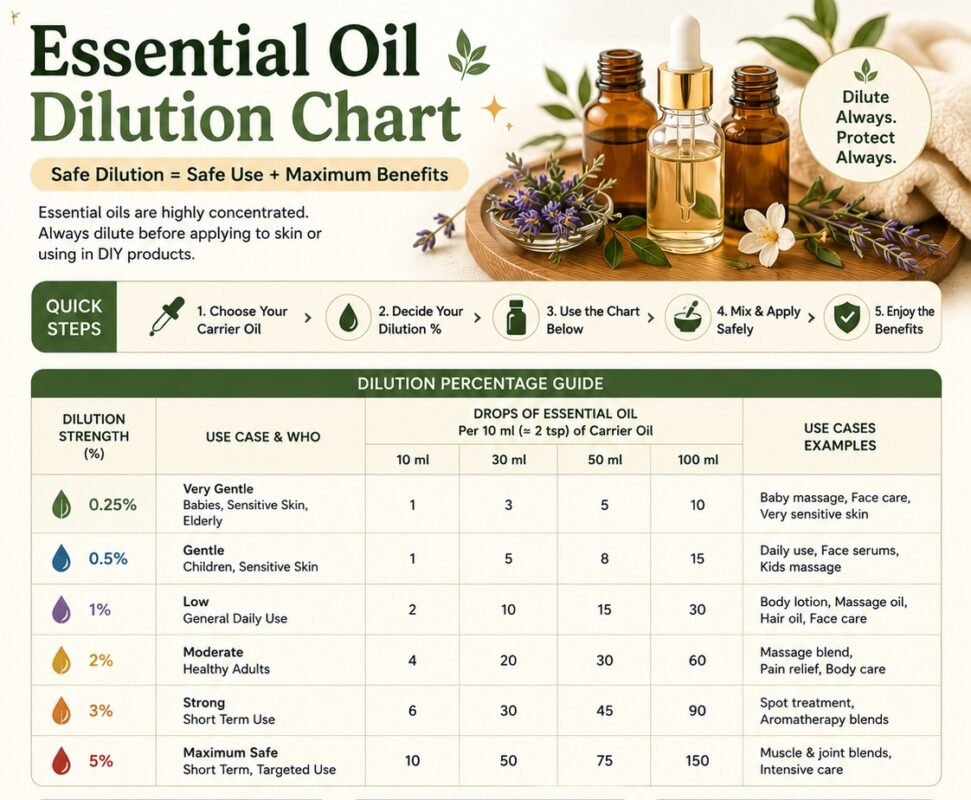
Essential Oil Dilution Chart
Jun
Essential Oil Dilution Chart
A practical dilution guide for essential oils in carrier oils, face oils, body oils, hair oils, massage oils, roll-ons, bath products, body butter, handmade soap, and DIY cosmetic formulations.
Quick Answer
Essential oils are concentrated plant extracts and should usually be diluted before skin use. For many adult body-care products, 1% to 2% is a common gentle dilution range. For face products or sensitive skin, start around 0.5% to 1%. For short-use body products, 2% to 3% may be used after checking oil-specific safety limits. Strong or irritating oils such as cinnamon, clove, lemongrass, peppermint, thyme, oregano and wintergreen-style oils need extra caution and lower limits. Always patch test and follow the supplier’s safety/IFRA guidance.
Essential Oil Dilution Calculator
Enter carrier oil amount and target dilution. This calculator gives approximate essential oil quantity in ml and approximate drops. Drop count is an estimate because drop size changes by oil, bottle, dropper and temperature.
Table of Contents
What Is Essential Oil Dilution?
Essential oil dilution means mixing a small amount of essential oil into a carrier oil, cream base, body butter, gel, soap base or another suitable cosmetic base before use. Essential oils are powerful and concentrated, so dilution helps reduce the chance of skin irritation, sensitization, burning, redness, itching or discomfort.
Common carrier oils include sweet almond oil, coconut oil, olive oil, jojoba-style oil, grapeseed oil, castor oil, sesame oil and sunflower oil. For DIY cosmetic making, dilution should be calculated by percentage, not guessed by smell.
For essential oils, carrier oils, fragrance oils, soap bases, body butter ingredients, cosmetic jars, bottles and DIY packaging, visit Jindeal.com.
Essential Oil Dilution Chart
This chart gives beginner-friendly planning ranges for topical cosmetic use. Always check the specific essential oil’s safety limit because every oil is different.
| Dilution % | Essential Oil in 100 ml Base | Approx. Drops in 100 ml | Best For |
|---|---|---|---|
| 0.25% | 0.25 ml | Approx. 5 drops | Very sensitive-use planning, delicate aroma, cautious formulas |
| 0.5% | 0.5 ml | Approx. 10 drops | Face oils, sensitive skin, low-aroma leave-on products |
| 1% | 1 ml | Approx. 20 drops | Gentle daily body oils, facial products after suitability check |
| 2% | 2 ml | Approx. 40 drops | Common adult body oil, massage oil and body-care blends |
| 3% | 3 ml | Approx. 60 drops | Stronger body-care blends after testing and oil-specific review |
| 5% | 5 ml | Approx. 100 drops | High dilution; short-use/specialist formulas only after safety review |
Drops Chart by Bottle Size
This chart uses an approximate estimate of 20 drops per 1 ml. Actual drops can vary.
| Carrier Oil / Base Size | 0.5% Dilution | 1% Dilution | 2% Dilution | 3% Dilution |
|---|---|---|---|---|
| 10 ml | 1 drop | 2 drops | 4 drops | 6 drops |
| 15 ml | 1 to 2 drops | 3 drops | 6 drops | 9 drops |
| 30 ml | 3 drops | 6 drops | 12 drops | 18 drops |
| 50 ml | 5 drops | 10 drops | 20 drops | 30 drops |
| 100 ml | 10 drops | 20 drops | 40 drops | 60 drops |
| 250 ml | 25 drops | 50 drops | 100 drops | 150 drops |
| 500 ml | 50 drops | 100 drops | 200 drops | 300 drops |
| 1 litre | 100 drops | 200 drops | 400 drops | 600 drops |
Essential Oil Dilution Formula
Use this formula when making essential oil blends, body oils, massage oils, face oils and hair oils.
Example: To make 100 ml body oil at 2% dilution:
Example: To make 50 ml face oil at 0.5% dilution:
- Use lower dilution for face products.
- Use lower dilution for sensitive skin.
- Use lower dilution for strong essential oils.
- Use product-specific maximum limits from supplier/IFRA documents.
Dilution by Product Type
| Product Type | Suggested Planning Range | Notes |
|---|---|---|
| Face Oil / Facial Serum | 0.25% to 1% | Use gentle oils and patch test |
| Body Oil | 1% to 2% | Common adult body-care range |
| Massage Oil | 1% to 2% | Lower for full-body or frequent use |
| Hair Oil | 0.5% to 2% | Use scalp comfort as priority; avoid eye contact |
| Body Butter | 0.5% to 2% | Check heat stability and aroma after cooling |
| Roll-On Aroma Blend | 1% to 3% | Use safe oils and avoid sensitive areas |
| Melt and Pour Soap | 0.5% to 2% | Check soap base compatibility and fragrance retention |
| Bath Oil | Very low and with proper dispersal | Do not add essential oil directly into bath water without dispersant |
| Leave-On Baby Product | Avoid unless guided by qualified professional | Extra caution required |
Best Carrier Oils for Essential Oil Dilution
Choose carrier oil based on product type, skin feel, aroma, cost, shelf life, packaging and target customer.
Essential Oil Safety Rules
| Safety Rule | Why Important | Practical Action |
|---|---|---|
| Dilute Before Skin Use | Essential oils are concentrated | Use carrier oil or suitable cosmetic base |
| Patch Test | Helps check individual sensitivity | Test small area before wider use |
| Avoid Eyes | Essential oils can irritate eyes | Keep away from eyes and mucous membranes |
| Do Not Ingest | Internal use needs specialist guidance | Do not suggest drinking essential oils |
| Pregnancy Caution | Some oils may not be suitable | Use only after qualified guidance |
| Children Caution | Children need much lower limits and oil selection | Avoid strong oils and use expert guidance |
| Pet Caution | Some oils can be unsafe around pets | Use caution with diffusers and stored oils |
| Store Safely | Prevents accidental use | Keep away from children, heat and sunlight |
| Check Oil-Specific Limits | Every essential oil is different | Use supplier/IFRA/SDS guidance |
Phototoxic and Strong Oils
Some essential oils need special care. Citrus oils such as cold-pressed bergamot, lemon, lime, grapefruit and bitter orange may increase sun-sensitivity if used on skin and exposed to sunlight. Strong “hot” oils may irritate skin even at low percentages.
| Oil Type | Examples | Extra Caution |
|---|---|---|
| Phototoxic Citrus Oils | Bergamot, lemon, lime, grapefruit, bitter orange | Check phototoxic limits before leave-on skin products |
| Hot / Spicy Oils | Cinnamon, clove, oregano, thyme | Use very low limits and avoid sensitive skin products |
| Strong Minty Oils | Peppermint, wintergreen-style oils | Use caution around children and sensitive users |
| Strong Herbaceous Oils | Lemongrass, tea tree, eucalyptus, rosemary | Check maximum dermal limits and product type |
| Oxidized Oils | Old oils exposed to air/heat/light | May increase irritation risk; store properly |
Common Mistakes
1. Applying Essential Oils Undiluted
Undiluted essential oils can irritate skin. Dilute in carrier oil or suitable base.
2. Using the Same Percentage for Every Oil
Lavender, peppermint, cinnamon, clove, tea tree and citrus oils do not have the same safety profile.
3. Measuring Only by Smell
A strong smell does not confirm safe dilution. Use percentage calculation.
4. Using Drops for Commercial Batches
Drops vary. For business batches, measure by weight or ml and keep batch records.
5. Ignoring Phototoxic Oils
Some citrus oils require sunlight exposure caution in leave-on products.
6. Making Medical Claims
Do not claim essential oils cure stress, anxiety, headache, acne, dandruff, hair fall, infection, pain, or disease.
7. Using Essential Oils in Baby Products Without Guidance
Baby and child-use products require extra safety review and professional guidance.
8. Poor Storage
Heat, light and air can oxidize essential oils and affect aroma and safety.
9. No Patch Test
Patch testing helps identify individual sensitivity before wider use.
10. Adding Oils Directly to Bath Water
Essential oils do not properly mix with plain water and can contact skin undiluted. Use a suitable dispersant or ready bath base.
FAQ
1. What is essential oil dilution?
Essential oil dilution means mixing essential oil into a carrier oil or cosmetic base before skin use.
2. What is a safe essential oil dilution for adults?
For many adult body-care products, 1% to 2% is a common gentle range. Oil-specific limits still matter.
3. What dilution should I use for face oil?
For face oils, start around 0.25% to 1% depending on essential oil, skin sensitivity and product goal.
4. How many drops for 1% dilution in 100 ml?
Using 20 drops per ml as an estimate, 1% in 100 ml is about 20 drops.
5. How many drops for 2% dilution in 100 ml?
Using 20 drops per ml as an estimate, 2% in 100 ml is about 40 drops.
6. Can I apply essential oils directly to skin?
It is safer to dilute essential oils before skin use. Undiluted use can increase irritation or sensitivity risk.
7. Which carrier oil is best for dilution?
Sweet almond oil, coconut oil, jojoba-style oil, grapeseed oil, olive oil and sunflower oil are common carrier choices.
8. Can I use essential oils in hair oil?
Yes, but dilute properly, avoid eye contact, use scalp-comfort-friendly oils and patch test.
9. Can I use essential oils in melt and pour soap?
Yes, but use suitable dilution, check soap base compatibility and test fragrance retention.
10. Are essential oils safe for children?
Children need extra caution, lower dilution and careful oil selection. Use qualified guidance for child-use products.
11. Are citrus essential oils safe in skincare?
Some citrus oils can be phototoxic in leave-on products. Check oil-specific safety limits and sun exposure guidance.
12. Can essential oils cure acne, stress or hair fall?
No cosmetic product should claim to cure medical or health conditions. Use cosmetic-safe wording only.
13. Should I measure essential oils by drops or weight?
Drops are only approximate. For repeatable business batches, measure by weight or ml.
14. How should essential oils be stored?
Store tightly closed in a cool, dry place away from heat, sunlight and children.
15. Where can I buy essential oils and carrier oils?
You can buy essential oils, carrier oils, soap bases, fragrance oils, jars, bottles and packaging from Jindeal.com.
Final Words
Essential oil dilution helps make DIY cosmetic and body-care products safer, more comfortable and more professional. Start low, patch test, check oil-specific limits, avoid medical claims, and keep proper batch records for business use.
For essential oils, carrier oils, soap bases, bottles, jars, packaging and DIY cosmetic supplies, visit Jindeal.com.
Shop Essential Oils and Carrier Oils on Jindeal.com
Buy essential oils, carrier oils, fragrance oils, soap bases, cosmetic jars, amber bottles, dropper bottles, roll-on bottles and DIY packaging materials from Jindeal.com.