
Carrier Oils, Uncategorized
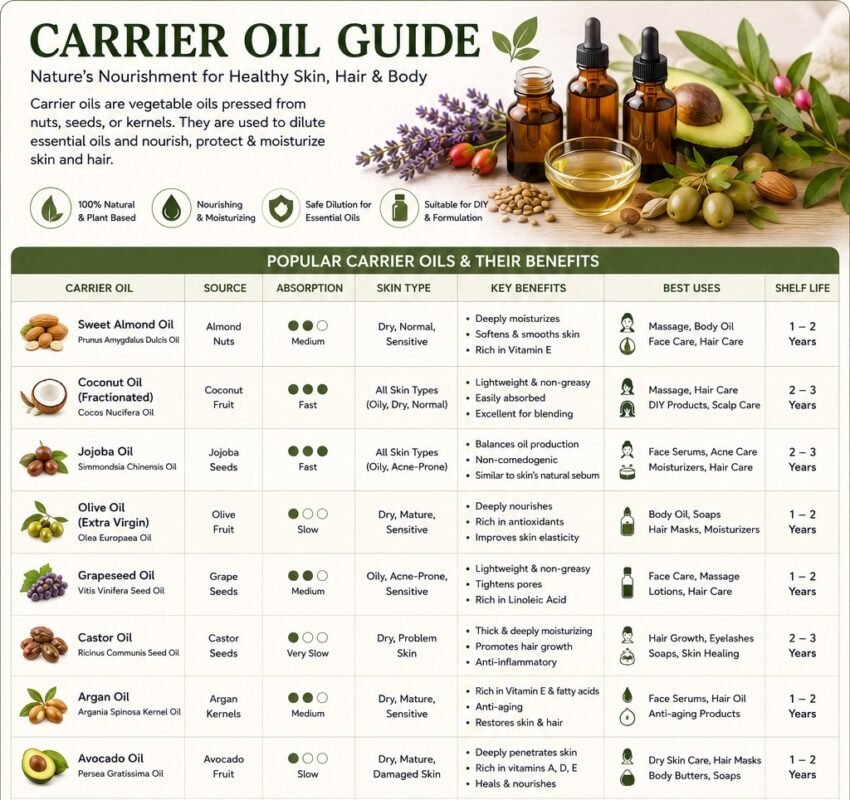
Carrier Oil Guide
Jun
Carrier Oil Guide
A complete beginner-friendly guide to carrier oils for skincare, hair oil, massage oil, body oil, face serum, beard oil, essential oil dilution, soap making, body butter, balms, and DIY cosmetic products.
Quick Answer
Carrier oils are fixed oils used to dilute essential oils and create cosmetic products such as face oils, hair oils, body oils, massage oils, balms, body butters and soaps. Popular carrier oils include sweet almond oil, coconut oil, castor oil, olive oil, grapeseed oil, sunflower oil, sesame oil, jojoba-style oil, avocado oil and argan oil. Choose a carrier oil based on skin feel, absorption, thickness, aroma, shelf life, product type and customer preference.
Table of Contents
What Is a Carrier Oil?
A carrier oil is a plant-based or cosmetic-grade fixed oil used as a base oil in DIY cosmetics and personal care products. It helps carry essential oils, fragrance ingredients, oil-soluble actives, butters and waxes into a usable cosmetic format.
Carrier oils are different from essential oils. Essential oils are highly concentrated aromatic extracts and are usually used in small percentages. Carrier oils are used in larger quantities and form the main base of many oil-based cosmetic products.
For carrier oils, essential oils, fragrance oils, soap bases, body butter ingredients, jars, bottles and DIY cosmetic packaging, visit Jindeal.com.
Why Carrier Oils Are Used
Carrier Oil Comparison Chart
This chart helps compare common carrier oils for DIY cosmetics and small beauty businesses.
| Carrier Oil | Skin Feel | Absorption | Best For | Notes |
|---|---|---|---|---|
| Sweet Almond Oil | Soft, smooth, medium-rich | Medium | Body oil, massage oil, face oil, baby-care style products after review | Popular beginner carrier oil |
| Coconut Oil | Rich, traditional, slightly heavy | Slow to medium | Hair oil, body oil, soap, balm | Can solidify in cooler weather depending on type |
| Castor Oil | Very thick, glossy | Slow | Hair oil, lip balm, soap, brow/lash cosmetic-style products | Best blended with lighter oils |
| Olive Oil | Rich and heavier | Slow | Body oil, soap, massage blends, traditional products | Strong natural odor in some grades |
| Grapeseed Oil | Light, smooth | Fast to medium | Massage oil, body oil, light skincare feel | Good for non-greasy feel blends |
| Sunflower Oil | Light to medium | Medium | Body oil, massage oil, creams, lotions | Cost-effective and versatile |
| Sesame Oil | Medium-rich, traditional | Medium | Massage oil, hair oil, body oil | Popular in traditional oil blends |
| Jojoba-Style Oil | Light, silky, premium | Fast to medium | Face oil, beard oil, premium serum | Premium skin feel |
| Avocado Oil | Rich, nourishing feel | Medium to slow | Body butter, balm, dry-skin feel products | Good in small percentage blends |
| Argan Oil | Luxurious, silky | Medium | Hair serum, face oil, premium products | Higher cost, premium positioning |
Best Carrier Oils by Skin Feel
Choose carrier oils based on the final texture you want customers to feel.
| Desired Product Feel | Good Carrier Oil Options | Best Product Type |
|---|---|---|
| Light and fast-feeling | Grapeseed, sunflower, jojoba-style oil | Face oil, body oil, summer blends |
| Soft and balanced | Sweet almond, sunflower, sesame | Massage oil, body oil, everyday blends |
| Rich and heavy | Olive, avocado, coconut, castor | Body butter, balm, dry-skin feel products |
| Glossy and thick | Castor oil | Lip balm, hair oil, brow/lash cosmetic-style oils |
| Premium silky feel | Argan, jojoba-style, sweet almond | Face serum, beard oil, hair serum |
| Traditional massage feel | Sesame, coconut, olive, almond | Massage oil, spa-style body oil |
Best Carrier Oils for Hair-Care Products
Carrier oils are widely used in hair oils, scalp-care themed oils, beard oils and hair serum-style products. Avoid medical claims such as curing hair fall, baldness, dandruff or scalp disease.
| Hair Product Goal | Carrier Oil Options | Use Note |
|---|---|---|
| Traditional hair oil | Coconut oil, sesame oil, castor oil, almond oil | Rich oil feel, good for pre-wash oiling |
| Light hair serum feel | Argan oil, jojoba-style oil, grapeseed oil | Use small amount to reduce greasy feel |
| Glossy finish | Castor oil, argan oil | Use castor in low percentage due to thickness |
| Beard oil | Jojoba-style oil, almond oil, grapeseed oil, argan oil | Light-to-medium feel works best |
| Herbal infused oil | Coconut, sesame, olive, sunflower | Use dry herbs and proper filtration |
| Massage scalp oil | Almond, coconut, sesame | Use cosmetic-safe essential oil dilution if adding aroma |
Carrier Oils for Essential Oil Dilution
Carrier oils are the most common way to dilute essential oils for topical cosmetic use. Essential oils should usually not be applied directly to skin without dilution.
| Dilution Level | Essential Oil in 100 ml Carrier Oil | Best For |
|---|---|---|
| 0.5% | 0.5 ml | Face oil, sensitive-use planning, light aroma |
| 1% | 1 ml | Gentle daily body oil, mild massage oil |
| 2% | 2 ml | Common adult body oil and massage oil range |
| 3% | 3 ml | Stronger body oil after oil-specific safety check |
Carrier Oils by Product Type
| Product Type | Suggested Carrier Oil Choices | Formulation Tip |
|---|---|---|
| Face Oil | Jojoba-style, grapeseed, sweet almond, argan | Keep texture light and essential oil low |
| Body Oil | Sweet almond, sunflower, sesame, coconut, olive | Blend light and rich oils for better feel |
| Massage Oil | Sweet almond, grapeseed, sesame, sunflower | Choose good slip and medium absorption |
| Hair Oil | Coconut, castor, sesame, almond, argan | Blend thick castor with lighter oils |
| Beard Oil | Jojoba-style, grapeseed, almond, argan | Use non-heavy oils for better comfort |
| Lip Balm | Castor, almond, coconut, olive | Combine with wax and butter |
| Body Butter | Almond, avocado, olive, coconut | Use with shea/cocoa/mango butter |
| Soap Making | Coconut, olive, castor, almond | Use formula-specific guidance for soap type |
| Scrub | Almond, sunflower, coconut, olive | Choose oil based on rinse feel |
Carrier Oil Formulation Tips
1. Blend Oils for Better Texture
One oil may feel too heavy, too thin, too sticky or too expensive. Blending oils helps improve texture, cost and product performance.
2. Use Castor Oil Carefully
Castor oil is thick and glossy. It works well in hair oils and balms but can feel sticky if used at a very high percentage.
3. Balance Cost and Premium Feel
Use premium oils such as argan or jojoba-style oil in smaller percentages and support them with more economical oils like almond, sunflower or grapeseed.
4. Consider Aroma
Some oils have a natural odor. This can affect fragrance or essential oil blends.
5. Add Vitamin E for Oil Products
Vitamin E is often used in oil-based cosmetic products as an antioxidant support. It is not a preservative for water-based products.
6. Keep Water Out of Oil Products
Oil-only products do not need the same preservative system as water-based products, but once water or wet botanicals are introduced, microbial risk changes.
7. Label Clearly
Use correct product name, ingredients, net quantity, batch number, MFG date, best-before, storage and caution statements.
Shelf Life and Storage
Carrier oils can become rancid if exposed to heat, air, sunlight or contamination. Always store oils properly and check odor, color and texture before using in a product.
| Storage Factor | Best Practice | Avoid |
|---|---|---|
| Light | Use amber bottles or store away from sunlight | Clear bottles in direct sunlight |
| Heat | Keep in cool storage | Hot warehouse, car, window shelf |
| Air | Keep caps tightly closed | Open containers and repeated contamination |
| Water | Keep water out of oil containers | Wet spoons, damp funnels, wet herbs |
| Batch Records | Record purchase date, supplier, lot and expiry | Unlabeled oil bottles |
| Smell Check | Check for rancid or off odor | Using old oil without inspection |
Common Mistakes
1. Confusing Carrier Oils with Essential Oils
Carrier oils are base oils. Essential oils are concentrated aromatic oils and must be used in small percentages.
2. Using Too Much Heavy Oil
Too much castor, olive or thick oil can make products greasy or sticky.
3. Not Checking Smell
Rancid oil can spoil the aroma and customer experience of the final product.
4. Adding Water to Oil Products
Water changes preservation needs. Keep oil-only products water-free unless you know preservation and testing.
5. Not Diluting Essential Oils
Essential oils should usually be diluted before skin use.
6. Making Medical Claims
Do not claim oils cure acne, eczema, dandruff, hair fall, infection, pain or disease.
7. Poor Packaging
Oil products need leak-proof bottles, oil-resistant labels and good caps.
8. No Batch Records
Record oil supplier, lot number, formula, batch date and product quantity.
9. Copying Competitor Formulas
Use your own formula testing and customer feedback.
10. Ignoring Patch Testing
Patch testing helps check comfort and individual sensitivity.
FAQ
1. What is a carrier oil?
A carrier oil is a base oil used in cosmetic products and to dilute essential oils before topical use.
2. What is the difference between carrier oil and essential oil?
Carrier oils are used in larger quantities as base oils. Essential oils are concentrated aromatic extracts used in small percentages.
3. Which carrier oil is best for beginners?
Sweet almond oil, coconut oil, sunflower oil and grapeseed oil are beginner-friendly options for many body-care products.
4. Which carrier oil is best for hair oil?
Coconut oil, castor oil, sesame oil, almond oil and argan oil are commonly used in hair-care oil blends.
5. Which carrier oil is light for face oil?
Grapeseed oil, jojoba-style oil, sweet almond oil and argan oil can be used for lighter face oil blends.
6. Can carrier oils be used directly on skin?
Many carrier oils can be used directly as cosmetic oils, but patch testing is recommended.
7. How much essential oil should I add to carrier oil?
For many adult body-care products, 1% to 2% is a common range. Use lower levels for face and sensitive-use products.
8. Can I mix multiple carrier oils?
Yes. Blending oils helps balance texture, absorption, cost and product feel.
9. Do carrier oils need preservatives?
Oil-only products generally do not need water-phase preservatives, but they should be protected from rancidity and contamination. Water-based products need preservation.
10. Is vitamin E a preservative?
Vitamin E is commonly used as antioxidant support in oil products, but it is not a preservative for water-based formulas.
11. Which oil is best for massage oil?
Sweet almond oil, grapeseed oil, sesame oil and sunflower oil are common massage oil choices.
12. Which carrier oil is best for lip balm?
Castor oil, almond oil, coconut oil and olive oil are commonly used with waxes and butters in lip balm.
13. Can carrier oils cure skin or hair problems?
No. Avoid cure or treatment claims. Use cosmetic-safe wording such as moisturized feel, soft feel, shine, massage and body-care use.
14. How should carrier oils be stored?
Store tightly closed in a cool, dry place away from direct sunlight, heat, moisture and contamination.
15. Where can I buy carrier oils?
You can buy carrier oils, essential oils, fragrance oils, soap bases, jars, bottles and DIY cosmetic packaging from Jindeal.com.
Final Words
Carrier oils are the foundation of many DIY cosmetic products. Choose oils based on texture, absorption, aroma, shelf life, cost and product use. Blend oils carefully, dilute essential oils safely, store oils properly and avoid medical claims when selling cosmetic products.
For carrier oils, essential oils, fragrance oils, jars, bottles, soap bases and DIY cosmetic supplies, visit Jindeal.com.
Shop Carrier Oils on Jindeal.com
Buy carrier oils, essential oils, fragrance oils, amber bottles, dropper bottles, roll-on bottles, cosmetic jars, soap bases and DIY packaging materials from Jindeal.com.