
Candle Fragrance Oils, Uncategorized
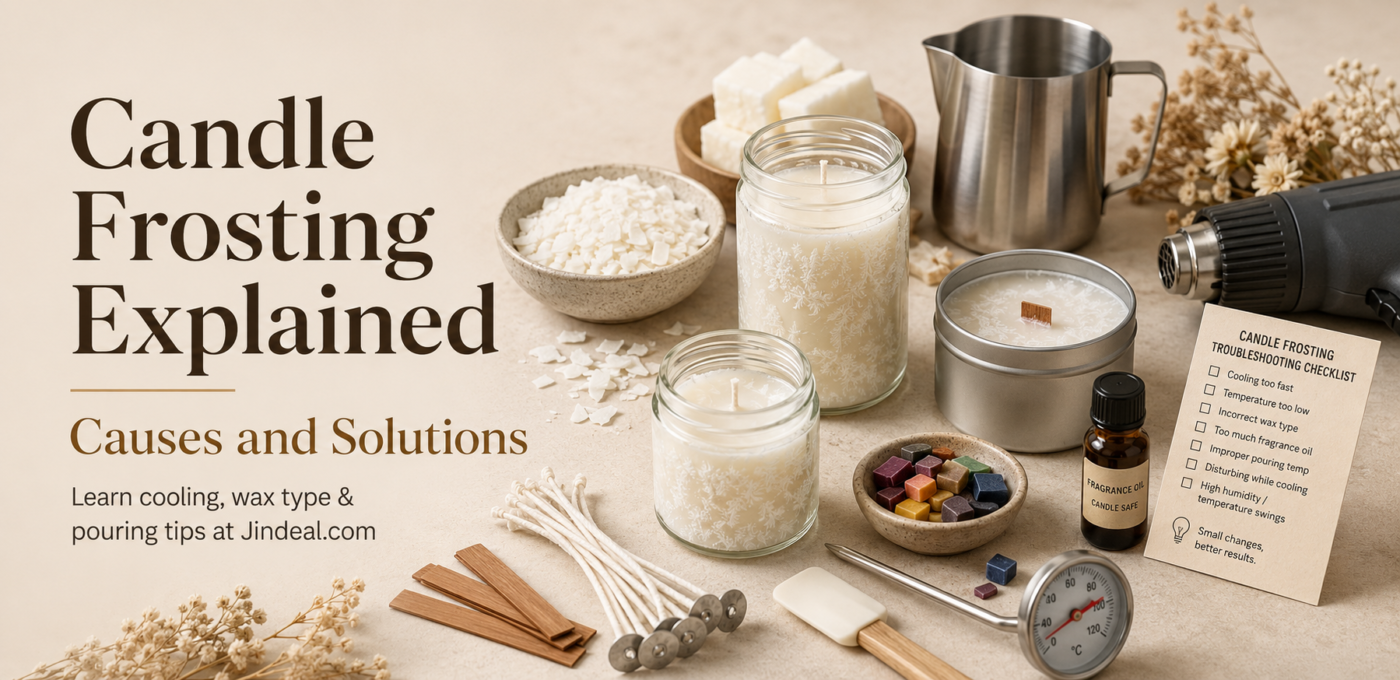
Candle Frosting Explained: Causes and Solutions
Jun
Candle Frosting Explained: Causes and Solutions
Learn why soy candles and natural wax candles develop white crystal marks, cloudy patches, or frosty surfaces, and how to reduce frosting with better wax handling, temperature control, cooling, fragrance load, and storage.
Quick Answer
Candle frosting is a white, cloudy, or crystal-like layer that often appears on soy wax and natural wax candles. It usually happens because of wax crystallization, temperature changes, rapid cooling, high fragrance load, or poor storage. It is mostly cosmetic and can be reduced with better pouring and cooling control.
Table of Contents
What Is Candle Frosting?
Candle frosting is a natural white, dusty, cloudy, or crystal-like pattern that appears on the surface or sides of candles. It is most common in soy wax candles and other natural wax candles. Frosting can appear immediately after cooling or after a few days or weeks of storage.
Frosting is usually not dangerous and does not normally mean the candle is spoiled. In many cases, the candle can still burn properly. However, frosting can make candles look less premium, especially for candle businesses selling luxury jar candles or colored candles.
Frosting is more visible in dark-colored candles, glass jar candles, and candles stored in changing temperatures. White or cream candles may hide frosting better.
For soy wax, paraffin wax, candle jars, fragrance oils, candle wicks, colors, thermometers, pouring pots, silicone molds, and DIY candle-making supplies, visit Jindeal.com.
What Causes the Problem?
Candle frosting happens when wax crystals form or reorganize on the candle surface. Natural waxes like soy wax are more likely to show frosting because of their natural composition and crystallization behavior.
Common causes include:
- Natural crystallization of soy wax
- Rapid cooling after pouring
- Pouring wax at the wrong temperature
- Room temperature changing during cooling
- Cold jars or cold molds
- High fragrance oil load
- Fragrance oil not mixed properly
- Using too much dye or color
- Storing candles in heat, cold, or sunlight
- Moving candles before they fully set
- Using wax not suited for container candles
- Skipping small-batch testing before production
For example, if soy wax is poured into a cold glass jar and then cooled in a cold room, the wax may crystallize unevenly and show white frosting on the candle sides or top surface.
Candle Frosting Fix Chart
Use this quick chart to identify why frosting appears and how to reduce it.
| Frosting Problem | Likely Cause | Best Solution |
|---|---|---|
| White patches on candle top | Wax crystallization or rapid cooling | Cool slowly and keep room temperature stable |
| Frosting on jar sides | Cold jar or uneven cooling | Warm jars slightly and avoid cold surfaces |
| Frosting on dark candles | Natural frosting is more visible on dark colors | Use lighter colors or test dye percentage |
| Frosting after few days | Storage temperature changes | Store candles in cool, dry, stable conditions |
| Cloudy look after fragrance added | High fragrance load or poor mixing | Use recommended fragrance percentage and mix evenly |
| Repeated frosting in all batches | Wax type or process issue | Test another wax blend or adjust pouring temperature |
Step-by-Step Solution
Step 1: Understand That Frosting Is Common in Soy Wax
Soy wax is natural and can develop frosting even when the candle is made correctly. The goal is not always to remove frosting 100%, but to reduce it and make the candle look more consistent and professional.
Step 2: Use the Right Wax
Choose wax suitable for container candles or the candle type you are making. Some soy waxes frost more than others. Wax blends may show less frosting than pure soy wax in some candle formulas.
Step 3: Control Melting Temperature
Melt wax gently and avoid overheating. Overheating can affect wax structure and final finish. Use a thermometer instead of guessing temperature by eye.
Follow the wax supplier’s recommended melting and pouring temperature range whenever available.
Step 4: Add Fragrance at the Right Temperature
Add candle-grade fragrance oil at the recommended temperature and mix slowly but thoroughly. Poor mixing can cause uneven appearance, weak scent throw, or surface issues.
Step 5: Use Correct Fragrance Load
Too much fragrance oil can disturb wax structure and may increase frosting, sweating, poor burn, or separation. Measure fragrance by weight and stay within wax supplier recommendations.
Step 6: Warm the Jars Slightly
Cold jars can create uneven cooling and frosting on the sides. If your room is cold, slightly warm the jars before pouring. Do not overheat jars; they should only be mildly warm and safe to handle.
Step 7: Pour at a Stable Temperature
Pour wax at a consistent temperature suitable for your wax type. Too hot or too cold pouring can both create surface issues. Keep notes of which pour temperature gives the best finish.
Step 8: Cool Candles Slowly
Rapid cooling is a major reason for frosting and rough surfaces. Let candles cool at room temperature away from fans, AC, windows, cold floors, and sudden temperature changes.
Step 9: Avoid Moving Candles While Setting
Moving candles before the wax sets fully can disturb the wax structure and surface finish. Place candles on a stable surface and let them cool without disturbance.
Step 10: Store Candles Properly
Store candles in a cool, dry place away from sunlight and temperature swings. Avoid keeping candles near windows, hot shelves, damp rooms, or direct AC airflow.
Step 11: Test Before Bulk Production
Make small test batches with your exact wax, fragrance, dye, wick, jar, and storage conditions. Check frosting after 24 hours, 7 days, and 2 to 4 weeks.
Common Mistakes
1. Thinking Frosting Means Candle Is Spoiled
Frosting is usually natural wax crystallization and often does not mean the candle is unsafe or unusable.
2. Cooling Candles Too Fast
Fridge, freezer, cold rooms, fans, and AC can increase frosting and surface problems.
3. Pouring into Cold Jars
Cold glass jars can cause side frosting and poor glass adhesion.
4. Using Too Much Fragrance Oil
High fragrance load can disturb wax structure and candle burn performance.
5. Adding Too Much Color
Dark colors make frosting more visible and may also affect wick performance if overused.
6. Not Using a Thermometer
Guessing wax temperature leads to inconsistent results. Use a thermometer for better control.
7. Moving Candles While Cooling
Movement can disturb wax setting and create uneven texture.
8. Storing Candles in Heat or Sunlight
Temperature swings and sunlight can increase frosting and sweating.
9. Expecting Soy Wax to Look Like Paraffin
Soy wax naturally behaves differently and may show frosting more easily.
10. Selling Without Appearance Testing
Check candles after storage before selling. Frosting may appear after a few days, not only immediately after pouring.
Expert Tips
- Use wax suitable for container candles.
- Use a thermometer for melting and pouring.
- Follow wax supplier temperature guidelines.
- Warm cold jars slightly before pouring.
- Use candle-grade fragrance oil only.
- Do not overload fragrance oil.
- Mix fragrance slowly and thoroughly.
- Cool candles slowly at stable room temperature.
- Avoid fans, AC airflow, freezer, and fridge cooling.
- Use lighter colors if frosting is very visible.
- Test candles after 24 hours, 7 days, and 2 to 4 weeks.
- Buy candle wax, fragrance oils, jars, wicks, colors, thermometers, and packaging from Jindeal.com.
FAQ
1. What is candle frosting?
Candle frosting is a white, cloudy, or crystal-like pattern that appears on wax, especially soy wax and natural wax candles.
2. Why does soy wax frost?
Soy wax can frost because of natural wax crystallization, cooling changes, temperature swings, fragrance load, or storage conditions.
3. Is candle frosting bad?
Frosting is usually cosmetic and does not always affect candle burning, but it can make candles look less premium.
4. Can I prevent candle frosting completely?
It may not be possible to prevent frosting 100% in soy wax, but you can reduce it with better temperature control, slow cooling, and good storage.
5. Does frosting affect scent throw?
Frosting itself is mainly visual, but poor wax handling, fragrance mixing, or storage can also affect scent throw.
6. Why is frosting more visible in colored candles?
White crystal marks are easier to see on dark or bright colored wax than on white or cream candles.
7. Can cold jars cause frosting?
Yes, cold jars can cause uneven cooling and frosting on the sides of the candle.
8. Should I put candles in the fridge to cool faster?
No. Fast cooling in the fridge or freezer can increase frosting, cracks, sinkholes, and poor finish.
9. Can too much fragrance oil cause frosting?
Too much fragrance oil can disturb wax structure and may contribute to frosting, sweating, or poor burn performance.
10. How do I reduce frosting in soy candles?
Use good wax, measure fragrance correctly, pour at the right temperature, warm jars slightly, cool slowly, and store candles in stable conditions.
11. Does paraffin wax frost like soy wax?
Paraffin wax usually shows less frosting than soy wax, but every wax should still be tested.
12. Can I sell candles with frosting?
You can sell candles if they are safe and tested, but visible frosting may reduce premium appearance. For luxury products, reduce frosting through testing.
13. Does candle frosting appear immediately?
Sometimes frosting appears after cooling, but it can also appear days or weeks later due to storage temperature changes.
14. Can I remove frosting from finished candles?
You may reduce surface frosting by gently warming the surface, but this is temporary and must be done carefully to avoid damaging the candle.
15. Where can I buy candle-making supplies?
You can buy soy wax, paraffin wax, candle jars, wicks, fragrance oils, candle colors, thermometers, molds, packaging, and DIY supplies from Jindeal.com.
Final Words
Candle frosting is a common issue in soy wax and natural wax candles. It is mostly cosmetic, but it can affect the premium look of your candles. The best solution is to control wax temperature, fragrance load, jar temperature, cooling speed, and storage conditions.
For candle wax, fragrance oils, wicks, jars, colors, thermometers, pouring pots, molds, packaging, and DIY candle-making supplies, visit Jindeal.com.
Make Smoother, Better-Looking Candles with Jindeal.com
Shop candle wax, fragrance oils, wicks, jars, colors, thermometers, molds, packaging, and DIY candle-making materials from Jindeal.com.
