
Candle Fragrance Oils, Uncategorized
Candle Business Startup Guide
Jun
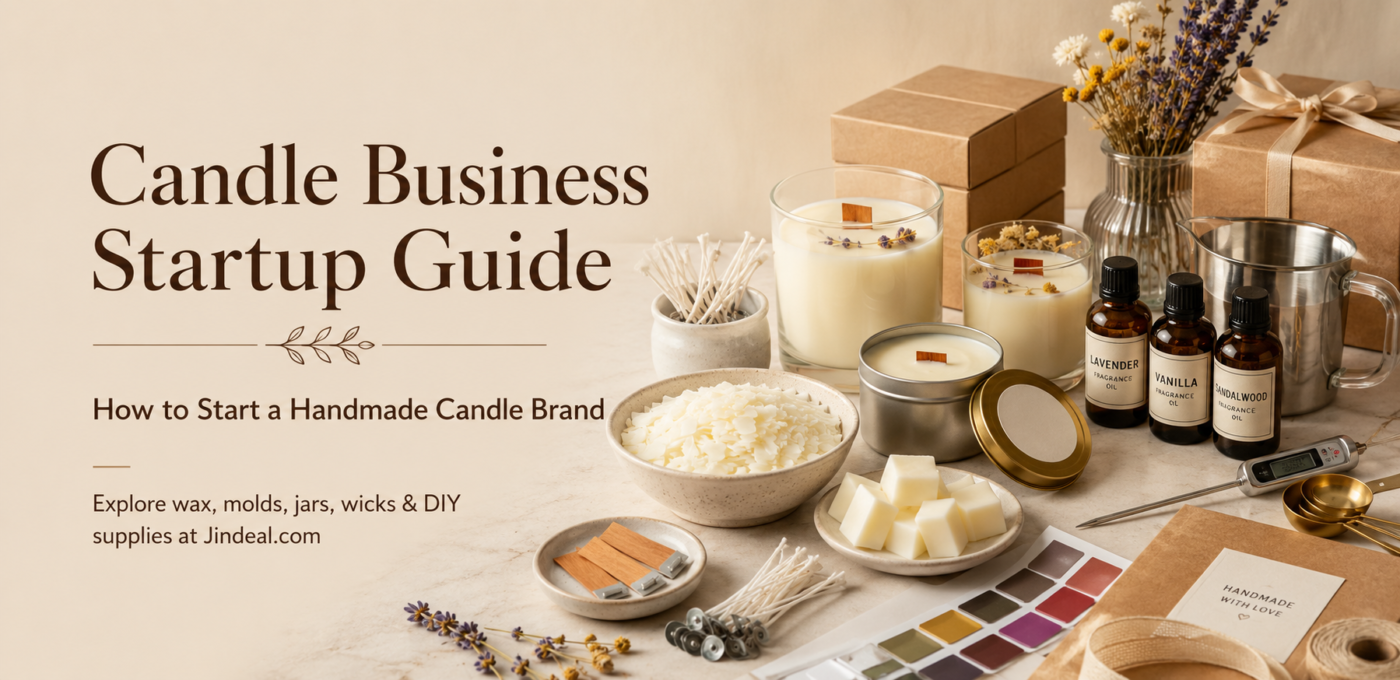
Candle Business Startup Guide: How to Start a Candle Making Business
Learn how to start a small candle business with the right wax, wick, fragrance oil, candle jars, colors, molds, packaging, pricing, testing, and selling strategy.
Quick Answer
To start a candle business, choose a candle niche, test wax-wick-fragrance combinations, calculate cost per candle, design attractive packaging, and sell through your website, Instagram, WhatsApp, local stores, exhibitions, and gifting channels. Start with small batches, test burn performance, collect feedback, and scale your best-selling candles.
Table of Contents
What Is a Candle Business?
A candle business is a product-based business where you make, package, brand, and sell candles to customers. It can start from home with basic wax, wicks, fragrance oils, jars, colors, labels, and packaging materials.
Candles are popular for home fragrance, decoration, gifting, festivals, weddings, spa use, meditation, restaurants, hotels, corporate gifting, and luxury hampers. A candle business can be started on a small budget and scaled slowly after product testing and customer feedback.
Common candle business products include soy wax candles, paraffin wax candles, scented jar candles, tealight candles, pillar candles, wax melts, decorative candles, dessert candles, festive candles, concrete jar candles, and gift sets.
For candle wax, wicks, fragrance oils, candle jars, colors, silicone molds, packaging, and DIY raw materials, you can visit Jindeal.com.
What Causes the Problem?
Many beginners want to start a candle business but face problems because candle making needs testing, costing, packaging, and quality control. A candle may look good but still fail if the wick is wrong, fragrance load is too high, wax is not suitable, or burn testing is ignored.
Common causes include:
- No clear candle niche or target customer
- Choosing the wrong wax for the product type
- Using the wrong wick size for the jar diameter
- Adding too much fragrance oil
- Not doing proper burn testing
- Using low-quality fragrance or poor candle jars
- Not calculating cost per candle properly
- Weak packaging and labeling
- Poor product photography
- Making too many varieties in the beginning
- Ignoring candle curing time
- Selling candles before checking safety and jar temperature
For example, a candle may tunnel if the wick is too small. It may smoke if the wick is too large. It may smell weak if fragrance is not mixed correctly, and it may become costly if packaging, wastage, shipping, and platform fees are not included in pricing.
Candle Business Startup Plan
Use this simple startup plan before making bulk candles.
| Startup Area | What You Need | Why It Matters |
|---|---|---|
| Wax | Soy wax, paraffin wax, beeswax, coconut wax, wax blends | Decides burn quality, finish, scent throw, and product feel |
| Wick | Correct wick size according to jar diameter and wax type | Controls flame, melt pool, tunneling, smoke, and safety |
| Fragrance | Candle-grade fragrance oil or suitable essential oil | Creates scent identity and repeat customer demand |
| Jar / Mold | Glass jars, metal tins, silicone molds, concrete jars | Gives candle shape, look, safety, and premium value |
| Packaging | Labels, boxes, dust covers, warning labels, gift packing | Protects product and improves brand presentation |
| Selling | Website, Instagram, WhatsApp, local stores, events, gifting | Helps reach customers and grow sales |
Step-by-Step Solution
Step 1: Decide Your Candle Business Niche
Start with one clear niche so customers understand your brand. You can focus on luxury scented candles, natural soy candles, festive candles, wedding return gifts, corporate gifting, dessert candles, spiritual candles, spa candles, or DIY candle kits.
Good beginner candle ideas include:
- Lavender relaxation candle
- Rose and vanilla candle
- Coffee scented candle
- Sandalwood luxury candle
- Citronella outdoor candle
- Festive diya-style candle
- Wax melts
- Gift candle set
Step 2: Choose the Right Candle Wax
Wax selection affects scent throw, burning, surface finish, and customer experience. Soy wax is popular for natural-looking jar candles. Paraffin wax gives strong scent throw and smooth finish. Beeswax gives a premium natural feel. Wax blends are useful when you want balanced performance.
For beginners, jar candles and wax melts are easier to start compared to complex decorative candles.
Step 3: Select the Correct Wick
Wick size is one of the most important parts of candle making. The wick must match the jar diameter, wax type, fragrance load, and candle design.
If the wick is too small, the candle may tunnel. If the wick is too large, the flame may smoke, mushroom, or overheat the jar. Always do burn testing before selling.
Step 4: Choose Candle Fragrance Oils
Fragrance is a major reason customers buy candles. Choose candle-grade fragrance oils that perform well in wax. Start with 4 to 6 scents instead of launching too many options.
Step 5: Calculate Fragrance Load
Fragrance load depends on wax type and fragrance oil recommendation. Many candle makers test between 6% to 10%, depending on wax and fragrance performance.
Example: For 1000g wax at 8% fragrance load, use 80g fragrance oil.
Step 6: Test Small Batches
Before production, make small test candles. Check wax finish, scent throw, flame height, melt pool, tunneling, smoking, and jar temperature. Record every batch.
Step 7: Calculate Cost Per Candle
Costing is very important. Include all components before final pricing.
Include:
- Wax cost
- Wick cost
- Fragrance oil cost
- Jar or mold cost
- Color or additive cost
- Label and warning label cost
- Box and packaging cost
- Wastage cost
- Labor cost
- Shipping or delivery cost
- Marketplace or payment gateway fee
- Profit margin
Step 8: Create Safe Packaging and Labels
Use attractive labels and packaging, but also include practical information. A candle label should include scent name, net weight, burn instructions, warning label, brand name, and contact details.
Warning labels are important because candles involve flame, heat, and glass jars.
Step 9: Take Professional Product Photos
Good photos increase online sales. Use clean background, soft lighting, lifestyle props, wax texture close-ups, and packaging images. Show your candle as a giftable and premium product.
Step 10: Start Selling and Scale Slowly
Start with small stock and collect customer feedback. Sell through your website, Instagram, WhatsApp, local stores, exhibitions, gift hampers, and corporate gifting. Scale only after identifying best-selling scents and jar sizes.
You can source candle-making materials from Jindeal.com, including candle wax, wicks, jars, fragrance oils, colors, silicone molds, packaging, and DIY raw materials.
Common Mistakes
1. Selling Without Burn Testing
Never sell candles without testing burn quality, flame height, smoke, scent throw, tunneling, and jar temperature.
2. Using the Wrong Wick Size
A wrong wick can cause tunneling, smoking, overheating, poor scent throw, and uneven burning.
3. Adding Too Much Fragrance Oil
More fragrance does not always mean better candle. Excess fragrance can cause sweating, poor burn, weak flame, or safety issues.
4. Not Calculating Cost Properly
Many beginners forget packaging, labels, wastage, fees, shipping, and labor when calculating profit.
5. Starting with Too Many Scents
Too many scents increase inventory cost and confuse customers. Start with a focused range.
6. Poor Jar Selection
Use suitable candle containers that can handle heat. Do not use random decorative glass without testing.
7. Ignoring Curing Time
Candles need time for wax and fragrance to bind properly. Proper curing improves scent performance.
8. Weak Packaging
Packaging affects perceived value. A good candle with poor packaging can look low quality.
9. Poor Product Photos
Online customers depend on visuals. Poor photos reduce trust and sales.
10. Scaling Too Fast
Do not buy large stock until you know which scents, jar sizes, and packaging styles customers prefer.
Expert Tips
- Start with 4 to 6 candle scents only.
- Use quality wax, wicks, fragrance oils, jars, and packaging.
- Always test wick size before final production.
- Record wax type, wick size, fragrance percentage, jar size, and burn result.
- Make small batches before bulk production.
- Use clear warning labels and burn instructions.
- Do not overload fragrance oil.
- Use premium product photos for online selling.
- Create combo packs, gift boxes, and festival hampers.
- Track best-selling scents and discontinue slow-moving products.
- Offer customization for gifting and corporate orders.
- Buy candle wax, wicks, jars, fragrance oils, colors, molds, and packaging from Jindeal.com.
FAQ
1. How can I start a candle business from home?
Start by choosing a candle niche, buying quality wax, wicks, fragrance oils, jars, and packaging, making small test batches, calculating cost, and selling through online and local channels.
2. Which candle is best for beginners?
Jar candles and wax melts are good options for beginners because they are easier to make, package, test, and sell.
3. What materials are needed to start a candle business?
You need candle wax, wicks, fragrance oils, jars or molds, melting pot, thermometer, weighing scale, wick stickers, labels, warning stickers, and packaging materials.
4. Which wax is best for candle business?
Soy wax, paraffin wax, beeswax, coconut wax, and wax blends can be used. The best wax depends on candle type, scent throw, finish, and target customer.
5. How many candle scents should I start with?
Start with 4 to 6 scents. This keeps inventory simple and helps you test customer demand.
6. How do I choose the right wick size?
Choose wick size according to jar diameter, wax type, fragrance load, and candle design. Always confirm with burn testing.
7. What is fragrance load in candles?
Fragrance load is the percentage of fragrance oil added to wax. Many candle makers test around 6% to 10%, depending on wax and fragrance recommendation.
8. Why is my candle tunneling?
Candle tunneling usually happens when the wick is too small, the first burn is too short, or the wax-wick combination is not balanced.
9. Why is my candle smoking?
Smoking can happen when the wick is too large, wick is not trimmed, fragrance load is too high, or the candle is burning in airflow.
10. How do I calculate candle selling price?
Add wax, wick, fragrance, jar, label, box, packaging, wastage, labor, shipping, platform fees, and profit margin to calculate the selling price.
11. Do candles need warning labels?
Yes, candles should include warning labels and burn instructions because they involve flame, heat, melted wax, and containers.
12. Can I sell candles online?
Yes, candles can be sold online through your own website, Instagram, WhatsApp, marketplaces, and direct customer channels.
13. Which candles sell well?
Popular options include soy jar candles, luxury scented candles, festive candles, wax melts, gift candles, coffee candles, lavender candles, and sandalwood candles.
14. How can I make candles look premium?
Use good jars, clean labels, premium fragrance, smooth wax finish, gift packaging, and professional product photography.
15. Where can I buy candle-making materials?
You can buy candle wax, wicks, fragrance oils, candle jars, colors, silicone molds, packaging materials, and DIY supplies from Jindeal.com.
Final Words
Starting a candle business is a good opportunity for beginners, DIY creators, home-based entrepreneurs, and gifting brands. The key is to start small, use quality materials, test every candle, calculate cost properly, and create packaging that customers trust.
Focus on a small product range first, collect feedback, and scale only after you know which scents and candle styles sell best. For candle wax, wicks, jars, fragrance oils, colors, silicone molds, packaging materials, and DIY raw materials, visit Jindeal.com.
Start Your Candle Business with Jindeal.com
Shop candle wax, wicks, jars, fragrance oils, colors, molds, packaging, and DIY candle-making materials from Jindeal.com.
