
Soap Base, Uncategorized
Why Is My Melt and Pour Soap Sweating? Complete Fix Guide
Jun
Why Is My Melt and Pour Soap Sweating? Complete Fix Guide
Learn why melt and pour soap develops moisture droplets, also called glycerin dew, and how to prevent sweating with better storage, wrapping, ingredients, and humidity control.
Quick Answer
Melt and pour soap sweats because glycerin in the soap base attracts moisture from the air, especially in humid weather. To fix it, let soap cool properly, avoid extra liquid additives, wrap it tightly with shrink wrap, store in a cool dry place, and use airtight packaging.
Table of Contents
What Is Soap Sweating?
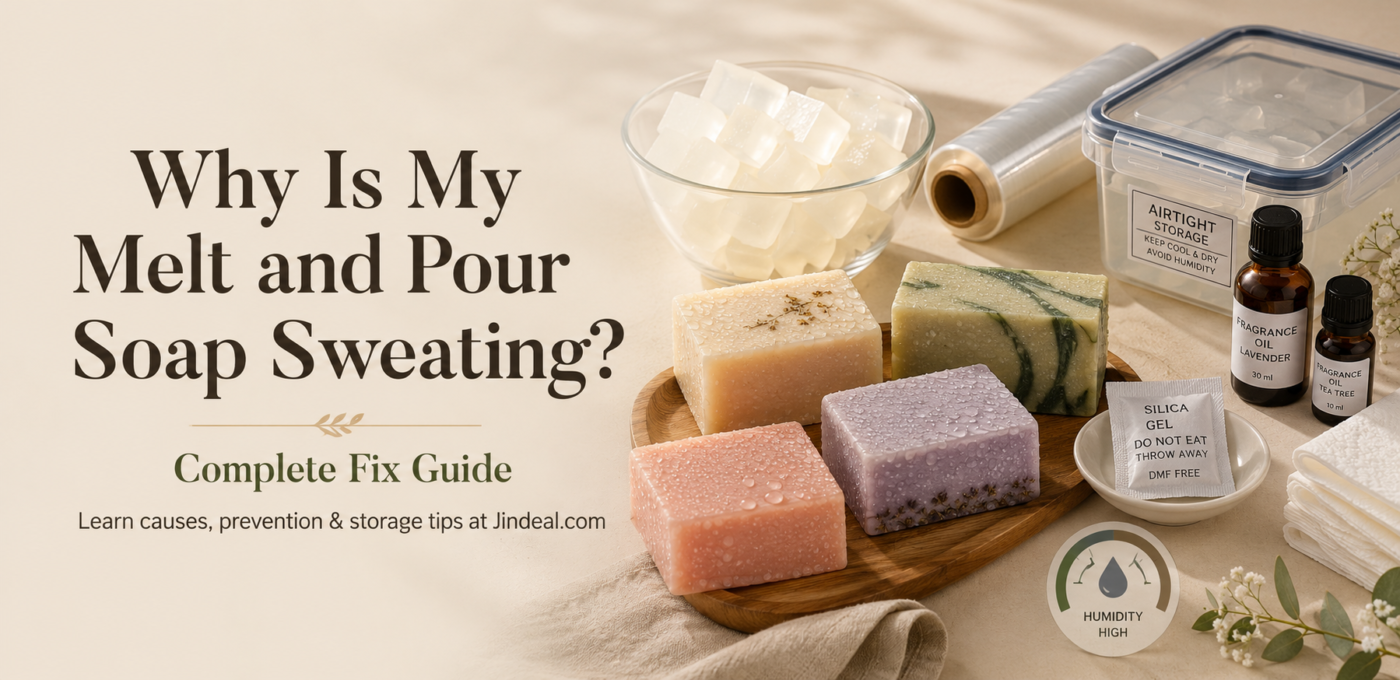
Soap sweating is the appearance of small water droplets, sticky moisture, or a glossy wet layer on the surface of melt and pour soap. It is also commonly called glycerin dew.
Melt and pour soap base usually contains glycerin, which helps make soap moisturizing and skin-friendly. However, glycerin is humectant in nature, which means it attracts moisture from the surrounding air. When humidity is high, the soap surface can pull moisture and look sweaty.
This issue is very common in humid weather, rainy season, coastal areas, poorly packed soaps, and soaps with extra liquid additives. The good news is that soap sweating can be controlled with correct handling, storage, and packaging.
For melt and pour soap base, ultra clear soap base, white soap base, fragrance oils, soap colors, silicone molds, shrink wrap, and DIY soap-making supplies, visit Jindeal.com.
What Causes the Problem?
Melt and pour soap sweating usually happens due to moisture, humidity, extra liquids, improper storage, or delayed wrapping. It does not always mean the soap is spoiled, but it can make the product look sticky, wet, and less professional.
Common causes include:
- High humidity in the room or weather
- Glycerin attracting moisture from the air
- Soap left open for too long after demolding
- Not wrapping soap tightly after making
- Adding too much fragrance oil
- Adding extra water, aloe vera juice, milk, or liquid extracts
- Using too much liquid color
- Overheating the soap base
- Storing soap in bathroom, kitchen, or damp area
- Using loose paper packaging without barrier protection
- Sudden temperature changes during storage or shipping
For example, if you make a beautiful glycerin soap and keep it open overnight in humid weather, it may start developing moisture on the surface by the next day. This is why quick and airtight wrapping is important for melt and pour soap.
Soap Sweating Fix Chart
Use this chart to quickly identify the reason for soap sweating and the best solution.
| Problem | Likely Cause | Best Fix |
|---|---|---|
| Water droplets on soap | High humidity and glycerin dew | Wrap soap tightly and store in dry area |
| Sticky soap surface | Extra liquid additive or too much fragrance | Reduce liquid additives and follow usage percentage |
| Soap sweats after demolding | Soap left open too long | Wrap after cooling and drying surface |
| Soap sweats inside packaging | Soap packed while warm or stored in heat | Cool fully before wrapping and avoid hot storage |
| Soap looks foggy or wet | Moisture trapped on surface | Wipe gently, air-dry shortly, then shrink wrap |
| Soap sweats during shipping | Heat, humidity, and temperature change | Use airtight wrapping and protective packaging |
Step-by-Step Solution
Step 1: Let the Soap Cool Completely
After pouring melt and pour soap into the mold, let it cool fully before demolding. If soap is removed too early or packed while warm, moisture may get trapped inside packaging.
Wait until the soap becomes firm, cool to touch, and properly set. Do not put warm soap directly into plastic wrapping.
Step 2: Remove Surface Moisture
If your soap already has light sweating, gently wipe the surface with a clean soft tissue or lint-free cloth. Do not rub too hard because it may damage the design or finishing.
Let the soap sit for a short time in a dry room before wrapping. Avoid keeping it open for many hours in humid weather.
Step 3: Reduce Extra Liquid Additives
Do not add too much water-based ingredient to melt and pour soap. Extra liquids can make the soap soft, sticky, and more likely to sweat.
Be careful with:
- Aloe vera juice
- Milk
- Floral water
- Herbal extracts
- Liquid colors
- Excess fragrance oil
Step 4: Use Correct Fragrance Percentage
Too much fragrance oil can make melt and pour soap oily, sticky, or soft. Always follow the recommended usage percentage from the fragrance supplier.
Step 5: Wrap Soap Tightly
Wrapping is the most important fix for melt and pour soap sweating. Use shrink wrap, cling wrap, or airtight packaging that creates a barrier between soap and humid air.
Make sure the wrapping touches the soap surface properly and does not leave large air gaps.
Step 6: Use Airtight Packaging
For selling, use proper packaging like shrink wrap plus box, airtight pouch, soap sleeve with barrier wrap, or sealed packaging. Paper packaging alone may not protect soap from moisture.
Step 7: Store in a Cool and Dry Place
Keep finished soaps away from bathroom, kitchen, open windows, damp cupboards, and direct sunlight. Use a cool, dry room for storage.
If your area is very humid, use silica gel packets in storage boxes, but do not place loose silica directly touching the soap.
Step 8: Control Humidity During Production
If possible, make and pack soaps in a dry room. During rainy season or humid weather, use a fan, air conditioner, or dehumidifier to reduce moisture in the room.
Step 9: Test Packaging Before Selling
Before selling bulk soap, pack a few sample soaps and keep them for several days in your normal storage condition. Check if they sweat, soften, or lose appearance.
Step 10: Improve Formula for Business Use
If you are selling soap commercially, keep the formula simple and stable. Avoid too many liquid additives and record every batch so you can repeat your best result.
Common Mistakes
1. Leaving Soap Open Overnight
Melt and pour soap should not be left open for long in humid weather. It can attract moisture quickly.
2. Packing Soap While Warm
Warm soap can trap condensation inside packaging. Always cool fully before wrapping.
3. Adding Too Much Liquid
Extra water-based ingredients can make soap sticky, soft, and more likely to sweat.
4. Using Too Much Fragrance Oil
Excess fragrance oil can cause oily surface, softness, poor texture, and sweating-like appearance.
5. Using Loose Paper Packaging Only
Paper sleeves look premium but do not stop humidity. Use shrink wrap or barrier packaging first.
6. Storing Soap in Damp Areas
Bathrooms, kitchens, and damp rooms can increase sweating. Store soap in a cool dry area.
7. Overheating Soap Base
Overheating can affect soap texture and moisture balance. Melt slowly using gentle heat.
8. Not Testing Before Selling
Always test soap storage and packaging before selling, especially during rainy or humid season.
9. Using Too Much Powder or Additive
Excess powders, clays, or herbs can affect texture and may create uneven surface appearance.
10. Ignoring Local Weather
Humidity changes by location and season. Packaging strategy should change according to weather conditions.
Expert Tips
- Use good-quality melt and pour soap base.
- Do not overheat soap base while melting.
- Avoid adding extra water-based liquids.
- Use fragrance oil within recommended percentage.
- Let soap cool completely before wrapping.
- Wrap soap tightly with shrink wrap or airtight film.
- Store finished soaps in a cool and dry room.
- Use silica gel in storage boxes during humid season.
- Do not store soap in bathrooms, kitchens, or damp cupboards.
- Test soap packaging for 3 to 7 days before selling.
- Keep formula and batch records for repeat production.
- Buy soap base, molds, fragrance oils, colors, clays, herbs, and packaging from Jindeal.com.
FAQ
1. Why is my melt and pour soap sweating?
Melt and pour soap sweats because glycerin attracts moisture from humid air. This creates water droplets or a sticky layer on the soap surface.
2. Is soap sweating dangerous?
Soap sweating is usually not dangerous, but it can make soap look sticky, wet, and less professional. Check smell and texture before use.
3. How do I stop melt and pour soap from sweating?
Let the soap cool completely, avoid extra liquid additives, wrap it tightly, and store it in a cool dry place.
4. Should I wrap melt and pour soap?
Yes, melt and pour soap should be wrapped tightly, especially in humid weather. Shrink wrap or airtight film works well.
5. Can I use paper packaging for melt and pour soap?
Paper packaging alone may not stop moisture. Use shrink wrap or barrier wrapping first, then add paper sleeve or box for presentation.
6. Why does soap sweat inside packaging?
This can happen if soap was packed while warm, stored in heat, or exposed to temperature changes during storage or shipping.
7. Can too much fragrance oil cause sweating?
Yes, too much fragrance oil can make soap soft, oily, sticky, or sweaty-looking. Always follow recommended usage percentage.
8. Can I add aloe vera juice or milk to melt and pour soap?
Extra liquid ingredients can increase softness and sweating. Use them carefully and in very small tested amounts.
9. Does clear soap base sweat more?
Clear glycerin-rich soap bases may show sweating more clearly in humid weather. Proper wrapping helps reduce the issue.
10. Can I fix soap that already sweated?
Yes, gently wipe the surface, let it dry briefly in a dry room, and wrap it tightly. If the soap is very soft or smells bad, do not sell it.
11. Should I store handmade soap in the fridge?
Regular fridge storage is not recommended because condensation can form when soap is removed. A cool, dry room is better.
12. How long should I wait before wrapping melt and pour soap?
Wrap after the soap is fully cool, firm, and dry on the surface. Do not leave it open for too long in humid weather.
13. Does humidity affect handmade soap?
Yes, high humidity is one of the biggest reasons for melt and pour soap sweating.
14. What packaging is best for melt and pour soap?
Shrink wrap, airtight film, sealed pouches, and boxes with inner wrapping are good options for melt and pour soap.
15. Where can I buy soap-making materials?
You can buy melt and pour soap base, silicone molds, fragrance oils, soap colors, clays, herbs, packaging, and DIY supplies from Jindeal.com.
Final Words
Melt and pour soap sweating is a common issue, especially in humid weather. It usually happens because glycerin attracts moisture from the air. With proper cooling, reduced liquid additives, correct fragrance use, tight wrapping, and dry storage, you can control this problem and make your soaps look professional.
For soap bases, silicone molds, fragrance oils, soap colors, essential oils, clays, herbal powders, shrink wrap, and DIY soap-making supplies, visit Jindeal.com.
Fix Soap Sweating with Better Soap-Making Supplies
Shop melt and pour soap base, molds, fragrance oils, colors, clays, packaging, and DIY cosmetic raw materials from Jindeal.com.
