
Soap Base, Uncategorized
Why Is My Soap Too Soft and Not Hardening?
Jun
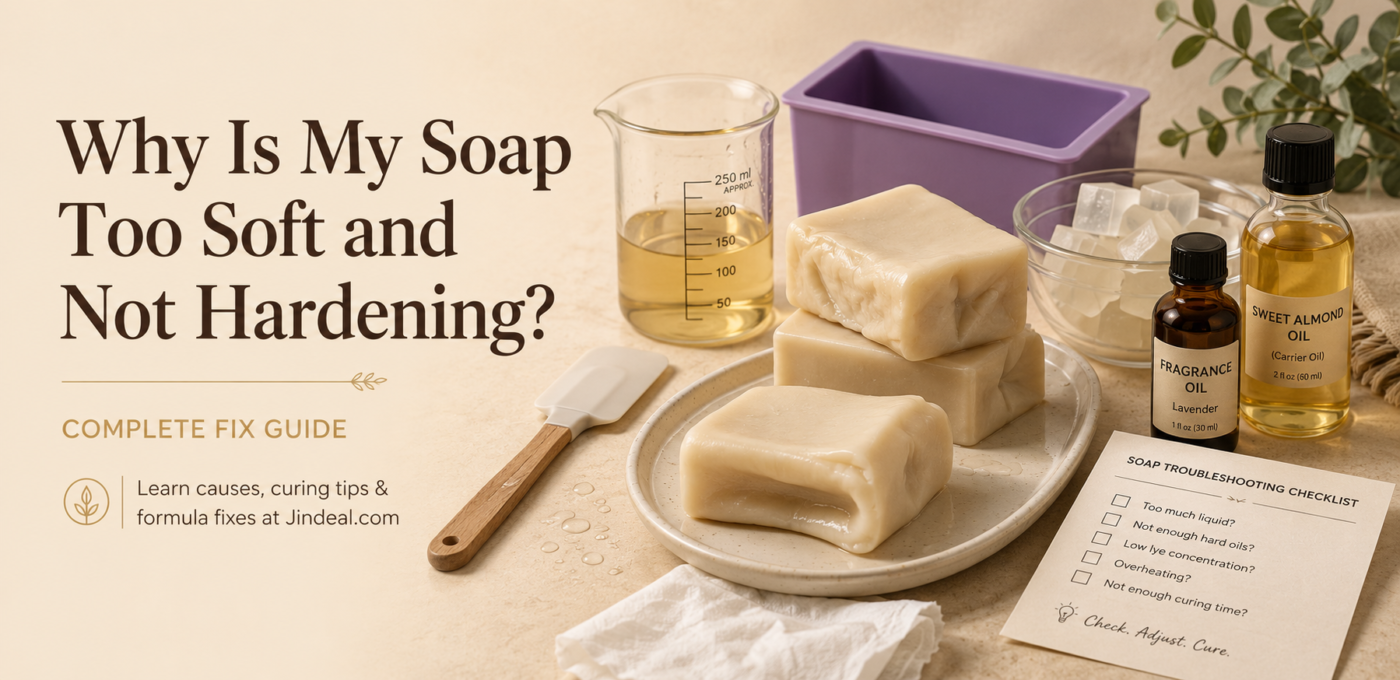
Why Is My Soap Too Soft and Not Hardening? Complete Fix Guide
Learn why handmade soap, melt and pour soap, or DIY soap becomes soft, sticky, bendy, oily, or slow to harden, and how to fix it with better formula, cooling, curing, storage, and ingredients.
Quick Answer
Soap becomes too soft when it has too much liquid, excess fragrance oil, wrong soap base, overheating, poor cooling, high humidity, or an unbalanced formula. To fix it, reduce liquid additives, measure fragrance correctly, allow proper cooling or curing time, store in a dry place, and test small batches first.
Table of Contents
What Does Soft Soap Mean?
Soft soap means the soap is not firm enough after making. It may feel bendy, sticky, rubbery, oily, wet, or difficult to demold. In melt and pour soap, softness usually happens due to overheating, extra liquid additives, too much fragrance oil, humidity, or poor wrapping. In cold process soap, softness may happen because of too much soft oil, excess water, wrong lye calculation, or insufficient curing time.
A good soap should feel firm, stable, easy to demold, and comfortable to use. If your soap remains soft for a long time, the formula or process needs correction.
This guide is mainly helpful for melt and pour soap makers, handmade soap businesses, DIY skincare creators, and beginners who want consistent soap quality.
For melt and pour soap base, glycerin soap base, white soap base, goat milk soap base, shea butter soap base, fragrance oils, soap colors, silicone molds, clays, herbal powders, and DIY cosmetic raw materials, you can visit Jindeal.com.
What Causes the Problem?
Soap becomes too soft when the balance of base, liquid, fragrance, additives, heat, and storage is not correct. The exact reason depends on the soap-making method.
Common causes include:
- Adding too much fragrance oil
- Adding extra water, milk, aloe vera juice, or floral water
- Using too much liquid color
- Overheating melt and pour soap base
- Demolding soap before it sets properly
- Using too many oils or butters in melt and pour soap
- Using a soft or low-quality soap base
- High humidity or poor storage
- Not wrapping melt and pour soap properly
- Using too much clay, powder, or botanical additive
- For cold process soap: excess water, wrong lye calculation, or too many soft oils
- Insufficient curing time for cold process soap
For example, if you add 5% fragrance oil into melt and pour soap base when the recommended level is 1% to 3%, the soap may become oily, soft, sticky, or sweaty. Similarly, adding too much aloe vera juice or milk can disturb the soap base and reduce hardness.
Soft Soap Fix Chart
Use this quick chart to identify the reason your soap is too soft and the best fix.
| Problem | Likely Cause | Best Fix |
|---|---|---|
| Soap feels sticky or oily | Too much fragrance oil or liquid additive | Reduce fragrance and liquids; follow usage percentage |
| Soap bends after demolding | Demolded too early or base not fully set | Allow more cooling time before demolding |
| Soap stays soft overnight | Too much liquid, overheating, or humid storage | Use less liquid, melt gently, store dry |
| Soap sweats and becomes soft | High humidity and glycerin dew | Wrap tightly and store in a cool dry place |
| Soap breaks while removing from mold | Not fully hardened or mold design too tight | Wait longer, chill briefly, use flexible silicone mold |
| Cold process soap is soft after days | High water, soft oils, wrong lye, or incomplete cure | Check formula and allow full curing time |
Step-by-Step Solution
Step 1: Identify Your Soap Type
First, check whether you are making melt and pour soap or cold process soap. The fix is different for each method.
Softness is commonly caused by extra liquids, excess fragrance, overheating, humidity, or demolding too early.
Softness may come from excess water, soft oil balance, incorrect lye calculation, or insufficient curing.
Step 2: Check Fragrance Oil Quantity
Too much fragrance oil is one of the most common reasons for soft melt and pour soap. For many melt and pour soaps, 1% to 3% fragrance oil is used as a general range, depending on supplier recommendation.
Always check the fragrance supplier guideline and avoid guessing by drops.
Step 3: Reduce Extra Liquid Additives
Melt and pour soap base is already balanced. Adding too much water, milk, aloe vera juice, floral water, liquid extract, or liquid color can make it soft or sticky.
Use powders, clays, and additives carefully. Too much additive can also disturb texture.
Step 4: Melt Soap Base Gently
Overheating can change the texture of melt and pour soap. Cut soap base into small cubes and melt slowly using short microwave bursts or a double boiler.
Do not boil the soap base. Stir gently and avoid unnecessary reheating.
Step 5: Let Soap Cool Fully Before Demolding
If soap bends or breaks while demolding, it may simply need more setting time. Let it cool fully at room temperature. For detailed molds, wait longer before removing.
You can place the mold in a cool area for a short time, but avoid long fridge storage because condensation may form later.
Step 6: Control Humidity
High humidity can make glycerin-rich melt and pour soap sweat and feel soft. Store soaps in a cool, dry room and wrap them tightly after cooling.
Step 7: Use Proper Packaging
For melt and pour soap, shrink wrap or airtight packaging helps protect the soap from air moisture. Paper wrapping alone may not prevent softness or sweating in humid weather.
Step 8: Test Small Batches First
Before making bulk soap, test 100g to 250g batches. Check hardness, sweating, fragrance, lather, color, and storage performance for a few days.
Step 9: Improve Your Formula
If your soap remains too soft, simplify your formula. Use a good soap base, reduce liquid additives, reduce fragrance oil, and keep notes of every batch.
Step 10: Decide Whether to Rebatch or Discard
If melt and pour soap is slightly soft, you may remelt it and add more soap base to dilute excess fragrance or liquid. If it smells bad, has mold growth, separates badly, or feels unsafe, do not sell or use it.
Common Mistakes
1. Adding Too Much Fragrance Oil
Excess fragrance oil can make soap soft, oily, sticky, and sweaty. Always measure by weight.
2. Adding Extra Water or Juice
Melt and pour soap does not need extra water. Too much liquid can reduce hardness and shelf stability.
3. Demolding Too Early
If soap is removed too soon, it may bend, dent, or break. Let it set fully first.
4. Overheating the Soap Base
High heat can damage texture and reduce soap quality. Melt gently and slowly.
5. Using Too Much Liquid Color
Too much liquid color can soften soap and may stain or bleed.
6. Using Poor-Quality Soap Base
A low-quality or unsuitable soap base may stay soft or perform inconsistently.
7. Not Wrapping Soap Properly
Open soap can absorb moisture from the air and become sticky or soft.
8. Storing Soap in Humid Areas
Bathroom, kitchen, or damp storage areas can increase sweating and softness.
9. Adding Too Many Oils and Butters
Extra carrier oils or butters can reduce hardness in melt and pour soap if used excessively.
10. Selling Without Stability Testing
Always test soap for hardness, sweating, smell, and packaging performance before selling.
Expert Tips
- Use good-quality melt and pour soap base.
- Measure fragrance oil by weight, not by drops.
- Keep fragrance oil around the supplier-recommended level.
- Avoid adding extra water, milk, or juice to melt and pour soap.
- Melt soap base gently and avoid boiling.
- Let soap cool fully before demolding.
- Use flexible silicone molds for easy demolding.
- Wrap melt and pour soap tightly after cooling.
- Store finished soap in a cool and dry place.
- Make small test batches before large production.
- Keep formula records for repeat quality.
- Buy soap base, molds, fragrance oils, colors, clays, herbs, and packaging from Jindeal.com.
FAQ
1. Why is my soap too soft?
Soap can become too soft because of excess fragrance oil, extra liquid additives, overheating, poor cooling, high humidity, or an unbalanced formula.
2. Why is my melt and pour soap not hardening?
Melt and pour soap may not harden if too much liquid, fragrance, oil, or color was added, or if it was demolded before fully setting.
3. Can too much fragrance oil make soap soft?
Yes. Too much fragrance oil can make soap soft, sticky, oily, sweaty, or unstable.
4. Can I fix soft melt and pour soap?
If the soap is only slightly soft, you can remelt it and add more soap base to dilute excess liquid or fragrance. Do not use soap that smells bad or looks spoiled.
5. How long does melt and pour soap take to harden?
Most melt and pour soaps harden within a few hours, depending on mold size, room temperature, and formula. Larger molds may need more time.
6. Should I put soft soap in the fridge?
You can chill it briefly to help demold, but long fridge storage may cause condensation and sweating later.
7. Does humidity make soap soft?
Yes. Humidity can make glycerin-rich melt and pour soap sweat and feel sticky or soft.
8. Can extra oil make soap soft?
Yes. Adding too much carrier oil or butter to melt and pour soap can reduce hardness and affect lather.
9. Why is my soap oily on top?
An oily top can happen when too much fragrance oil, carrier oil, or additive was added and did not mix properly.
10. Can liquid color make soap soft?
Yes, too much liquid color can affect texture, softness, and color bleeding.
11. How can I make melt and pour soap harder?
Use a good soap base, avoid extra liquids, keep fragrance within limits, cool fully, and store in a dry place.
12. Why is cold process soap soft after 24 hours?
Cold process soap may still be soft after 24 hours due to high water, soft oils, low temperature, or formula balance. It may need more time to harden.
13. Can I sell soap that is slightly soft?
No. Soap should be properly firm, stable, and tested before selling. Soft soap can look unprofessional and may create customer complaints.
14. Does wrapping help soap hardness?
Wrapping does not harden the soap itself, but it protects melt and pour soap from humidity, sweating, and sticky surface issues.
15. Where can I buy soap-making materials?
You can buy melt and pour soap base, silicone molds, fragrance oils, soap colors, clays, herbal powders, packaging, and DIY supplies from Jindeal.com.
Final Words
Soft soap is a common problem for beginners, especially when using melt and pour soap base with too much fragrance, liquid color, extra oil, or water-based additives. The fix is to simplify your formula, measure ingredients correctly, avoid overheating, allow proper setting time, and store soap in dry conditions.
For soap bases, silicone molds, fragrance oils, soap colors, essential oils, clays, herbal powders, shrink wrap, and DIY soap-making supplies, visit Jindeal.com.
Make Firmer, Better Handmade Soap with Jindeal.com
Shop melt and pour soap base, molds, fragrance oils, colors, clays, packaging, and DIY cosmetic raw materials from Jindeal.com.
