
Uncategorized
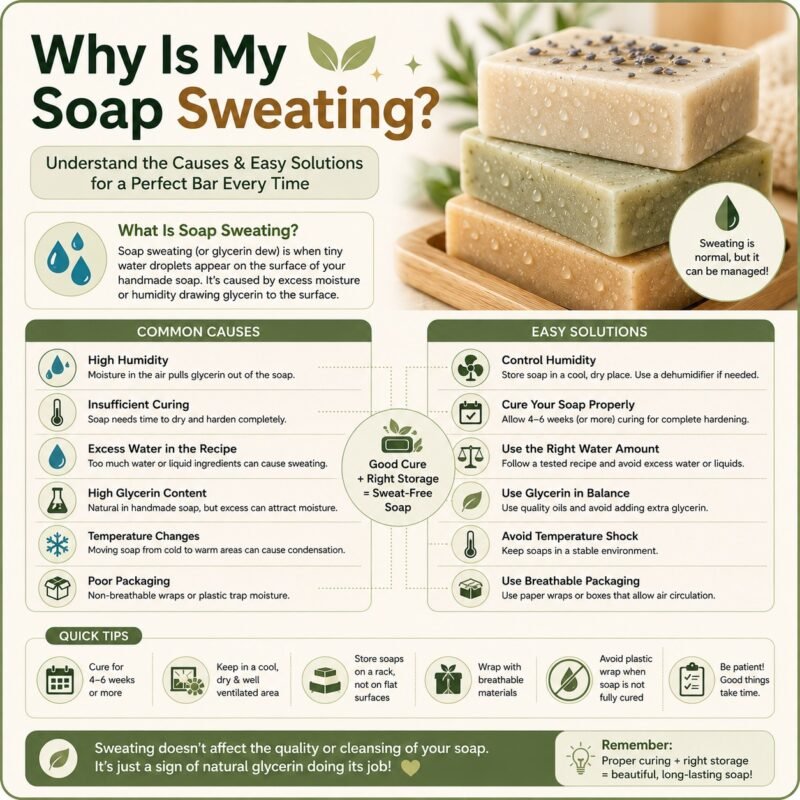
Why Is My Soap Sweating?
Jun
Why Is My Soap Sweating?
Learn why melt and pour soap develops water droplets, sticky surface, glycerin dew, wet packaging, or moisture marks — and how to prevent soap sweating with better formula, storage, wrapping, and packaging.
Quick Answer
Soap sweating usually happens when glycerin-rich melt and pour soap attracts moisture from the air. This moisture appears as tiny droplets, sticky surface, or wet packaging. High humidity, open storage, poor wrapping, excess fragrance oil, too many liquid additives, and hot/cold temperature changes can make sweating worse. To prevent it, wrap soap soon after cooling, store in a cool dry place, use moisture-resistant packaging, avoid overloading fragrance or oils, and test every soap batch before selling.
Table of Contents
What Is Soap Sweating?
Soap sweating means small water droplets or sticky moisture appearing on the surface of soap. In melt and pour soap, this is commonly called glycerin dew. It is not usually soap “melting”; it is moisture being attracted from the air and collecting on the soap surface.
Melt and pour soap bases often contain glycerin, which is a humectant. Humectants attract moisture. This is useful in skincare feel, but it also means the soap can pull moisture from humid air if left uncovered.
For melt and pour soap base, fragrance oils, soap colors, clays, herbal powders, silicone molds, soap boxes, shrink wrap, and packaging supplies, visit Jindeal.com.
Main Causes of Soap Sweating
Soap Sweating Troubleshooting Chart
| Problem Seen | Possible Cause | Best Fix |
|---|---|---|
| Tiny water droplets on soap | High humidity and glycerin dew | Wrap soap quickly and store in dry area |
| Sticky surface | Humidity, excess fragrance or liquid additives | Reduce additives and use better packaging |
| Wet soap box | Soap was packed without moisture barrier | Use shrink wrap or inner wrap before boxing |
| Label peeling | Moisture or oil on packaging | Use moisture-resistant label and protect soap first |
| Soap becomes soft | Too much fragrance/oil/additive | Lower fragrance and additive percentage |
| Soap sweats after fridge storage | Condensation after cold-to-warm shift | Avoid fridge storage for finished soap |
| Soap sweats during monsoon | Very high room humidity | Use dehumidifier/dry storage and airtight packaging |
How to Prevent Soap Sweating
1. Wrap Soap Soon After Cooling
After soap is fully cooled and firm, wrap it as soon as possible. Do not leave melt and pour soap open overnight in humid weather.
2. Use Moisture-Resistant Packaging
For melt and pour soap, shrink wrap, tight pouches, or clear moisture-barrier wrapping helps reduce exposure to humid air.
3. Store in a Cool, Dry Place
Keep finished soap away from bathrooms, kitchens, damp rooms, direct sunlight, and high heat.
4. Control Fragrance Oil Level
Use fragrance oil within recommended range. For many melt and pour soaps, 1% to 3% is a common beginner range, but always follow supplier guidance.
5. Avoid Too Many Liquid Additives
Adding extra oils, water-based extracts, liquid colors, milk, or watery ingredients can increase softness and sweating risk.
6. Use Dry Additives Carefully
Clays, herbal powders, and botanicals should be dry, fine, and used in controlled quantity. Too much powder can affect texture and appearance.
7. Use a Dehumidifier During Monsoon
In humid cities and monsoon weather, a dehumidifier or air-conditioned dry room can help reduce sweating during production and storage.
8. Test Before Bulk Selling
Make a sample batch and store it for 7, 15, and 30 days to check sweating, fragrance, color, hardness, and packaging condition.
Best Packaging for Sweaty Soap
Packaging is the biggest practical solution for melt and pour soap sweating. Open boxes alone may look premium, but they may not protect glycerin soap from moisture.
| Packaging Type | Best For | Benefit | Limitation |
|---|---|---|---|
| Shrink Wrap | Melt and pour soap | Strong moisture protection and clear display | Needs neat heat sealing |
| Clear Soap Pouch | Budget and retail soaps | Easy packing and moisture protection | May look basic without label design |
| Soap Box + Inner Wrap | Premium soap | Gift look plus protection | Higher cost |
| Butter Paper Only | Natural-style soap presentation | Handmade look | Weak moisture protection for melt and pour soap |
| Soap Sleeve | Low-cost branding | Good display and label space | Does not protect full soap from humidity |
| Airtight Storage Box | Bulk stock storage | Reduces moisture exposure before dispatch | Must be clean and dry |
Fragrance Oil and Soap Sweating
Fragrance oil can affect soap texture and sweating. If you add too much fragrance or use a fragrance that is not compatible with the soap base, the soap may become soft, sticky, oily, or wet-looking.
| Fragrance Issue | What Happens | Fix |
|---|---|---|
| Too Much Fragrance | Soft or oily soap surface | Use recommended percentage |
| Poor Mixing | Fragrance pockets or oily marks | Mix gently and evenly |
| Wrong Fragrance Type | Soap sweating, discoloration or poor texture | Use soap-compatible fragrance oil |
| Fragrance Added Too Hot | Weaker scent and possible instability | Add at suitable melted soap temperature |
| No Batch Testing | Problem appears after packing | Test each fragrance in small batch first |
Storage Tips to Stop Soap Sweating
| Storage Condition | Best Practice | Avoid |
|---|---|---|
| Humidity | Keep soap in dry room | Bathroom, kitchen, damp room |
| Temperature | Cool, stable room temperature | Direct sunlight, hot shelves, car storage |
| Air Exposure | Wrap finished soap quickly | Leaving soap open for many hours |
| Fridge | Usually avoid for finished soap | Condensation after taking out |
| Bulk Stock | Airtight dry container or sealed cartons | Open trays in humid air |
| Dispatch | Pack in dry carton with protection | Wet box, poor tape, loose wrapping |
- Use silica gel in storage cartons only if suitable and kept away from direct product contact.
- Keep soap stock away from water sources and open windows during monsoon.
- Do not pack soap while it is warm.
- Do not store finished soap near open fragrance bottles or strong odors.
- Check older batches weekly during humid weather.
Can You Sell Soap That Sweated?
If soap has light glycerin dew but still smells normal, looks clean, and has stable texture, it may be repacked after wiping and drying in a clean, dry area. However, if the soap is very sticky, smells bad, has visible contamination, oily leakage, damaged packaging, or poor appearance, do not sell it as a fresh premium product.
| Soap Condition | Can It Be Sold? | Action |
|---|---|---|
| Light surface dew only | Possibly after inspection | Wipe, dry, repack and observe |
| Wet packaging but soap looks fine | Use caution | Replace packaging and check again |
| Very sticky soap | Not recommended | Review formula and storage |
| Bad smell | No | Do not sell |
| Visible dirt or contamination | No | Do not sell |
| Oily surface from excess fragrance | No | Reduce fragrance in next batch |
Common Mistakes
1. Leaving Soap Open Overnight
Melt and pour soap can start sweating quickly in humid weather when left open.
2. Using Only Paper Wrap
Paper looks natural but may not protect glycerin soap from humidity.
3. Adding Too Much Fragrance Oil
High fragrance load can make soap soft, oily, or sticky.
4. Adding Too Many Oils
Melt and pour soap is already a finished base. Extra oils can reduce hardness and stability.
5. Packing Warm Soap
Warm soap can create condensation and packaging marks.
6. Storing in Fridge
Cold soap can sweat when brought back into warm room air.
7. No Humidity Control
Monsoon and humid rooms need better storage and packaging.
8. Using Poor Labels
Labels can peel when soap sweats. Use moisture-resistant labels and inner wrap.
9. Not Testing Packaging
Test soap with final packaging for at least a few days before bulk selling.
10. Selling Sweaty Soap Without Inspection
Wet packaging and sticky soap can damage brand image and customer trust.
FAQ
1. Why is my soap sweating?
Soap sweating usually happens because glycerin-rich melt and pour soap attracts moisture from humid air.
2. Is soap sweating dangerous?
Light glycerin dew is common in melt and pour soap, but very sticky, dirty, bad-smelling, or unstable soap should not be sold.
3. How do I stop melt and pour soap from sweating?
Wrap soap quickly after cooling, store in a dry place, use moisture-resistant packaging, reduce excess fragrance/additives, and avoid humid storage.
4. Should I store soap in the fridge?
Finished soap is usually better stored in a cool, dry room. Fridge storage can create condensation when soap returns to room temperature.
5. What is glycerin dew?
Glycerin dew is moisture collected on glycerin-rich soap due to humidity in the air.
6. Does fragrance oil cause soap sweating?
Fragrance oil can make sweating worse if used too much or if it is not compatible with the soap base.
7. How much fragrance oil should I use in melt and pour soap?
A beginner range is commonly 1% to 3% of soap base weight, but always follow supplier usage guidance and test your batch.
8. Can I wipe sweaty soap and repack it?
If the soap only has light dew and is otherwise clean and stable, you may wipe, dry, repack and observe. Do not sell contaminated or bad-smelling soap.
9. Which packaging is best for melt and pour soap?
Shrink wrap, clear moisture-barrier pouches, or inner wrap plus outer soap box work well for many melt and pour soaps.
10. Why is my soap box getting wet?
The soap may be sweating inside the box. Use an inner moisture barrier before boxing.
11. Does handmade soap always sweat?
Not always. Sweating is more common in glycerin-rich melt and pour soap, especially in humid conditions.
12. Can clay reduce soap sweating?
Clays may slightly affect texture, but they are not a complete solution for glycerin dew. Packaging and humidity control are more important.
13. Can soap sweating affect labels?
Yes. Moisture can peel labels, stain paper wraps, and make boxes look damaged.
14. Can I sell soap that has sweated?
Only after careful inspection if it is clean, stable and repacked properly. Do not sell soap that looks damaged, dirty, sticky, oily or smells bad.
15. Where can I buy soap making supplies?
You can buy melt and pour soap base, fragrance oils, essential oils, colors, clays, herbal powders, silicone molds and packaging from Jindeal.com.
Final Words
Soap sweating is common in melt and pour soap because glycerin attracts moisture from humid air. The best solution is not one single ingredient; it is a complete system of correct fragrance percentage, controlled additives, fast wrapping, moisture-resistant packaging, dry storage, and batch testing.
For melt and pour soap base, fragrance oils, colors, clays, herbal powders, silicone molds, soap boxes and packaging, visit Jindeal.com.
Shop Soap Making Supplies on Jindeal.com
Buy melt and pour soap bases, fragrance oils, essential oils, soap colors, mica, cosmetic clays, herbal powders, silicone molds, soap boxes and packaging materials from Jindeal.com.