
Soap Base
How to Add Herbal Powders to Soap Correctly
Jun
How to Add Herbal Powders to Soap Correctly
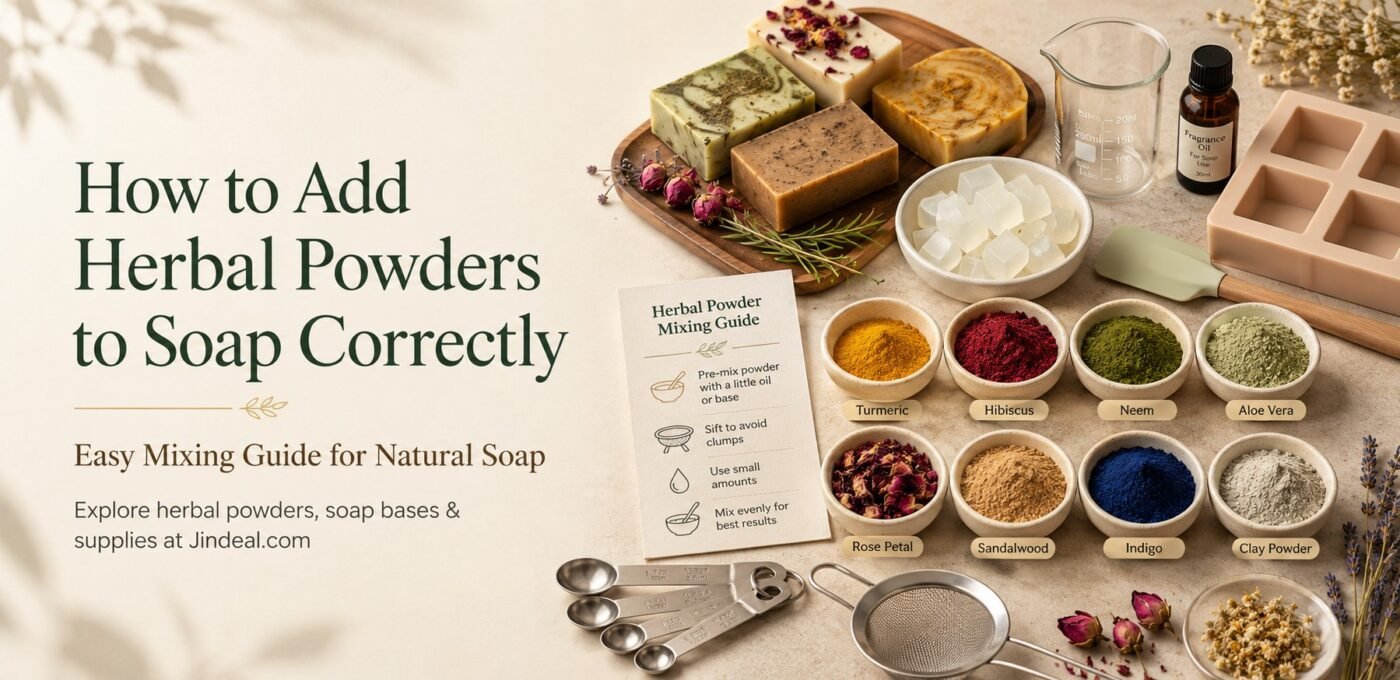
Learn the right way to add turmeric, neem, hibiscus, rose, coffee, charcoal, sandalwood, aloe vera, and other herbal powders to melt and pour soap without lumps, rough texture, color issues, or poor finishing.
Quick Answer
To add herbal powders to soap correctly, use a small amount, pre-mix the powder with a little melted soap base or suitable liquid medium, stir gently, avoid overheating, and test before bulk production. Too much powder can make soap rough, cloudy, soft, crumbly, or reduce lather.
Table of Contents
Why Add Herbal Powders to Soap?
Herbal powders are added to handmade soap to create natural color, mild exfoliation, product theme, label appeal, and a herbal skincare look. They are popular in melt and pour soap, herbal soap, ubtan soap, ayurvedic-style soap, luxury soap, and DIY skincare products.
Common herbal powders used in soap include turmeric powder, neem powder, hibiscus powder, rose petal powder, coffee powder, orange peel powder, aloe vera powder, sandalwood powder, charcoal powder, multani mitti, and other cosmetic-grade botanicals.
However, herbal powders must be used correctly. Adding too much powder or mixing it directly into melted soap can cause lumps, rough texture, cloudy soap, settling, cracks, sweating, soft soap, or poor lather. For business-quality soap, small testing and proper dispersion are very important.
For herbal powders, melt and pour soap base, silicone molds, soap colors, fragrance oils, essential oils, clays, carrier oils, and DIY soap-making supplies, visit Jindeal.com.
What Causes the Problem?
Most herbal powder problems happen because the powder is added too much, added directly without pre-mixing, or not matched with the right soap base. Melt and pour soap is already a finished soap base, so heavy additives can disturb texture and clarity.
Common causes include:
- Adding too much herbal powder
- Adding dry powder directly into melted soap
- Not pre-mixing powder before adding
- Using coarse powder instead of fine cosmetic-grade powder
- Using damp or contaminated powder
- Adding too much oil or liquid to disperse the powder
- Overheating soap base after adding powder
- Using heavy powders in clear soap and expecting full transparency
- Not stirring gently and evenly
- Not testing color change after soap cools
- Not checking whether the powder settles at the bottom
- Using herbal powders without checking skin suitability
For example, if you add too much turmeric powder to clear soap base, the soap can become cloudy, dark, gritty, and may stain. If you add coffee powder directly without dispersing, it can clump and settle at the bottom of the mold.
Herbal Powder Usage Chart
Use this chart as a beginner starting point for melt and pour soap. Always test small batches before selling.
| Herbal Powder | Best Soap Theme | Suggested Beginner Use | Important Note |
|---|---|---|---|
| Turmeric Powder | Ubtan, glow-style soap, herbal soap | Very small amount | Can stain or turn dark if overused |
| Neem Powder | Herbal soap, oily-skin theme soap | Small amount | Strong color and herbal smell |
| Hibiscus Powder | Hair-care theme soap, floral soap | Small amount | Color may change in soap |
| Rose Petal Powder | Luxury floral soap, rose soap | Small amount | May turn brownish over time |
| Coffee Powder | Exfoliating soap, coffee soap | Small amount | Can feel rough if too coarse |
| Charcoal Powder | Black detox-style soap | Very small amount | Can make lather grey or black if overused |
| Orange Peel Powder | Citrus soap, fresh soap | Small amount | May add scrubby texture |
| Aloe Vera Powder | Fresh green soap, soothing-style soap | Small amount | Disperse well to avoid clumps |
| Sandalwood Powder | Premium herbal soap, festive soap | Small amount | Use cosmetic-grade powder only |
| Multani Mitti / Clay | Clay soap, spa soap, oily-skin theme | Small amount | Too much can reduce lather and make soap dry |
Step-by-Step Solution
Step 1: Choose Cosmetic-Grade Herbal Powder
Use clean, dry, fine, cosmetic-grade herbal powders. Avoid food-grade powders with moisture, coarse particles, impurities, or strong contamination risk. Fine powder gives smoother soap and better dispersion.
Step 2: Decide the Soap Theme
Select powder according to product theme. For ubtan soap, turmeric, sandalwood, orange peel, and multani mitti work well. For herbal green soap, neem and aloe vera are common. For coffee soap, coffee powder gives a natural scrub look.
Step 3: Start with a Small Quantity
Do not add too much powder at once. For melt and pour soap, start with a small amount and increase only after testing. Too much powder can make soap rough, cloudy, brittle, or low-lather.
Step 4: Pre-Mix the Powder
Do not add dry powder directly into the full melted soap batch. First pre-mix the powder with a small amount of melted soap base. This makes a smooth slurry and reduces lumps.
You can also disperse some powders with a tiny amount of suitable carrier oil, but avoid adding too much oil because it can soften soap or reduce lather.
Step 5: Melt Soap Base Gently
Cut melt and pour soap base into small cubes and melt gently using short microwave bursts or a double boiler. Do not boil the base. Overheating can affect clarity, texture, fragrance, and final finish.
Step 6: Add the Powder Slurry Slowly
Add the pre-mixed herbal powder slurry into the melted soap base slowly. Stir gently until the powder is evenly distributed. Avoid fast stirring because it can create air bubbles.
Step 7: Add Fragrance and Color Carefully
Herbal powders already add color and natural smell. Add fragrance oil carefully and within supplier-recommended usage. If needed, add soap color drop by drop only after checking the powder color.
Step 8: Pour Before Powder Settles
Some powders settle at the bottom if the soap is too thin or if you wait too long. Pour the soap when it is slightly cooled but still fluid. Stir gently just before pouring.
Step 9: Spray Alcohol for Bubbles
After pouring, spray rubbing alcohol lightly on the soap surface to reduce bubbles. This helps create a smoother finish.
Step 10: Let Soap Set and Check Result
Let soap cool fully before demolding. Check texture, color, lather, smell, sweating, powder settling, and skin feel. Record the result before making a larger batch.
Step 11: Wrap and Store Properly
Wrap melt and pour soap tightly after cooling. Store in a cool, dry place away from moisture and sunlight. Herbal soaps may change color over time, so good packaging is important.
Common Mistakes
1. Adding Too Much Herbal Powder
Too much powder can make soap rough, cloudy, dry, brittle, or low-lather.
2. Adding Powder Directly
Dry powder can form lumps if added directly into melted soap. Always pre-mix first.
3. Using Coarse Powder
Coarse powder can scratch skin and make soap look uneven. Use fine cosmetic-grade powder.
4. Adding Too Much Oil for Dispersion
Too much carrier oil can soften melt and pour soap and reduce lather.
5. Expecting Clear Soap to Stay Transparent
Most herbal powders make clear soap cloudy or opaque. Use clear base only if you want a translucent herbal look.
6. Not Testing Color Change
Many herbal powders change color in soap. Always test before selling.
7. Using Damp Powder
Moist powder can affect soap texture, shelf stability, and product quality.
8. Overheating After Adding Powder
Too much heat after adding powders may darken color, affect fragrance, or change texture.
9. Not Checking Powder Settling
Heavy powders can settle at the bottom if the base is too hot or too thin.
10. Selling Without Stability Testing
Herbal soaps should be tested for color, smell, sweating, hardness, and packaging stability before selling.
Expert Tips
- Use fine cosmetic-grade herbal powders.
- Start with a small amount and increase only after testing.
- Pre-mix powder with a little melted soap base to avoid lumps.
- Do not add too much carrier oil for dispersion.
- Use white or goat milk base for creamy herbal soaps.
- Use clear base only when you want a translucent effect.
- Stir gently to avoid bubbles.
- Pour before heavy powders settle.
- Spray alcohol after pouring to reduce bubbles.
- Wrap melt and pour herbal soaps properly after cooling.
- Keep batch records for repeat production.
- Buy herbal powders, soap bases, molds, fragrance oils, colors, and packaging from Jindeal.com.
FAQ
1. Can I add herbal powders to melt and pour soap?
Yes, herbal powders can be added to melt and pour soap, but they should be used in small tested amounts and pre-mixed properly.
2. How much herbal powder should I add to soap?
Start with a very small amount and test. The right amount depends on the powder type, soap base, color goal, and texture you want.
3. Why does herbal powder make soap cloudy?
Herbal powders are solid particles, so they can reduce transparency, especially in clear soap base.
4. Why does powder settle at the bottom of soap?
Powder settles when the soap base is too hot, too thin, or the powder is heavy. Let the base cool slightly and stir gently before pouring.
5. Should I mix herbal powder with water first?
For melt and pour soap, avoid adding extra water because it can soften soap. Pre-mix with melted soap base or use a very small amount of suitable medium.
6. Can turmeric powder be used in soap?
Yes, turmeric powder is popular for ubtan-style soaps, but it should be used carefully because too much can stain or make the soap dark.
7. Can neem powder be added to soap?
Yes, neem powder can be used in herbal soap themes. It has a strong herbal color and smell, so test first.
8. Can coffee powder be added to soap?
Yes, coffee powder can be used for exfoliating soap. Use fine powder and avoid adding too much to prevent roughness.
9. Can charcoal powder be used in soap?
Yes, charcoal powder can be used for black or detox-style soaps, but use a small amount because it can darken lather.
10. Which soap base is best for herbal powders?
White soap base and goat milk soap base are good for creamy herbal soaps. Clear base is better only if you want a translucent design.
11. Do herbal powders reduce lather?
Too much herbal powder can reduce lather and make soap feel heavy or gritty.
12. Can herbal powders change color in soap?
Yes, many natural powders can change color over time or after mixing with soap base. Always test before bulk production.
13. Can I use homemade herbal powder?
You can, but it must be clean, dry, fine, and suitable for cosmetic use. For business, cosmetic-grade powder is safer and more consistent.
14. How do I avoid lumps in herbal soap?
Pre-mix the herbal powder with a little melted soap base before adding it to the full batch. Stir slowly and evenly.
15. Where can I buy herbal powders for soap making?
You can buy herbal powders, melt and pour soap base, silicone molds, fragrance oils, essential oils, soap colors, clays, and packaging from Jindeal.com.
Final Words
Herbal powders can make handmade soap look natural, premium, and customer-friendly, but they must be added carefully. Use fine cosmetic-grade powders, add small tested amounts, pre-mix before adding, avoid extra water, and check the final texture, color, lather, and storage stability.
For herbal powders, soap bases, silicone molds, fragrance oils, essential oils, soap colors, clays, carrier oils, packaging, and DIY soap-making supplies, visit Jindeal.com.
Make Better Herbal Soap with Jindeal.com
Shop herbal powders, soap bases, molds, fragrance oils, colors, clays, packaging, and DIY cosmetic raw materials from Jindeal.com.
