
Uncategorized
How to Make Body Butter That Stays Soft
Jun
How to Make Body Butter That Stays Soft
Learn how to make soft, creamy, smooth body butter at home using cosmetic butters, carrier oils, vitamin E, fragrance, and the right whipping and cooling method without graininess, hardness, or oily separation.
Quick Answer
To make body butter that stays soft, balance hard butters with soft oils, avoid overheating, cool the melted oils quickly, whip at the right semi-solid stage, and add lightweight carrier oils. Use more liquid oil for softness and avoid too much beeswax or hard butter, which can make body butter stiff.
Table of Contents
What Is Soft Body Butter?
Soft body butter is a rich, creamy, anhydrous skincare product made mainly from butters and oils. It does not contain water, so it feels thicker than lotion but should still be scoopable, spreadable, and smooth on the skin.
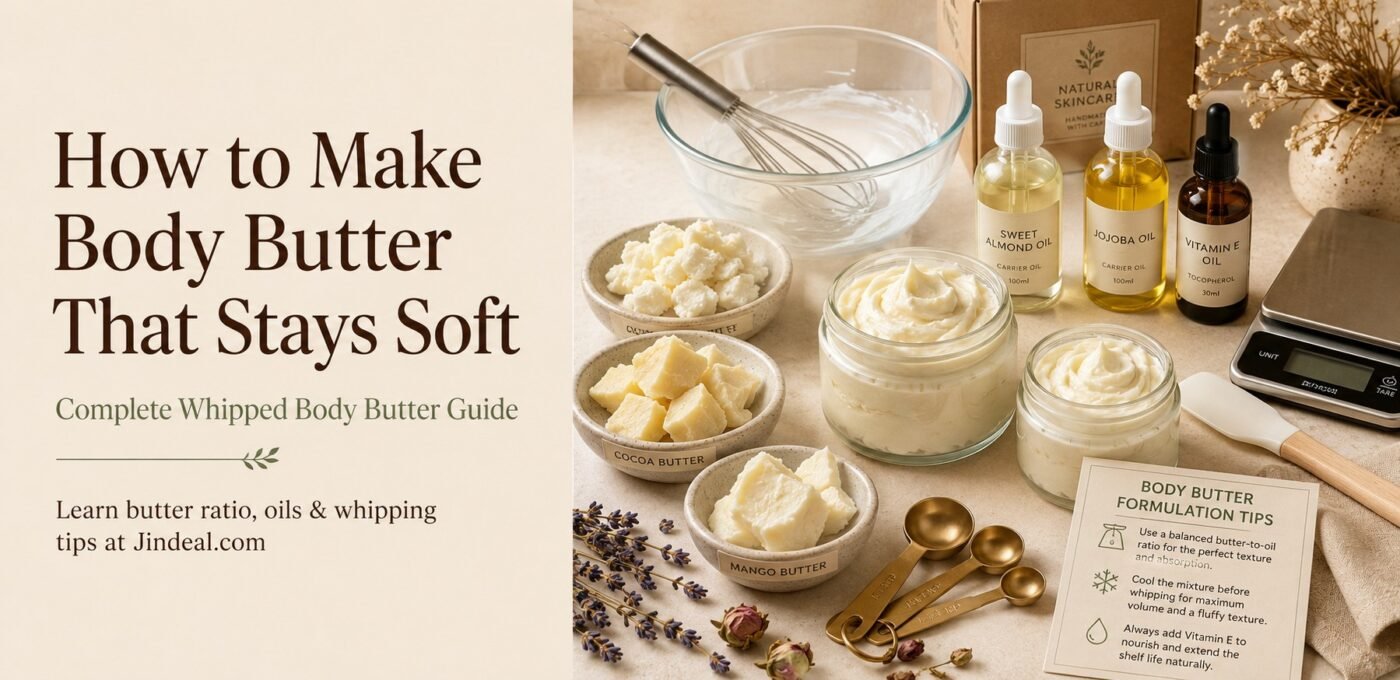
Common body butter ingredients include shea butter, cocoa butter, mango butter, coconut oil, sweet almond oil, jojoba oil, olive oil, grapeseed oil, sunflower oil, vitamin E oil, arrowroot powder, fragrance oil, and essential oil.
The main challenge is texture. Body butter can become too hard, greasy, grainy, oily, sticky, or melted depending on the formula and process. A good soft body butter needs the right ratio of hard butter, soft butter, liquid oil, and optional powder.
For cosmetic butters, carrier oils, vitamin E oil, fragrance oils, essential oils, arrowroot powder, jars, labels, and DIY cosmetic raw materials, visit Jindeal.com.
What Causes the Problem?
Body butter becomes too hard, grainy, or unstable when the formula has too much hard butter, not enough liquid oil, wrong cooling method, overheating, or poor whipping timing.
Common causes include:
- Too much cocoa butter, beeswax, or hard butter
- Not enough liquid carrier oil
- Using too much coconut oil in cold weather
- Overheating shea butter
- Cooling slowly and causing grainy texture
- Whipping when mixture is too liquid
- Whipping when mixture is too hard
- Using heavy oils only, causing greasy feel
- Adding too much arrowroot or powder
- Adding water-based ingredients without preservative
- Storing body butter in very hot or cold conditions
- Not testing formula in local weather
For example, if you make body butter with mostly cocoa butter and coconut oil, it may become very hard in winter. If you cool shea butter slowly, it may develop graininess. If you add too much liquid oil, it may become oily or too loose.
Soft Body Butter Formula Guide
This is a beginner-friendly starting guide for anhydrous whipped body butter. Always test small batches before selling.
| Ingredient Type | Suggested Range | Purpose | Texture Effect |
|---|---|---|---|
| Soft Butter | 40% to 60% | Main creamy body | Smooth, rich, spreadable |
| Hard Butter | 5% to 20% | Adds firmness | Too much makes butter hard |
| Liquid Carrier Oil | 25% to 45% | Softness and glide | More oil makes it softer |
| Arrowroot Powder | 1% to 5% | Reduces greasy feel | Too much can feel powdery |
| Vitamin E Oil | 0.2% to 1% | Antioxidant support | Helps oil freshness |
| Fragrance / Essential Oil | As per supplier safe limit | Aroma | Too much may irritate or thin formula |
Step-by-Step Solution
Step 1: Choose a Balanced Formula
Start with a formula that has enough liquid oil to keep the butter soft. If your body butter is too hard, increase liquid oil. If it is too loose, increase soft butter or a small amount of hard butter.
Step 2: Weigh All Ingredients
Use a digital scale and measure ingredients by weight, not by spoon or cup. This gives repeatable results and helps you adjust texture in future batches.
Step 3: Melt Butters Gently
Melt the butters using a double boiler on low heat. Do not overheat shea butter or cocoa butter. Heat only until melted, then remove from heat.
Step 4: Add Liquid Oils
Add carrier oils such as sweet almond oil, jojoba oil, grapeseed oil, sunflower oil, coconut oil, or olive oil. Stir slowly until everything is uniform.
Step 5: Cool Quickly to Avoid Graininess
Graininess often happens when shea butter cools slowly. Place the melted mixture in a cool area or refrigerator for a short time until it becomes semi-solid, not fully hard.
Step 6: Whip at the Right Stage
Whip the semi-solid mixture with a hand mixer until it becomes light, fluffy, and creamy. If it is too liquid, it will not whip properly. If it is too hard, it may become lumpy.
Step 7: Add Arrowroot Powder
Add arrowroot powder slowly while whipping to reduce greasy feel. Do not add too much because it can make body butter feel dry or powdery.
Step 8: Add Vitamin E and Fragrance
Add vitamin E oil and skin-safe fragrance oil or essential oil. Use fragrance only within supplier-recommended safe limits for leave-on body products.
Step 9: Whip Again
Whip again for a smooth, airy texture. Scrape the sides of the bowl and mix evenly so there are no hard lumps or unmixed oil pockets.
Step 10: Fill Clean Jars
Fill body butter into clean, dry jars. Do not introduce water into the product. Use dry spoons, clean tools, and proper packaging.
Step 11: Test Texture After 24 Hours
Body butter can change texture after setting. Check softness after 24 hours. If too hard, increase liquid oil next time. If too soft, increase butter or reduce liquid oil.
Step 12: Test in Local Weather
Body butter behaves differently in summer and winter. Test your formula in your local climate before making large batches.
Common Mistakes
1. Using Too Much Cocoa Butter
Cocoa butter is firm and can make body butter hard if used too much.
2. Not Adding Enough Liquid Oil
Liquid oils help body butter stay soft and spreadable.
3. Overheating Shea Butter
Overheating can increase the chance of grainy texture.
4. Cooling Too Slowly
Slow cooling may cause grains in shea butter formulas.
5. Whipping Too Early
If the mixture is too liquid, it will not hold fluffy texture.
6. Whipping Too Late
If the mixture is too hard, it may become lumpy and uneven.
7. Adding Water Without Preservative
Water-based ingredients need a proper preservative system. Do not add water casually to body butter.
8. Using Too Much Powder
Too much arrowroot or starch can make the butter feel dry, chalky, or draggy.
9. Using Too Much Fragrance
Body butter is a leave-on product, so fragrance must be used carefully and within safe limits.
10. Not Testing in Summer and Winter
A body butter that is soft in winter may melt in summer. Climate testing is important.
Expert Tips
- Use more liquid oil if body butter is too hard.
- Use less cocoa butter or beeswax for softer texture.
- Cool the melted mixture quickly to reduce graininess.
- Whip when the mixture is semi-solid, not fully liquid.
- Use lightweight oils like sweet almond, jojoba, or grapeseed for better skin feel.
- Add arrowroot powder in small amounts to reduce greasy feel.
- Use vitamin E oil to support oil freshness.
- Use only skin-safe fragrance or essential oil within leave-on limits.
- Do not add water unless you are using a proper preservative system.
- Test texture after 24 hours before changing formula.
- Test in both hot and cold weather before selling.
- Buy shea butter, cocoa butter, mango butter, carrier oils, vitamin E, arrowroot powder, fragrances, and jars from Jindeal.com.
FAQ
1. How do I make body butter that stays soft?
Use enough liquid carrier oil, avoid too much hard butter, cool the melted oils quickly, and whip when the mixture is semi-solid.
2. Why is my body butter too hard?
It may contain too much cocoa butter, beeswax, coconut oil, or hard butter and not enough liquid oil.
3. How do I soften hard body butter?
Remelt gently, add more liquid carrier oil, cool quickly, and whip again at the semi-solid stage.
4. Why is my body butter grainy?
Graininess usually happens when shea butter cools slowly or is overheated. Quick cooling helps reduce grains.
5. Which butter is best for soft body butter?
Shea butter and mango butter are commonly used for soft, creamy body butter. Cocoa butter adds firmness.
6. Which oil is best for body butter?
Sweet almond oil, jojoba oil, grapeseed oil, sunflower oil, and olive oil are popular carrier oils for body butter.
7. Can I add coconut oil to body butter?
Yes, but coconut oil can become firm in cooler weather, so balance it with liquid oils.
8. Why is my body butter too greasy?
It may contain too much heavy oil or not enough powder. Add a small amount of arrowroot powder to reduce greasy feel.
9. Can I add water to body butter?
Do not add water unless you are using a proper emulsifier and preservative system. Oil-only body butter should stay water-free.
10. Does body butter need preservative?
Oil-only body butter usually does not need water-phase preservative, but if water or aloe juice is added, preservation is required.
11. Can I add fragrance oil to body butter?
Yes, but use only fragrance oil suitable for leave-on cosmetic products and follow safe usage limits.
12. Can I add essential oil to body butter?
Yes, if the essential oil is suitable for skin use and used within safe leave-on limits.
13. Why does my body butter melt in summer?
Body butter can melt in heat because it contains oils and butters. Add more firm butter or adjust formula for hot weather.
14. How long should I whip body butter?
Whip until it becomes light, creamy, and fluffy. The exact time depends on batch size, temperature, and mixer power.
15. Where can I buy body butter ingredients?
You can buy shea butter, cocoa butter, mango butter, sweet almond oil, jojoba oil, vitamin E oil, arrowroot powder, fragrance oils, essential oils, jars, and DIY cosmetic raw materials from Jindeal.com.
Final Words
Soft body butter depends on the right balance of butters, oils, cooling, and whipping. If your body butter is too hard, increase liquid oils and reduce hard butters. If it is grainy, melt gently, cool quickly, and whip at the semi-solid stage.
For shea butter, cocoa butter, mango butter, carrier oils, vitamin E, arrowroot powder, fragrance oils, essential oils, jars, labels, and DIY cosmetic raw materials, visit Jindeal.com.
Make Soft Body Butter with Jindeal.com
Shop cosmetic butters, carrier oils, vitamin E oil, arrowroot powder, fragrance oils, essential oils, jars, labels, and DIY cosmetic raw materials from Jindeal.com.
