
Uncategorized
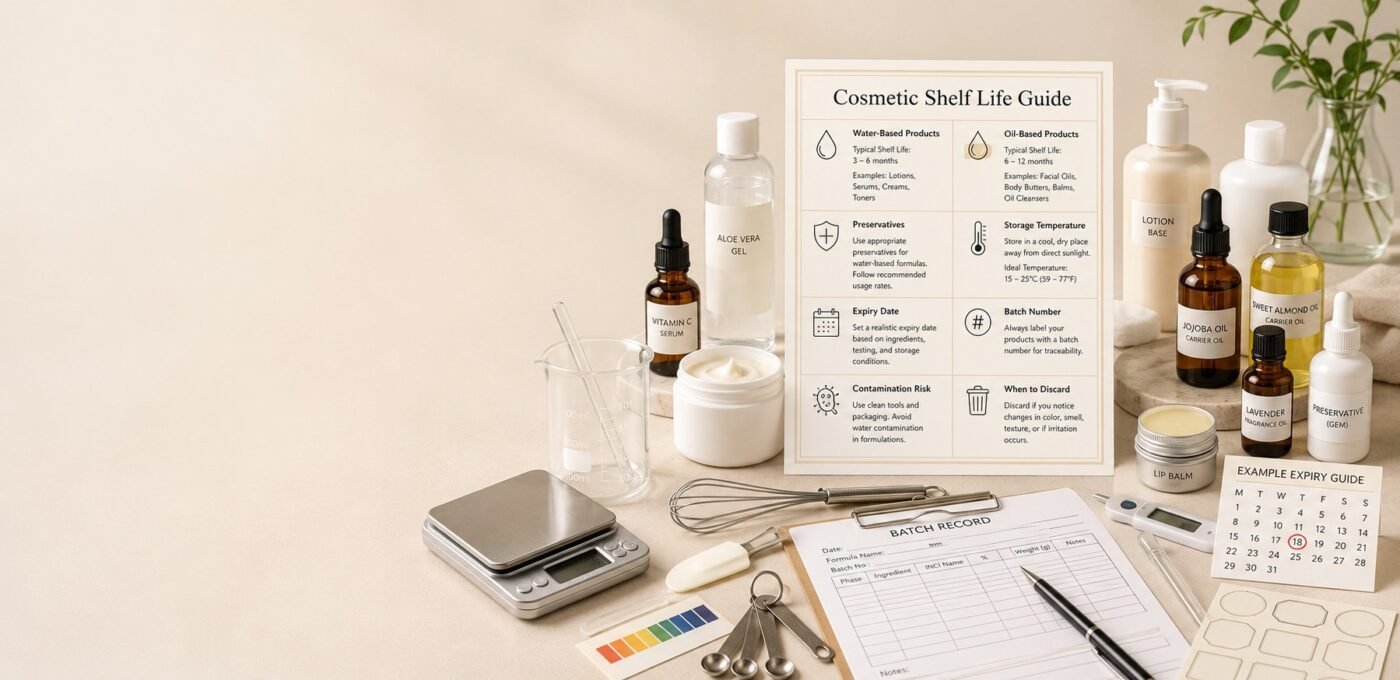
Cosmetic Shelf Life Guide
Jun
Cosmetic Shelf Life Guide
Learn how long handmade cosmetics can last, what affects shelf life, why preservation matters, how to store raw materials and finished products, and how to identify expiry signs in DIY skincare, soap, creams, lotions, oils, butters, scrubs, and masks.
Quick Answer
Cosmetic shelf life depends on formula type, water content, preservative system, raw material freshness, hygiene, packaging, and storage. Oil-only products may oxidize or become rancid, while water-based products need a broad-spectrum preservative. Never use smell alone to judge safety, especially for lotions, creams, gels, and water-containing products.
Table of Contents
What Is Cosmetic Shelf Life?
Cosmetic shelf life means the period during which a cosmetic product stays usable, stable, fresh, and suitable for its intended cosmetic use when stored correctly. Shelf life is affected by ingredients, formulation method, preservative system, packaging, hygiene, light, heat, air, and moisture.
Handmade cosmetics can lose quality in two main ways: oils can oxidize and become rancid, while water-containing products can grow bacteria, yeast, or mold if not preserved properly. A product can look normal but still be unsafe if preservation is weak.
Cosmetic shelf life should not be guessed. For products planned for sale, proper stability observation, preservative selection, batch records, supplier data, and professional testing are important.
For cosmetic preservatives, vitamin E oil, carrier oils, butters, emulsifying wax, jars, bottles, labels, soap bases, clays, herbal powders, and DIY cosmetic raw materials, visit Jindeal.com.
What Affects Shelf Life?
Shelf life is not decided by one ingredient only. It depends on the full formula, the process, the packaging, and how the customer uses and stores the product.
Main factors include:
- Water content in the product
- Use of suitable preservative system
- Freshness and shelf life of raw materials
- Oxidation stability of carrier oils and butters
- Use of antioxidants like vitamin E oil for oil-rich formulas
- Product pH and preservative compatibility
- Clean manufacturing and sanitized packaging
- Type of packaging: jar, bottle, pump, tube, dropper
- Customer contamination during use
- Storage temperature, sunlight, humidity, and air exposure
- Fragrance, essential oil, extracts, and botanical ingredients
- Stability testing and batch records
For example, an oil-only body butter may not need a water-phase preservative, but it can still go rancid if made with old oils or stored in heat. A lotion contains water, so it needs a broad-spectrum preservative even if it also contains vitamin E oil.
Cosmetic Shelf Life Guide Chart
This beginner-friendly chart explains general shelf life risk levels. Actual shelf life depends on your exact formula, raw materials, packaging, hygiene, storage, and testing.
| Product Type | Main Shelf Life Risk | Preservative Needed? | Beginner Guidance |
|---|---|---|---|
| Carrier Oils | Oxidation and rancidity | No water preservative needed | Store cool, dark, closed; use fresh oils |
| Body Butter | Oil rancidity, melting, contamination | Not for oil-only formulas | Use clean jars and avoid water contamination |
| Balms & Salves | Oil oxidation and texture change | Not for oil-only formulas | Use antioxidant support and airtight packaging |
| Lotions & Creams | Microbial growth and emulsion instability | Yes | Use broad-spectrum preservative and check pH |
| Gels & Toners | Bacteria, yeast, mold | Yes | Use preservative, pH testing, and clean bottles |
| Scrubs | Water contamination during use | Depends on formula and use | Oil-only scrub may still need extra care if used with wet hands |
| Clay Masks | Water contamination if pre-mixed | Dry powder usually no; wet mask yes | Keep dry powders dry; preserve wet masks |
| Melt & Pour Soap | Sweating, fragrance fading, storage issues | Usually base already preserved/processed | Wrap properly and avoid humidity |
Step-by-Step Shelf Life Control Guide
Step 1: Identify Product Type
First decide whether your product is oil-only, water-based, emulsion-based, dry powder, soap-based, or used with wet hands. This decides the preservation and shelf life strategy.
Step 2: Check Raw Material Freshness
The finished product cannot last longer than weak or old raw materials. Check the supplier shelf life, manufacturing date, storage condition, smell, color, and appearance of oils, butters, powders, preservatives, and fragrance oils.
Step 3: Use Preservative for Water-Based Products
Any product containing water, aloe juice, hydrosol, floral water, herbal tea, glycerin solution, or water-based extract needs a suitable broad-spectrum preservative system.
Step 4: Check pH for Preservative Performance
Many preservatives work only within a specific pH range. If the pH is outside the effective range, the preservative may fail even if used at the correct percentage.
Step 5: Use Antioxidants for Oil-Rich Products
Vitamin E oil can be used in oil-rich products to support oil freshness and slow oxidation. It is useful in body butters, balms, carrier oil blends, lip balms, hair oils, and massage oils.
Step 6: Manufacture Hygienically
Use clean tools, sanitized containers, clean workspace, dry spoons, gloves if needed, and avoid water contamination. Poor hygiene can reduce shelf life even with preservatives.
Step 7: Choose Better Packaging
Packaging affects shelf life. Pumps, tubes, and bottles reduce finger contamination compared to open jars. Amber or opaque packaging helps protect light-sensitive oils and ingredients.
Step 8: Store Correctly
Store raw materials and finished products away from heat, sunlight, humidity, and air exposure. Close caps tightly. Keep dry powders away from moisture.
Step 9: Record Batch Details
Record batch date, ingredients, supplier lot numbers, formula percentages, preservative level, pH, packaging, and observations. Batch records help you trace problems later.
Step 10: Watch for Expiry Signs
Discard products showing bad smell, color change, mold, gas, separation, watery leakage, unusual texture, rancid odor, irritation, or packaging swelling.
Step 11: Test Before Selling
For commercial products, do stability checks and consider professional microbial testing or preservative efficacy testing. Do not guess shelf life for products you plan to sell.
Common Mistakes
1. Using Vitamin E as a Preservative
Vitamin E is an antioxidant for oils, not a broad-spectrum preservative for water-based products.
2. Adding Water Without Preservative
Any water-containing cosmetic needs a suitable preservative system.
3. Using Old Oils
Old or rancid oils reduce product quality and shelf life.
4. Ignoring pH
Wrong pH can make preservatives fail.
5. Using Dirty Jars or Wet Tools
Contamination can spoil cosmetics faster.
6. Making Large Batches Too Early
Beginners should test small batches before bulk production.
7. Storing Products in Heat
Heat can melt, oxidize, separate, or spoil products faster.
8. Relying Only on Smell
A product can be contaminated even if it smells normal.
9. Using Open Jars for Watery Products
Open jars increase finger contamination risk. Pumps or tubes may be better.
10. Selling Without Testing
Commercial cosmetics should be properly formulated, preserved, labeled, documented, and tested.
Expert Tips
- Use fresh raw materials from reliable suppliers.
- Store oils and butters away from heat and sunlight.
- Use preservatives for any water-containing product.
- Do not use vitamin E oil as a full preservative.
- Use vitamin E oil as antioxidant support in oil-rich formulas.
- Check pH for lotions, creams, gels, toners, and cleansers.
- Use clean tools and sanitized packaging.
- Choose pumps or tubes for water-based products when possible.
- Keep dry powders dry and moisture-free.
- Record batch number, date, formula, pH, preservative, and observations.
- Discard products with mold, rancid smell, separation, or color change.
- Buy cosmetic preservatives, vitamin E oil, carrier oils, butters, jars, bottles, labels, and DIY cosmetic raw materials from Jindeal.com.
FAQ
1. What is cosmetic shelf life?
Cosmetic shelf life is the period during which a product stays stable, usable, and suitable for its intended cosmetic use when stored correctly.
2. How long do handmade cosmetics last?
It depends on formula type, raw materials, preservative system, hygiene, packaging, and storage. Water-based products need proper preservation and testing.
3. Do oil-only products need preservatives?
Oil-only products usually do not need water-phase preservatives, but they can oxidize and become rancid over time.
4. Do lotions need preservatives?
Yes. Lotions contain water and need a suitable broad-spectrum preservative system.
5. Is vitamin E oil a preservative?
No. Vitamin E oil is mainly an antioxidant for oils and does not protect water-based products from bacteria, yeast, and mold.
6. Can essential oils preserve cosmetics?
Essential oils are not reliable complete preservatives. Use a proper preservative system for water-containing products.
7. What are signs a cosmetic has expired?
Bad smell, rancid odor, color change, mold, separation, watery leakage, gas, texture change, or irritation can indicate spoilage.
8. Can a cosmetic be unsafe if it smells normal?
Yes. Microbial contamination may not always create obvious smell or visible mold.
9. Does packaging affect shelf life?
Yes. Pumps, tubes, amber bottles, airtight containers, and clean packaging can improve product quality and reduce contamination risk.
10. Why did my body butter smell bad?
The oils or butters may have oxidized or become rancid due to age, heat, light, or poor storage.
11. Why did my lotion grow mold?
The preservative system may be missing, incorrect, incompatible, too low, outside pH range, or the product may have been contaminated.
12. Do dry clay masks need preservatives?
Dry powder masks usually do not need water-phase preservatives if kept dry, but pre-mixed wet masks need proper preservation.
13. How should I store cosmetic raw materials?
Store them in closed containers away from heat, sunlight, moisture, and contamination. Follow supplier storage instructions.
14. Can I sell cosmetics without shelf life testing?
Products planned for sale should be properly formulated, preserved, labeled, documented, and tested according to applicable cosmetic rules.
15. Where can I buy preservatives and raw materials?
You can buy cosmetic preservatives, vitamin E oil, carrier oils, butters, emulsifiers, jars, bottles, labels, soap bases, clays, and DIY cosmetic raw materials from Jindeal.com.
Final Words
Cosmetic shelf life is controlled by formula type, raw material quality, preservation, pH, hygiene, packaging, and storage. Oil-only products mainly face oxidation risk, while water-based products need proper microbial preservation.
For safe DIY cosmetic making, use fresh ingredients, measure correctly, preserve water-based products, keep records, and test before selling. For cosmetic preservatives, vitamin E oil, carrier oils, butters, jars, bottles, labels, and DIY raw materials, visit Jindeal.com.
Improve Cosmetic Shelf Life with Jindeal.com
Shop cosmetic preservatives, vitamin E oil, carrier oils, butters, emulsifiers, jars, bottles, labels, soap bases, clays, and DIY cosmetic ingredients from Jindeal.com.
