
Uncategorized
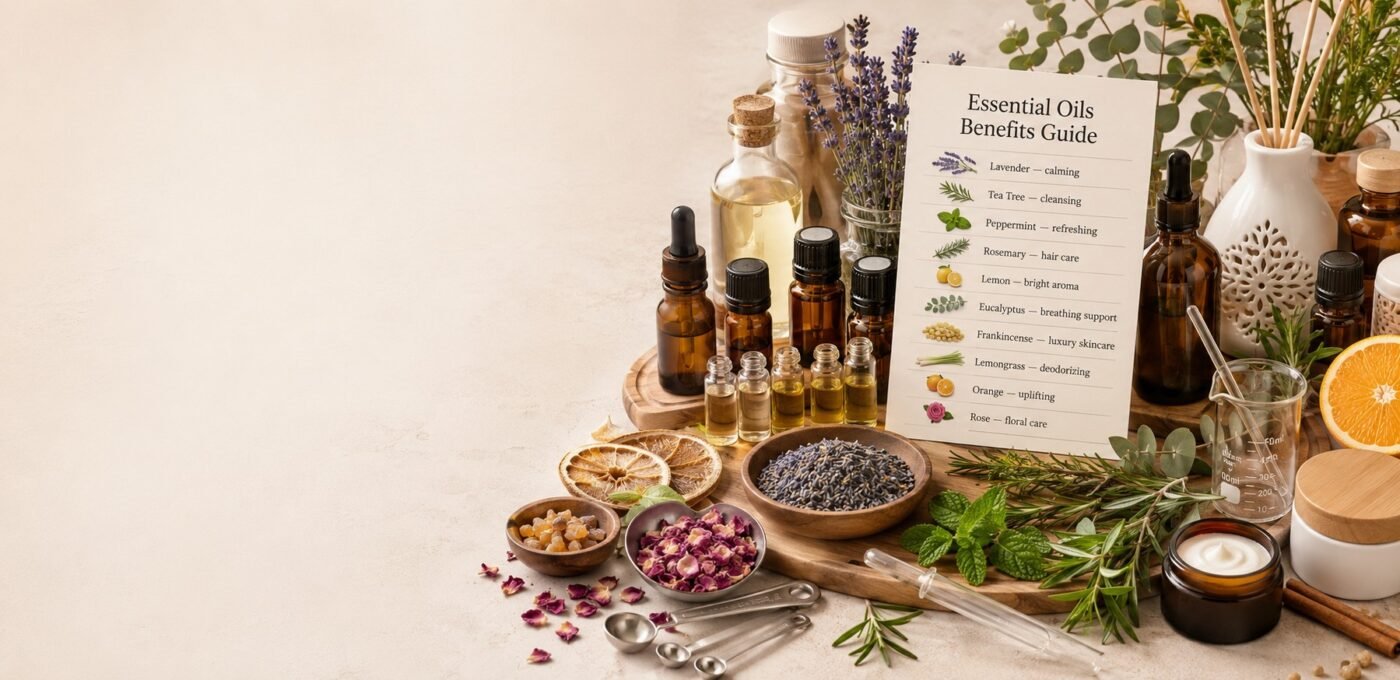
50 Essential Oils and Their Benefits
Jun
50 Essential Oils and Their Benefits
Explore 50 popular essential oils for cosmetic, aroma, soap, candle, diffuser, bath, hair care, body care, massage oil, and DIY formulation use with beginner-friendly benefits, safe-use notes, and product ideas.
Quick Answer
Essential oils are concentrated aromatic plant oils used mainly for fragrance, aroma experience, and cosmetic product appeal. Popular oils include lavender, tea tree, rosemary, peppermint, lemon, eucalyptus, orange, lemongrass, frankincense, and rose. Always dilute essential oils properly and avoid medical treatment claims in cosmetic products.
Table of Contents
What Are Essential Oils?
Essential oils are highly concentrated aromatic oils obtained from plants such as flowers, leaves, peels, roots, woods, herbs, spices, resins, and grasses. They are used in cosmetics, soap making, candles, diffusers, massage oils, hair oils, bath products, and aromatherapy-style products.
In cosmetic and DIY formulation, essential oils are mainly used for aroma, product theme, sensory experience, and label appeal. They should be treated as concentrated ingredients and used carefully within safe limits.
Essential oils are different from fragrance oils. Essential oils are plant-derived aromatic oils, while fragrance oils are specially created aroma blends that may be natural, synthetic, or mixed depending on supplier type. Both must be used according to product-safe usage guidelines.
For essential oils, carrier oils, fragrance oils, soap bases, candle wax, diffuser bases, cosmetic jars, bottles, and DIY raw materials, visit Jindeal.com.
Essential Oil Safety Basics
Essential oils are powerful and should not be used directly on skin without proper dilution. Skin-safe usage depends on the oil type, product type, age group, body area, leave-on or rinse-off use, and supplier safety guidelines.
50 Essential Oils and Their Benefits Chart
This chart lists common essential oils with cosmetic, aroma, and DIY product benefits. Always check supplier documentation before using any oil in a final product.
| No. | Essential Oil | Aroma / Cosmetic Benefit | Best DIY Product Ideas |
|---|---|---|---|
| 1 | Lavender Essential Oil | Soft floral aroma, calming product theme, gentle skincare appeal | Soap, body butter, bath salts, massage oil, diffuser blends |
| 2 | Tea Tree Essential Oil | Fresh herbal aroma, clean-feel product positioning | Soap, face wash, shampoo, scalp oil, foot care products |
| 3 | Rosemary Essential Oil | Herbal fresh aroma, popular in hair care themes | Hair oil, shampoo, conditioner, soap, diffuser blends |
| 4 | Peppermint Essential Oil | Cool minty aroma, refreshing sensory feel | Foot scrub, soap, shampoo, bath products, diffuser blends |
| 5 | Lemon Essential Oil | Bright citrus aroma, fresh and clean product theme | Soap, cleaning-style aroma blends, diffuser, bath products |
| 6 | Sweet Orange Essential Oil | Sweet citrus aroma, cheerful and fresh fragrance profile | Soap, candles, bath salts, body scrub, diffuser blends |
| 7 | Eucalyptus Essential Oil | Strong fresh aroma, spa and steam-style product theme | Shower steamers, soap, diffuser, massage blends |
| 8 | Lemongrass Essential Oil | Fresh lemony grassy aroma, bright handmade product appeal | Soap, candles, diffuser, foot products, body wash |
| 9 | Frankincense Essential Oil | Warm resinous aroma, premium skincare and meditation theme | Face oil, balm, diffuser, body oil, luxury soap |
| 10 | Rose Essential Oil | Rich floral aroma, luxury and romantic product theme | Face oil, perfume oil, soap, body butter, bath products |
| 11 | Geranium Essential Oil | Floral green aroma, balanced skincare-style appeal | Face serum, body oil, soap, diffuser, lotion |
| 12 | Ylang Ylang Essential Oil | Sweet exotic floral aroma, luxury spa fragrance profile | Perfume oil, body butter, candles, soap, diffuser blends |
| 13 | Patchouli Essential Oil | Earthy deep aroma, long-lasting base note | Perfume oil, soap, beard oil, candles, incense-style blends |
| 14 | Cedarwood Essential Oil | Woody warm aroma, masculine and grounding product theme | Beard oil, soap, candles, diffuser, hair oil |
| 15 | Sandalwood Essential Oil | Soft woody aroma, premium traditional fragrance profile | Perfume oil, soap, body oil, diffuser, luxury skincare |
| 16 | Clary Sage Essential Oil | Herbal floral aroma, spa-style blend support | Massage oil, diffuser, bath products, body oil |
| 17 | Bergamot Essential Oil | Fresh citrus-floral aroma, elegant fragrance note | Perfume oil, soap, diffuser, body care |
| 18 | Grapefruit Essential Oil | Fresh citrus aroma, bright and energizing product theme | Body scrub, soap, diffuser, bath products |
| 19 | Lime Essential Oil | Sharp citrus aroma, fresh clean product feel | Soap, diffuser, bath salts, summer product blends |
| 20 | Mandarin Essential Oil | Soft sweet citrus aroma, gentle cheerful product theme | Soap, body oil, diffuser, bath products |
| 21 | Cinnamon Essential Oil | Warm spicy aroma, festive fragrance profile | Candles, diffuser blends, soap at safe low use |
| 22 | Clove Essential Oil | Strong warm spicy aroma, festive and traditional blends | Candles, diffuser, soap at safe low use |
| 23 | Ginger Essential Oil | Warm spicy aroma, massage and winter product theme | Massage oil, bath products, diffuser, soap |
| 24 | Cardamom Essential Oil | Sweet spicy aroma, premium warm fragrance note | Perfume oil, diffuser, candles, luxury soap |
| 25 | Black Pepper Essential Oil | Dry spicy aroma, warm massage-style product note | Massage oil, diffuser, masculine blends, soap |
| 26 | Basil Essential Oil | Fresh herbal aroma, green clean product character | Soap, diffuser, hair care, bath products |
| 27 | Thyme Essential Oil | Strong herbal aroma, clean herbal theme | Soap, diffuser, cleansing-style products at safe use |
| 28 | Oregano Essential Oil | Powerful herbal aroma, strong rustic blend note | Diffuser blends and specialty soap at very careful use |
| 29 | Sage Essential Oil | Herbal earthy aroma, natural spa-style profile | Soap, diffuser, massage blends |
| 30 | Marjoram Essential Oil | Warm herbal aroma, soft relaxing product theme | Massage oil, diffuser, bath blends, body oil |
| 31 | Chamomile Essential Oil | Soft herbal floral aroma, gentle skincare positioning | Face oil, body butter, baby-style aroma blends, bath products |
| 32 | Jasmine Essential Oil | Rich floral aroma, luxury perfume-style product theme | Perfume oil, body oil, soap, candles, bath products |
| 33 | Neroli Essential Oil | Elegant orange blossom aroma, premium skincare feel | Face oil, perfume oil, body oil, diffuser, luxury lotion |
| 34 | Palmarosa Essential Oil | Fresh rosy-grassy aroma, skincare-style fragrance note | Soap, face oil, body care, diffuser blends |
| 35 | Citronella Essential Oil | Fresh grassy lemon aroma, outdoor-style product theme | Candles, diffuser, soap, outdoor aroma blends |
| 36 | Vetiver Essential Oil | Deep earthy smoky aroma, base note for premium blends | Perfume oil, candles, beard oil, diffuser, soap |
| 37 | Juniper Berry Essential Oil | Fresh woody aroma, spa and bath product profile | Bath salts, massage oil, diffuser, soap |
| 38 | Cypress Essential Oil | Fresh woody evergreen aroma, clean spa-style note | Massage oil, diffuser, soap, bath products |
| 39 | Pine Essential Oil | Fresh forest aroma, clean green product theme | Soap, candles, diffuser, bath products |
| 40 | Fir Needle Essential Oil | Fresh evergreen aroma, winter and forest-style blends | Candles, diffuser, soap, bath salts |
| 41 | Spearmint Essential Oil | Soft minty aroma, refreshing but gentler than peppermint | Soap, lip care at safe use, diffuser, foot products |
| 42 | Wintergreen Essential Oil | Strong minty-sweet aroma, specialty product note | Massage-style blends at very careful safe use |
| 43 | Fennel Essential Oil | Sweet herbal aroma, unique botanical blend note | Soap, diffuser, body oil blends |
| 44 | Anise Essential Oil | Sweet licorice-like aroma, specialty fragrance note | Soap, diffuser, perfume-style blends |
| 45 | Carrot Seed Essential Oil | Earthy herbal aroma, premium facial oil theme | Face oil, body oil, balm, luxury skincare blends |
| 46 | Myrrh Essential Oil | Warm resinous aroma, traditional premium product theme | Balm, perfume oil, soap, diffuser, body oil |
| 47 | Elemi Essential Oil | Fresh resinous citrus aroma, luxury skincare-style note | Face oil, perfume oil, soap, diffuser blends |
| 48 | Helichrysum Essential Oil | Warm herbal honey-like aroma, premium skincare positioning | Face oil, balm, body oil, luxury creams |
| 49 | Petitgrain Essential Oil | Green citrus woody aroma, fresh cologne-style note | Perfume oil, soap, diffuser, body care |
| 50 | Blue Tansy Essential Oil | Sweet herbal aroma with blue color note, premium blend appeal | Face oil, balm, luxury skincare, aroma blends |
How to Choose Essential Oils
Step 1: Decide Product Type
Choose essential oil based on whether you are making soap, candle, diffuser oil, body butter, face serum, hair oil, massage oil, bath salt, shower steamer, or lotion. Not every essential oil is suitable for every product.
Step 2: Choose Aroma Family
Essential oils can be grouped into floral, citrus, herbal, minty, woody, spicy, resinous, earthy, and green aroma families. A balanced blend often includes top notes, middle notes, and base notes.
Step 3: Check Skin-Safe Use
For leave-on cosmetics, use essential oils very carefully and always check supplier safety guidance. Some oils are strong sensitizers and should be used at very low levels or avoided in face products.
Step 4: Dilute Correctly
Never add essential oils by random drops for commercial formulas. Measure by weight and follow a proper usage percentage based on product type.
Step 5: Check Phototoxicity
Some citrus essential oils may be phototoxic depending on type and processing. Use extra care in leave-on skin products and check supplier documentation.
Step 6: Check Heat and Product Performance
Some essential oils fade in high heat or high-pH soap. Test the final product for aroma strength after curing, storage, and use.
Step 7: Start Simple
Beginners should start with 1 to 3 essential oils in a blend. Simple blends are easier to test and improve.
Step 8: Record Your Formula
Write essential oil name, supplier, batch number, usage percentage, product type, date, and test results. This helps repeat successful products.
Common Mistakes
1. Applying Essential Oil Directly to Skin
Essential oils should be diluted properly before topical use.
2. Using Too Much Essential Oil
More essential oil does not mean better product. Too much can irritate skin, overpower aroma, or destabilize formulas.
3. Making Medical Claims
Do not claim essential oils cure acne, infection, pain, anxiety, or disease in cosmetic product content.
4. Ignoring Product Type
Usage level for soap, candle, diffuser, lotion, face oil, and massage oil is not the same.
5. Using Citrus Oils Without Phototoxicity Check
Some citrus oils need extra care in leave-on products exposed to sunlight.
6. Not Patch Testing
Always patch test finished products, especially leave-on skincare.
7. Not Checking Supplier Usage Limits
Different oils have different safe usage limits.
8. Using Essential Oils as Preservatives
Essential oils are not reliable complete preservatives for water-based cosmetics.
9. Using Old Oxidized Oils
Old essential oils can oxidize and may increase irritation risk or smell unpleasant.
10. Selling Without Documentation
Keep batch records, supplier details, formula percentages, and safety notes for every product.
Expert Tips
- Use essential oils mainly for aroma and cosmetic product appeal.
- Dilute essential oils properly before skin use.
- Use carrier oils like sweet almond, jojoba, coconut, or olive oil for dilution.
- Check supplier recommended usage rate for every product type.
- Use lavender, orange, rosemary, peppermint, and lemongrass as beginner-friendly aroma oils after safety checking.
- Use strong oils like cinnamon, clove, oregano, thyme, and wintergreen with extra caution.
- Avoid essential oils in baby products unless professionally formulated.
- Patch test finished products before regular use.
- Store essential oils in tightly closed dark bottles away from heat and sunlight.
- Do not rely on essential oils as preservatives.
- Keep claims cosmetic, aroma, and sensory-focused.
- Buy essential oils, carrier oils, fragrance oils, soap bases, candle wax, diffuser bases, jars, and bottles from Jindeal.com.
FAQ
1. What are essential oils used for?
Essential oils are used for aroma, cosmetic product appeal, soap making, candle making, diffuser blends, bath products, massage oils, hair oils, and skincare-style products.
2. Can essential oils be applied directly to skin?
No. Essential oils should usually be diluted in a suitable carrier oil or formula before topical use.
3. Which essential oils are best for beginners?
Lavender, sweet orange, rosemary, peppermint, lemon, eucalyptus, tea tree, lemongrass, geranium, and cedarwood are popular beginner choices, but safety limits still apply.
4. Are essential oils preservatives?
No. Essential oils are not reliable complete preservatives for water-based cosmetics. Use a proper broad-spectrum preservative when water is present.
5. Can I use essential oils in soap?
Yes, many essential oils are used in soap, but aroma strength and stability can change during soap making and curing.
6. Can I use essential oils in candles?
Some essential oils can be used in candles, but candle performance varies. Test scent throw, safety, and wax compatibility.
7. Can I use essential oils in face serum?
Only use essential oils that are suitable for facial leave-on products and at very low safe levels. Beginners can make fragrance-free face serum.
8. What is the difference between essential oil and fragrance oil?
Essential oils are plant-derived aromatic oils. Fragrance oils are aroma blends created for scent and may be natural, synthetic, or mixed depending on supplier type.
9. Do essential oils expire?
Essential oils can oxidize and lose quality over time. Store them in dark, tightly closed bottles away from heat and sunlight.
10. Which essential oils smell floral?
Lavender, rose, geranium, ylang ylang, jasmine, neroli, chamomile, and palmarosa have floral or floral-style aroma profiles.
11. Which essential oils smell citrus?
Lemon, sweet orange, bergamot, grapefruit, lime, mandarin, petitgrain, and neroli are popular citrus or citrus-floral oils.
12. Which essential oils smell woody?
Cedarwood, sandalwood, pine, fir needle, cypress, vetiver, frankincense, and myrrh are popular woody, resinous, or earthy oils.
13. Which essential oils should be used carefully?
Cinnamon, clove, oregano, thyme, wintergreen, peppermint, and some citrus oils need extra care because they can be strong or sensitizing depending on use.
14. Can I sell products with essential oils?
Yes, but you should follow safe usage limits, product testing, labeling rules, documentation, and avoid medical claims.
15. Where can I buy essential oils?
You can buy essential oils, carrier oils, fragrance oils, soap bases, candle wax, diffuser bases, jars, bottles, and DIY cosmetic raw materials from Jindeal.com.
Final Words
Essential oils can add beautiful aroma, natural product appeal, and premium sensory value to DIY cosmetics, soaps, candles, diffusers, bath products, and body care formulas. The best essential oil depends on product type, aroma profile, safety limits, and customer preference.
Use essential oils carefully, dilute properly, patch test finished products, store oils well, and avoid medical claims. For essential oils, carrier oils, fragrance oils, soap bases, candle wax, diffuser bases, jars, bottles, and DIY raw materials, visit Jindeal.com.
Explore Essential Oils with Jindeal.com
Shop essential oils, carrier oils, fragrance oils, soap bases, candle wax, diffuser bases, amber bottles, jars, and DIY cosmetic-making ingredients from Jindeal.com.
