
Uncategorized
Beginner Soap Making Mistakesv
Jun
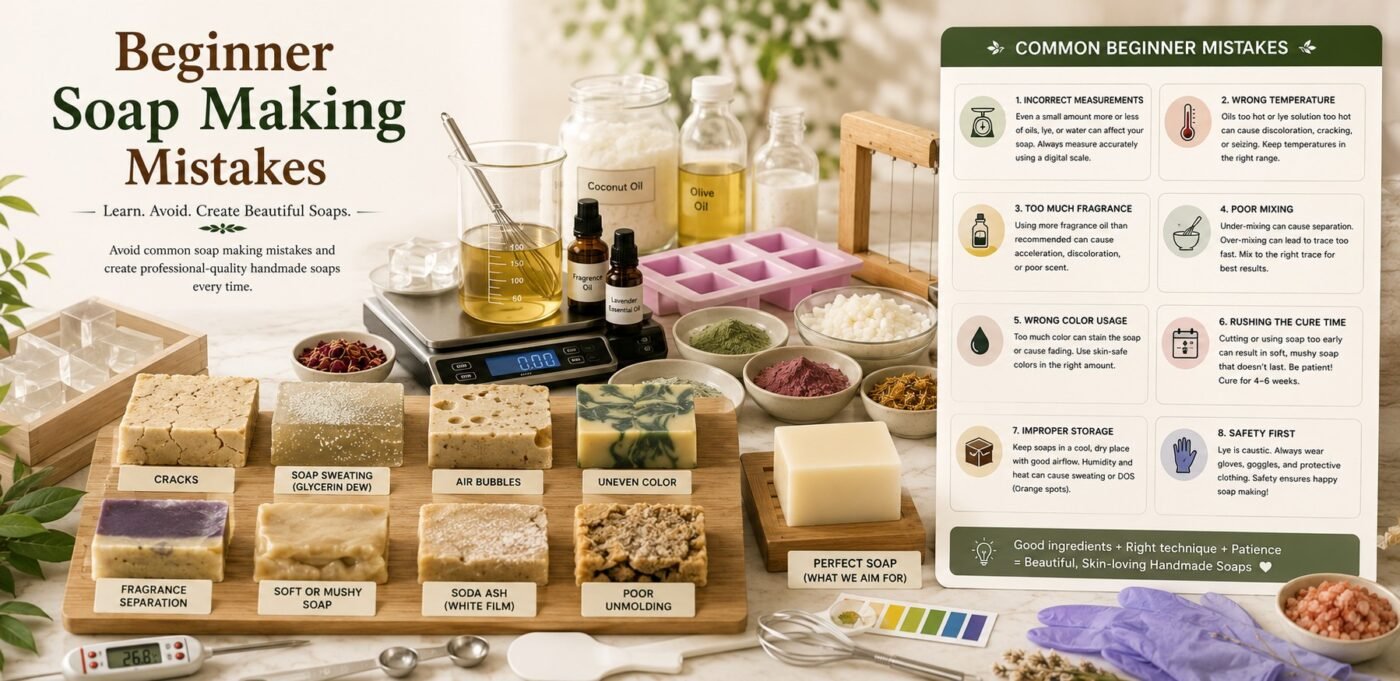
Beginner Soap Making Mistakes
Learn the most common beginner mistakes in melt and pour soap making and handmade soap production, including overheating, sweating, bubbles, weak fragrance, color bleeding, soft bars, poor packaging, and wrong additive usage.
Quick Answer
The most common beginner soap making mistakes are overheating soap base, adding too much fragrance oil, using non-soap-safe colors, adding too much oil or powder, not dispersing clays and mica, pouring too hot, demolding too early, poor packaging, and selling without testing. Most issues can be avoided by measuring ingredients in grams, using cosmetic-grade materials, testing small batches, and keeping proper batch records.
Table of Contents
Why Beginner Soap Mistakes Happen
Soap making looks simple, especially melt and pour soap, but small mistakes can affect the final bar. Too much heat, too much fragrance, wrong color, poor storage, and overuse of additives can cause sweating, softness, bubbles, color bleeding, fragrance loss, gritty texture, and weak lather.
The good news is that most beginner soap problems are easy to fix once you understand the cause. Start with simple formulas, measure by weight, use cosmetic-grade raw materials, and test every new soap base, fragrance, color, and additive before selling.
For soap bases, fragrance oils, essential oils, mica colors, clays, herbal powders, silicone molds, packaging, and DIY soap making raw materials, visit Jindeal.com.
Top Beginner Soap Making Mistakes
Soap Troubleshooting Chart
Use this chart to identify common problems and fix them quickly.
| Problem | Possible Cause | Easy Fix | Prevention |
|---|---|---|---|
| Soap Sweating | Humidity, high glycerin base, excess fragrance, poor packaging | Wipe, dry, and wrap properly | Pack soon after cooling and store in dry place |
| Soap Too Soft | Too much oil, fragrance, liquid, or overheating | Reduce additives in next batch | Use measured formula and avoid extra oils |
| Air Bubbles | Fast stirring, overheating, pouring too high | Spray surface lightly with alcohol if suitable | Stir slowly and pour gently |
| Fragrance Fading | Low fragrance, overheating, poor fragrance quality, long air exposure | Use quality fragrance and correct percentage | Add fragrance at controlled temperature and pack well |
| Color Bleeding | Wrong dye, too much liquid color, non-stable color | Use non-bleeding soap-safe color | Test layered soap before selling |
| Gritty Texture | Coarse powder, too much clay/herbal powder, poor dispersion | Use fine powder and reduce amount | Disperse powders before adding |
| Low Lather | Too much clay, oil, powder, or butter | Reduce additives | Keep additives low in melt and pour soap |
| Soap Cracking | Temperature shock, overheating, unmolding too early | Control cooling and avoid rough handling | Let soap set fully before demolding |
| Staining Foam | Too much mica, charcoal, pigment, or dark color | Reduce color level | Test wash-off and towel staining |
| Uneven Color | Poor mixing or undispersed powder | Disperse color and mix gently | Prepare color slurry before adding |
How to Prevent Soap Making Problems
1. Use a Digital Scale
Measure soap base, fragrance, color, clay, and oils in grams. Guesswork creates inconsistent results.
2. Melt Soap Base Gently
Use short heating intervals and stir slowly. Do not boil or overheat soap base.
3. Use Safe Fragrance Levels
For melt and pour soap, many beginners start around 1% to 3% fragrance oil, but always follow supplier recommended safe usage limits.
4. Use Soap-Safe Colors
Use cosmetic-grade soap-safe mica, pigment, or liquid color. Avoid food color, craft color, Holi color, or unknown pigment.
5. Disperse Powders First
Mix mica, clay, charcoal, and herbal powder with a small amount of glycerin, oil, alcohol, or melted soap base before adding.
6. Keep Additives Low
Do not overload melt and pour soap with oils, powders, clays, or butters. Too much additive can reduce lather and create softness.
7. Control Pour Temperature
Pouring too hot can create bubbles, melting, and fragrance loss. Pouring too cool can create thick texture or uneven finish.
8. Pack Soap Properly
Melt and pour soap should be packed in suitable packaging to reduce moisture exposure and sweating.
9. Store Soap Correctly
Keep soap away from sunlight, heat, humidity, dust, and strong odors.
10. Test Before Selling
Check sweating, fragrance retention, color stability, hardness, lather, packaging, and shelf appearance before selling.
Soap Testing Checklist
Every beginner should test soap before selling or making bulk batches.
| Test Area | What to Check | When to Check | Why Important |
|---|---|---|---|
| Sweating | Moisture droplets or sticky surface | 24 hours, 7 days, 15 days | Shows packaging and humidity stability |
| Fragrance | Smell strength and change | After cooling, 7 days, 30 days | Checks fragrance retention |
| Hardness | Firmness and shape | After demolding and storage | Checks formula balance |
| Lather | Foam, slip, rinse feel | After full setting | Checks additive level |
| Color | Bleeding, fading, staining | 7 days, 15 days, 30 days | Important for selling |
| Texture | Grit, lumps, specks | After demolding and wash test | Checks powder dispersion |
| Packaging | Label peeling, sweating, sticking | After packing and storage | Important for customer presentation |
| Shelf Look | Cracks, fading, shrinkage | 15 to 30 days | Checks product stability |
Batch Record Template
Keeping batch records helps you repeat successful soap formulas and avoid repeating mistakes.
| Record Field | What to Write | Example |
|---|---|---|
| Batch Number | Your unique batch code | MP-Rose-001 |
| Soap Base | Base type and supplier | Ultra Clear Soap Base, Jindeal |
| Batch Weight | Total grams made | 1000 g |
| Fragrance | Name and percentage | Rose Fragrance Oil, 2% |
| Color | Color type and amount | Pink mica, 0.3% |
| Additives | Clay, powder, oil, vitamin E | Kaolin Clay, 1% |
| Temperature Notes | Melting and pour observation | Melted gently, no boiling |
| Result | Final look and problems | Smooth bar, light bubbles, good fragrance |
| Testing Notes | Sweating, lather, color, packaging | No sweating after 7 days |
Mistakes Before Selling Soap
1. Selling Without Shelf Testing
Check soap after 7, 15, and 30 days before selling in bulk. Some soaps look fine on day one but sweat, fade, or lose fragrance later.
2. Not Calculating Real Cost
Include soap base, fragrance, colors, additives, packaging, label, labor, wastage, shipping material, selling fees, and profit margin.
3. Weak Packaging
Soap packaging should protect against dust, moisture, scratches, sweating, and fragrance loss.
4. Poor Label Information
Plan product name, net weight, batch number, manufacturing date, MRP, ingredient list, usage instructions, storage instructions, and business details as applicable.
5. Making Medical Claims
Do not claim soap cures acne, eczema, pigmentation, infection, dandruff, hair fall, or skin disease. Use cosmetic-safe language like cleansing, fragrance, beauty, spa, herbal, and gifting.
6. No Customer Instructions
Add instructions such as keep soap dry between uses, store away from heat, and avoid contact with eyes.
FAQ
1. What is the biggest beginner soap making mistake?
The biggest mistake is adding too much fragrance, oil, color, clay, or powder without testing. This can cause sweating, softness, staining, and low lather.
2. Why is my melt and pour soap sweating?
Soap can sweat due to humidity, glycerin-rich base, excess fragrance, poor packaging, or warm storage conditions.
3. Why is my soap too soft?
Soap may become soft if too much oil, fragrance, liquid, or additive is added, or if the base is overheated.
4. Why does my soap have bubbles?
Bubbles happen due to fast stirring, overheating, or pouring too aggressively. Stir gently and pour slowly.
5. Why did my soap lose fragrance?
Fragrance may fade due to low fragrance level, overheating, poor-quality fragrance, air exposure, or long storage.
6. Why is my soap color bleeding?
Color bleeding happens when unsuitable dye or too much color moves through the soap. Use soap-safe non-bleeding colors for layered designs.
7. Can I use food color in soap?
Food color is not recommended because it may bleed, fade, or stain. Use cosmetic-grade soap-safe colors.
8. Can I add carrier oil to melt and pour soap?
Yes, but use very small amounts. Too much oil can make soap soft and reduce lather.
9. Can I add clay to soap?
Yes. Kaolin Clay, French Green Clay, Multani Mitti, Rhassoul Clay, and Bentonite Clay can be used in small amounts after proper dispersion.
10. Why is my soap gritty?
Soap can become gritty if powder is coarse, used too much, or not dispersed properly before adding.
11. How much fragrance oil should I use?
For melt and pour soap, many beginners start around 1% to 3%, but always follow supplier safe usage guidance.
12. Can soap cure acne or skin problems?
No. Do not make medical claims. Soap can be described as cleansing, beauty, fragrance, herbal, luxury, spa, or gifting product.
13. How do I avoid soap sweating in packaging?
Let soap cool fully, pack properly, use moisture-resistant packaging, and store in a dry place away from humidity.
14. Should I test soap before selling?
Yes. Test sweating, hardness, fragrance, lather, color, packaging, and shelf appearance before selling.
15. Where can I buy soap making supplies?
You can buy soap bases, fragrance oils, essential oils, mica colors, clays, herbal powders, silicone molds, and packaging from Jindeal.com.
Final Words
Beginner soap making mistakes are normal, but they become easy to prevent when you understand the cause. Use cosmetic-grade ingredients, measure by weight, heat gently, add fragrance and colors carefully, disperse powders properly, and test before selling.
Keep batch records, check shelf appearance, pack soap properly, and avoid medical claims. For soap bases, fragrance oils, colors, clays, herbal powders, silicone molds, and packaging, visit Jindeal.com.
Shop Soap Making Supplies on Jindeal.com
Buy melt and pour soap bases, fragrance oils, essential oils, soap colors, mica, cosmetic clays, herbal powders, silicone molds, and packaging materials from Jindeal.com.