
Uncategorized
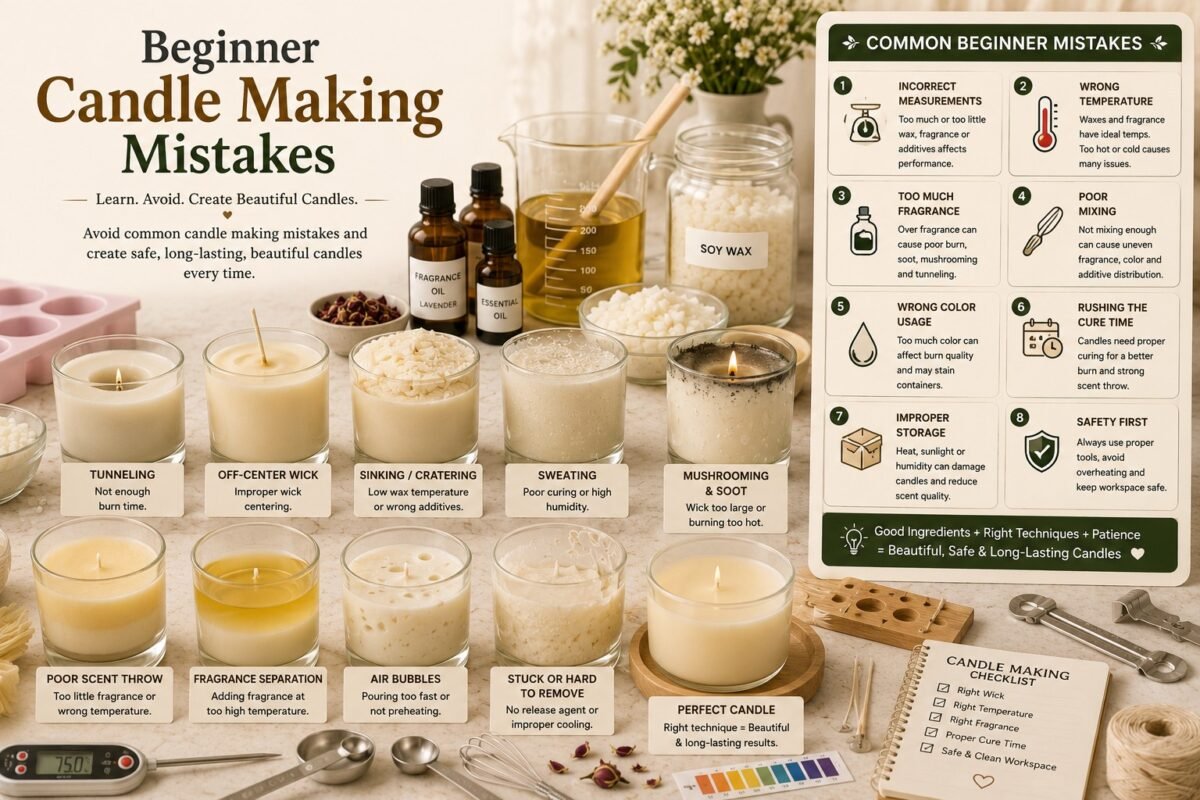
Beginner Candle Making Mistakes
Jun
Beginner Candle Making Mistakes
Learn the most common candle making mistakes beginners make, including wrong wick size, tunneling, weak fragrance throw, black smoke, frosting, sinkholes, wet spots, overheating wax, poor curing, and unsafe selling without testing.
Quick Answer
The most common beginner candle making mistakes are using the wrong wick size, adding too much fragrance oil, not measuring in grams, overheating wax, pouring at the wrong temperature, skipping cure time, using unsuitable jars, weak packaging, and selling candles without burn testing. Most problems can be prevented by testing every wax, wick, jar, fragrance, and dye combination before selling.
Table of Contents
Why Beginner Candle Mistakes Happen
Candle making looks simple because the basic formula is wax, fragrance oil, wick, and container. But candle performance depends on many small details: wax type, jar diameter, wick size, fragrance load, pour temperature, curing time, dye level, room temperature, and burn testing.
A candle can look beautiful but still burn badly. It may tunnel, smoke, overheat the jar, give weak fragrance, create soot, crack on top, or waste wax at the sides. That is why testing is the most important step in candle making.
For soy wax, paraffin wax, coconut wax blend, fragrance oils, candle jars, candle tins, cotton wicks, wooden wicks, wick stickers, candle dyes, silicone molds, and packaging, visit Jindeal.com.
Top Beginner Candle Making Mistakes
Candle Troubleshooting Chart
Use this chart to identify common candle problems and their easy fixes.
| Problem | Possible Cause | Easy Fix | Prevention |
|---|---|---|---|
| Candle Tunneling | Wick too small, short first burn, hard wax, wrong jar/wick match | Test a larger wick in next batch | Burn test until melt pool develops properly |
| Black Smoke | Wick too large, wick not trimmed, too much fragrance, draft | Trim wick and test smaller wick | Keep wick trimmed and fragrance within limit |
| Weak Scent Throw | Low fragrance, poor fragrance oil, wrong wax, wrong wick, short cure time | Improve fragrance quality and cure properly | Test hot throw after curing |
| Frosting | Soy wax crystallization, cooling conditions, temperature change | Accept minor frosting or adjust pour/cooling | Control cooling and test wax blend |
| Sinkholes | Wax cooling and shrinking, pouring too hot, air pockets | Use heat gun or second pour if suitable | Control pour temperature and cooling |
| Wet Spots | Wax pulling away from jar, temperature change, jar adhesion issue | Adjust jar warming and cooling | Test jar, wax, and room temperature |
| Large Flame | Wick too large, fragrance load too high, wrong wick type | Use smaller wick and retest | Do complete burn testing |
| Jar Too Hot | Oversized wick, wide melt pool, unsafe jar, long burn time | Stop use and retest formula | Check container heat in testing |
| Rough Candle Top | Pour temperature, cooling speed, wax type, fragrance compatibility | Adjust pour temperature or use heat gun lightly | Keep batch notes and test temperatures |
| Fragrance Sweating | Too much fragrance, poor wax compatibility, high temperature storage | Reduce fragrance load | Follow wax supplier max fragrance load |
How to Prevent Candle Problems
1. Measure Everything in Grams
Use a digital scale for wax, fragrance oil, dye, and batch size. Accurate measurement makes your candle formula repeatable.
2. Find Actual Jar Fill Weight
Do not assume jar ml equals wax grams. Test the actual fill weight of your jar before calculating wax and fragrance.
3. Use the Right Wick Size
Wick size depends on jar diameter, wax type, fragrance oil, dye, and desired burn performance. Test multiple wick sizes.
4. Keep Fragrance Load Within Limit
For many jar candles, beginners start around 6% to 8% fragrance load, but always follow wax and fragrance supplier recommendations.
5. Control Wax Temperature
Overheating and wrong pour temperature can affect candle finish, adhesion, fragrance throw, and stability.
6. Cure Candles Properly
Many candles smell better after curing because fragrance settles into the wax. Cure time depends on wax type and formula.
7. Use Heat-Safe Containers
Use containers made for candles. Avoid thin glass, decorative containers not designed for heat, or unknown jars.
8. Add Warning Labels
Every candle should have safety instructions such as never leave unattended, trim wick, keep away from children and pets, and burn on a heat-safe surface.
9. Test Shipping Packaging
Candles can break, melt, leak, or scratch during delivery. Use strong outer packaging, filler, and protection.
10. Keep Batch Records
Write wax type, fragrance percentage, wick size, jar size, pour temperature, cure time, and test result for every batch.
Candle Testing Checklist
Candle testing is compulsory before selling. Test every new formula, jar, wick, fragrance, dye, or wax change.
| Test Area | What to Check | Good Result | Problem Sign |
|---|---|---|---|
| Cold Throw | Fragrance before burning | Pleasant aroma from candle | No smell after curing |
| Hot Throw | Fragrance while burning | Good room aroma | Weak scent while burning |
| Melt Pool | Wax pool development | Even melt pool over time | Tunneling or too deep pool |
| Flame Height | Flame size and stability | Controlled steady flame | Large flame or heavy flicker |
| Jar Heat | Container temperature | Warm but not unsafe | Very hot jar or glass risk |
| Soot and Smoke | Black smoke, soot, mushrooming | Clean burn | Black soot or smoking wick |
| Surface Finish | Top after cooling | Smooth sale-ready look | Cracks, sinkholes, rough top |
| Burn Time | Total burn duration | Consistent burn performance | Fast burn or wasted wax |
| Shipping Test | Breakage, melting, leakage, label damage | Safe delivery-ready packaging | Broken jar or damaged candle |
Batch Record Template
Batch records help you repeat best-selling formulas and solve candle problems quickly.
| Record Field | What to Write | Example |
|---|---|---|
| Batch Number | Your unique batch code | Soy-Lav-001 |
| Wax Type | Wax name and supplier | Soy Wax, Jindeal |
| Jar / Tin | Container size and diameter | 120 ml amber jar |
| Fill Weight | Wax + fragrance per candle | 100 g |
| Fragrance | Name and percentage | Lavender FO, 8% |
| Wick | Wick type and size | Cotton wick, tested size |
| Dye | Color type and amount | Lavender dye chip, small amount |
| Temperatures | Melt, fragrance add, pour temperature | Record actual values used |
| Cure Time | Days before test | 7 days |
| Burn Test Result | Hot throw, flame, smoke, jar heat | Good throw, no smoke, jar warm |
Mistakes Before Selling Candles
1. Selling Without Burn Testing
Do not sell a candle just because it looks good. Test the burn from start to finish.
2. No Warning Label
Add burn safety warnings on every candle. This is important for customer safety and professional presentation.
3. Not Calculating Real Cost
Include wax, fragrance, wick, jar, label, warning sticker, packaging, labor, testing loss, shipping material, selling fee, and profit margin.
4. Weak Shipping Packaging
Candle jars can break during delivery. Use strong boxes, fillers, and protection.
5. Making Medical Claims
Do not claim candles cure anxiety, insomnia, headache, stress, depression, or disease. Use aroma, decor, ambience, gifting, spa, and relaxation-style language.
6. Too Many Fragrances at Launch
Start with 5 to 10 tested fragrances instead of launching many untested products.
FAQ
1. What is the biggest beginner candle making mistake?
The biggest mistake is using the wrong wick size and selling without proper burn testing.
2. Why is my candle tunneling?
Tunneling usually happens due to a wick that is too small, short burn time, or wrong wax and jar combination.
3. Why does my candle make black smoke?
Black smoke can happen due to an oversized wick, untrimmed wick, too much fragrance, draft, or poor formula balance.
4. Why is my candle not smelling strong?
Weak scent throw can happen due to low fragrance load, poor fragrance oil quality, wrong wax, wrong wick, or short cure time.
5. How much fragrance oil should I use in candles?
Many beginner jar candles start around 6% to 8%, but always follow wax and fragrance supplier recommendations.
6. Why is my soy candle frosting?
Frosting is common in soy wax due to crystallization. It is mostly visual, but pour temperature and cooling control can reduce it.
7. Why does my candle have sinkholes?
Sinkholes can happen when wax cools and shrinks, when pouring too hot, or when air pockets form.
8. Why does my candle jar get too hot?
The wick may be too large, burn time may be too long, jar may be unsuitable, or the melt pool may be too deep.
9. Can I use any glass jar for candles?
No. Use heat-safe candle containers. Thin or decorative glass not made for candles can be unsafe.
10. Should I cure candles before testing?
Yes. Many candles perform better after curing. Cure time depends on wax and formula.
11. Can I add essential oils to candles?
Yes, but essential oils may have softer hot throw than candle fragrance oils and still need burn testing.
12. Can candles cure stress or insomnia?
No. Do not make medical claims. Candles can be described for aroma, ambience, decor, gifting, and relaxation-style mood.
13. Why is my candle sweating fragrance?
Fragrance sweating can happen due to too much fragrance oil, poor wax compatibility, or warm storage.
14. What should I test before selling candles?
Test hot throw, cold throw, wick size, flame, smoke, jar heat, burn time, surface finish, and shipping packaging.
15. Where can I buy candle making supplies?
You can buy candle wax, fragrance oils, essential oils, jars, tins, wicks, wick stickers, dyes, molds, and packaging from Jindeal.com.
Final Words
Beginner candle making mistakes are normal, but they must be corrected before selling. The most important step is testing. A safe and professional candle should have the right wick, controlled flame, good fragrance throw, stable jar temperature, clean burn, good packaging, and clear warning labels.
Use quality candle raw materials, measure in grams, test every formula, keep batch records, and avoid medical claims. For candle wax, fragrance oils, jars, tins, wicks, colors, molds, and packaging, visit Jindeal.com.
Shop Candle Making Supplies on Jindeal.com
Buy soy wax, paraffin wax, fragrance oils, essential oils, candle jars, tins, cotton wicks, wooden wicks, wick stickers, candle dyes, silicone molds, and packaging materials from Jindeal.com.