
Soap Base
Why is my soap sweating
Jun
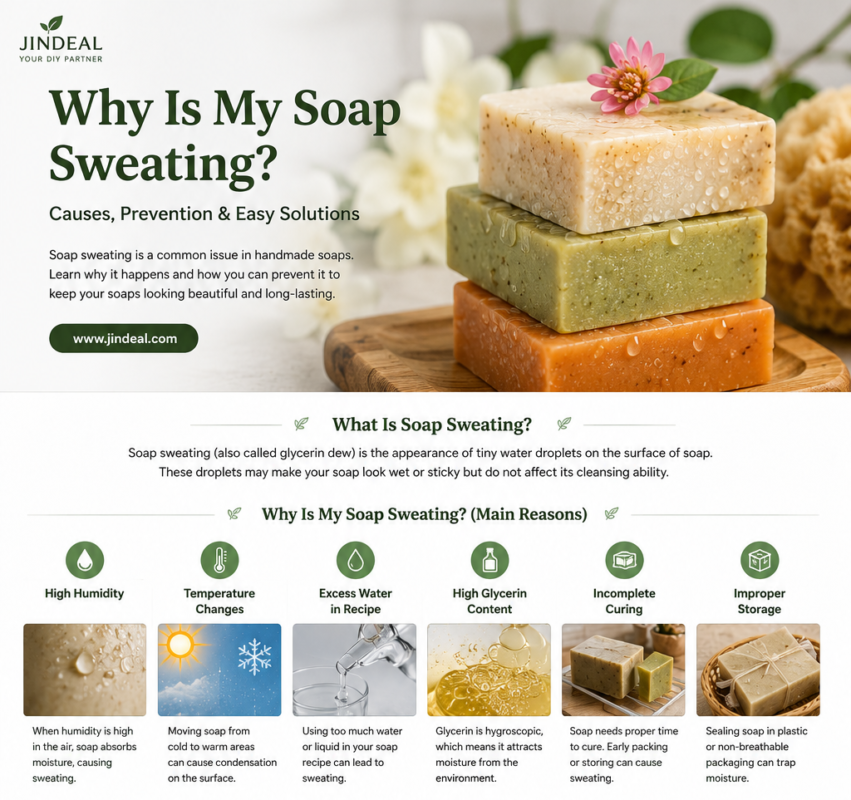
Why Is My Soap Sweating? Causes, Prevention & Easy Solutions
If your handmade soap looks wet, sticky, or covered with tiny water droplets, you are not alone. This common issue is called soap sweating or glycerin dew. It usually happens when moisture from the air collects on the surface of the soap.
Soap sweating is very common in melt and pour soap, glycerin soap, handmade soap, and soaps stored in humid weather. The good news is that sweating does not usually mean your soap is spoiled. With the right ingredients, storage, curing, and packaging, you can reduce this problem and keep your soaps looking clean, dry, and professional.
Shop Soap Making Supplies on Jindeal.com
What Is Soap Sweating?
Soap sweating is the appearance of small water droplets on the surface of soap. It can make soap look wet, sticky, or oily, even when the soap itself is not melting. This happens because some soap ingredients, especially glycerin, attract moisture from the surrounding air.
Glycerin is a humectant, which means it pulls moisture from the air. In humid weather, glycerin-rich soaps may collect moisture on the surface. This is why many handmade soap makers notice sweating during rainy season, monsoon, summer humidity, or when soaps are stored in closed plastic packaging.
Why Is My Soap Sweating? Main Reasons
1. High Humidity
The most common reason for soap sweating is high humidity. When there is too much moisture in the air, glycerin-rich soap pulls that moisture and droplets appear on the soap surface.
2. High Glycerin Content
Glycerin makes soap skin-friendly and moisturizing, but it also attracts water. Melt and pour soap bases often contain glycerin, so sweating can happen more easily.
3. Sudden Temperature Change
Moving soap from a cool place to a warm place can create condensation. This can make the soap surface look wet.
4. Excess Water in Formula
Using too much water, liquid additives, watery extracts, or wet ingredients can increase sweating and softness.
5. Improper Curing
Cold process soap needs proper curing time. If packed too early, extra water may remain inside and create sweating.
6. Wrong Packaging
Airtight plastic packaging can trap moisture. In humid conditions, this can make soap look sticky or wet.
Soap Sweating in Melt and Pour Soap
Melt and pour soap base is very popular because it is beginner-friendly, easy to melt, easy to colour, and easy to fragrance. But melt and pour soap may sweat more compared to some other soaps because it often contains glycerin and other humectant ingredients.
If you are using a transparent glycerin soap base, ultra-clear soap base, aloe vera soap base, goat milk soap base, or premium white melt and pour soap base, sweating can happen when the soap is exposed to humidity. This is normal, especially in India’s humid weather.
Does Soap Sweating Mean the Soap Is Bad?
No, soap sweating does not always mean the soap is bad. In many cases, it only means the soap has attracted moisture from the air. The soap can still be used normally if it smells fine, has no mold, and has not become unusually soft or spoiled.
However, if your soap develops bad smell, unusual colour change, visible mold, or excessive slimy texture, then it may be a quality or storage problem and should not be sold.
How to Prevent Soap Sweating
1. Store Soap in a Dry Place
Keep handmade soaps in a cool, dry, and well-ventilated area. Avoid storing soaps near bathrooms, open windows, damp walls, kitchen steam, or water sources.
2. Use Airtight Packaging Carefully
For melt and pour soap, shrink wrap or tight wrapping can help reduce exposure to humidity. But make sure the soap is completely dry before packing. For cold process soap, allow full curing before final packing.
3. Allow Proper Curing
Cold process soap usually needs proper curing time before packaging. This helps extra water evaporate and makes the soap harder and longer lasting.
4. Reduce Excess Liquid Additives
Avoid adding too much water, liquid colours, watery extracts, fresh fruit pulp, or other water-heavy ingredients. Extra liquid can increase sweating, softness, and shelf-life issues.
5. Use Good Air Circulation
Keep soaps on racks or trays where air can move around them. Good airflow helps reduce surface moisture.
6. Use Silica Gel or Desiccant Packs
For storage boxes, cartons, or shipping, silica gel packets can help absorb extra moisture. Do not put silica gel directly inside unpacked soap in a way that touches the soap.
7. Avoid Sudden Temperature Changes
Do not move soaps directly from cold AC rooms to hot humid areas. Allow the soap to adjust slowly to room temperature.
8. Choose the Right Soap Base
If sweating is a regular issue, test different melt and pour soap bases. Some bases perform better in humid areas. You can also test small batches before making bulk soap for selling.
Quick Troubleshooting Table
| Problem | Possible Reason | Solution |
|---|---|---|
| Soap has tiny water drops | High humidity or glycerin attracting moisture | Store in dry place, wrap properly, use desiccant in storage box |
| Soap feels sticky | Too much moisture on surface | Wipe gently, dry in low-humidity area, improve packaging |
| Soap sweats after packing | Soap was packed before fully dry or cured | Allow proper drying/curing before packaging |
| Soap becomes soft | Too much liquid additive or improper formula | Reduce liquid additives and test formula again |
| Soap sweats during monsoon | Very high moisture in air | Use dehumidifier, airtight storage, silica gel in cartons |
| Soap looks cloudy or wet | Condensation due to temperature change | Avoid sudden cold-to-hot movement and store at stable temperature |
What to Do If Your Soap Is Already Sweating
- Gently wipe the soap surface with a clean dry tissue or soft cloth.
- Place the soap in a dry, ventilated area for some time.
- Avoid direct sunlight because it may affect colour and fragrance.
- Once dry, pack the soap properly to reduce further moisture exposure.
- Store packed soaps in a dry box or carton with moisture absorber packets.
Best Packaging for Sweating Soap
Packaging plays an important role in preventing soap sweating. For melt and pour soaps, shrink wrapping is often used because it reduces direct contact with humid air. For cold process soaps, breathable paper packaging may be suitable after full curing, depending on the formula and climate.
You can also use soap boxes, kraft paper, butter paper, labels, and moisture absorber packs for better presentation and storage. Always keep finished soaps away from direct heat, sunlight, and damp areas.
Best Jindeal Products for Soap Making
To make better soaps and reduce common problems like sweating, softness, colour bleeding, and poor finish, use good quality soap making ingredients and tools from Jindeal.com.
- Melt and Pour Soap Base
- Fragrance Oils
- Essential Oils
- Silicone Moulds
- Herbal Powders
- Natural Clays
- DIY Tools
Common Mistakes That Increase Soap Sweating
- Adding too much fragrance oil or liquid colour
- Using fresh fruit pulp or watery extracts without proper testing
- Packing soap immediately after making
- Keeping soap in humid rooms or bathrooms
- Using airtight packaging while soap still contains excess moisture
- Storing soaps near steam, AC temperature changes, or open air humidity
- Not testing soap base performance during monsoon or humid weather
Final Tips for Beautiful, Long-Lasting Handmade Soaps
Soap sweating is common, especially in glycerin-rich soaps and humid weather. By controlling humidity, choosing the right soap base, allowing proper curing, using correct packaging, and storing soaps carefully, you can reduce sweating and improve the final look of your handmade soaps.
Whether you are making soaps for personal use, gifting, workshops, or your small business, good ingredients and proper storage are key. Explore soap bases, fragrances, colours, molds, oils, butters, additives, and DIY tools at Jindeal.com to create beautiful handmade soaps with confidence.
Visit Jindeal.com for Soap Making SuppliesFAQs About Soap Sweating
Why is my handmade soap sweating?
Your soap is sweating because ingredients like glycerin attract moisture from the air. High humidity, temperature changes, excess water, and wrong packaging can also cause sweating.
Is soap sweating dangerous?
In most cases, soap sweating is not dangerous. It is usually a moisture and appearance issue. But if soap smells bad, shows mold, or becomes slimy, it should not be used or sold.
Does glycerin soap sweat more?
Yes, glycerin-rich soaps and many melt and pour soap bases can sweat more because glycerin naturally attracts moisture from the air.
How do I stop melt and pour soap from sweating?
Store it in a dry place, wrap it properly after it is dry, avoid high humidity, use silica gel in storage boxes, and test different soap bases if sweating is frequent.
Can I sell soap that has sweated?
You should avoid selling soap that looks wet, sticky, or unattractive. Dry it properly, improve packaging, and check quality before selling.
Can soap sweating be fixed?
Yes. Wipe the surface gently, dry the soap in a low-humidity place, and store or package it correctly to reduce future sweating.
