
Uncategorized
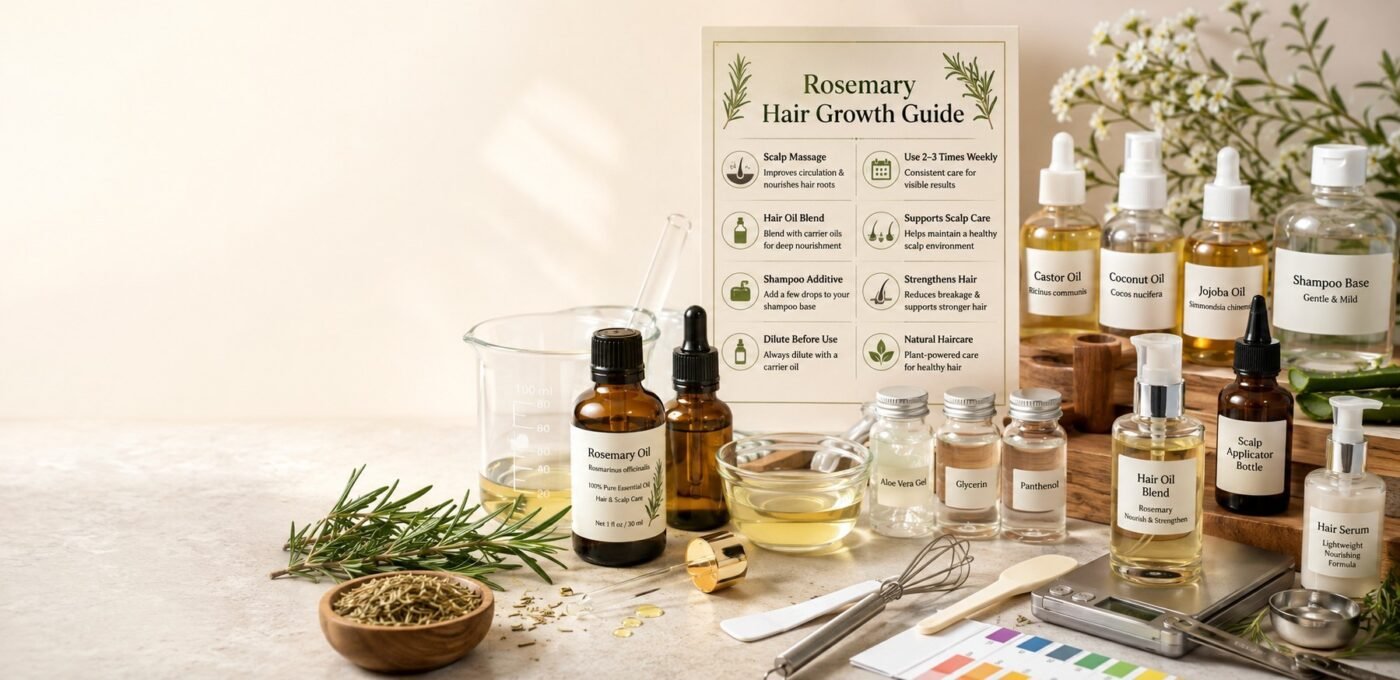
Rosemary Oil for Hair Growth Guide
Jun
Rosemary Oil for Hair Growth Guide
Learn how rosemary essential oil is used in DIY hair care, scalp oil, shampoo, conditioner, hair masks, and herbal hair oil blends with cosmetic-safe guidance, dilution tips, beginner formulas, and product-making ideas.
Quick Answer
Rosemary essential oil is popular in hair care because of its fresh herbal aroma and strong scalp-care product positioning. It is commonly used in hair oil blends, shampoo, conditioner, scalp massage oils, and hair masks. It must be diluted properly and should not be marketed as a guaranteed medical hair-growth treatment.
Table of Contents
What Is Rosemary Essential Oil?
Rosemary essential oil is a concentrated aromatic oil with a fresh, herbal, camphoraceous aroma. It is widely used in hair care, scalp-care themed products, handmade soaps, shampoos, conditioners, massage oils, diffuser blends, and herbal cosmetic formulations.
In DIY hair care, rosemary essential oil is usually added to carrier oil blends, shampoo bases, conditioner formulas, scalp massage oils, and hair masks for its herbal aroma and strong product appeal. It is often paired with oils like coconut oil, castor oil, jojoba oil, olive oil, and sweet almond oil.
Rosemary oil is concentrated and should not be applied directly to scalp or skin without dilution. For products planned for sale, use supplier-recommended levels, proper labeling, and avoid medical claims.
For rosemary essential oil, carrier oils, castor oil, coconut oil, shampoo ingredients, preservatives, bottles, jars, and DIY cosmetic raw materials, visit Jindeal.com.
Rosemary Oil Benefits for Hair Care Products
Rosemary essential oil is one of the most popular essential oils for hair care-themed formulations because it gives products a fresh herbal aroma and a premium botanical identity.
Cosmetic and hair care product benefits include:
- Fresh herbal aroma for hair oil and shampoo products
- Popular ingredient for scalp-care themed formulations
- Strong label appeal in herbal hair care products
- Blends well with coconut oil, castor oil, jojoba oil, and almond oil
- Works well in pre-wash hair oil blends
- Useful in shampoo and conditioner aroma profiles
- Pairs well with peppermint, lavender, tea tree, cedarwood, and eucalyptus
- Good aroma choice for herbal soap and cleansing bars
- Can be included in massage oil and spa-style blends when diluted
- Supports natural, botanical, and premium hair care positioning
Rosemary Oil Usage Chart
This chart gives beginner-friendly rosemary oil product ideas. Always check supplier-recommended usage limits for your exact rosemary essential oil and final product type.
| Product Type | How Rosemary Oil Helps | Beginner Note | Safety Reminder |
|---|---|---|---|
| Hair Oil Blend | Adds herbal aroma and scalp-care product theme | Dilute in coconut, castor, jojoba, almond, or olive oil | Patch test before scalp use |
| Pre-Wash Scalp Oil | Creates herbal massage oil experience | Apply diluted blend before washing | Avoid eyes and broken skin |
| Shampoo | Adds fresh herbal aroma and clean hair care feel | Blend with peppermint, tea tree, or lavender | Use rinse-off safe level |
| Conditioner | Adds herbal aroma to hair softening formulas | Add during cool-down or fragrance phase | Mix properly and preserve water-based formulas |
| Hair Mask | Supports herbal spa-style hair care theme | Use with oils, butters, clays, or conditioner base | Water-based masks need preservative |
| Handmade Soap | Adds herbal fresh aroma | Good for herbal cleansing bars | Check soap-safe usage |
| Diffuser Blend | Fresh herbal room aroma | Blend with lemon, lavender, eucalyptus, or peppermint | Diffuse safely and avoid overuse |
Step-by-Step Hair Care Usage Guide
Step 1: Choose Your Hair Product Type
Decide whether you are making hair oil, scalp massage oil, shampoo, conditioner, hair mask, hair serum, or herbal soap. Product type decides the best carrier oil, usage level, and mixing method.
Step 2: Choose Carrier Oil
For hair oil, choose carrier oil based on desired texture. Coconut oil gives traditional hair oil feel, castor oil is thick and rich, jojoba oil feels lighter, olive oil feels rich, and sweet almond oil gives balanced glide.
Step 3: Dilute Rosemary Oil Correctly
Do not use rosemary essential oil directly on scalp. Dilute it in a carrier oil or cosmetic base. For commercial formulas, measure by weight and use supplier-recommended percentage.
Step 4: Make a Simple Hair Oil Blend
For a beginner herbal hair oil, blend carrier oils first, then add rosemary essential oil at the correct diluted level. Mix thoroughly and fill into a clean dry bottle.
Step 5: Add to Shampoo or Conditioner Carefully
If using rosemary oil in shampoo or conditioner, add it during the fragrance or cool-down stage and mix evenly. Water-based shampoo and conditioner formulas need suitable preservatives.
Step 6: Patch Test Before Use
Apply a small amount of the finished diluted product to a small area first. Stop use if irritation, redness, itching, or discomfort occurs.
Step 7: Use Correctly on Hair
For pre-wash oil, apply diluted oil to scalp and hair, leave for a suitable time, then wash out. Avoid eyes and do not apply on irritated or broken skin.
Step 8: Store Properly
Store rosemary essential oil and finished oil blends in closed bottles away from heat, sunlight, and moisture. Use clean dry bottles to avoid contamination.
Step 9: Keep Claims Cosmetic
Use safe words like herbal hair care, scalp-care theme, fresh rosemary aroma, nourishing hair oil feel, and pre-wash hair oil blend. Avoid guaranteed hair growth or medical treatment claims.
Common Mistakes
1. Applying Rosemary Oil Directly to Scalp
Rosemary essential oil should always be diluted before scalp or skin use.
2. Using Too Much Essential Oil
Too much rosemary oil can cause irritation, strong smell, or discomfort.
3. Claiming Guaranteed Hair Growth
Cosmetic products should not claim guaranteed hair growth or treatment of hair loss conditions.
4. Using Rosemary Oil as a Preservative
Rosemary essential oil is not a complete preservative for water-based products.
5. Adding to Shampoo Without Preservative Knowledge
Water-based hair products need proper preservation and pH compatibility.
6. Not Patch Testing
Scalp and skin sensitivity varies. Always patch test finished products.
7. Using Near Eyes
Avoid the eye area. Essential oils can cause strong irritation if they enter the eyes.
8. Using Old Oxidized Oil
Old rosemary oil may smell weak or off and may increase irritation risk.
9. Making Baby or Pregnancy Products Without Expertise
Essential oil products for babies, pregnancy, and sensitive users need professional safety checking.
10. Selling Without Records
Keep supplier details, batch number, formula percentage, safety notes, and testing records for commercial products.
Expert Tips
- Use rosemary essential oil for fresh herbal hair care aroma and scalp-care product theme.
- Dilute rosemary oil in carrier oil before scalp use.
- Use coconut oil and castor oil for rich traditional hair oil blends.
- Use jojoba oil or sweet almond oil for lighter hair oil blends.
- Blend rosemary with peppermint for a fresh cooling aroma.
- Blend rosemary with lavender for a softer herbal floral aroma.
- Blend rosemary with tea tree for a strong clean herbal shampoo theme.
- Patch test every finished hair care product.
- Use proper preservative for water-based shampoo, conditioner, or hair mask.
- Store essential oils and blends away from heat and sunlight.
- Avoid medical hair growth claims.
- Buy rosemary oil, carrier oils, castor oil, coconut oil, shampoo ingredients, bottles, jars, and DIY raw materials from Jindeal.com.
FAQ
1. What is rosemary oil used for in hair care?
Rosemary essential oil is used for fresh herbal aroma and scalp-care product themes in hair oil, shampoo, conditioner, hair masks, and herbal soap.
2. Can rosemary oil grow hair?
Rosemary oil is popular in hair growth-themed cosmetic products, but cosmetic content should not promise guaranteed hair growth or claim treatment of hair loss conditions.
3. Can rosemary oil be applied directly to scalp?
No. Rosemary essential oil should be diluted in a carrier oil or suitable cosmetic base before scalp use.
4. Which carrier oil is best with rosemary oil?
Coconut oil, castor oil, jojoba oil, olive oil, and sweet almond oil are common carrier oils for rosemary hair oil blends.
5. Can I mix rosemary oil with castor oil?
Yes. Castor oil can be used as a carrier oil, but it is thick, so many makers blend it with lighter oils like coconut, almond, or jojoba oil.
6. Can rosemary oil be used in shampoo?
Yes. Rosemary oil can be used in shampoo formulas for fresh herbal aroma. Use the correct rinse-off level and preserve water-based formulas properly.
7. Can rosemary oil be used in conditioner?
Yes. It can be added to conditioner formulas at a suitable level, usually during cool-down or fragrance phase.
8. Can rosemary oil irritate the scalp?
Yes. It can irritate some users, especially if used too strong or undiluted. Always patch test finished products.
9. What blends well with rosemary oil?
Rosemary blends well with peppermint, lavender, tea tree, eucalyptus, cedarwood, lemon, and lemongrass.
10. Is rosemary oil a preservative?
No. Rosemary essential oil is not a complete preservative. Water-based products still need a suitable preservative system.
11. Can I use rosemary oil in hair mask?
Yes. Rosemary oil can be used in hair masks if diluted correctly. Water-based masks need preservative and pH checking.
12. Can rosemary oil be used daily?
Usage frequency depends on the final product, dilution level, scalp tolerance, and product type. Patch test and avoid overuse.
13. Can rosemary oil be used for children?
Essential oil use for children needs extra safety care and professional checking. Avoid casual use without proper guidance.
14. How should rosemary oil be stored?
Store rosemary essential oil in a tightly closed dark bottle away from sunlight, heat, and air exposure.
15. Where can I buy rosemary oil for hair care?
You can buy rosemary essential oil, carrier oils, castor oil, coconut oil, shampoo ingredients, bottles, jars, and DIY cosmetic raw materials from Jindeal.com.
Final Words
Rosemary essential oil is a powerful hair care-themed ingredient because of its fresh herbal aroma and strong scalp-care product appeal. It works well in diluted hair oils, shampoo, conditioner, hair masks, and herbal soap formulas.
Use rosemary oil carefully, dilute properly, patch test, preserve water-based products, and avoid medical hair growth claims. For rosemary essential oil, carrier oils, castor oil, coconut oil, shampoo ingredients, bottles, jars, and DIY cosmetic raw materials, visit Jindeal.com.
Make Rosemary Hair Care Products with Jindeal.com
Shop rosemary essential oil, castor oil, coconut oil, jojoba oil, shampoo ingredients, conditioner ingredients, amber bottles, jars, and DIY hair care raw materials from Jindeal.com.
