
Uncategorized
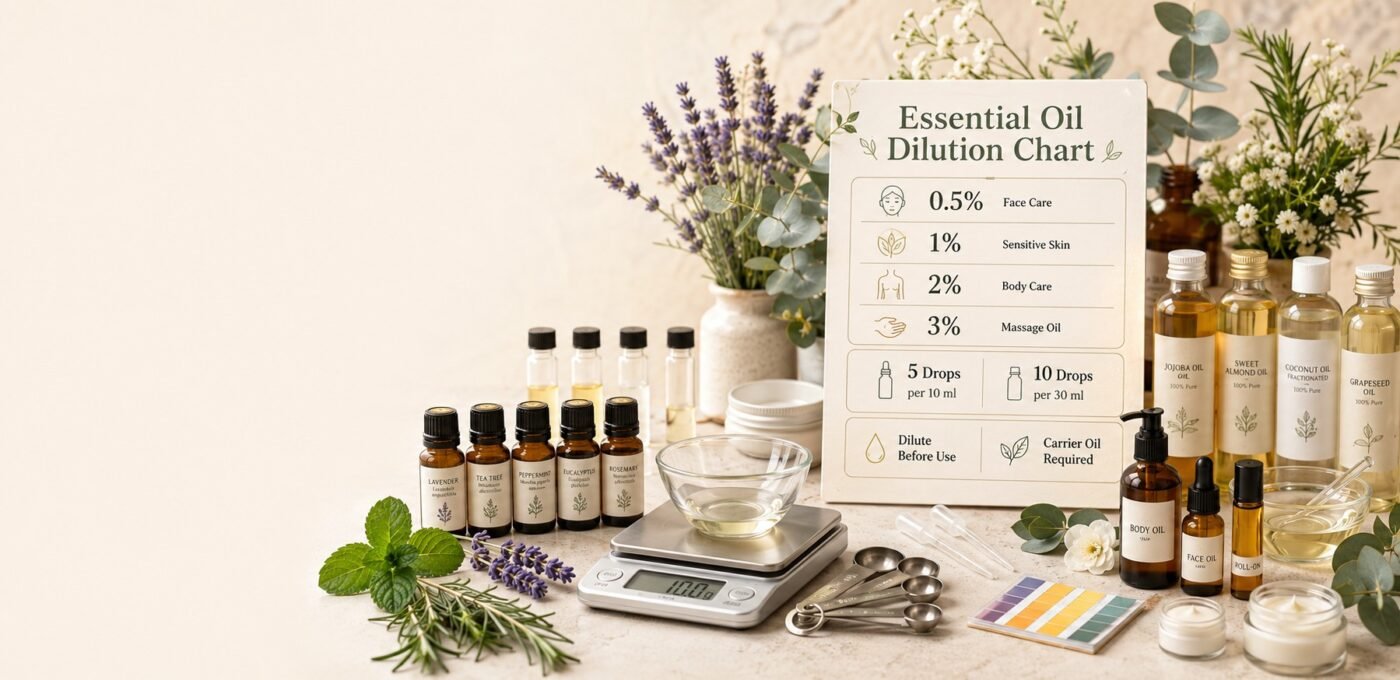
Essential Oil Dilution Chart
Jun
Essential Oil Dilution Chart
Learn how to dilute essential oils safely for DIY skincare, hair care, massage oils, body butter, soap, shampoo, bath products, diffuser blends, and handmade cosmetics with simple percentage charts and easy calculation formulas.
Quick Answer
Essential oils are highly concentrated and should usually be diluted before skin use. A beginner-friendly range is often 0.25% to 1% for face products, around 1% to 2% for body leave-on products, and higher levels only when suitable for rinse-off products or supplier-approved formulas. Always check the exact oil’s safe limit.
Table of Contents
What Is Essential Oil Dilution?
Essential oil dilution means mixing essential oil into a carrier oil, cosmetic base, soap base, shampoo base, lotion base, body butter, balm, scrub, or other suitable product so the essential oil is used at a controlled and safer percentage.
Essential oils are concentrated aromatic ingredients. They are not used like normal oils. A few drops can strongly affect aroma, skin feel, irritation risk, and formula stability.
In professional cosmetic making, essential oils should be measured by weight, not guessed by drops. Drop size changes by bottle, dropper, oil thickness, and temperature, so weight-based formulation is more accurate.
For essential oils, carrier oils, fragrance oils, vitamin E oil, soap bases, body butter ingredients, bottles, jars, and DIY cosmetic raw materials, visit Jindeal.com.
Why Dilution Is Important
Essential oil dilution helps reduce irritation risk, improves even mixing, controls aroma strength, and makes the product more comfortable to use. Undiluted essential oils can be too strong for skin and scalp.
Dilution is important because:
- Essential oils are highly concentrated
- Undiluted use can irritate skin or scalp
- Some oils are stronger than others
- Face products need lower levels than body products
- Leave-on products need more caution than rinse-off products
- Children, elderly users, and sensitive users need extra care
- Some citrus oils may have phototoxicity concerns
- Strong oils like cinnamon, clove, oregano, thyme, peppermint, and wintergreen need extra caution
- Correct dilution improves product consistency and repeatability
- Commercial products need accurate formulation records
Essential Oil Dilution Chart
This beginner chart gives general cosmetic dilution guidance. Some essential oils require lower limits, so always check supplier usage data for the exact oil.
| Dilution % | Essential Oil in 100 g Product | Best Use | Beginner Note |
|---|---|---|---|
| 0.25% | 0.25 g | Very sensitive products, cautious face products | Good for very light aroma and extra caution |
| 0.5% | 0.5 g | Face oils, facial serums, sensitive-skin formulas | Common beginner face-product range |
| 1% | 1 g | Face/body products where low aroma is needed | Useful for gentle leave-on products |
| 2% | 2 g | Body oils, massage oils, body butter, scrubs | Common body-care range if oil is suitable |
| 3% | 3 g | Some rinse-off products or strong aroma body products | Use only after checking oil/product safety |
| 4%+ | 4 g or more | Only for specific product types and approved formulas | Not recommended for beginners without safety data |
How to Calculate Essential Oil Quantity
The best method is to calculate by weight. Use a digital scale that can measure small quantities accurately.
| Total Batch Size | 0.5% Dilution | 1% Dilution | 2% Dilution |
|---|---|---|---|
| 10 g | 0.05 g | 0.10 g | 0.20 g |
| 30 g | 0.15 g | 0.30 g | 0.60 g |
| 50 g | 0.25 g | 0.50 g | 1.00 g |
| 100 g | 0.50 g | 1.00 g | 2.00 g |
| 500 g | 2.50 g | 5.00 g | 10.00 g |
| 1 kg | 5.00 g | 10.00 g | 20.00 g |
Why Drops Are Not Best for Selling
Drop counting is common for home use, but it is not accurate for commercial products. One drop can vary by oil type, dropper, bottle, temperature, and viscosity. For repeatable formulas, use grams.
Product-Wise Dilution Guide
Face Products
Face skin is more sensitive than body skin. Use very low essential oil levels or make fragrance-free products, especially for sensitive skin.
Body Products
Body oils, body butters, balms, and scrubs can often use slightly higher levels than face products, but the exact oil still matters.
Hair and Scalp Products
Essential oils like rosemary, tea tree, peppermint, lavender, and eucalyptus are popular in hair care themes, but scalp products should be diluted and patch tested.
Soap and Rinse-Off Products
Rinse-off products are washed away, but essential oil still needs correct usage. Strong oils can irritate even in rinse-off products if overused.
Bath Products
Essential oils should not float directly on bath water. Use a proper dispersing system or suitable formula design to avoid direct skin contact with undiluted oil.
Common Mistakes
1. Applying Essential Oils Undiluted
Undiluted essential oils can irritate skin and scalp.
2. Using the Same Percentage for Every Oil
Each essential oil has different strength and safety limits.
3. Using Too Much in Face Products
Face products need lower levels and extra caution.
4. Counting Drops for Commercial Products
Drops are not accurate. Use weight-based formulas for repeatability.
5. Ignoring Phototoxic Oils
Some citrus oils require extra care in leave-on skin products exposed to sunlight.
6. Adding Essential Oils to Baby Products Casually
Baby and child products need professional safety guidance.
7. Using Essential Oils as Preservatives
Essential oils are not complete preservatives for water-based cosmetics.
8. Not Patch Testing
Even diluted products can irritate some users.
9. Using Strong Oils Without Caution
Cinnamon, clove, oregano, thyme, peppermint, and wintergreen need extra care.
10. Making Medical Claims
Do not claim essential oils cure diseases, infections, acne, hair loss, pain, or other medical conditions.
Expert Tips
- Measure essential oils by weight for accuracy.
- Start with low dilution and increase only if safe and needed.
- Use 0.25% to 0.5% for many beginner face products.
- Use around 1% to 2% for many body-care products if the oil is suitable.
- Check supplier safe usage data for every essential oil.
- Dilute in carrier oils like sweet almond, jojoba, coconut, olive, or grapeseed oil.
- Use lower levels for sensitive users and leave-on products.
- Patch test finished products.
- Do not use essential oils as preservatives.
- Store essential oils in dark airtight bottles away from heat and sunlight.
- Keep product claims cosmetic and aroma-focused.
- Buy essential oils, carrier oils, vitamin E oil, soap bases, bottles, jars, and DIY raw materials from Jindeal.com.
FAQ
1. What does essential oil dilution mean?
It means mixing essential oil into a carrier oil or cosmetic base at a safe controlled percentage.
2. Why should essential oils be diluted?
Essential oils are concentrated and may irritate skin if used undiluted or at high levels.
3. What is a good dilution for face oils?
Many beginner face oils use very low dilution such as 0.25% to 0.5%, depending on the oil and user sensitivity.
4. What is a good dilution for body oils?
Many body oils use around 1% to 2% dilution if the essential oil is suitable and supplier limits allow it.
5. How much essential oil is 1% in 100 g?
1% dilution in 100 g product means 1 g essential oil and 99 g base or carrier blend.
6. How much essential oil is 2% in 100 g?
2% dilution in 100 g product means 2 g essential oil and 98 g base or carrier blend.
7. Can I measure essential oils by drops?
Drops are not very accurate. For repeatable formulas and selling, measure by weight in grams.
8. Can essential oils be used directly on skin?
It is better to dilute essential oils before skin use. Direct application can irritate skin.
9. Can essential oils be used in baby products?
Baby products need professional safety guidance. Do not casually add essential oils to baby products.
10. Are essential oils preservatives?
No. Essential oils are not reliable complete preservatives for water-based cosmetics.
11. Which carrier oils are good for dilution?
Sweet almond oil, jojoba oil, coconut oil, olive oil, grapeseed oil, sunflower oil, and castor oil are common carrier oils.
12. Can I use essential oils in soap?
Yes, but use soap-safe levels and test aroma stability in your soap base or soap process.
13. Can I use essential oils in bath salts?
Yes, but they should be properly dispersed so undiluted essential oil does not float on bath water.
14. Which essential oils need extra caution?
Cinnamon, clove, oregano, thyme, peppermint, wintergreen, and some citrus oils need extra caution and supplier safety checking.
15. Where can I buy essential oils and carrier oils?
You can buy essential oils, carrier oils, vitamin E oil, soap bases, bottles, jars, and DIY cosmetic raw materials from Jindeal.com.
Final Words
Essential oil dilution is one of the most important safety steps in DIY cosmetic making. Use lower levels for face and sensitive products, moderate levels for body products, and always check supplier guidance for each oil.
Measure by weight, patch test, avoid medical claims, and never use essential oils as preservatives. For essential oils, carrier oils, vitamin E oil, soap bases, bottles, jars, and DIY raw materials, visit Jindeal.com.
Dilute Essential Oils Safely with Jindeal.com
Shop essential oils, carrier oils, vitamin E oil, soap bases, cosmetic bottles, jars, and DIY cosmetic-making ingredients from Jindeal.com.
