
Candle Fragrance Oils, Uncategorized
Candle Wick Size Chart
26
Jun
Jun
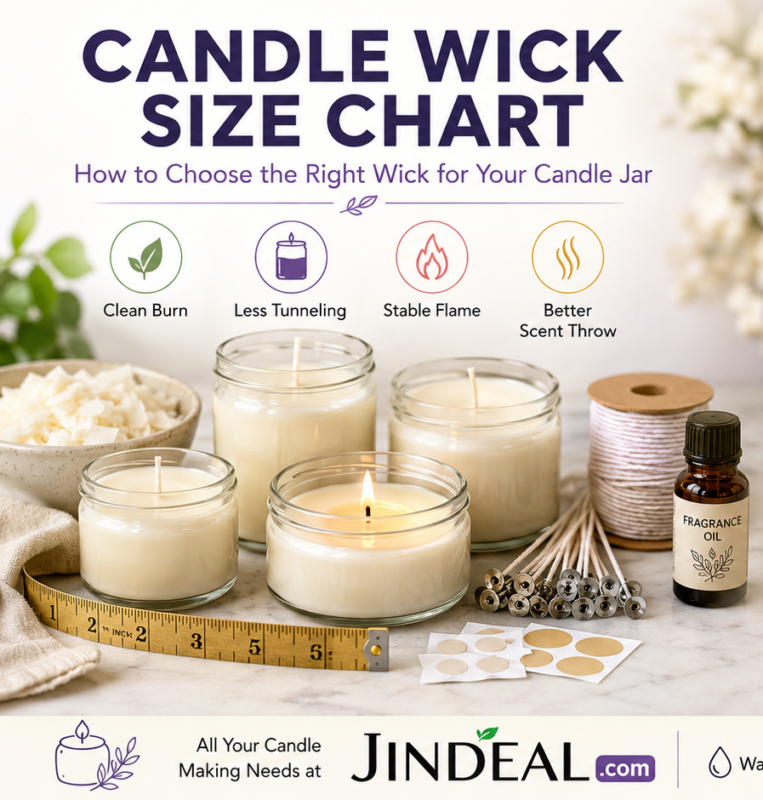
Candle Wick Size Chart: How to Choose the Right Wick for Soy Wax, Paraffin & Handmade Candles
Choosing the correct candle wick size is one of the most important steps in candle making. The right wick gives a clean flame, full melt pool, good fragrance throw and safe burning performance.
Quick Answer
A candle wick size chart helps you select the correct wick based on jar diameter, wax type and fragrance load. If the wick is too small, the candle may tunnel. If it is too large, it may smoke, burn too fast or become unsafe. Always test burn before final production.Table of Contents
What Is a Candle Wick Size Chart?
A Candle Wick Size Chart is a simple reference guide that helps candle makers choose the correct wick according to candle jar diameter, wax type and candle design. It is useful for soy wax candles, paraffin wax candles, beeswax candles, coconut wax candles and blended wax candles. The wick controls how the candle burns. It pulls melted wax upward through the wick and feeds the flame. If the wick is not suitable for your jar and wax, the candle may tunnel, smoke, mushroom, overheat or leave wax on the sides. For candle wax, candle jars, fragrance oils, silicone molds, candle colors and DIY raw materials, you can visit Jindeal.com.What Causes the Problem?
Most candle burning problems happen because the wick size does not match the candle diameter, wax type or fragrance load. Many beginners select a wick by guesswork, but even a small difference in wick size can change the candle performance.- Too small wick: causes tunneling, weak flame and poor melt pool.
- Too large wick: causes smoke, soot, mushrooming and fast burning.
- Wrong wax match: soy wax, paraffin wax and beeswax may need different wick sizes.
- High fragrance load: can slow down burning and may need wick testing.
- Color or additives: too much dye, mica or powder can block wick flow.
- Jar shape: narrow, wide, deep or irregular jars affect heat distribution.
- No test burn: finalizing a candle without testing can lead to customer complaints.
Candle Wick Size Chart
Use this chart as a starting point. Actual wick choice can change based on wax brand, fragrance oil, dye, jar shape and room temperature. Always perform a test burn before bulk production.| Container Diameter | Approx. Diameter | Suggested Wick Type | Starting Wick Size | Best For |
|---|---|---|---|---|
| Small jar / tealight | 2.5-4 cm | Cotton wick | Small / thin wick | Tealights, mini candles, sample candles |
| Small candle jar | 4-5 cm | Cotton or pre-waxed wick | Small to medium wick | Travel tin, small glass jar, votive candle |
| Medium jar | 5-6.5 cm | Cotton wick / ECO style wick | Medium wick | 100ml to 150ml jar candles |
| Standard jar | 6.5-7.5 cm | Cotton wick / soy wick | Medium to large wick | 180ml to 250ml soy candles |
| Large jar | 7.5-9 cm | Large cotton wick or double wick | Large wick / 2 small wicks | Luxury jar candles, wide container candles |
| Extra wide jar | 9 cm+ | Double or triple wick setup | 2-3 tested wicks | Large bowl candles, premium decorative candles |
Important: Wick charts are starting guides only. Final wick size must be confirmed by test burning the candle for safety, melt pool quality and fragrance throw.
Step-by-Step Solution
Step 1: Measure the Candle Jar Diameter
Measure the inside diameter of your candle jar from one side to the other. Do not measure the outer wall. The inner diameter decides the melt pool size.Step 2: Identify Your Wax Type
Different waxes burn differently. Soy wax usually burns cooler and may need a slightly stronger wick than paraffin. Beeswax is harder and may also need careful wick testing.Step 3: Check Fragrance Load
If you use a high fragrance percentage, the wick may burn slower. Start with a balanced fragrance load and test the candle before increasing fragrance.Step 4: Select a Starting Wick from the Chart
Use the candle wick size chart above to select your starting wick. For small jars, start with a smaller wick. For wider jars, use a larger wick or double wick setup.Step 5: Make a Test Candle
Prepare one test candle with the selected wick. Keep the same wax, fragrance oil, color and jar that you plan to use for final production.Step 6: Cure the Candle
Let the candle cure properly before testing. Soy wax candles usually perform better after proper curing because wax and fragrance need time to bind.Step 7: Perform a Test Burn
Burn the candle for 2 to 4 hours and check the melt pool, flame height, smoke, soot and container temperature. The melt pool should slowly reach near the jar edge without overheating.Step 8: Adjust Wick Size
If the candle tunnels, test a bigger wick. If the flame is too high or smoky, test a smaller wick. Repeat until the candle burns cleanly and safely.Simple Rule: Small flame + tunneling = wick too small. Big flame + smoke = wick too large.
Common Mistakes
1. Choosing Wick by Guesswork
Every jar and wax combination is different. Guessing wick size can create poor candle performance.2. Ignoring Jar Diameter
The same wax weight can burn differently in a narrow jar and a wide jar. Always measure diameter.3. Using One Wick for All Waxes
Soy wax, paraffin wax, beeswax and blended wax may need different wick sizes.4. Adding Too Much Fragrance
High fragrance load can affect wick flow, flame size and candle stability.5. Using Too Much Color
Excess dye, mica or powder can clog the wick and reduce proper burning.6. No Test Burn
Selling candles without testing can lead to tunneling, smoke or unsafe burning.7. Not Trimming the Wick
Long wicks can create large flames, soot and mushrooming. Trim before every burn.8. Using Wide Jar with One Small Wick
Large containers may need a bigger wick or multiple wick setup for an even melt pool.Expert Tips
- Always test at least 2-3 wick sizes for a new candle jar.
- Use the same wax, fragrance oil, color and jar during testing.
- Trim the wick to around 5 mm before each test burn.
- Check flame height, smoke, mushrooming and jar temperature.
- For wide jars, consider double wick instead of one oversized wick.
- Avoid too much mica powder because it can block wick burning.
- Keep proper records of wax quantity, fragrance load, wick size and test results.
- Do not finalize a wick only by first burn; check multiple burn cycles.
- If the jar becomes too hot, reduce wick size immediately.
- Buy candle wax, candle jars, candle wicks, fragrance oils and candle-making supplies from Jindeal.com.
FAQ
1. What is a candle wick size chart?
A candle wick size chart is a guide that helps you choose a suitable wick based on candle jar diameter, wax type and candle design.2. How do I choose the right wick size?
Measure the inside diameter of your jar, check your wax type, choose a starting wick from the chart and then perform a test burn.3. What happens if the wick is too small?
A small wick can cause tunneling, weak flame, poor fragrance throw and leftover wax on the jar sides.4. What happens if the wick is too large?
A large wick can cause high flame, smoke, soot, mushrooming, fast burning and overheating of the container.5. Which wick is best for soy wax candles?
Cotton wicks, pre-waxed wicks and soy-compatible wicks are commonly used for soy wax candles. Final selection depends on jar diameter and test burn results.6. Do paraffin candles need a different wick?
Yes, paraffin wax burns differently from soy wax. You may need to test a different wick size for paraffin candles.7. Can I use wooden wicks?
Yes, wooden wicks can be used for container candles, but they need separate testing because flame style and heat output are different from cotton wicks.8. Why is my candle tunneling?
Candle tunneling usually happens because the wick is too small, the first burn was too short, or the candle wax and wick combination is not balanced.9. Why is my candle smoking?
Smoking can happen when the wick is too large, the wick is not trimmed, or there is too much fragrance, dye or additive in the candle.10. Should I use one wick or two wicks?
For small and medium jars, one wick is usually enough. For wide jars above around 7.5-9 cm, double wick testing may give better melt pool coverage.11. How long should I test burn a candle?
A common test burn cycle is around 2 to 4 hours. Check melt pool, flame size, smoke and jar temperature during each cycle.12. How short should I trim the candle wick?
Trim the wick to around 5 mm before lighting. A trimmed wick gives a cleaner and safer burn.13. Can too much fragrance affect wick size?
Yes, high fragrance load can affect burning performance. It may require wick adjustment and proper test burning.14. Can mica powder clog candle wicks?
Yes, too much mica or powder can block the wick and disturb wax flow. Use candle-safe colors carefully.15. Where can I buy candle-making supplies?
You can buy candle wax, candle jars, candle wicks, fragrance oils, candle colors, silicone molds and DIY supplies from https://jindeal.com/.Final Words
A Candle Wick Size Chart is a helpful starting point for choosing the right candle wick, but the final result depends on your jar, wax, fragrance oil, color and burn test. Correct wick selection improves candle safety, appearance, fragrance throw and customer satisfaction. For candle wax, candle jars, candle wicks, fragrance oils, silicone molds, candle colors and DIY raw materials, visit Jindeal.com. Visit Jindeal.com