
Uncategorized
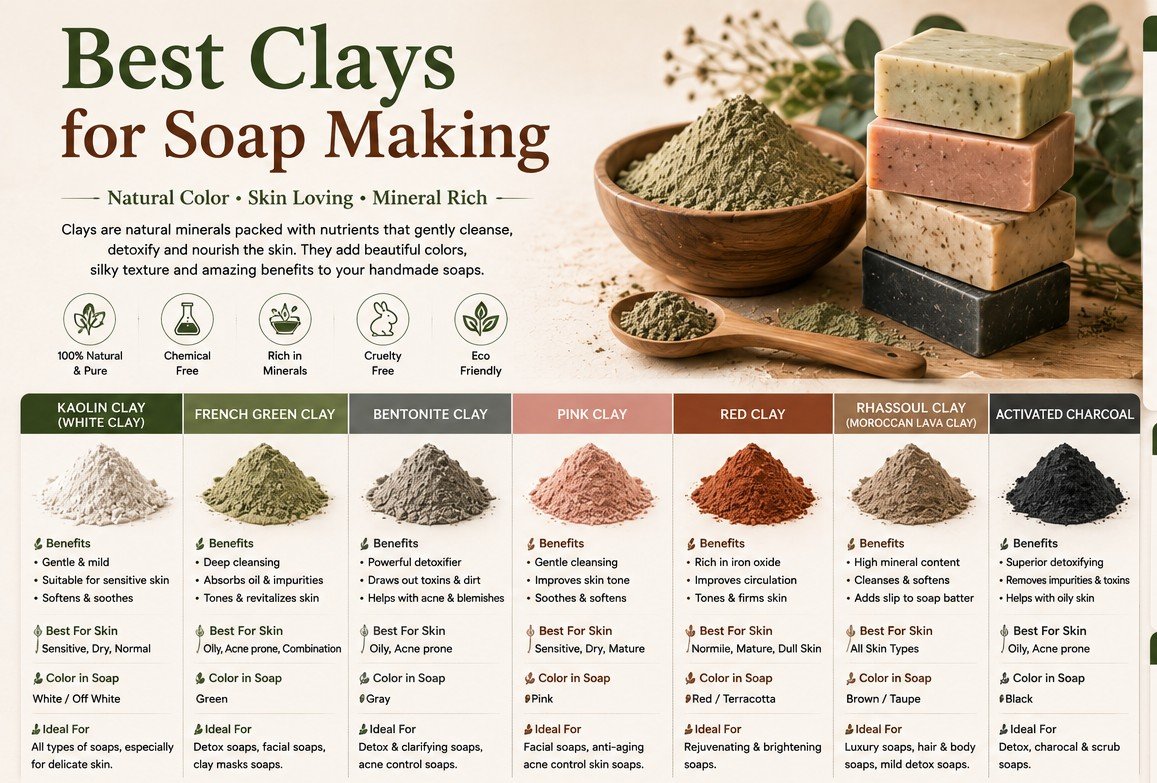
Best Clays for Soap Making
Jun
Best Clays for Soap Making
Learn which cosmetic clays work best in handmade soap, melt and pour soap, clay soap bars, natural-color soaps, facial soap concepts, body soaps, and premium DIY soap products.
Quick Answer
The best clays for soap making are Kaolin Clay, French Green Clay, Bentonite Clay, Rhassoul Clay, Multani Mitti, Red Clay, Yellow Clay, Brazilian Purple Clay, and Activated Charcoal-style powders. Kaolin is best for beginners, French Green gives a green spa look, Bentonite gives stronger clay feel, and Rhassoul gives premium spa appeal.
Table of Contents
Why Use Clay in Soap Making?
Cosmetic clays are used in soap making to add natural color, earthy texture, label appeal, mild slip, spa-style identity, and premium handmade product presentation. Clay soap bars look more natural and can help create product themes like facial soap, charcoal soap, green clay soap, ubtan soap, herbal soap, and spa soap.
Clays are especially useful in melt and pour soap, cold process soap, handmade soap bars, body soaps, foot soaps, and decorative soap products. They are not only used for color; they also give a natural ingredient story and help the product look more premium.
For cosmetic clays, soap bases, herbal powders, fragrance oils, essential oils, mica colors, silicone molds, jars, and DIY soap making raw materials, visit Jindeal.com.
Best Clays for Soap Making
Soap Clay Comparison Chart
This chart helps you choose the best clay for your soap making project.
| Clay | Soap Color / Look | Best Soap Type | Beginner Note |
|---|---|---|---|
| Kaolin Clay | White to off-white, smooth natural look | Facial soap, gentle soap, luxury soap, fragrance soap | Best beginner clay |
| French Green Clay | Natural green shade | Green clay soap, spa soap, oily-skin themed soap | Use small amount first |
| Bentonite Clay | Grey-beige clay look | Body soap, foot soap, strong clay soap | Can thicken and feel heavy if overused |
| Rhassoul Clay | Brown-beige earthy shade | Spa soap, Moroccan-style soap, premium body soap | Good luxury clay soap option |
| Multani Mitti | Beige-brown traditional look | Ubtan soap, face pack soap, herbal soap | Great for Indian herbal soap concepts |
| Brazilian Purple Clay | Soft purple cosmetic color | Luxury soap, decorative soap, premium skincare soap | Test color stability |
| Red Clay | Red-brown earthy tone | Natural soap, spa soap, decorative soap | May stain if used too much |
| Yellow Clay | Warm yellow-beige tone | Herbal soap, ubtan soap, natural color soap | Good for warm natural shade |
| Activated Charcoal Powder | Black to grey color | Men’s soap, charcoal soap, cleansing-style soap | Use carefully to avoid black foam or staining |
How to Add Clay to Soap
1. Disperse Clay Before Adding
Do not add dry clay directly into soap base in large lumps. First disperse it in a small amount of glycerin, oil, water, or melted soap base depending on your soap method. This helps avoid clumps and specks.
2. Use Small Amounts First
Start with a small test batch. Too much clay can make soap gritty, dull, draggy, or weak in lather. Increase slowly after testing.
3. Test Color After Cooling
Clay color can look different after soap cools and sets. Some natural clays may darken, fade, or look muted in the final bar.
4. Pair Clay with the Right Fragrance
Clay soaps pair well with earthy, herbal, floral, spa, mint, tea tree, sandalwood, lavender, and natural fragrance themes.
5. Use Cosmetic-Grade Clay Only
For soap making, always choose cosmetic-grade clays suitable for skin-contact products.
6. Test Lather and Feel
Clay can affect foam, slip, drag, and rinse feel. Always test finished soap before selling.
7. Keep Claims Cosmetic-Safe
You can describe soap as “green clay soap”, “spa soap”, “herbal soap”, “natural color soap”, or “oil-control themed soap”, but avoid claiming it cures acne, infection, pigmentation, or skin disease.
Beginner Soap Ideas
| Soap Idea | Simple Ingredient Direction | Product Theme |
|---|---|---|
| Kaolin Clay Soap | Melt and pour soap base + Kaolin Clay + lavender fragrance | Gentle luxury soap |
| French Green Clay Soap | Soap base + French Green Clay + tea tree or herbal fragrance | Green spa soap |
| Bentonite Body Soap | Soap base + Bentonite Clay + peppermint fragrance | Strong body clay soap |
| Rhassoul Spa Soap | Soap base + Rhassoul Clay + sandalwood or lavender fragrance | Luxury spa soap |
| Multani Mitti Ubtan Soap | Soap base + Multani Mitti + rose powder + ubtan fragrance | Traditional herbal soap |
| Charcoal Clay Soap | Soap base + Activated Charcoal + Kaolin Clay + mint fragrance | Black cleansing-style soap |
Common Mistakes
1. Adding Too Much Clay
Too much clay can make soap gritty, dull, draggy, or low in lather.
2. Not Dispersing Clay First
Dry clay can form lumps. Disperse it before adding to soap base.
3. Using Industrial Grade Clay
Only use cosmetic-grade clay for soap making.
4. Expecting Bright Colors from Natural Clay
Clay colors are usually natural, muted, earthy, and batch-dependent.
5. Not Testing Scent Compatibility
Some earthy clays may slightly affect fragrance profile, so test aroma after curing or setting.
6. Not Testing Lather
Clay can change foam and rinse feel. Always test finished bars.
7. Making Medical Claims
Do not claim clay soap cures acne, eczema, pigmentation, infection, or skin disease.
8. Using Too Much Charcoal
Too much charcoal can create black foam, staining, or messy wash-off.
9. Not Checking Settling
Clay may settle in melt and pour soap if the base is too hot or too thin.
10. Skipping Batch Notes
Record clay amount, soap base type, fragrance, temperature, and final result for repeat production.
Expert Tips
- Start with Kaolin Clay if you are new to soap making.
- Use French Green Clay for premium green spa soap.
- Use Rhassoul Clay for luxury earthy spa soap.
- Use Multani Mitti for Indian ubtan-style soap concepts.
- Use Bentonite Clay carefully because it can feel heavier.
- Disperse clay before adding to soap base.
- Use small amounts and test before bulk production.
- Test color, lather, hardness, fragrance, and rinse feel.
- Use cosmetic-grade clays only.
- Keep claims cosmetic-safe and avoid treatment claims.
- Buy soap bases, Kaolin Clay, French Green Clay, Bentonite Clay, Rhassoul Clay, Multani Mitti, fragrance oils, essential oils, colors, and molds from Jindeal.com.
FAQ
1. Which clay is best for soap making?
Kaolin Clay is the best beginner clay for soap making because it is smooth, easy to use, and works well in many soap formulas.
2. Can I use Bentonite Clay in soap?
Yes, Bentonite Clay can be used in soap, but use it carefully because too much can make soap heavy or draggy.
3. Can I use French Green Clay in soap?
Yes. French Green Clay is excellent for green clay soap, spa soap, and oily-skin themed soap bars.
4. Can I use Rhassoul Clay in soap?
Yes. Rhassoul Clay gives soap a premium earthy spa look and natural clay appeal.
5. Can I use Multani Mitti in soap?
Yes. Multani Mitti works well in ubtan soap, herbal soap, and traditional Indian face pack soap concepts.
6. How much clay should I add to soap?
Start with a small test amount and increase slowly after testing. Exact quantity depends on soap base type, desired color, texture, and final feel.
7. Why is my clay soap gritty?
Soap can become gritty if clay is too coarse, added too much, or not dispersed properly before mixing.
8. Why did my clay settle in melt and pour soap?
Clay can settle if the soap base is too hot, too thin, or if too much clay is added. Let the base cool slightly and stir gently.
9. Can clay reduce soap lather?
Yes, too much clay can reduce lather or change foam feel. Always test finished soap.
10. Can clay soap cure acne?
No cosmetic soap should claim to cure acne or skin disease. Clay soap can be described as a clean-feel or spa-style rinse-off product.
11. Which clay gives green color in soap?
French Green Clay gives a natural green tone in soap, but final shade depends on base and usage level.
12. Which clay gives purple color in soap?
Brazilian Purple Clay can give a soft purple cosmetic shade, but test color stability in your soap base.
13. Can I mix different clays in soap?
Yes. You can mix clays like Kaolin, French Green, Bentonite, Rhassoul, and Multani Mitti, but test the final texture and lather.
14. Do clays need preservative in soap?
Finished soap does not use preservatives like creams, but clay must be dry, clean, cosmetic-grade, and properly stored before use.
15. Where can I buy clays for soap making?
You can buy Kaolin Clay, French Green Clay, Bentonite Clay, Rhassoul Clay, Multani Mitti, soap bases, fragrance oils, essential oils, colors, and molds from Jindeal.com.
Final Words
Clays are one of the easiest ways to make handmade soap look natural, premium, and spa-inspired. Kaolin Clay is best for beginners, French Green Clay is great for green clay soap, Bentonite gives stronger clay feel, Rhassoul gives luxury spa appeal, and Multani Mitti works well for ubtan-style soap.
Use cosmetic-grade clay, disperse it properly, test lather and texture, and avoid medical claims. For soap bases, clays, herbal powders, fragrance oils, essential oils, colors, silicone molds, and DIY soap making raw materials, visit Jindeal.com.
Shop Soap Making Clays on Jindeal.com
Buy Kaolin Clay, French Green Clay, Bentonite Clay, Rhassoul Clay, Multani Mitti, soap bases, fragrance oils, essential oils, mica colors, and silicone soap molds from Jindeal.com.
