
Uncategorized
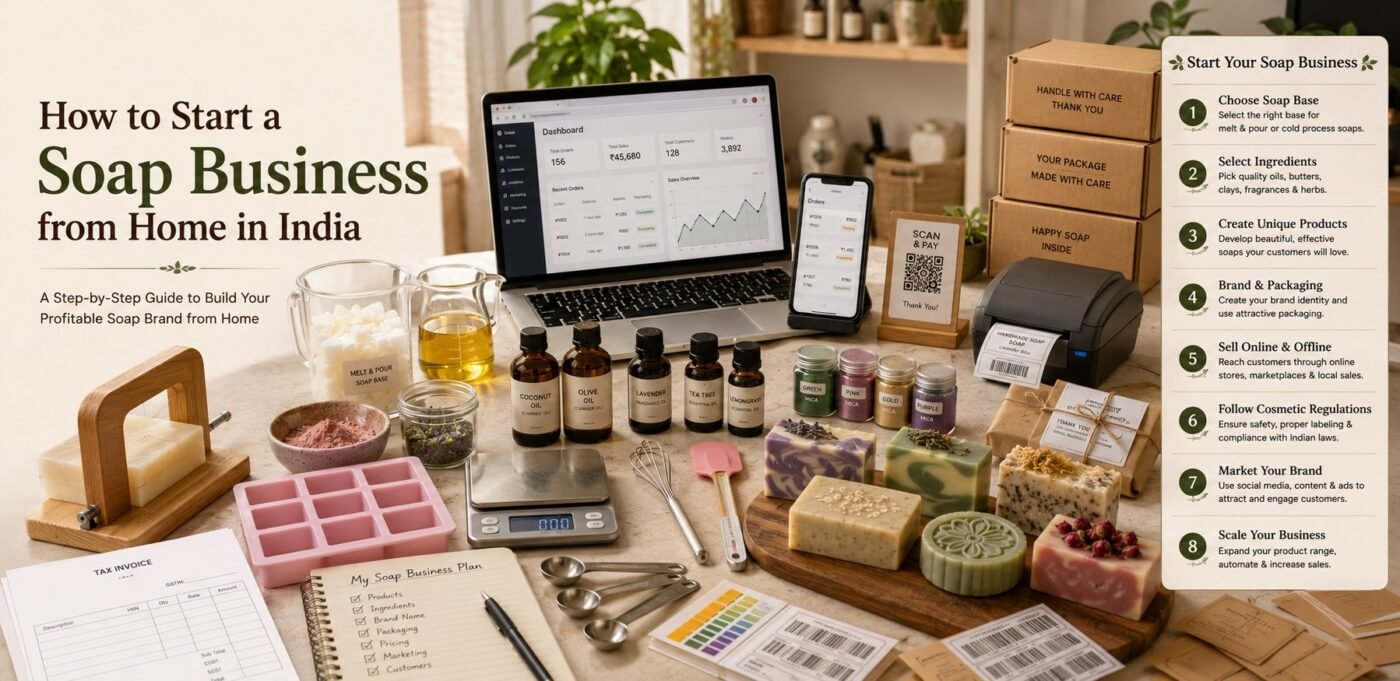
How to Start a Soap Business from Home in India
Jun
How to Start a Soap Business from Home in India
Learn how to plan, make, package, price, brand, and sell handmade soap from home in India with practical product ideas, raw material planning, basic compliance points, costing tips, and beginner mistakes to avoid.
Quick Answer
To start a soap business from home in India, choose a soap type, learn small-batch production, buy cosmetic-grade raw materials, create safe formulas, design labels, calculate cost and margin, test product quality, check local cosmetic manufacturing and packaging compliance, and sell through Instagram, WhatsApp, marketplaces, or your own website.
Table of Contents
Soap Business Overview
Starting a soap business from home is one of the most popular DIY business ideas in India because the entry cost is low, product variety is high, and customers like handmade, natural-style, gifting, herbal, luxury, and customized soap products.
You can start with melt and pour soap because it is beginner-friendly and does not require handling lye directly. After learning product design, fragrance selection, packaging, and customer feedback, you can expand into cold process soap, shampoo bars, body bars, ubtan soap, clay soap, goat milk soap, glycerin soap, and premium gift sets.
For soap bases, fragrance oils, essential oils, cosmetic clays, herbal powders, colors, mica, silicone molds, packaging, jars, bottles, and DIY soap making raw materials, visit Jindeal.com.
Best Soap Types to Start With
Raw Materials Needed
Start with a small range instead of buying too many items. A focused starter kit helps reduce wastage and makes quality control easier.
| Category | Examples | Why Needed |
|---|---|---|
| Soap Base | Ultra Clear base, White base, Goat Milk base, Shea Butter base, Aloe Vera base | Main soap-making raw material |
| Fragrance / Essential Oils | Rose, sandalwood, lavender, tea tree, lemon, mogra, coffee, vanilla | Creates product identity and customer appeal |
| Colors | Mica, liquid color, cosmetic pigment, natural clay color | Improves soap appearance |
| Clays | Kaolin, French Green Clay, Multani Mitti, Rhassoul, Bentonite | Creates spa, herbal, clay soap concepts |
| Herbal Powders | Rose powder, hibiscus powder, orange peel powder, red sandalwood powder | Adds botanical label appeal and natural look |
| Molds | Silicone soap molds, loaf molds, cavity molds, designer molds | Gives final soap shape |
| Tools | Digital scale, beakers, spatula, thermometer, cutter, gloves | Improves batch accuracy and safety |
| Packaging | Butter paper, shrink wrap, kraft boxes, labels, pouches, cartons | Protects soap and improves brand value |
Step-by-Step Business Plan
Step 1: Choose Your Soap Niche
Do not start with every type of soap. Choose one clear niche such as luxury gifting soap, herbal Indian soap, transparent glycerin soap, kids soap, men’s charcoal soap, clay soap, bridal ubtan soap, or hotel guest soap.
Step 2: Learn Small Batch Making
Make small batches of 5 to 10 bars first. Test melting temperature, fragrance level, color, bubbles, sweating, cracking, hardness, packing, and shelf appearance.
Step 3: Build 5 to 10 Hero Products
Start with a small product collection. Example: Rose Soap, Sandalwood Soap, Ubtan Soap, Charcoal Soap, Lavender Soap, Goat Milk Soap, Aloe Vera Soap, Coffee Soap, Green Clay Soap, and Transparent Glycerin Soap.
Step 4: Calculate Cost Properly
Include soap base, fragrance, color, additives, packaging, label, electricity, wastage, labor, marketplace commission, shipping material, and profit margin.
Step 5: Create Basic Branding
Choose a brand name, logo, color theme, packaging style, product photography style, and label design. Premium packaging can increase perceived value.
Step 6: Test With Real Customers
Give samples to family, friends, salons, boutiques, PGs, gift stores, and small resellers. Ask for feedback on fragrance, look, feel, packing, and price.
Step 7: Prepare Labels and Batch Records
Keep formula records, batch number, manufacturing date, supplier name, raw material lot number, and product photos. This helps quality control and repeat production.
Step 8: Start Selling Online and Offline
Start with WhatsApp, Instagram, local gift stores, exhibitions, flea markets, salons, boutique stores, and your own website. Later, expand to marketplaces and B2B gifting.
Basic Compliance Checklist in India
Soap sold as a cosmetic or skincare product may fall under cosmetic rules and state licensing requirements. Before commercial sale, check with your local State Drug Control Department or a professional consultant. Rules can depend on product type, claims, manufacturing location, and business model.
| Area | What to Check | Beginner Note |
|---|---|---|
| Cosmetic Manufacturing | Cosmetics Rules, 2020 and applicable State Licensing Authority requirements | Check before selling soap commercially |
| Business Registration | Proprietorship, partnership, LLP, or company setup | Many home businesses start as proprietorship |
| Udyam Registration | MSME/Udyam registration for small business identity | Useful for MSME benefits and business documentation |
| GST | GST registration threshold, interstate supply, marketplace sales, invoice requirements | Check before selling outside your state or through platforms |
| Labeling | Product name, net quantity, MRP, batch no., manufacturing date, manufacturer/packer details, customer care details and other required declarations | Packaged product labels must be clear and compliant |
| Claims | Avoid drug/medical claims like curing acne, eczema, pigmentation, infection, or disease | Keep claims cosmetic-safe |
| Safety Records | Formula sheet, supplier invoice, batch record, testing notes, customer complaints | Helps quality and accountability |
Soap Costing and Pricing
Many beginners price soap too low because they only calculate soap base cost. Real pricing must include all hidden costs.
| Cost Item | Include This | Example Impact |
|---|---|---|
| Raw Material | Soap base, fragrance, color, oils, clays, powders | Main production cost |
| Packaging | Box, wrap, sticker, label, ribbon, carton | Can make low-cost soap look premium |
| Wastage | Spillage, trimming, damaged bars, testing loss | Add wastage percentage |
| Labor | Your time for making, packing, replying, shipping | Never ignore labor cost |
| Selling Cost | Marketplace commission, payment gateway, ads, samples | Important for online sales |
| Shipping Material | Courier box, tape, filler, invoice, label | Must be included for online orders |
| Profit Margin | Retail, wholesale, reseller, bulk gift margin | Decide separate pricing slabs |
Packaging and Branding
Soap packaging should protect the bar, show the fragrance or variant clearly, and make the product look gift-worthy. Packaging is very important for online selling because customers cannot smell the product before buying.
Good Packaging Ideas
- Kraft paper wrap with premium label
- Printed soap box with window
- Transparent shrink wrap with sticker label
- Butter paper wrap for handmade look
- Luxury gift box for set of 3 or 6 soaps
- Festival packaging for Diwali, Rakhi, wedding, and corporate gifting
Label Information to Plan
- Brand name and product name
- Variant/fragrance name
- Net quantity
- MRP
- Batch number
- Manufacturing date
- Best before or use before information
- Ingredients list
- Manufacturer/packer/marketer details as applicable
- Customer care contact
- Usage and storage instructions
Where to Sell Your Soap
You can sell handmade soap through multiple channels. Start with direct channels first because they give better feedback and lower risk.
| Sales Channel | Best For | Beginner Tip |
|---|---|---|
| Friends, family, repeat customers, local groups | Use catalog photos and clear price list | |
| Brand building, reels, gift sets, lifestyle content | Show making videos and packing videos | |
| Local Gift Stores | Offline retail and gifting | Offer tester bars and wholesale margin |
| Salons and Boutiques | Premium local customers | Make small luxury display packs |
| Exhibitions | Fast customer feedback and bulk orders | Carry combo packs and samples |
| Your Website | Long-term brand building | Add SEO blogs, product pages, FAQs, and reviews |
| Marketplaces | Pan-India reach | Calculate commission, GST, returns, and shipping carefully |
Common Mistakes
1. Starting With Too Many Products
Start with 5 to 10 strong products instead of 50 random soaps.
2. Not Testing Soap Before Selling
Test sweating, fragrance retention, color stability, hardness, packing, and shelf appearance.
3. Using Low-Quality Fragrance
Bad fragrance can ruin the customer experience even if the soap looks good.
4. Pricing Too Low
Include packaging, labor, wastage, selling cost, and profit margin.
5. Ignoring Labels
Labels should be clear, professional, and compliant for packaged goods.
6. Making Medical Claims
Do not claim soap cures acne, eczema, pigmentation, infection, or skin disease.
7. Poor Product Photography
Good photos help online customers understand quality and fragrance theme.
8. Not Keeping Batch Records
Batch records help you repeat best-selling formulas and manage customer complaints.
9. Weak Packaging
Soap can get damaged, scratched, or sweaty during storage and shipping if packaging is poor.
10. Not Checking Compliance
Before selling commercially, verify license, GST, labeling, local trade, and packaging rules.
FAQ
1. Can I start a soap business from home in India?
Yes, you can start planning and testing from home, but before commercial selling you should check cosmetic manufacturing, local business, GST, labeling, and packaging compliance requirements.
2. Which soap is best for beginners?
Melt and pour soap is best for beginners because it is easier, faster, and does not require direct lye handling.
3. How much investment is needed to start?
You can start small with soap base, 3 to 5 fragrances, colors, molds, tools, labels, and basic packaging. Investment depends on batch size and packaging quality.
4. Do I need a license to sell handmade soap in India?
Soap sold as a cosmetic may require applicable cosmetic manufacturing compliance. Check with your local State Drug Control Department or compliance consultant before selling.
5. Do I need GST for soap business?
GST depends on turnover, interstate supply, marketplace rules, and business model. Check with a GST consultant before selling outside your state or through platforms.
6. Can I sell soap on Instagram?
Yes, Instagram is a good starting channel, but product labels, claims, packaging, and business compliance should still be handled properly.
7. Can I sell soap on Amazon or Flipkart?
Yes, but marketplaces may require GST, brand details, product compliance, barcode, packaging, and proper invoices.
8. Which soap base should I start with?
Start with clear soap base, white soap base, goat milk soap base, shea butter soap base, or aloe vera soap base depending on your product theme.
9. Which fragrances sell well?
Rose, sandalwood, lavender, lemon, mogra, coffee, vanilla, tea tree, orange, and charcoal-mint style fragrances are popular beginner options.
10. Can handmade soap cure acne?
No. Do not make medical claims. Handmade soap can be sold as cleansing, fragrance, beauty, gifting, spa, or cosmetic product.
11. How do I price handmade soap?
Add raw material, packaging, labor, wastage, shipping material, selling commission, and profit margin before deciding price.
12. How can I make soap look premium?
Use good molds, matching fragrance and color, clean labels, neat packaging, product photography, and consistent branding.
13. What are good soap business niches?
Good niches include gifting soap, herbal soap, ubtan soap, luxury soap, kids soap, men’s soap, clay soap, transparent soap, and hotel guest soap.
14. Can I buy small quantities of soap raw materials?
Yes. Jindeal.com supports DIY makers and small businesses with low MOQ soap bases, fragrances, colors, clays, molds, and packaging materials.
15. Where can I buy soap making supplies in India?
You can buy soap bases, fragrance oils, essential oils, clays, herbal powders, colors, mica, silicone molds, and packaging from Jindeal.com.
Final Words
Starting a soap business from home in India is possible with the right product selection, small-batch testing, quality raw materials, good packaging, correct pricing, and basic compliance planning. Start small, build 5 to 10 strong soaps, take customer feedback, and grow step by step.
Use cosmetic-grade raw materials, avoid medical claims, maintain batch records, and verify all legal requirements before commercial selling. For soap bases, fragrance oils, essential oils, colors, clays, herbal powders, molds, and packaging, visit Jindeal.com.
Shop Soap Making Raw Materials on Jindeal.com
Buy melt and pour soap bases, fragrance oils, essential oils, cosmetic clays, herbal powders, mica colors, silicone molds, and packaging materials from Jindeal.com to start your soap business from home.