
Uncategorized
Carrier Oil vs Essential Oil: What’s the Difference?
Jun
Carrier Oil vs Essential Oil: What’s the Difference?
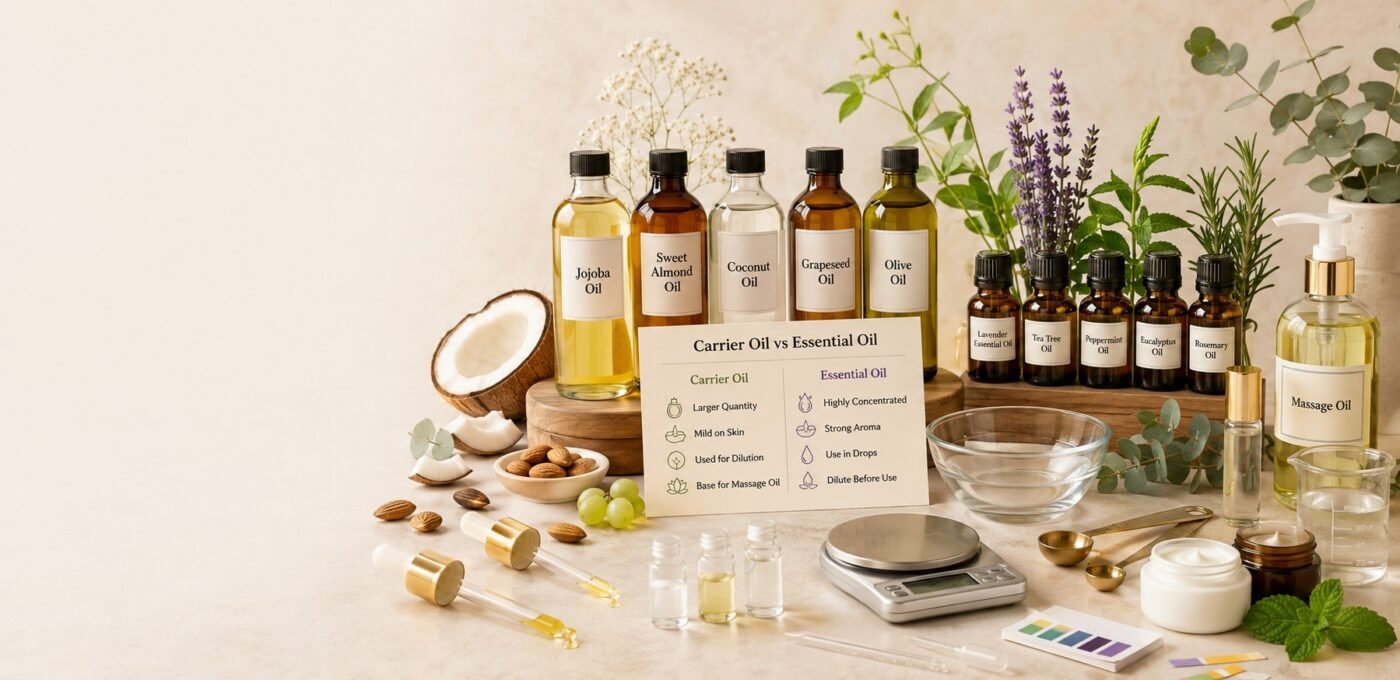
Learn the clear difference between carrier oils and essential oils, how both are used in DIY skincare, hair care, massage oils, soap, body butter, face serum, bath products, and why essential oils should be diluted before skin use.
Quick Answer
Carrier oils are mild fixed oils like coconut oil, sweet almond oil, jojoba oil, olive oil, and castor oil used to moisturize, dilute, and carry ingredients. Essential oils are concentrated aromatic oils like lavender, tea tree, rosemary, peppermint, and eucalyptus used mainly for aroma and product theme. Essential oils usually need carrier oil dilution before skin use.
Table of Contents
What Are Carrier Oils and Essential Oils?
Carrier oils and essential oils are both popular in DIY cosmetics, but they are very different ingredients. Carrier oils are fatty oils that can be used in larger amounts in skincare, hair care, massage oils, balms, body butters, and oil blends. Essential oils are concentrated aromatic oils used in very small amounts for aroma and cosmetic product appeal.
What Is a Carrier Oil?
A carrier oil is a fixed oil usually obtained from seeds, nuts, fruits, or kernels. Examples include coconut oil, sweet almond oil, jojoba oil, olive oil, castor oil, grapeseed oil, sunflower oil, and argan oil. Carrier oils help dilute essential oils and provide slip, richness, shine, and skin feel.
What Is an Essential Oil?
An essential oil is a highly concentrated aromatic oil obtained from plant parts such as leaves, flowers, peels, woods, roots, herbs, resins, or grasses. Examples include lavender essential oil, tea tree oil, rosemary oil, peppermint oil, eucalyptus oil, lemon oil, and lemongrass oil.
For carrier oils, essential oils, fragrance oils, soap bases, body butter ingredients, bottles, jars, and DIY cosmetic raw materials, visit Jindeal.com.
Main Difference Between Carrier Oil and Essential Oil
The biggest difference is concentration and purpose. Carrier oils are base oils used in larger quantities, while essential oils are concentrated aromatic ingredients used in very small percentages.
Carrier Oil vs Essential Oil Comparison Chart
This chart explains the practical difference for beginners making DIY cosmetics, hair oils, skincare, soap, and bath products.
| Point | Carrier Oil | Essential Oil |
|---|---|---|
| Main Purpose | Base oil, dilution, slip, skin feel, nourishment-style cosmetic use | Aroma, fragrance profile, product theme, sensory experience |
| Concentration | Mild compared to essential oils | Highly concentrated aromatic ingredient |
| Typical Quantity | Can be used in large percentages | Used in small percentages |
| Direct Skin Use | Many carrier oils can be used directly if suitable for skin | Usually should be diluted before topical use |
| Aroma Strength | Mild, neutral, nutty, oily, or natural aroma | Strong aroma such as floral, minty, citrus, herbal, woody |
| Examples | Coconut oil, almond oil, jojoba oil, olive oil, castor oil | Lavender, tea tree, rosemary, peppermint, eucalyptus, lemon |
| Best Products | Body oil, hair oil, massage oil, balm, body butter, face oil | Soap, diffuser, massage blend, shampoo, body wash, bath products |
| Shelf Life Risk | Can oxidize and become rancid | Can oxidize and lose aroma quality |
| Preservative Role | Not a preservative for water-based products | Not a complete preservative for water-based products |
| Beginner Safety | Usually easier to use | Needs dilution, safe limits, and patch testing |
How to Use Both in DIY Products
1. Face Oil
Use carrier oils as the main base. For sensitive face products, essential oils are optional and should be used very carefully at low levels. Many face oils can be fragrance-free.
2. Hair Oil
Use carrier oils like coconut oil, castor oil, jojoba oil, olive oil, and sweet almond oil as the base. Essential oils like rosemary, tea tree, lavender, or peppermint can be added in diluted amounts for aroma and hair-care product theme.
3. Massage Oil
Carrier oils provide glide and spreadability. Essential oils provide aroma. Always dilute essential oils properly before massage use.
4. Body Butter
Carrier oils help soften butters and improve spread. Essential oils can add fragrance, but they must be used within leave-on safe limits.
5. Soap Making
Carrier oils or butters may be part of soap formulas or added in small amounts to melt and pour soap. Essential oils add aroma to soap, but usage levels and scent stability must be tested.
6. Bath Products
Carrier oils can add richness to bath products, while essential oils add aroma. Essential oils should be properly dispersed so they do not float undiluted on bath water.
7. Diffuser and Aroma Products
Essential oils are used mainly for aroma. Carrier oils are not normally used in water diffusers, but may be used in roll-on perfume oils or aroma oil blends designed for topical use.
Essential Oil Dilution Guide
Essential oils should be used at a controlled percentage. The correct amount depends on oil type, product type, leave-on or rinse-off use, age group, skin sensitivity, and supplier safety guidance.
| Dilution Level | Essential Oil in 100 g Product | Typical Beginner Use |
|---|---|---|
| 0.25% | 0.25 g | Very cautious face or sensitive formulas |
| 0.5% | 0.5 g | Many beginner face oil formulas |
| 1% | 1 g | Gentle body products and light aroma blends |
| 2% | 2 g | Many body oils, massage oils, and body butter formulas if suitable |
| 3%+ | 3 g or more | Only for suitable products after checking oil safety data |
Common Mistakes
1. Using Essential Oil Like Carrier Oil
Essential oils are highly concentrated and should not be used in large amounts like carrier oils.
2. Applying Essential Oils Directly
Most essential oils should be diluted before skin or scalp use.
3. Thinking Carrier Oil and Essential Oil Are Same
Carrier oils are base oils; essential oils are concentrated aromatic ingredients.
4. Using Essential Oils as Preservatives
Essential oils are not complete preservatives for water-based cosmetics.
5. Using Too Much Essential Oil in Face Products
Face products need very low levels or fragrance-free formulation.
6. Not Checking Oil Suitability
Some essential oils are not suitable for every product type or skin area.
7. Measuring Only by Drops for Selling
Drops are not accurate for commercial formulas. Use grams by weight.
8. Ignoring Shelf Life
Both carrier oils and essential oils can oxidize over time.
9. Adding Essential Oils to Baby Products Casually
Baby and child products need professional safety checking.
10. Making Medical Claims
Cosmetic products should not claim to cure acne, hair loss, infection, pain, or disease.
Expert Tips
- Use carrier oils as the base for face oils, hair oils, massage oils, and body oils.
- Use essential oils only in small safe percentages for aroma and product theme.
- Measure formulas by weight for consistency.
- Choose light carrier oils like jojoba or grapeseed for non-greasy feel.
- Choose richer oils like castor or olive oil for heavier hair oil blends.
- Use lavender essential oil for soft floral aroma.
- Use rosemary or tea tree for herbal hair-care themed products.
- Use peppermint or eucalyptus carefully for fresh cooling aroma.
- Patch test finished products before regular use.
- Store oils in tightly closed bottles away from heat and sunlight.
- Use preservatives for water-based products; oils are not preservatives.
- Buy carrier oils, essential oils, vitamin E oil, soap bases, bottles, jars, and DIY cosmetic raw materials from Jindeal.com.
FAQ
1. What is the difference between carrier oil and essential oil?
Carrier oil is a mild base oil used in larger amounts. Essential oil is a concentrated aromatic oil used in small amounts for aroma and product theme.
2. Can carrier oils be used directly on skin?
Many carrier oils can be used directly if suitable for the user’s skin and product purpose.
3. Can essential oils be used directly on skin?
Essential oils should usually be diluted before skin use because they are concentrated.
4. Why are carrier oils called carrier oils?
They help carry and dilute essential oils so essential oils can be spread more safely on skin.
5. Which carrier oil is best for hair?
Coconut oil, castor oil, jojoba oil, olive oil, and sweet almond oil are commonly used in hair oil blends.
6. Which carrier oil is best for face?
Jojoba oil, grapeseed oil, sweet almond oil, and argan oil are popular face oil choices depending on skin feel preference.
7. Which essential oils are popular for hair care?
Rosemary, tea tree, lavender, peppermint, cedarwood, and eucalyptus are popular in hair-care themed products.
8. Which essential oils are popular for skincare?
Lavender, geranium, frankincense, tea tree, chamomile, and rose are popular in skincare-style products, but dilution and safety limits matter.
9. Are carrier oils preservatives?
No. Carrier oils are not preservatives for water-based cosmetics.
10. Are essential oils preservatives?
No. Essential oils are not reliable complete preservatives for water-based cosmetics.
11. Can I mix carrier oil and essential oil?
Yes. This is common for massage oil, hair oil, body oil, face oil, and roll-on blends when essential oil is used at a safe dilution.
12. How much essential oil should I add to carrier oil?
It depends on product type and essential oil. Many beginner products use 0.25% to 2%, but always check supplier usage guidance.
13. Can I use essential oil instead of fragrance oil?
Sometimes, but performance, aroma strength, safety limits, cost, and stability can differ. Test in your final product.
14. Do carrier oils expire?
Yes. Carrier oils can oxidize and become rancid over time. Store them cool, dark, and tightly closed.
15. Where can I buy carrier oils and essential oils?
You can buy carrier oils, essential oils, vitamin E oil, soap bases, bottles, jars, and DIY cosmetic raw materials from Jindeal.com.
Final Words
Carrier oils and essential oils are both useful in DIY cosmetics, but they are not the same. Carrier oils are the base and dilution oils, while essential oils are concentrated aromatic ingredients used in small amounts.
Use carrier oils for skin feel, slip, hair oil, massage oil, and body care. Use essential oils carefully for aroma and product theme. For carrier oils, essential oils, vitamin E oil, soap bases, bottles, jars, and DIY raw materials, visit Jindeal.com.
Shop Carrier Oils and Essential Oils on Jindeal.com
Buy sweet almond oil, jojoba oil, coconut oil, castor oil, lavender oil, rosemary oil, tea tree oil, peppermint oil, eucalyptus oil, bottles, jars, and DIY cosmetic ingredients from Jindeal.com.
