
Uncategorized
How to Choose Cosmetic Colors and Mica
Jun
How to Choose Cosmetic Colors and Mica
Learn how to choose cosmetic colors, mica powders, pigments, oxides, lake colors, liquid colors, and natural colorants for soap, body butter, lip products, bath bombs, scrubs, lotions, creams, and DIY cosmetic products.
Quick Answer
Choose cosmetic colors based on product type, safety approval, solubility, pH stability, staining risk, shimmer level, and usage rate. Mica is great for shimmer and decorative color, oxides give strong matte color, liquid colors are easy for soap, and natural powders suit herbal-style products but may fade or change color.
Table of Contents
What Are Cosmetic Colors and Mica?
Cosmetic colors are colorants used to make skincare, soap, bath, lip, hair care, and personal care products visually attractive. They may be powders, pigments, mica, liquid colors, oil-dispersible colors, water-soluble colors, iron oxides, ultramarines, lake colors, or natural herbal powders.
Mica is a shiny mineral-based cosmetic colorant often used for shimmer, pearl effect, metallic look, and decorative color. It is popular in melt and pour soap, bath bombs, body shimmer products, resin-style crafts, nail products, and some makeup-style products depending on grade and safety approval.
Not every color is suitable for every product. A color that works in soap may not be suitable for lips. A color that looks bright in powder may fade in high-pH soap. A mica that looks beautiful in the jar may not show strongly in opaque products.
For cosmetic mica powders, soap colors, liquid colors, oxides, clays, herbal powders, melt and pour soap bases, cosmetic jars, bottles, and DIY cosmetic raw materials, visit Jindeal.com.
What Causes Beginner Confusion?
Beginners often choose color only by shade, but cosmetic color selection also depends on product type, solubility, safety, pH, and final appearance. The same mica may behave differently in clear soap, white soap, body butter, bath bombs, and lotion.
Common confusion happens because beginners:
- Use craft glitter instead of cosmetic-grade mica
- Use soap color in lip products without checking lip approval
- Use water-soluble color in oil-based products
- Use oil-dispersible pigments directly in water-based products
- Add too much mica and create staining or rough texture
- Expect mica shimmer to show strongly in opaque white products
- Do not check pH stability in soap and cleansers
- Use natural powders but expect bright synthetic-style color
- Do not pre-disperse powder colors before adding
- Use non-cosmetic colorants in leave-on products
- Ignore bleeding, fading, staining, and migration
- Do not test color in the final formula before bulk production
Choosing the correct color system prevents dull color, clumps, bleeding, staining, fading, rough texture, and customer complaints.
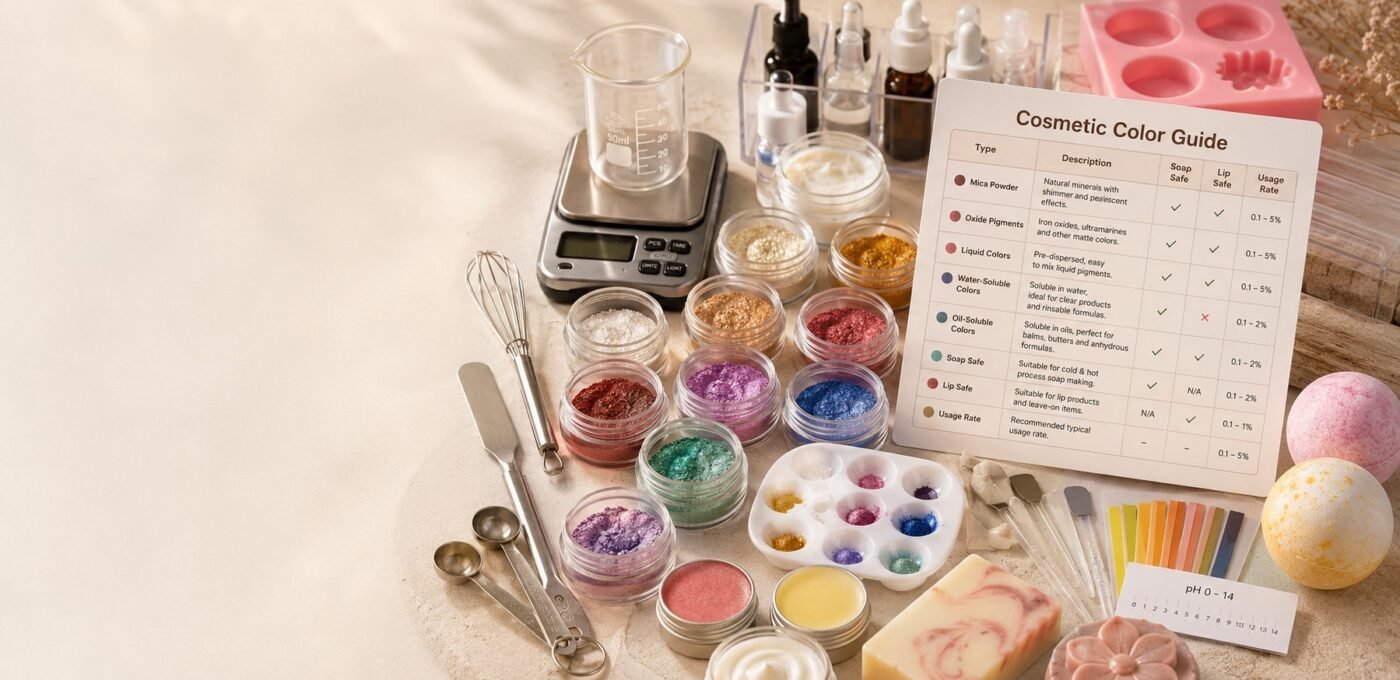
Cosmetic Color Selection Chart
Use this beginner-friendly chart to choose the right color type for different cosmetic products.
| Color Type | Best For | Look / Finish | Beginner Note |
|---|---|---|---|
| Mica Powder | Soap, bath bombs, shimmer body products, decorative cosmetics | Shimmer, pearl, metallic, sparkle | Use cosmetic-grade mica and check product suitability |
| Iron Oxides | Makeup-style products, soaps, matte color formulas | Strong matte earthy colors | Must be dispersed properly to avoid specks |
| Liquid Soap Colors | Melt and pour soap, clear soap, white soap | Easy bright color | Check if color bleeds or migrates in soap |
| Lake Colors | Bath bombs, some cosmetics, color cosmetics | Bright and strong | Check product and regional approval before use |
| Natural Powders | Herbal soap, ubtan, masks, scrubs, natural-style products | Muted natural color | May fade, change, or give earthy texture |
| Clays | Face masks, soaps, scrubs, natural skincare | Soft earthy tones | Can thicken or dry out formulas if used too much |
| Water-Soluble Dyes | Water-based products, some bath products | Clear bright color | May stain or bleed depending on formula |
| Oil-Dispersible Colors | Oil-based balms, body butter, lip products, anhydrous products | Better in oil phase | Do not add directly to water without proper system |
Step-by-Step Choosing Guide
Step 1: Decide the Product Type
First choose the product you are making. Soap, lotion, body butter, lip balm, bath bomb, face mask, scrub, shampoo, and makeup-style products need different color choices.
Step 2: Check Cosmetic Grade
Use only cosmetic-grade colors for cosmetic products. Do not use craft mica, craft glitter, fabric dye, candle dye, food color, poster color, or industrial pigment unless the supplier clearly confirms cosmetic suitability for that product type.
Step 3: Check Area Approval
Some colors may be safe for soap but not for lips or eyes. Some may be allowed in rinse-off products but not leave-on products. Check supplier documents and regional rules before selling.
Step 4: Match Color to Product Base
Clear soap base makes colors look brighter and more transparent. White soap base makes colors pastel or opaque. Body butter may mute shimmer. Bath bombs may need stronger or better-dispersed color.
Step 5: Check Solubility and Dispersibility
Some colors dissolve in water, some disperse in oil, and some need pre-mixing. Mica does not dissolve; it disperses. If not mixed properly, it can settle, clump, or create specks.
Step 6: Pre-Disperse Powder Colors
Mix mica or pigment with a small amount of suitable liquid before adding to the full batch. Use oil for oil-based products and glycerin or suitable medium for some water-based products, depending on the color type.
Step 7: Use Small Amount First
Start with a small amount and increase gradually. Too much mica or pigment can stain skin, feel gritty, clog texture, or affect product stability.
Step 8: Test for Bleeding and Migration
Some colors bleed or move in soap, bath products, or layered designs. Test the final product for a few days or weeks before selling.
Step 9: Test in Final Formula
A color may look different after heating, cooling, curing, drying, pH change, fragrance addition, or storage. Always test in the final product formula.
Step 10: Label and Store Correctly
Store mica and colors in dry, closed containers away from moisture. Label each color with name, batch, supplier, usage notes, and approved product types.
Common Mistakes
1. Using Craft Mica in Cosmetics
Craft mica may not be cosmetic-grade and may not be safe for skin products.
2. Using Candle Dye in Skincare
Candle dyes are for candles, not cosmetic skin products.
3. Using Food Color in Soap or Cosmetics
Food color may bleed, stain, fade, or fail in soap and cosmetic formulas.
4. Not Checking Lip Approval
Only lip-approved colors should be used in lip balm, lip gloss, or lip products.
5. Adding Too Much Mica
Too much mica can stain, feel rough, settle, or look muddy.
6. Not Pre-Dispersing Powder Colors
Dry mica or pigment can create specks and clumps if added directly.
7. Expecting Bright Color from Natural Powders
Natural powders often give soft, muted, earthy tones and may fade.
8. Ignoring pH Stability
High-pH products like soap can change or fade some colors.
9. Not Testing for Bleeding
Some colors migrate in layered soap designs or bath products.
10. Selling Without Color Stability Testing
Test color after storage, heat, light exposure, and product curing before selling.
Expert Tips
- Use cosmetic-grade mica and colorants only.
- Check if the color is approved for soap, skin, eyes, lips, or bath use.
- Use mica for shimmer and pearl effect.
- Use oxides for stronger matte color.
- Use liquid colors for easy melt and pour soap coloring.
- Use natural powders for herbal and earthy product themes.
- Pre-disperse mica and powder pigments before adding.
- Start with a small color amount and increase slowly.
- Test color in clear base and white base separately.
- Check bleeding, staining, fading, and migration.
- Store colors in dry airtight containers.
- Buy cosmetic mica, soap colors, oxides, clays, herbal powders, soap base, jars, and DIY cosmetic raw materials from Jindeal.com.
FAQ
1. What is mica powder used for in cosmetics?
Mica powder is used to add shimmer, pearl effect, sparkle, and decorative color to soaps, bath products, body shimmer products, and some cosmetic formulas.
2. Is mica safe for cosmetics?
Cosmetic-grade mica can be used in suitable cosmetic products, but you must check supplier approval for the exact product type and application area.
3. Can I use mica in soap?
Yes. Mica is popular in melt and pour soap and decorative soap making. Test in clear and white bases because final color can look different.
4. Can I use mica in body butter?
Yes, small amounts of cosmetic-grade shimmer mica can be used for body shimmer products, but too much may stain or feel gritty.
5. Can I use mica in lip balm?
Only use mica that is specifically approved for lip products. Not all cosmetic micas are lip-safe.
6. Can I use food color in soap?
Food color is not ideal for soap because it can bleed, fade, stain, or behave unpredictably.
7. Can I use candle dye in cosmetics?
No. Candle dye is meant for candles, not skincare, soap, or cosmetic products.
8. What is the difference between mica and oxide?
Mica usually gives shimmer or pearl effect, while oxides give stronger matte earthy color.
9. Why does my mica clump in soap?
Mica can clump if added dry without pre-dispersing. Mix it with a small amount of suitable liquid before adding to the full batch.
10. Why did my color fade in soap?
Some colors are not stable in high-pH soap or may fade due to light, heat, fragrance, or curing conditions.
11. What colors are best for natural cosmetics?
Clays, herbal powders, and natural-style micas can be used for earthy and natural product themes, but colors may be softer and less bright.
12. Can mica stain skin?
Too much mica or strong pigment may stain skin or leave residue. Use proper amounts and test before selling.
13. Can I use mica in bath bombs?
Yes, bath-safe cosmetic mica can be used in bath bombs, but dispersion and tub staining risk should be tested.
14. How should I store mica powder?
Store mica in a dry, closed container away from moisture, heat, and contamination.
15. Where can I buy cosmetic colors and mica?
You can buy cosmetic mica powders, soap colors, oxides, clays, herbal powders, soap base, jars, bottles, and DIY cosmetic raw materials from Jindeal.com.
Final Words
Choosing cosmetic colors and mica is not only about shade. You must check product type, cosmetic grade, area approval, solubility, pH stability, bleeding, staining, shimmer level, and final formula performance.
Start with cosmetic-grade colorants, test in small batches, and keep records of each formula. For cosmetic mica powders, soap colors, oxides, clays, herbal powders, soap bases, jars, bottles, and DIY cosmetic raw materials, visit Jindeal.com.
Choose Cosmetic Colors with Jindeal.com
Shop cosmetic mica powders, soap colors, oxides, clays, herbal powders, soap bases, jars, bottles, and DIY cosmetic ingredients from Jindeal.com.
