
Uncategorized
Candle Shelf Life Guide
Jun
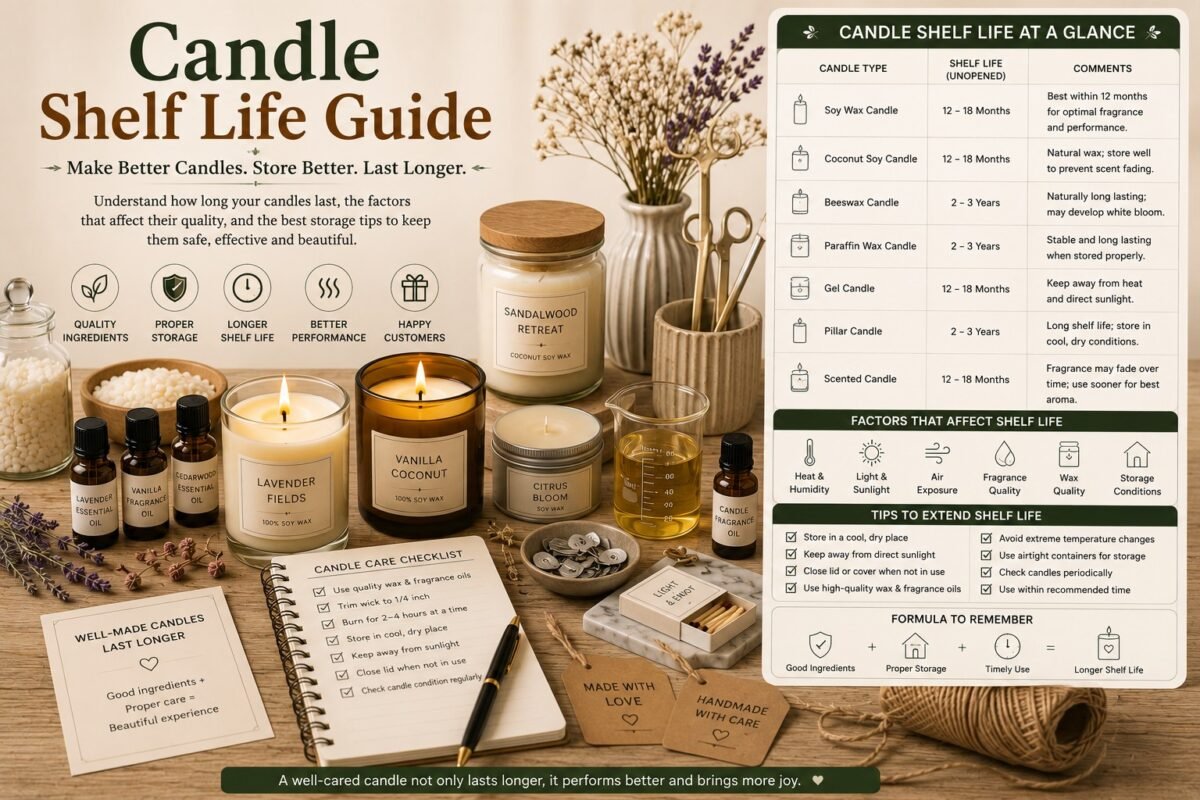
Candle Shelf Life Guide
Learn how long handmade candles, soy candles, paraffin candles, coconut wax candles, wax melts, candle tins, jar candles, fragrance candles, and essential oil candles can last, plus how to store and test them before selling.
Quick Answer
Handmade candles can stay good for many months when made with stable wax, suitable fragrance oil, correct fragrance load, clean jars, and proper storage. However, exact shelf life depends on wax type, fragrance oil, essential oil, dye, wick, container, packaging, humidity, heat, and sunlight exposure. For candle business use, always test each formula for fragrance fading, sweating, frosting, wax discoloration, wick performance, jar adhesion, and burn quality before deciding a best-before period.
Table of Contents
What Candle Shelf Life Means
Candle shelf life means how long a candle remains acceptable in appearance, fragrance, texture, wick performance, surface finish, packaging condition, and burn quality during storage. For handmade candle sellers, shelf life is also about whether the candle still looks fresh, premium, gift-worthy, and safe for the customer.
Over time, candles can lose fragrance, sweat fragrance oil, discolor, frost, collect dust, develop rough tops, show wet spots, weaken labels, or perform differently during burning. Essential oil candles can fade faster than some fragrance oil candles, and soy candles may show frosting due to natural wax behavior.
For candle wax, fragrance oils, essential oils, candle jars, tins, wicks, wick stickers, labels, warning stickers, candle dyes, and packaging, visit Jindeal.com.
Candle Shelf Life Chart
This chart gives beginner-friendly planning guidance. Actual shelf life depends on raw materials, fragrance, packaging, and storage.
| Candle Type | Typical Shelf Planning | Main Risk | Best Storage Tip |
|---|---|---|---|
| Soy Wax Jar Candle | Several months with proper storage | Frosting, weak hot throw, wet spots, fragrance fading | Store cool, dry, and away from sunlight |
| Paraffin Wax Candle | Generally stable when packed well | Dust, fragrance fading, color change | Use lid or box to protect fragrance and surface |
| Coconut Wax Blend Candle | Good when formula is compatible | Soft surface, sweating, heat sensitivity | Avoid high temperature storage |
| Essential Oil Candle | Needs aroma-retention testing | Essential oil fading, oxidation, softer hot throw | Use airtight packaging and test after storage |
| Wax Melts | Good when sealed properly | Fragrance loss, sweating, deformation in heat | Use clamshell/pouch/box and avoid heat |
| Candle Tin | Good with proper lid and storage | Denting, label damage, heat exposure | Keep tins protected from pressure and heat |
| Luxury Glass Jar Candle | Good when covered and boxed | Dust, fragrance fading, glass breakage | Use dust cover, lid, and strong box |
| Colored Candle | Needs color stability testing | Fading, dye bleeding, wick performance change | Keep away from sunlight and over-coloring |
What Affects Candle Shelf Life
Best Storage Conditions
Candles should be stored away from heat, sunlight, dust, moisture, and strong odors. Poor storage can make even a good candle look old before it reaches the customer.
| Storage Factor | Best Practice | What Happens If Ignored |
|---|---|---|
| Heat | Store in a cool place | Wax softening, sweating, surface damage |
| Sunlight | Avoid direct sunlight | Color fading, fragrance loss, yellowing |
| Dust | Use lids, dust covers, or boxes | Dirty surface and poor shelf look |
| Moisture | Keep packaging dry | Label peeling, box damage, poor appearance |
| Strong Odors | Store away from chemicals or strong fragrances | Candle aroma can mix or change |
| Pressure | Avoid stacking heavy boxes on candles | Dented tins, damaged boxes, cracked glass |
- Store candles in a cool, dry, clean area.
- Keep candles away from windows and direct sunlight.
- Use dust covers, lids, or boxes for finished candles.
- Do not store candles near open fragrance bottles or strong chemicals.
- Use batch-wise inventory and sell older stock first.
Best Packaging for Candle Shelf Life
Packaging protects candles from fragrance loss, dust, label damage, scratches, breakage, and shipping stress. For online selling, packaging must also protect against courier handling.
| Packaging Type | Best For | Benefit | Limitations |
|---|---|---|---|
| Lid | Jar candles and tins | Protects fragrance and keeps dust away | Adds cost and must fit properly |
| Dust Cover | Luxury jar candles | Clean premium look and surface protection | Less protection than full lid |
| Individual Box | Premium candles and gifting | Protects jar and improves brand value | Must be included in pricing |
| Shrink Wrap | Candle tins, wax melts, gift sets | Tamper-style protection and dust control | Needs neat finish for premium look |
| Bubble Wrap / Paper Cushion | Shipping glass candles | Reduces breakage risk | Must be used with strong outer box |
| Wax Melt Clamshell | Wax melts | Easy use and protects shape | Heat can deform product |
| Rigid Gift Box | Luxury candle sets | Premium presentation and gifting value | Higher cost and larger shipping size |
Signs a Candle Has Quality Issues
Do not sell candles as fresh premium products if they show serious quality issues during shelf testing.
| Warning Sign | Possible Cause | Action |
|---|---|---|
| Weak or changed fragrance | Fragrance fading, poor storage, essential oil oxidation | Retest formula and packaging |
| Fragrance sweating | Too much fragrance, poor wax compatibility, heat exposure | Reduce fragrance load and improve storage |
| Wax discoloration | Sunlight, fragrance discoloration, dye issue | Store away from light and test color stability |
| Cracked or rough top | Temperature change, wax shrinkage, poor cooling | Adjust pour and storage conditions |
| Label peeling | Moisture, oil, poor adhesive, curved jar | Change label material or adhesive |
| Dented tin or cracked glass | Poor storage or shipping protection | Do not sell damaged packaging |
| Bad burn after storage | Wick/fragrance/wax incompatibility | Reformulate and burn test again |
Candle Shelf Life Testing Checklist
Use this checklist before deciding the best-before period for handmade candles.
| Test Area | What to Check | Suggested Check Time | Record Result |
|---|---|---|---|
| Cold Throw | Fragrance strength before burning | 7 days, 15 days, 30 days, 60 days | Strong / medium / weak |
| Hot Throw | Fragrance while burning after storage | After cure and again after storage | Good / weak / changed |
| Surface Look | Frosting, cracks, sinkholes, roughness | 7 days, 30 days, 60 days | Stable / changed |
| Fragrance Sweating | Oil droplets or wet surface | After heat exposure and storage | Pass / needs improvement |
| Color | Fading, yellowing, dye movement | 30 days and 60 days | Stable / changed |
| Burn Quality | Flame, smoke, wick, melt pool, jar heat | After storage test | Pass / fail |
| Packaging | Label peeling, box damage, dust, denting | 7 days, 30 days, 60 days | Good / needs change |
| Shipping Simulation | Breakage, scratches, leakage, label damage | Before online selling | Pass / needs stronger packaging |
Labeling and Best-Before Tips
Good candle labels help customers use and store candles correctly. Handmade candles should include product and safety information in a clear, professional way.
| Label Item | Why Add It | Example |
|---|---|---|
| Product Name | Identifies fragrance and candle type | Lavender Soy Wax Candle |
| Net Weight | Customer clarity | 100 g |
| Batch Number | Quality tracking | SOY-LAV-0626-01 |
| Manufacturing Date | Inventory tracking | MFG: Jun 2026 |
| Best Before | Customer usage guidance | Best before 12 months from MFG after testing |
| Burn Instructions | Improves safe use | Trim wick before each use |
| Warning Label | Fire safety | Never leave burning candle unattended |
| Storage Instruction | Maintains product appearance | Store in cool, dry place away from sunlight |
Common Candle Shelf Life Mistakes
1. Giving Shelf Life Without Testing
Do not print long best-before periods without testing your exact candle formula, packaging, and storage conditions.
2. Using Too Much Fragrance Oil
High fragrance load can cause sweating, wick clogging, smoking, or unstable candle surface.
3. Ignoring Heat During Storage
Heat can soften wax, cause fragrance sweating, damage labels, and make candles look old.
4. No Dust Cover or Lid
Open candles collect dust and lose fragrance faster, especially during display or storage.
5. Not Burn Testing After Storage
A candle may burn well when fresh but perform differently after weeks of storage.
6. Poor Label Material
Labels can peel, stain, or fade if the material is not suitable for candle jars or shipping.
7. Weak Shipping Packaging
Glass jars can break and tins can dent if packaging is weak.
8. Storing Near Sunlight
Sunlight can fade candle dye, yellow wax, and weaken fragrance.
9. No Batch Rotation
Sell older stock first and keep batch-wise records for quality control.
10. Making Medical Claims
Do not claim candles cure stress, anxiety, insomnia, headache, depression, or any disease. Use aroma, ambience, decor, gifting, and spa-style language.
FAQ
1. How long do handmade candles last?
Handmade candles can stay good for many months when made, packed, and stored properly, but the exact shelf life depends on wax, fragrance, packaging, and storage.
2. Do candles expire?
Candles may lose fragrance, discolor, sweat, collect dust, or burn differently over time. Quality should be checked before selling old stock.
3. How long do soy candles last?
Soy candles can last several months with good storage, but they may show frosting or fragrance changes depending on formula and conditions.
4. Why did my candle lose fragrance?
Fragrance can fade due to poor fragrance oil, heat, sunlight, open storage, low fragrance load, or long storage.
5. Why is my candle sweating fragrance oil?
Fragrance sweating can happen due to too much fragrance, poor wax compatibility, high heat, or unstable formula.
6. Can candles go rancid?
Some natural waxes or essential oil blends can change smell over time. If a candle smells unpleasant or oxidized, do not sell it as fresh.
7. What is the best way to store candles?
Store candles in a cool, dry place away from sunlight, dust, heat, and strong odors. Use lids, dust covers, or boxes.
8. Should candles be stored in the fridge?
Regular cool and dry room storage is usually better. Fridge storage can create condensation when candles return to room temperature.
9. What packaging improves candle shelf life?
Lids, dust covers, boxes, shrink wrap, and strong shipping packaging can protect candles from dust, fragrance loss, and damage.
10. Do essential oil candles have shorter shelf life?
Essential oil candles need aroma-retention testing because some essential oils fade or oxidize faster than candle fragrance oils.
11. Can I sell old candles?
Only sell candles that still look fresh, smell good, have safe packaging, and pass burn testing after storage.
12. What should be on a candle label?
Add product name, net weight, fragrance, batch number, manufacturing date, storage instruction, burn instruction, warning label, and business details as applicable.
13. Can candles cure stress or insomnia?
No. Avoid medical claims. Candles can be described for aroma, ambience, decor, gifting, premium home fragrance, and relaxation-style mood.
14. How often should I check stored candle stock?
Check batches regularly for fragrance, sweating, surface finish, color, label condition, packaging, and burn quality.
15. Where can I buy candle making supplies?
You can buy candle wax, fragrance oils, essential oils, jars, tins, wicks, wick stickers, dyes, molds, labels, warning stickers, and packaging from Jindeal.com.
Final Words
Candle shelf life depends on wax quality, fragrance load, essential oil stability, wick compatibility, packaging, storage, and burn performance after storage. A candle may look good when freshly poured but lose fragrance, sweat, fade, collect dust, or burn differently after weeks or months.
Test every candle formula, keep batch records, store properly, use protective packaging, and add safety labels. For candle wax, fragrance oils, jars, tins, wicks, colors, molds, labels, and packaging, visit Jindeal.com.
Shop Candle Making Supplies on Jindeal.com
Buy soy wax, paraffin wax, fragrance oils, essential oils, candle jars, tins, cotton wicks, wooden wicks, wick stickers, candle dyes, silicone molds, labels, warning stickers, and packaging materials from Jindeal.com.