
 Vedini 6 Cavities Bee Soap Molds Silicone Honeybee JKB-353
 Soap Base, Uncategorized
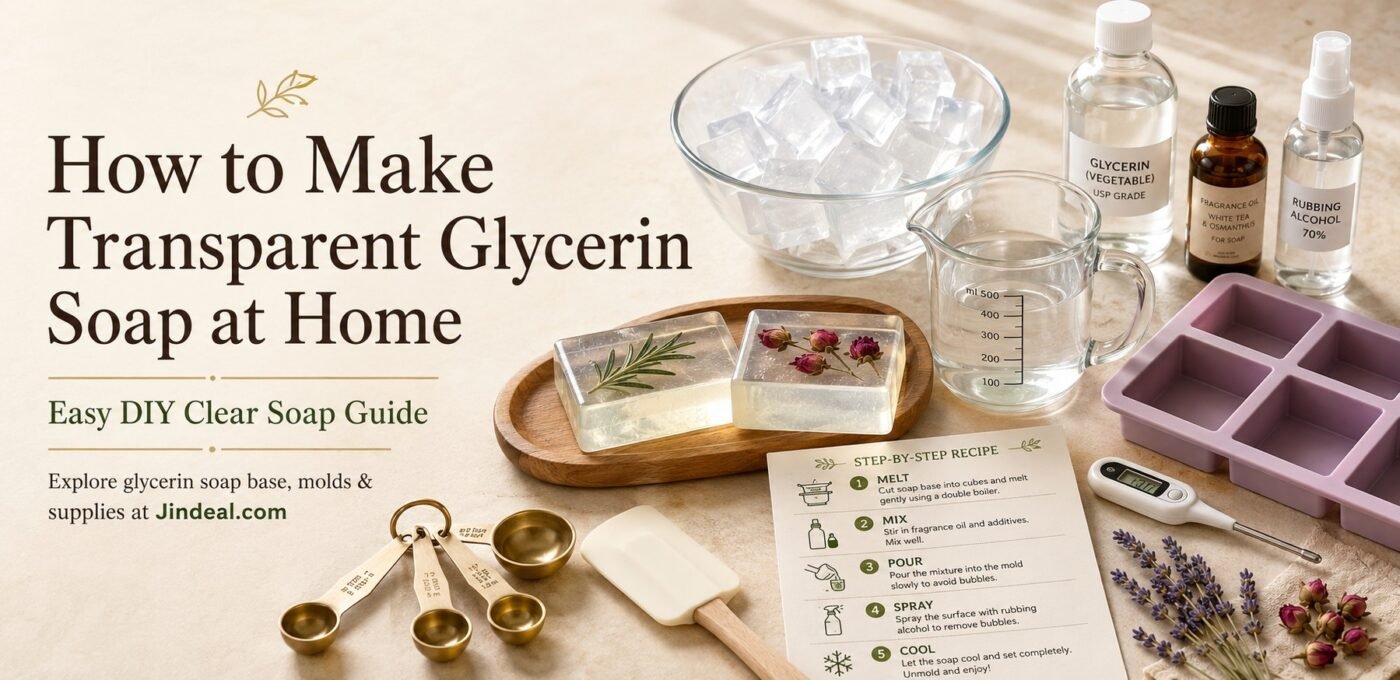
How to Make Transparent Glycerin Soap at Home
Jun
How to Make Transparent Glycerin Soap at Home
Learn an easy beginner-friendly method to make clear transparent glycerin soap at home using melt and pour soap base, fragrance oil, soap color, silicone molds, and simple soap-making tools.
Quick Answer
To make transparent glycerin soap at home, use a good-quality clear melt and pour soap base, cut it into cubes, melt gently, add soap-safe fragrance and color, pour into silicone molds, spray alcohol to remove bubbles, let it set, demold, and wrap properly to prevent sweating.
Table of Contents
What Is Transparent Glycerin Soap?
Transparent glycerin soap is a clear or semi-clear soap that looks glossy, premium, and attractive. It is popular for handmade soap making because it can show colors, dried flowers, layers, embeds, glitter, herbs, and creative designs beautifully.
Glycerin is a humectant that helps attract moisture. This gives glycerin soap a skin-friendly feel, but it also means the soap can sweat in humid weather if it is not wrapped properly.
For beginners, the easiest way to make transparent glycerin soap at home is to use a ready-made clear melt and pour soap base. This method avoids complicated lye handling and gives fast results. You only need to melt, customize, pour, cool, demold, and pack.
For ultra clear melt and pour soap base, silicone soap molds, soap colors, fragrance oils, essential oils, dried flowers, clays, herbs, and packaging materials, visit Jindeal.com.
What Causes the Problem?
Many beginners face problems while making transparent glycerin soap because clear soap base needs gentle handling. Overheating, too much fragrance, too much color, excess additives, bubbles, and poor wrapping can affect the final clarity and finish.
Common causes include:
- Overheating the transparent soap base
- Stirring too fast and creating air bubbles
- Adding too much fragrance oil
- Using fragrance or color not suitable for soap
- Adding too many powders, herbs, or heavy additives
- Pouring soap when it is too hot
- Not spraying alcohol to remove surface bubbles
- Demolding before the soap is fully set
- Leaving glycerin soap open in humid weather
- Not wrapping the soap tightly after cooling
- Using a low-quality soap base with poor clarity
- Adding water, milk, or extra liquid to melt and pour base
For example, if you add too much herbal powder to transparent soap, it may become cloudy instead of clear. If you overheat the base, bubbles and dullness may appear. If you leave the soap open after making, it may sweat due to glycerin attracting moisture from the air.
Materials Needed
Use the right ingredients and tools for better clarity, smooth finish, and professional-looking soap.
| Item | Purpose | Beginner Tip |
|---|---|---|
| Transparent Soap Base | Main base for clear glycerin soap | Do not add extra water |
| Fragrance Oil | Adds aroma | Use soap-safe fragrance only |
| Liquid Soap Color | Adds transparent color | Add drop by drop |
| Silicone Mold | Gives shape | Flexible molds are easier to demold |
| Rubbing Alcohol Spray | Removes bubbles | Spray immediately after pouring |
| Shrink Wrap | Protects from moisture | Wrap after soap fully cools |
Step-by-Step Solution
Step 1: Prepare Your Workspace
Clean your table, tools, molds, containers, and spatula before starting. Soap-making should be done in a clean and dry area. Keep fragrance, color, mold, and alcohol spray ready before melting the soap base.
Step 2: Cut the Soap Base into Small Cubes
Cut transparent glycerin soap base into small equal cubes. Small cubes melt faster and more evenly, reducing overheating and bubbles.
Step 3: Melt the Soap Base Gently
Melt the soap base using a double boiler or microwave in short intervals. Stir slowly between heating. Do not boil the base. Overheating can reduce clarity, create bubbles, and affect soap texture.
Step 4: Add Soap-Safe Fragrance
Let the melted base cool slightly, then add fragrance oil or essential oil. For many melt and pour soaps, fragrance is commonly tested around 1% to 3%, depending on supplier recommendation.
Always measure fragrance oil by weight for better accuracy.
Step 5: Add Transparent Soap Color
Add soap color drop by drop. Too much color can make the soap look dark or unclear. For transparent soap, use colors that are designed to keep the soap clear and bright.
Step 6: Mix Slowly
Stir slowly to avoid air bubbles. Do not whisk the melted soap. Fast stirring traps air inside the soap and creates bubbles after setting.
Step 7: Pour into Silicone Mold
Pour the melted soap slowly and close to the mold surface. Pouring from too much height can trap air. For detailed molds, pour a small amount first, tilt the mold gently, then fill completely.
Step 8: Spray Alcohol to Remove Bubbles
Immediately after pouring, spray rubbing alcohol lightly on the surface to remove bubbles. This helps create a smooth and clean top surface.
Step 9: Let the Soap Set
Let the soap cool and harden at room temperature. Do not move the mold repeatedly. Most small soaps set within a few hours, but larger soaps may need more time.
Step 10: Demold Carefully
Once the soap is fully hard, gently pull the sides of the silicone mold away and push the soap out slowly. Do not force the soap out too early.
Step 11: Wrap the Soap Properly
Transparent glycerin soap can sweat in humid weather because glycerin attracts moisture. Wrap the soap tightly with shrink wrap or airtight film after it cools completely.
Step 12: Store in a Cool Dry Place
Store finished soaps away from sunlight, heat, bathroom moisture, kitchen humidity, and damp storage areas. For selling, use neat labels and protective packaging.
Common Mistakes
1. Overheating the Soap Base
Overheating can reduce transparency, create bubbles, and affect final soap texture.
2. Stirring Too Fast
Fast stirring traps air and creates bubbles. Always stir slowly and gently.
3. Adding Too Much Fragrance
Too much fragrance oil can make soap soft, sweaty, oily, or cloudy.
4. Using Non-Soap-Safe Color
Wrong color can bleed, fade, stain, or make transparent soap cloudy.
5. Adding Too Much Powder
Large amounts of clay, herbs, or powders can reduce transparency and make soap look cloudy.
6. Pouring from Too Much Height
Pouring from height can trap air and create holes or bubbles.
7. Not Using Alcohol Spray
Alcohol spray helps remove surface bubbles and gives a smoother finish.
8. Demolding Too Early
If soap is not fully set, it may bend, dent, crack, or lose shape.
9. Leaving Soap Open After Making
Transparent glycerin soap can sweat if left open in humid air.
10. Poor Storage
Heat, sunlight, and humidity can affect clarity, sweating, and fragrance strength.
Expert Tips
- Use high-quality transparent melt and pour soap base.
- Cut soap base into small cubes before melting.
- Melt gently and avoid boiling.
- Add fragrance only within supplier-recommended percentage.
- Use transparent soap colors for clear soap designs.
- Stir slowly to avoid bubbles.
- Spray alcohol immediately after pouring.
- Use silicone molds for easy demolding.
- Avoid adding too much powder or heavy botanical material.
- Wrap glycerin soap tightly after cooling.
- Store finished soap in a cool and dry place.
- Buy transparent soap base, molds, colors, fragrance oils, essential oils, and packaging from Jindeal.com.
FAQ
1. How do I make transparent glycerin soap at home?
Use clear melt and pour soap base, melt it gently, add soap-safe fragrance and color, pour into silicone molds, spray alcohol, let it set, demold, and wrap.
2. What is the easiest way to make clear soap?
The easiest method is using ready-made transparent melt and pour soap base because it avoids direct lye handling and gives quick results.
3. Can I make transparent soap without lye?
If you use ready melt and pour soap base, you do not handle lye directly. The base is already made and only needs melting and customization.
4. Why is my glycerin soap cloudy?
Cloudiness can happen due to overheating, too much powder, unsuitable color, excess fragrance, or using an unclear base.
5. Why does transparent glycerin soap sweat?
Glycerin attracts moisture from the air, especially in humid weather. Tight wrapping helps reduce sweating.
6. How much fragrance oil should I add?
For many melt and pour soaps, 1% to 3% fragrance is commonly tested, but always follow supplier guidelines.
7. Can I add essential oils to glycerin soap?
Yes, essential oils can be added if they are suitable for soap use and used within safe limits.
8. Can I add herbs or flowers inside transparent soap?
Yes, but use dried botanicals carefully. Too much botanical material can affect clarity, texture, and storage.
9. How long does glycerin soap take to set?
Small soaps usually set within a few hours. Larger molds may need more time depending on size and room temperature.
10. Why are there bubbles in my transparent soap?
Bubbles usually come from fast stirring, overheating, or pouring from height. Spray alcohol immediately after pouring to reduce surface bubbles.
11. Can I remelt transparent glycerin soap?
Yes, melt and pour soap can be remelted gently. Avoid overheating and repeated reheating because it may affect quality.
12. Which mold is best for glycerin soap?
Flexible silicone molds are best for easy demolding and clean soap shapes.
13. How do I keep glycerin soap transparent?
Use clear soap base, avoid overheating, use transparent colors, avoid too many powders, and wrap the soap properly.
14. Can I sell homemade glycerin soap?
Yes, but you should use quality ingredients, test your formula, pack properly, label clearly, and follow local cosmetic rules.
15. Where can I buy glycerin soap-making supplies?
You can buy transparent soap base, silicone molds, fragrance oils, essential oils, soap colors, clays, herbs, packaging, and DIY supplies from Jindeal.com.
Final Words
Making transparent glycerin soap at home is simple when you use a good clear melt and pour soap base and follow the right process. Melt gently, add soap-safe fragrance and color, pour carefully, spray alcohol for bubbles, cool fully, demold, and wrap tightly.
For transparent soap base, silicone molds, fragrance oils, essential oils, soap colors, dried flowers, clays, herbal powders, spray bottles, shrink wrap, and DIY soap-making supplies, visit Jindeal.com.
Make Transparent Glycerin Soap with Jindeal.com
Shop ultra clear soap base, molds, fragrance oils, transparent colors, essential oils, herbs, packaging, and DIY cosmetic raw materials from Jindeal.com.
