
Candle Fragrance Oils, Uncategorized
How Much Fragrance Oil Should I Add to Soap?,
Jun
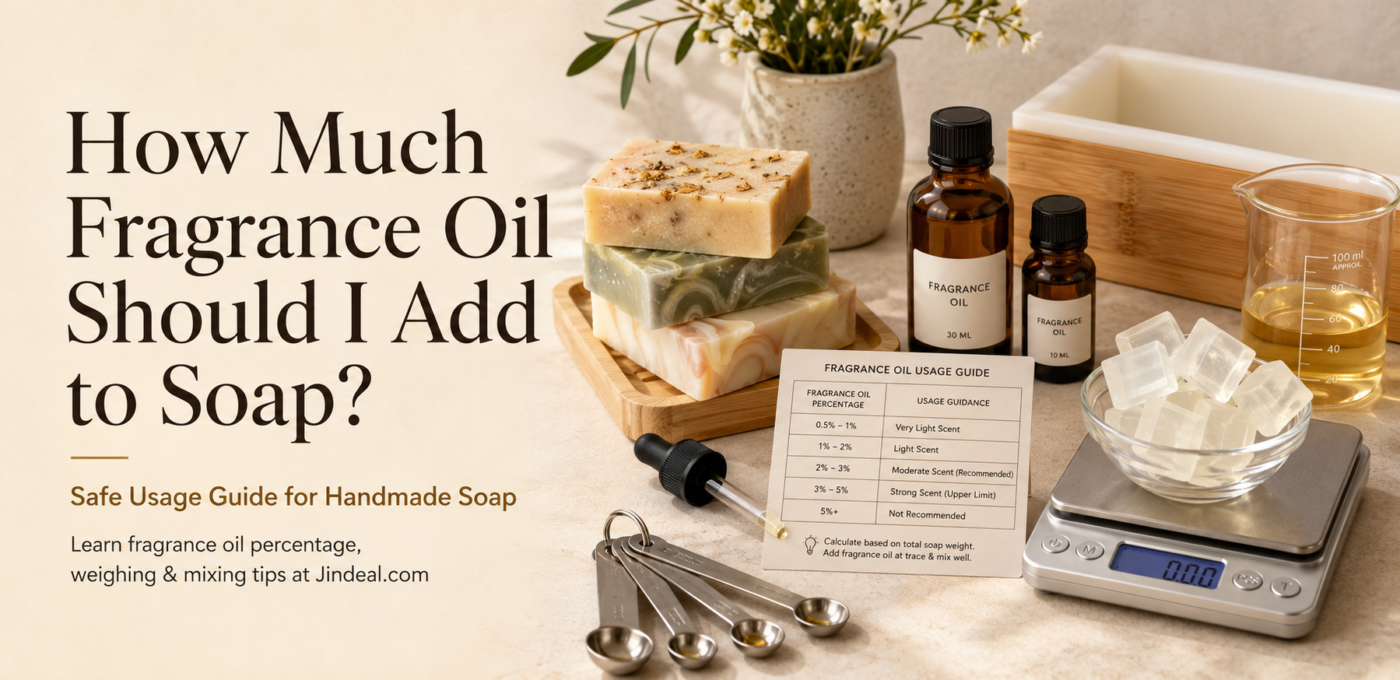
How Much Fragrance Oil Should I Add to Soap?
Learn the correct fragrance oil percentage for melt and pour soap, handmade soap, glycerin soap, goat milk soap, shea butter soap, and small soap business production.
Quick Answer
For melt and pour soap, fragrance oil is commonly used around 1% to 3% of the soap base weight, depending on fragrance strength and supplier guideline. For 1000g soap base, 2% fragrance means 20g fragrance oil. Always check IFRA or supplier usage limits before making soap.
Table of Contents
Why Fragrance Oil Quantity Matters in Soap
Fragrance oil gives soap its smell, identity, and customer appeal. A well-fragranced soap can feel premium, memorable, and giftable. But fragrance oil must be used in the correct quantity because too little fragrance can make soap smell weak, while too much fragrance can cause softness, sweating, oily surface, irritation risk, or poor soap quality.
In melt and pour soap, fragrance oil is usually calculated as a percentage of the total soap base weight. This is more accurate than adding random drops. If you are making soap for business, always measure fragrance oil by weight using a digital scale.
Different fragrance oils have different strengths. Some scents like coffee, sandalwood, musk, rose, or mogra may smell strong at lower usage, while some light citrus or floral scents may need careful testing. Always follow the supplier recommendation and safety guideline.
For soap fragrance oils, melt and pour soap base, essential oils, soap colors, molds, clays, herbal powders, and DIY cosmetic raw materials, you can visit Jindeal.com.
What Causes the Problem?
Most fragrance problems in soap happen because the fragrance oil is added without correct calculation. Many beginners add fragrance by smell, drops, or guesswork, which can create inconsistent results from batch to batch.
Common causes include:
- Adding fragrance oil without weighing it
- Using too much fragrance oil in melt and pour soap
- Using too little fragrance oil and getting weak scent
- Not checking supplier or IFRA usage guideline
- Adding fragrance oil when soap base is too hot
- Using fragrance oil not suitable for soap
- Using fragrance oil only by drops instead of percentage
- Not mixing fragrance oil properly into soap base
- Overheating the soap base after adding fragrance
- Not testing the fragrance in a small batch first
- Using strong fragrance oils at high percentage
- Using fragrance oil in baby or sensitive-skin products without extra care
For example, if you add 50g fragrance oil into 1000g soap base, that is 5%. This may be too high for many melt and pour soap recipes and can cause sweating, oily surface, softness, or overpowering smell.
Soap Fragrance Oil Usage Chart
Use this chart as a general starting point for melt and pour soap. Always confirm with supplier guideline, IFRA limit, and your final soap testing.
| Soap Base Quantity | 1% Fragrance | 2% Fragrance | 3% Fragrance | Best Use |
|---|---|---|---|---|
| 100g soap base | 1g | 2g | 3g | Small test batch |
| 250g soap base | 2.5g | 5g | 7.5g | Trial batch |
| 500g soap base | 5g | 10g | 15g | Small production |
| 1000g soap base | 10g | 20g | 30g | Standard batch |
| 2000g soap base | 20g | 40g | 60g | Business batch |
| 5000g soap base | 50g | 100g | 150g | Bulk production |
Step-by-Step Solution
Step 1: Check the Fragrance Oil Usage Limit
Before adding fragrance oil to soap, check whether the fragrance is suitable for soap making. Fragrance oils are not all the same. Some are made for candles, some for diffusers, and some for cosmetic use.
For soap, use cosmetic-grade fragrance oil or essential oil suitable for wash-off skincare products. Check the supplier recommendation and do not exceed the allowed usage level.
Step 2: Decide Your Fragrance Percentage
For melt and pour soap, many makers start around 1% to 3%. For light fragrance, start with 1%. For balanced scent, 2% is a common testing point. For stronger scent, test up to 3% only if allowed by the fragrance guideline.
Step 3: Weigh the Soap Base
First weigh your soap base. Do not calculate fragrance oil by mold size only. The most accurate method is to calculate fragrance from the actual soap base weight.
Example: If you are melting 1000g soap base, calculate fragrance oil based on 1000g.
Step 4: Use the Fragrance Oil Formula
Use this simple formula for accurate calculation:
Example for 1000g soap base at 2% fragrance:
1000g × 2 ÷ 100 = 20g fragrance oil
Step 5: Melt Soap Base Gently
Cut the soap base into small cubes and melt gently using microwave short bursts or double boiler. Do not overheat the base because overheating can reduce quality, create bubbles, and affect fragrance performance.
Step 6: Add Fragrance at the Right Time
Add fragrance after the soap base has melted and cooled slightly. If the soap is too hot, fragrance may evaporate faster and the scent may become weak.
Mix slowly and evenly so the fragrance spreads throughout the soap base.
Step 7: Test a Small Batch First
Before making a large batch, test 100g or 250g soap base with your chosen fragrance percentage. Check smell, texture, sweating, hardness, and skin feel after the soap sets.
Step 8: Record Your Formula
Write down soap base type, fragrance name, fragrance percentage, color, additive, temperature, mold type, and result. This helps repeat your best batch for business use.
Step 9: Pack and Store Properly
After soap cools and sets, wrap it properly. Melt and pour soap can sweat in humid weather, so shrink wrap or airtight packaging is helpful.
Common Mistakes
1. Adding Fragrance by Guesswork
Guessing creates inconsistent soap batches. Always calculate fragrance oil by percentage and weight.
2. Using Too Much Fragrance Oil
Too much fragrance can make soap soft, sticky, oily, or sweaty. It can also make the scent overpowering.
3. Using Too Little Fragrance Oil
Too little fragrance may make the soap smell weak, especially after storage or wrapping.
4. Not Checking Fragrance Suitability
Use fragrance oils suitable for soap or cosmetic use. Candle-only oils may not be suitable for skin products.
5. Adding Fragrance When Soap Is Too Hot
High heat can reduce fragrance strength and affect the final scent throw.
6. Not Mixing Properly
Poor mixing can create uneven fragrance distribution, oily pockets, or inconsistent smell.
7. Ignoring IFRA or Supplier Limit
Every fragrance oil may have a different safe usage limit. Always check before final production.
8. Using Drops Instead of Weight
Drops are not accurate because drop size changes by oil thickness and dropper type. Use grams for better accuracy.
9. Testing Only by Smell from Bottle
Fragrance can smell different in soap than it smells in the bottle. Always test in soap base.
10. Selling Without Batch Testing
Test scent strength, sweating, texture, and customer experience before selling.
Expert Tips
- Start with 2% fragrance oil for many melt and pour soap test batches.
- Use 1% for very strong fragrances or mild soap designs.
- Do not exceed supplier or IFRA recommended usage level.
- Measure fragrance oil by weight, not by drops.
- Add fragrance after melting, when soap base is not overheated.
- Mix slowly and evenly to avoid air bubbles.
- Test every new fragrance in a small batch first.
- Keep formula records for repeat production.
- Use shrink wrap or airtight packaging for melt and pour soap.
- Store soaps in a cool and dry place.
- Use cosmetic-grade fragrance oils for soap-making products.
- Buy soap fragrance oils, soap base, molds, colors, and packaging from Jindeal.com.
FAQ
1. How much fragrance oil should I add to melt and pour soap?
For melt and pour soap, 1% to 3% fragrance oil is commonly used, depending on fragrance strength and supplier guideline.
2. How much fragrance oil for 100g soap base?
For 100g soap base, use about 1g at 1%, 2g at 2%, or 3g at 3% fragrance oil.
3. How much fragrance oil for 1kg soap base?
For 1kg soap base, use about 10g at 1%, 20g at 2%, or 30g at 3% fragrance oil.
4. Can I add too much fragrance oil to soap?
Yes. Too much fragrance oil can make soap soft, oily, sticky, sweaty, or overpowering in smell.
5. Why does my soap smell weak?
Soap may smell weak if fragrance percentage is too low, fragrance was added when soap was too hot, or the fragrance is naturally light.
6. Should I measure fragrance oil by drops or grams?
Measure by grams using a digital scale. Drops are not accurate for soap-making production.
7. Can I use candle fragrance oil in soap?
Only use it if the supplier confirms it is skin-safe and suitable for soap or cosmetic use.
8. Can I use essential oil instead of fragrance oil?
Yes, essential oils can be used, but they must be added within safe usage limits and tested in soap.
9. When should I add fragrance oil to melt and pour soap?
Add fragrance after the soap base has melted and cooled slightly. Avoid adding fragrance to overheated soap.
10. Can fragrance oil cause soap sweating?
Yes, too much fragrance oil can make soap soft, sticky, oily, or sweaty-looking.
11. Why does fragrance separate in soap?
Fragrance may separate if too much is added, it is not suitable for soap, or it is not mixed properly.
12. What is the best fragrance percentage for beginners?
For beginners, 2% is a good test starting point for many melt and pour soaps, if allowed by the fragrance guideline.
13. Does fragrance oil affect soap hardness?
Yes, excess fragrance oil may soften soap or affect texture, especially in melt and pour soap.
14. How can I make soap smell stronger naturally?
Use a suitable soap-safe fragrance, measure correctly, avoid overheating, and wrap soap properly after cooling.
15. Where can I buy soap fragrance oils?
You can buy soap fragrance oils, essential oils, soap base, molds, colors, clays, herbal powders, packaging, and DIY supplies from Jindeal.com.
Final Words
Fragrance oil can make handmade soap more attractive, premium, and memorable, but correct usage is very important. For melt and pour soap, 1% to 3% is a common starting range, but the final amount depends on fragrance strength, supplier guideline, IFRA limit, and your soap test result.
Always measure by weight, test small batches, avoid overheating, and wrap soap properly after cooling. For soap fragrance oils, melt and pour soap base, silicone molds, soap colors, essential oils, clays, herbal powders, and packaging supplies, visit Jindeal.com.
Make Better Fragranced Soap with Jindeal.com
Shop soap fragrance oils, soap bases, molds, colors, clays, herbs, packaging, and DIY cosmetic raw materials from Jindeal.com.
