
Candle Fragrance Oils, Uncategorized
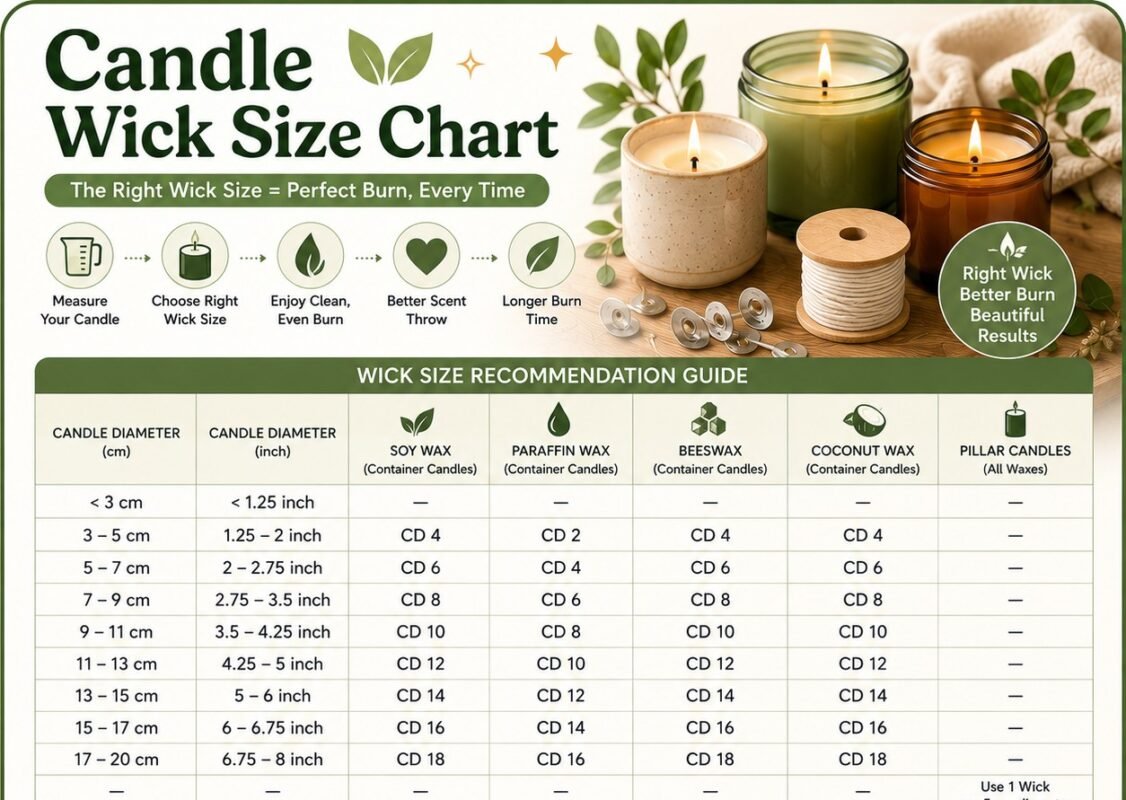
Candle Wick Size Chart
Jun
Candle Wick Size Chart
Choose the right wick size for soy candles, paraffin candles, coconut wax candles, candle tins, glass jar candles, wooden wick candles, and handmade candle business production.
Quick Answer
Candle wick size is mainly selected by jar inner diameter, wax type, fragrance load, dye amount, and candle design. Small jars need smaller wicks, wide jars need larger wicks or sometimes multiple wicks. A wick that is too small causes tunneling and weak fragrance throw. A wick that is too large causes high flame, black smoke, soot, fast burn, and overheated container. Always use wick charts only as a starting point and burn test every final candle before selling.
Table of Contents
How to Choose Candle Wick Size
Wick size is not selected only by candle weight. The most important starting point is the inner diameter of the jar or tin. After that, adjust based on wax type, fragrance oil percentage, dye amount, additives, jar shape, and burn test result.
For candle wax, fragrance oils, cotton wicks, wooden wicks, wick stickers, jars, tins, dyes, molds, and packaging, visit Jindeal.com.
Candle Wick Size Chart by Jar Diameter
This chart is a beginner starting point. Actual wick size depends on the wick series, wax blend, fragrance oil, dye, jar shape, and supplier specifications.
| Jar Inner Diameter | Approx. Diameter in Inches | Wick Direction | Common Candle Type | Testing Focus |
|---|---|---|---|---|
| 3 cm to 4 cm | 1.2" to 1.6" | Very small wick | Mini tin, tealight-style, sample candle | Small flame, no drowning |
| 4 cm to 5 cm | 1.6" to 2" | Small wick | Small jar candle, travel tin | Full melt pool without large flame |
| 5 cm to 6 cm | 2" to 2.4" | Small-medium wick | 100 g to 150 g jar candle | Tunneling and hot throw |
| 6 cm to 7 cm | 2.4" to 2.8" | Medium wick | 150 g to 220 g jar candle | Melt pool, soot, jar heat |
| 7 cm to 8 cm | 2.8" to 3.15" | Medium-large wick | Premium glass jar candle | Even burn and controlled flame |
| 8 cm to 9 cm | 3.15" to 3.5" | Large wick or double wick testing | Wide jar candle | Heat control and full melt pool |
| 9 cm to 10 cm | 3.5" to 4" | Double wick often needs testing | Large luxury candle | Container heat and flame balance |
| Above 10 cm | Above 4" | Multiple wick design | Large bowl candle, luxury candle | Safety, heat, soot, even melt pool |
Wick Guide by Wax Type
Different waxes need different wick behavior. A wick that works in paraffin may not work in soy wax or coconut wax blend.
| Wax Type | Wick Behavior | Common Issue | Testing Tip |
|---|---|---|---|
| Soy Wax | Often needs careful wick testing for hot throw and melt pool | Tunneling, frosting, weak hot throw | Test one size up/down around supplier starting point |
| Paraffin Wax | Often gives strong scent throw and easier melt pool | Soot or smoke if wick is too large | Watch flame height and jar soot |
| Coconut Wax Blend | Soft and creamy; wick depends on blend | Sweating, soft wax, wick drowning | Test fragrance load and wick together |
| Beeswax Blend | Can need stronger wick due to harder wax | Tunneling or low flame | Use supplier guide and full burn test |
| Wax Melts | No wick needed | Shape stability and fragrance sweating | Do not use candle wick chart for wax melts |
Cotton Wick vs Wooden Wick
Both cotton wicks and wooden wicks can make beautiful candles, but they need different testing.
| Point | Cotton Wick | Wooden Wick |
|---|---|---|
| Beginner Use | Easy to source and test | Premium look but needs careful testing |
| Burn Style | Classic steady flame | Wide flame and crackle effect depending on wick |
| Trimming | Trim to suitable height before burn | Trim short and remove charred wood |
| Jar Diameter | Available in many sizes | Width/thickness selection matters |
| Common Problem | Mushrooming, soot, tunneling if wrong size | Wick not staying lit, tunneling, large flame |
| Best For | Daily jar candles, tins, production batches | Luxury candles, premium branding, gifting |
Signs of Wrong Wick Size
| Sign | Likely Wick Problem | Correction |
|---|---|---|
| Candle tunneling | Wick too small | Test larger wick |
| Weak hot throw | Wick too small or poor melt pool | Increase wick or adjust formula |
| Wick drowning | Wick too small or wax pool too deep | Use stronger wick and retest |
| Large flame | Wick too large | Test smaller wick |
| Black smoke | Wick too large, too much fragrance/dye, poor trimming | Reduce wick size, trim wick, adjust formula |
| Jar gets too hot | Wick too large or multiple wicks too close | Use smaller wick or redesign |
| Uneven burn | Wick off-center or airflow | Center wick and avoid fan/window |
| Heavy mushrooming | Wick/fragrance balance issue | Trim wick and test different wick series |
Burn Testing Checklist
Burn testing confirms whether your wick is suitable. A candle should be tested from the first burn to near the bottom before selling.
| Test Point | What to Check | Pass Sign |
|---|---|---|
| First Burn | Melt pool reaches close to edge safely | No deep tunnel |
| Flame Height | Stable flame, not too large | Controlled flame |
| Melt Pool Depth | Not too shallow, not too deep | Even burn without drowning wick |
| Hot Throw | Fragrance while burning | Good aroma for room size |
| Soot / Smoke | Black smoke, soot on jar | Minimal smoke after proper trim |
| Jar Temperature | Container heat during longer burn | Does not become dangerously hot |
| Wick Position | Wick remains centered | Even melt pool |
| End Burn | Behavior near bottom of jar | No overheating or unsafe flame |
When to Use Multiple Wicks
Large or wide jars may need two or more wicks because one large wick can create an unsafe high flame or hot center. Multiple wicks spread heat more evenly, but they must be tested carefully.
| Jar Size | Single Wick or Multiple? | Testing Focus |
|---|---|---|
| Below 7 cm diameter | Usually single wick starting point | Tunneling and flame control |
| 7 cm to 8.5 cm diameter | Single wick or double wick depending on wax | Melt pool and jar heat |
| 9 cm to 10 cm diameter | Double wick often needs testing | Even burn and safe container temperature |
| Above 10 cm diameter | Multiple wick design | Wick spacing, flame safety, heat build-up |
Candle Wick Troubleshooting Chart
| Problem | Possible Cause | Fix |
|---|---|---|
| Tunneling | Wick too small, short first burn | Test larger wick and educate customer on first burn |
| Large flame | Wick too large or too long | Trim wick and test smaller size |
| Black smoke | Wick too large, too much fragrance/dye | Reduce wick, fragrance, dye or trim properly |
| Wick drowning | Wick too small or too much fragrance | Use stronger wick and reduce additives |
| Poor hot throw | Small melt pool, wrong wick, poor cure | Retest wick and allow cure time |
| Jar too hot | Wick too large or multiple wicks too strong | Reduce wick size or redesign jar/wick layout |
| Uneven wax on sides | Off-center wick or airflow | Center wick and burn away from fan |
| Wooden wick won’t stay lit | Wick too thin, too much wax on wick, poor trim | Trim correctly and test different wooden wick size |
Common Wick Mistakes
1. Choosing Wick by Candle Weight Only
Use jar inner diameter as the main starting point. Weight alone is not enough.
2. Not Testing the Final Formula
Changing wax, fragrance, dye, jar or wick means you should burn test again.
3. Using One Wick for Every Jar
Different jar diameters need different wick sizes.
4. Ignoring Fragrance Load
High fragrance load can affect wick performance and burn quality.
5. Over-Coloring Candles
Too much dye can clog the wick and cause weak flame or smoke.
6. Not Centering the Wick
An off-center wick causes uneven burn and wax left on one side.
7. Poor Wick Trimming
Long wick can smoke. Too-short wick can drown. Add trimming instructions to labels.
8. Skipping End-Burn Test
Candles can behave differently near the bottom of the jar, where heat builds up.
9. Testing Near Fan or Window
Airflow can make results inaccurate.
10. Selling Without Warning Labels
Every candle should include basic burn safety and warning instructions.
FAQ
1. How do I choose candle wick size?
Start with the jar inner diameter, then adjust based on wax type, fragrance load, dye, jar shape and burn test results.
2. What happens if the wick is too small?
A small wick can cause tunneling, weak flame, poor hot throw and wick drowning.
3. What happens if the wick is too large?
A large wick can cause high flame, black smoke, soot, fast burning and overheated jar.
4. Can I use the same wick for soy and paraffin wax?
Not always. Soy, paraffin, coconut blend and beeswax blends burn differently and need separate testing.
5. Do wooden wicks need different sizing?
Yes. Wooden wick width, thickness and trimming are important. Test wooden wicks separately from cotton wicks.
6. How many wicks for a wide candle jar?
Very wide jars may need two or more wicks, but multiple wick candles need careful heat and safety testing.
7. Why is my candle tunneling?
Tunneling usually means the wick is too small, first burn was too short, or the candle formula was not burn-tested properly.
8. Why is my candle smoking?
Smoking can happen due to a wick that is too large, wick not trimmed, too much fragrance or dye, or poor airflow.
9. What is hot throw?
Hot throw is the fragrance released while the candle is burning.
10. What is cold throw?
Cold throw is the fragrance smell from the unlit candle.
11. Should I trim candle wicks?
Yes. Trimming helps control flame height, smoke and burn quality.
12. Do fragrance oils affect wick size?
Yes. Different fragrance oils and fragrance percentages can change burn performance, so retesting is important.
13. Should I burn test every candle?
Test every new jar, wax, wick, fragrance and dye combination before selling.
14. Can candles cure stress or insomnia?
No. Avoid medical claims. Use aroma, ambience, decor, gifting, spa-style mood and premium home fragrance language.
15. Where can I buy candle wicks?
You can buy cotton wicks, wooden wicks, wick stickers, candle wax, fragrance oils, jars, tins, dyes, molds and packaging from Jindeal.com.
Final Words
A candle wick size chart is only a starting point. The correct wick is confirmed through burn testing with the exact wax, jar, fragrance, dye and fill weight you plan to sell. A good wick creates a stable flame, even melt pool, good hot throw, minimal soot, and safe jar temperature.
For candle wax, cotton wicks, wooden wicks, fragrance oils, jars, tins, dyes, molds, labels and packaging, visit Jindeal.com.
Shop Candle Wicks and Candle Making Supplies on Jindeal.com
Buy cotton wicks, wooden wicks, wick stickers, soy wax, paraffin wax, fragrance oils, candle jars, tins, dyes, molds, labels and packaging materials from Jindeal.com.