
Uncategorized
How to Price Handmade Soap
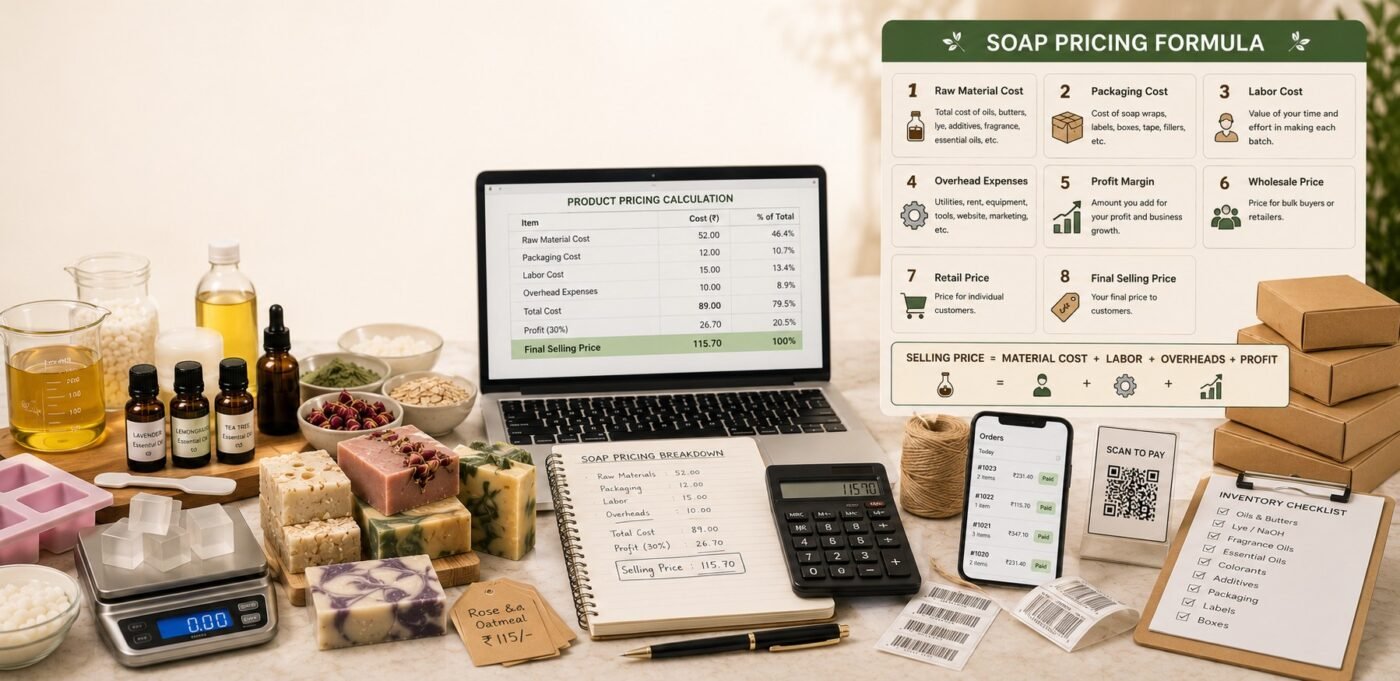
Jun
How to Price Handmade Soap
Learn a simple and practical handmade soap pricing formula for melt and pour soap, herbal soap, luxury soap, gift soap, and small soap business production. Calculate raw material cost, packaging, labor, wastage, selling cost, wholesale price, and retail profit.
Quick Answer
To price handmade soap, calculate the total cost per bar first: soap base + fragrance + color + additives + packaging + label + labor + wastage + selling cost. After that, add your profit margin. A simple beginner formula is: total cost per soap × 2 for wholesale pricing and total cost per soap × 3 to 4 for retail pricing, depending on packaging, brand positioning, and market demand.
Table of Contents
Why Handmade Soap Pricing Matters
Many beginner soap makers calculate only soap base cost and fragrance cost. This makes the final selling price too low and the business becomes difficult to scale. Handmade soap pricing must include every direct and hidden cost, including packaging, label, labor, wastage, testing, selling fee, and profit.
Correct pricing helps you sell with confidence, give wholesale rates safely, run discounts without loss, and build a sustainable soap business. A good handmade soap price should cover your cost, protect your profit, and match your product quality.
For soap bases, fragrance oils, essential oils, mica colors, clays, herbal powders, silicone molds, labels, packaging, and DIY soap raw materials, visit Jindeal.com.
Handmade Soap Pricing Formula
Use this simple formula for every soap product before deciding MRP or selling price.
For a simple handmade soap business, you can start with these pricing multipliers:
| Pricing Type | Simple Formula | Best For | Important Note |
|---|---|---|---|
| Minimum Safe Price | Cost × 1.5 | Very low-margin clearance or testing | Not ideal for long-term business |
| Wholesale Price | Cost × 2 | Bulk buyers, resellers, salons, gift shops | Use only if production is efficient |
| Standard Retail Price | Cost × 3 | Website, Instagram, small business selling | Good beginner pricing method |
| Premium Retail Price | Cost × 4 or higher | Luxury packaging, gift soaps, premium branding | Requires strong presentation and quality |
Cost Items You Must Include
| Cost Item | Example | How to Calculate | Why It Matters |
|---|---|---|---|
| Soap Base | ₹180 per kg | Soap base grams ÷ 1000 × rate per kg | Main raw material cost |
| Fragrance Oil | ₹900 per kg | Fragrance grams ÷ 1000 × rate per kg | Major product appeal and cost |
| Color / Additive | Mica, clay, herbs | Used grams ÷ 1000 × rate per kg | Improves product theme |
| Packaging | Box + label + wrap | Total packaging cost per bar | Builds brand value |
| Labor | Making and packing time | Total labor cost ÷ number of bars | Your time has value |
| Wastage | 5% to 10% | Add percentage on material cost | Protects profit from loss |
| Selling Cost | Ads, platform fee, gateway | Add per-bar estimate | Important for online selling |
Complete Soap Pricing Example
Example for 1 kg melt and pour soap batch making 10 bars of 100 g each.
| Cost Item | Quantity / Rate | Total Cost | Cost per Soap Bar |
|---|---|---|---|
| Soap Base | 970 g at ₹180/kg | ₹174.60 | ₹17.46 |
| Fragrance Oil | 20 g at ₹900/kg | ₹18.00 | ₹1.80 |
| Color + Additive | Mica/clay/herbs | ₹10.00 | ₹1.00 |
| Packaging | Box + label + wrap | ₹100.00 | ₹10.00 |
| Labor | Making + packing | ₹100.00 | ₹10.00 |
| Wastage / Testing | Approx. | ₹30.00 | ₹3.00 |
| Selling Cost | Ads/platform/gateway estimate | ₹70.00 | ₹7.00 |
| Total Cost | 10 soap bars | ₹502.60 | ₹50.26 |
Suggested Selling Price From This Example
| Pricing Type | Formula | Price per 100 g Soap | Use Case |
|---|---|---|---|
| Minimum Price | ₹50 × 1.5 | ₹75 | Clearance or trial only |
| Wholesale Price | ₹50 × 2 | ₹100 | Bulk buyer or reseller |
| Standard Retail Price | ₹50 × 3 | ₹150 | Website and direct selling |
| Premium Retail Price | ₹50 × 4 | ₹200 | Luxury gift packaging |
Wholesale vs Retail Pricing
Wholesale and retail pricing should not be the same. Wholesale buyers expect lower price because they buy in bulk and may resell your soap. Retail buyers pay more because they buy one or a few pieces and expect better packaging, branding, and service.
| Pricing Type | Typical Formula | Customer Type | Important Condition |
|---|---|---|---|
| Wholesale | Cost × 2 | Resellers, salons, stores, gifting companies | Minimum order quantity should apply |
| Retail | Cost × 3 to 4 | Website, Instagram, direct customers | Better packaging and branding required |
| Gift Hamper Price | Product cost + box + fillers + ribbon + margin | Corporate gifting, festive gifting | Include extra packing and customization cost |
| Private Label Price | Cost + formulation + label + MOQ margin | Brands and resellers | Charge for custom fragrance, label, and development |
Simple Manual Calculator Method
Use this simple method whenever you create a new handmade soap product.
- Write total batch weight in grams.
- Write number of bars made from the batch.
- Add cost of soap base used.
- Add cost of fragrance oil or essential oil used.
- Add cost of color, clay, herbal powder, vitamin E, or carrier oil.
- Add packaging cost per soap.
- Add label and sticker cost per soap.
- Add labor cost per soap.
- Add wastage and testing cost.
- Add selling cost, payment gateway, ads, and shipping material if applicable.
- Divide total cost by number of bars.
- Multiply by 2 for wholesale or 3 to 4 for retail.
Common Pricing Mistakes
1. Calculating Only Raw Material Cost
Soap base and fragrance are not the only costs. Packaging, label, labor, wastage, and selling cost must be included.
2. Forgetting Labor Cost
Your time has value. Include time for melting, pouring, demolding, packing, cleaning, and customer support.
3. Ignoring Wastage
Every batch has some loss: trimming, spillage, rejected bars, testing, and damaged pieces.
4. Copying Competitor Price Blindly
Competitors may have different raw material costs, packaging, margins, or production scale.
5. Selling Too Cheap
Low pricing may bring orders but can damage profit and make the business unsustainable.
6. No Separate Wholesale Price
Wholesale pricing needs minimum quantity and lower packaging or production efficiency.
7. Not Adding Online Selling Cost
Website fees, marketplace commission, payment gateway charges, ads, returns, and shipping material affect profit.
8. Premium Packaging With Budget Pricing
If packaging cost is high, your selling price must support it.
9. No Price Review
Raw material rates change. Review your soap price regularly.
10. Making Medical Claims to Justify Price
Do not use treatment claims to sell soap at a higher price. Build value through quality, packaging, fragrance, design, and trust.
FAQ
1. How do I price handmade soap?
Add raw materials, packaging, labor, wastage, selling cost, and profit margin. A simple retail formula is total cost per soap × 3 to 4.
2. What costs should I include in soap pricing?
Include soap base, fragrance, color, additives, packaging, label, labor, wastage, testing, selling fee, ads, payment gateway, and shipping material.
3. What is a good profit margin for handmade soap?
Many small soap businesses use a retail multiplier of 3 to 4 times total cost, depending on packaging, brand value, and selling channel.
4. How do I calculate cost per soap bar?
Add total batch cost and divide it by the number of soap bars made from that batch.
5. Should I include labor cost?
Yes. Include time for making, cleaning, packing, labeling, photography, and customer support.
6. Should packaging cost be included?
Yes. Soap box, label, sticker, wrap, ribbon, pouch, and outer courier packaging should be included.
7. How much should I charge for a 100 g handmade soap?
It depends on your cost. If your real cost is ₹50 per bar, a standard retail price may be around ₹150 to ₹200 depending on packaging and positioning.
8. What is wholesale pricing for handmade soap?
A simple wholesale method is cost per soap × 2, but use minimum order quantity and fixed packaging to protect profit.
9. How do I price soap gift boxes?
Add soap cost, gift box, fillers, ribbon, label, customization, labor, outer packaging, and profit margin.
10. How do I price private label soap?
Include raw materials, production, custom fragrance, custom label, packaging, development time, MOQ risk, and margin.
11. Should shipping be included in soap price?
You can include shipping in product price or charge separately. Make sure courier box and shipping material are included somewhere.
12. How often should I update soap price?
Review prices whenever raw material, packaging, shipping, ad cost, or marketplace fee changes.
13. Can premium fragrance increase soap price?
Yes. Premium fragrance, better packaging, and professional presentation can support higher pricing.
14. Can I claim soap cures acne to charge more?
No. Avoid medical claims. Use cosmetic-safe claims such as cleansing, handmade, aromatic, luxury, herbal-inspired, spa-style, and gifting.
15. Where can I buy soap making supplies?
You can buy soap bases, fragrance oils, essential oils, mica colors, clays, herbal powders, silicone molds, labels, and packaging from Jindeal.com.
Final Words
Handmade soap pricing should protect your profit and reflect your product quality. Do not price only by soap base cost or competitor pricing. Calculate raw materials, fragrance, packaging, labor, wastage, selling costs, and profit margin before deciding MRP.
Start with a simple pricing sheet, update it regularly, and use better packaging, fragrance, product photography, and branding to justify premium price. For soap bases, fragrance oils, colors, clays, herbal powders, molds, and packaging, visit Jindeal.com.
Shop Soap Making Supplies on Jindeal.com
Buy melt and pour soap bases, fragrance oils, essential oils, soap colors, mica, cosmetic clays, herbal powders, silicone molds, labels, and packaging materials from Jindeal.com.