
Uncategorized
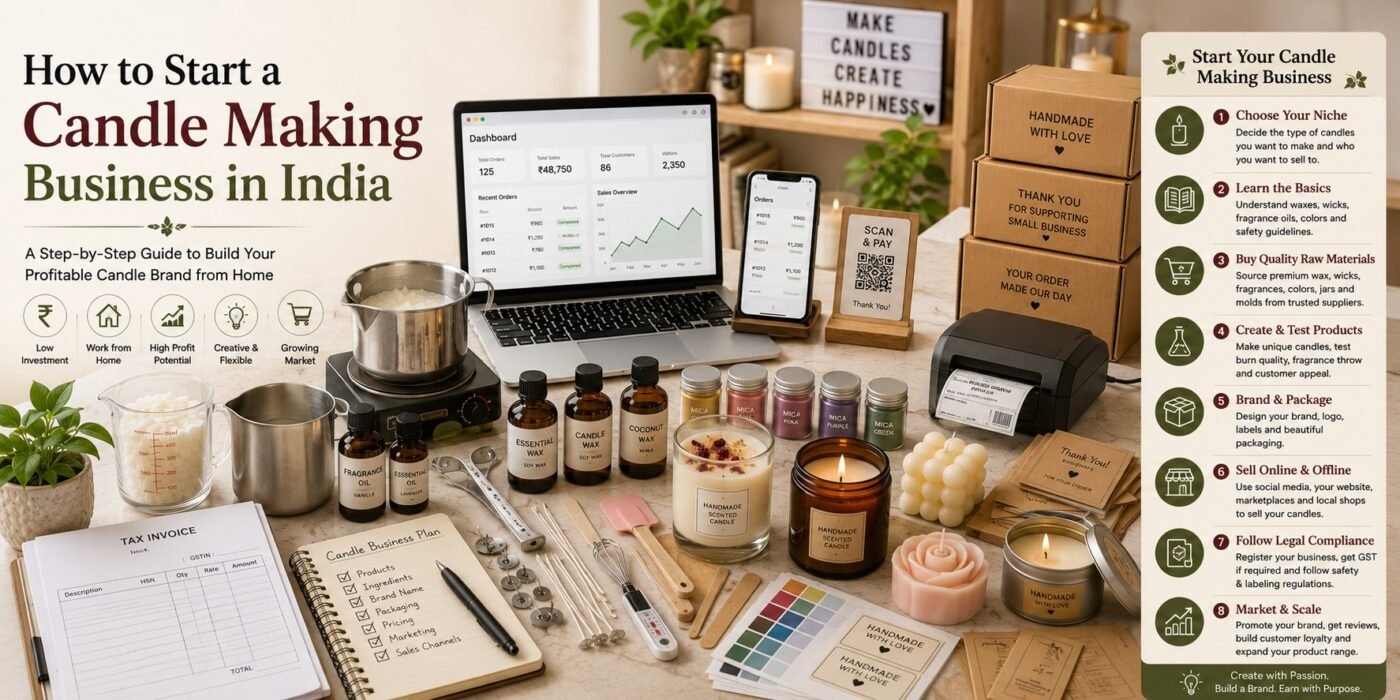
How to Start a Candle Making Business in India
Jun
How to Start a Candle Making Business in India
Learn how to plan, make, test, package, price, brand, and sell candles in India with beginner-friendly raw material guidance, safety testing, costing, packaging ideas, compliance checklist, and online selling tips.
Quick Answer
To start a candle making business in India, choose a candle niche, learn wax and wick testing, buy quality wax, fragrance oils, jars, tins, molds, wicks, dyes, and labels, create safe tested candles, calculate cost and profit, check packaging/GST/business requirements, and sell through Instagram, WhatsApp, gift stores, exhibitions, marketplaces, or your website.
Table of Contents
Candle Business Overview
Candle making is a good home business idea in India because candles are used for home fragrance, gifting, decor, wedding hampers, festive gifting, spa products, return gifts, corporate gifts, and premium lifestyle products.
You can start small with jar candles and candle tins because they are easier to pack, ship, and brand. After testing, you can expand into soy wax candles, paraffin candles, coconut wax blends, molded candles, wax melts, tealights, pillar candles, dessert candles, aromatherapy-style candles, and luxury gift sets.
For candle wax, fragrance oils, essential oils, candle jars, tins, wicks, wick stickers, wick holders, candle dyes, silicone molds, packaging, and DIY candle making supplies, visit Jindeal.com.
Best Candle Types to Start With
Raw Materials Needed
Start with a focused candle-making kit instead of buying too many fragrances, containers, and waxes. Testing becomes easier when you control variables.
| Category | Examples | Why Needed |
|---|---|---|
| Wax | Soy wax, paraffin wax, coconut wax blend, beeswax blend | Main candle body |
| Wicks | Cotton wicks, wooden wicks, pre-tabbed wicks | Controls flame, melt pool, burn quality |
| Containers | Glass jars, amber jars, candle tins, ceramic jars | Holds wax and builds product look |
| Fragrance Oils | Rose, sandalwood, vanilla, coffee, lavender, mogra, citrus, oud | Main selling appeal and product identity |
| Essential Oils | Lavender, eucalyptus, peppermint, rosemary, lemongrass, orange | Natural aroma theme when used safely |
| Colors | Candle dye chips, liquid candle dye, mica for decorative surfaces | Improves appearance and range variety |
| Tools | Digital scale, thermometer, pouring pot, heat source, beakers, stirrer | Improves batch accuracy and quality |
| Accessories | Wick stickers, wick holders, warning labels, dust covers | Improves safety and professional finish |
| Packaging | Boxes, kraft cartons, labels, tissue paper, corrugated shipping boxes | Protects candles and improves brand value |
Step-by-Step Business Plan
Step 1: Choose Your Candle Niche
Choose one clear niche first: luxury jar candles, budget tins, festive candles, soy wax candles, aromatherapy-style candles, wedding return gifts, corporate gifting, dessert candles, or home fragrance sets.
Step 2: Select Wax and Container
For beginners, soy wax jar candles or tin candles are easier to manage. Choose one wax and two or three containers first. Every jar size needs separate wick testing.
Step 3: Test Wick Size
Wick testing is the most important step. A wrong wick can cause tunneling, weak fragrance throw, black smoke, overheating jar, large flame, or poor burn.
Step 4: Choose Fragrance Range
Start with 5 popular fragrances such as lavender, rose, vanilla, sandalwood, coffee, mogra, lemon, jasmine, oud, or spa fragrance. Test hot throw and cold throw before final launch.
Step 5: Create 5 to 10 Hero Products
Example product range: Lavender Sleep Candle, Rose Luxury Candle, Sandalwood Meditation Candle, Coffee Candle, Vanilla Candle, Citrus Fresh Candle, Mogra Candle, Oud Candle, Spa Candle, and Festive Diya Candle Set.
Step 6: Calculate Cost and Margin
Include wax, fragrance, wick, jar/tin, label, warning sticker, box, labor, wastage, testing loss, marketplace fee, payment gateway fee, shipping material, and profit.
Step 7: Create Labels and Safety Instructions
Candle labels should include product name, net quantity, fragrance, batch number, manufacturing/packing date, MRP, maker details, care instructions, and candle warning information.
Step 8: Start Selling and Collect Feedback
Sell first through WhatsApp, Instagram, local gift shops, exhibitions, salons, cafes, boutique stores, and small resellers. Use feedback to improve fragrance, burn time, packaging, and pricing.
Candle Testing Checklist
Never sell a candle just because it looks good. A candle must be tested for burn safety and performance.
| Test Area | What to Check | Why It Matters |
|---|---|---|
| Cold Throw | Fragrance smell before burning | Important for retail and gifting |
| Hot Throw | Fragrance while burning | Main customer satisfaction factor |
| Wick Size | Melt pool, flame height, smoking, tunneling | Controls safety and performance |
| Jar Heat | Container temperature during burn | Prevents unsafe overheating |
| Soot / Smoke | Black smoke or mushrooming wick | Affects cleanliness and safety |
| Burn Time | Total burn hours and even wax use | Needed for product claims |
| Surface Finish | Frosting, sinkholes, cracks, wet spots | Affects product appearance |
| Shipping Test | Breakage, melting, leakage, label damage | Important for online orders |
Basic Compliance Checklist in India
Candle business compliance can depend on your state, business model, scale, product category, packaging, sales channel, and claims. Before commercial selling, check with a local compliance consultant, GST consultant, and packaging/labeling expert.
| Area | What to Check | Beginner Note |
|---|---|---|
| Business Registration | Proprietorship, partnership, LLP, or company setup | Many small businesses start as proprietorship |
| Udyam Registration | MSME/Udyam registration on the official government portal | Useful for MSME identity and documentation |
| GST | GST registration threshold, interstate supply, e-commerce sales, invoice rules | Check before marketplace or interstate selling |
| Packaged Commodity Label | Name/address, common name, net quantity, MRP, month/year, consumer care and other required declarations | Needed for pre-packaged goods |
| Safety Label | Burn warning, trimming wick, burn time, keep away from children/pets, never leave unattended | Very important for candles |
| Claims | Avoid medical, therapeutic, disease, or guaranteed health claims | Use aroma, decor, gifting, ambiance wording |
| Batch Records | Wax, wick, fragrance %, jar size, batch number, testing notes | Helps repeat quality and handle complaints |
Candle Costing and Pricing
Beginners often calculate only wax and fragrance cost, but a candle’s real cost includes jar, wick, label, packaging, labor, testing, breakage, shipping material, and selling commission.
| Cost Item | Include This | Why Important |
|---|---|---|
| Wax | Soy wax, paraffin wax, coconut wax blend | Main candle base cost |
| Fragrance | Fragrance oil or essential oil | Usually a major cost driver |
| Wick | Cotton wick, wooden wick, wick tab | Important for burn performance |
| Container | Glass jar, tin, ceramic jar | Affects price and premium look |
| Packaging | Label, warning sticker, box, ribbon, tissue | Builds brand value |
| Wastage | Spillage, testing, damaged jars, rejected candles | Must be included in pricing |
| Labor | Making, cleaning, curing, packing, customer support | Your time has cost |
| Selling Cost | Ads, marketplace fee, payment gateway, samples | Needed for online profitability |
| Shipping Material | Corrugated box, filler, tape, label | Candles need safe packing |
Packaging and Branding
Candle packaging should protect the product, show the fragrance clearly, and make the candle feel gift-worthy. Premium packaging can increase perceived value even when the candle size is small.
Good Packaging Ideas
- Amber glass jar with kraft label
- Matte black candle tin with premium sticker
- Luxury rigid gift box for candle sets
- Festival packaging for Diwali, wedding, Rakhi, Christmas, and corporate gifting
- Dust cover on candle top
- Warning sticker at bottom of jar
- Corrugated protective outer box for shipping
Branding Tips
- Create fragrance families: Floral, Spa, Festive, Dessert, Woody, Fresh, Luxury
- Use clean product photography with flame, wax, jar, and fragrance ingredients
- Make a clear fragrance description for each candle
- Add usage instructions and safety warnings on product page
- Offer gift-ready packaging and combo sets
Where to Sell Candles
Start with direct sales channels, then expand into marketplaces and wholesale after your product is tested and packaging is stable.
| Sales Channel | Best For | Beginner Tip |
|---|---|---|
| Local orders, repeat buyers, gifting groups | Use catalog photos and combo pricing | |
| Reels, lifestyle content, candle making videos | Show burning videos and packaging videos | |
| Gift Stores | Offline retail and local gifting | Offer tester candles and wholesale margin |
| Salons and Boutiques | Premium local customers | Make small display units |
| Exhibitions | Festive sales and customer feedback | Carry mini candles and gift boxes |
| Corporate Gifting | Bulk orders and festival hampers | Offer branding and custom fragrance labels |
| Your Website | Long-term brand building and SEO | Add blogs, FAQs, safety information, and reviews |
| Marketplaces | Pan-India reach | Calculate commission, GST, breakage, and returns carefully |
Common Mistakes
1. Selling Without Burn Testing
Every jar, wax, wick, and fragrance combination must be tested before selling.
2. Using Wrong Wick Size
Wrong wick causes tunneling, smoking, overheating, weak throw, or unsafe flame.
3. Adding Too Much Fragrance Oil
Excess fragrance can cause sweating, poor burn, weak structure, or safety issues.
4. Ignoring Jar Heat
A jar that gets too hot can become unsafe. Always test container temperature.
5. Pricing Too Low
Include jar, wax, fragrance, wick, label, warning sticker, box, labor, wastage, and selling costs.
6. Weak Packaging
Candles can break, melt, leak, or get scratched during shipping if packaging is poor.
7. No Warning Label
Every candle should include clear burn safety instructions.
8. Too Many Fragrances at Launch
Start with 5 to 10 tested scents instead of 50 untested variants.
9. Making Medical Claims
Do not claim candles cure anxiety, insomnia, depression, headache, disease, or any medical condition.
10. Not Keeping Batch Records
Record wax, wick, fragrance percentage, jar size, pour temperature, and test results.
FAQ
1. Can I start a candle business from home in India?
Yes, you can start planning, testing, and small-batch making from home. Before commercial selling, check business registration, GST, labeling, packaging, and local requirements.
2. Which candle is best for beginners?
Soy wax jar candles and candle tins are good beginner products because they are easy to brand, pack, and sell.
3. How much investment is needed to start?
You can start small with wax, jars/tins, wicks, fragrance oils, dye, thermometer, pouring pot, labels, warning stickers, and packaging. Investment depends on batch size and packaging quality.
4. Do I need GST for candle business?
GST depends on turnover, interstate supply, e-commerce sales, and business model. Check with a GST consultant before selling on marketplaces or outside your state.
5. Do candles need warning labels?
Yes, candles should include burn safety warnings such as never leave unattended, keep away from flammable items, keep away from children and pets, trim wick, and burn on a heat-safe surface.
6. Which wax is best for candle business?
Soy wax is popular for premium natural-style candles, paraffin is economical, and coconut wax blends are used for luxury candles. Choose based on your product positioning and test results.
7. Which fragrances sell well?
Lavender, rose, sandalwood, vanilla, coffee, mogra, jasmine, lemon, oud, cinnamon, and spa-style fragrances are popular starter options.
8. Why is candle testing important?
Testing helps confirm wick size, fragrance throw, jar heat, burn time, soot, tunneling, wax performance, and overall safety.
9. Can I sell candles on Instagram?
Yes. Instagram is a good platform for candle making videos, lifestyle photos, gift sets, and festive campaigns.
10. Can I sell candles on Amazon or Flipkart?
Yes, but marketplaces may require GST, proper labels, invoices, safe packaging, product information, and compliance documents.
11. Can candles cure stress or insomnia?
No. Avoid medical or therapeutic claims. You can describe aroma, ambiance, relaxation-style mood, decor, or gifting appeal without claiming treatment.
12. How do I price handmade candles?
Add wax, fragrance, wick, jar, label, warning sticker, packaging, labor, wastage, selling cost, shipping material, and profit margin.
13. What is the most important candle making tool?
A digital scale and thermometer are very important because accurate measurement and temperature control improve consistency.
14. Can I buy small quantities of candle raw materials?
Yes. Jindeal.com supports DIY makers and small businesses with low MOQ candle wax, fragrance oils, jars, tins, wicks, colors, molds, and packaging.
15. Where can I buy candle making supplies in India?
You can buy candle wax, fragrance oils, essential oils, candle jars, tins, wicks, wick stickers, dyes, silicone molds, and packaging from Jindeal.com.
Final Words
Starting a candle making business in India is possible with small investment, careful testing, good fragrance selection, premium packaging, clear safety labels, and smart selling channels. Start with a limited product range, test every candle properly, keep batch records, and improve based on customer feedback.
Use quality raw materials, avoid unsafe claims, verify business and packaging requirements, and focus on product safety. For candle wax, fragrance oils, essential oils, jars, tins, wicks, colors, molds, and packaging, visit Jindeal.com.
Shop Candle Making Raw Materials on Jindeal.com
Buy soy wax, paraffin wax, fragrance oils, essential oils, candle jars, tins, wicks, wick stickers, candle dyes, silicone molds, and packaging materials from Jindeal.com to start your candle making business in India.