
Uncategorized
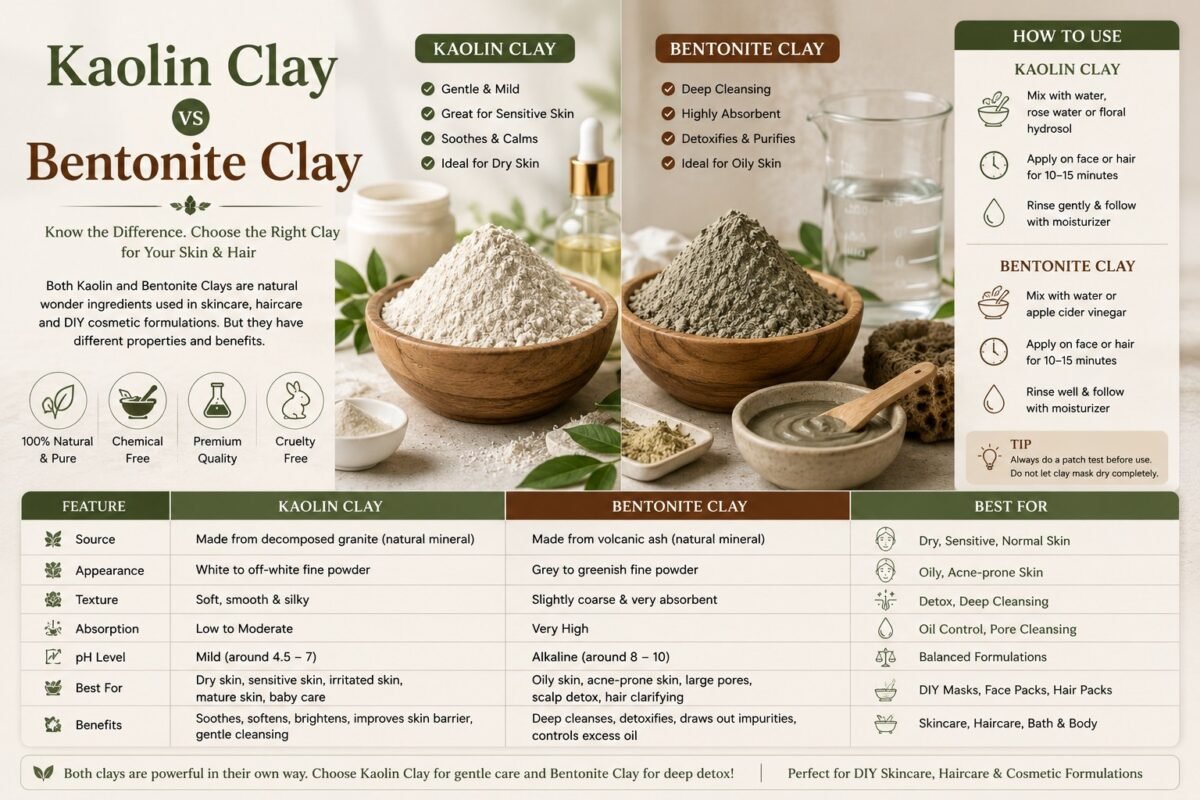
Kaolin Clay vs Bentonite Clay
Jun
Kaolin Clay vs Bentonite Clay
Learn the difference between Kaolin Clay and Bentonite Clay for DIY face masks, soap, scrubs, body packs, bath powders, oily-skin themed products, gentle skincare products, and natural cosmetic formulations.
Quick Answer
Kaolin Clay is usually softer, smoother, and gentler, making it beginner-friendly for face masks, soap, bath powders, and mild skincare-style products. Bentonite Clay is more absorbent, thicker, and stronger, making it popular for deep clay mask concepts, foot products, body packs, and oily-skin themed rinse-off products.
Table of Contents
What Are Kaolin Clay and Bentonite Clay?
What Is Kaolin Clay?
Kaolin Clay is a fine, soft cosmetic clay commonly used in face masks, soaps, scrubs, bath powders, body packs, dry mask powders, and gentle skincare-style products. It has a smooth powder feel and is often preferred by beginners because it is easy to blend and gives a softer clay experience.
What Is Bentonite Clay?
Bentonite Clay is a highly absorbent clay that swells and thickens strongly when mixed with water. It is popular in strong clay mask concepts, body packs, foot care products, oily-skin themed rinse-off products, and thick paste-style cosmetic formulas.
Both clays are useful in DIY cosmetics, but they behave differently in formulas. Kaolin is gentle and smooth, while Bentonite is heavier, more absorbent, and more thickening.
For Kaolin Clay, Bentonite Clay, Multani Mitti, French Green Clay, Rhassoul Clay, herbal powders, soap bases, jars, pouches, and DIY cosmetic raw materials, visit Jindeal.com.
Main Difference Between Kaolin and Bentonite
The main difference is texture and absorption. Kaolin Clay gives a mild, smooth, creamy clay feel. Bentonite Clay absorbs more water and oil, swells strongly, and creates a thicker mask paste.
Kaolin Clay vs Bentonite Clay Comparison Chart
This chart helps you choose the right clay for your DIY cosmetic product.
| Point | Kaolin Clay | Bentonite Clay |
|---|---|---|
| Texture | Soft, smooth, fine, creamy powder feel | Heavier, stronger, swelling clay texture |
| Absorption | Mild to moderate absorption feel | High absorption feel |
| Beginner Friendly | Very beginner-friendly | Needs more careful use |
| Best Skin-Feel Theme | Gentle, soft, everyday, mild face mask concept | Deep clay, oily-skin themed, strong mask concept |
| Water Mixing | Makes smooth paste easily | Swells and thickens strongly |
| Soap Use | Very good in soap for smooth clay feel | Can be used but may thicken and affect texture |
| Face Mask Use | Good for gentle dry mask powders | Good for stronger rinse-off mask concepts |
| Body Pack Use | Good for mild body packs | Good for thick body clay packs |
| Scrub Use | Good for gentle polish-style formulas | Use carefully; can feel heavy |
| Best Blends | Rose powder, aloe powder, Multani Mitti, essential oils | Kaolin clay, French green clay, charcoal, Multani Mitti |
Best Product Uses
1. Face Mask Powder
Kaolin Clay is ideal for gentle dry face mask powders. Bentonite Clay can be used for stronger clay mask concepts, but it should be balanced with milder powders to avoid an overly drying feel.
2. Handmade Soap
Kaolin Clay is very popular in soap because it gives a smooth feel and natural clay look. Bentonite can also be used, but it may thicken formulas and create a heavier texture if overused.
3. Body Packs
Bentonite Clay works well in thick body pack products because it swells and creates a strong clay paste. Kaolin Clay works for softer body pack concepts.
4. Scrubs
Kaolin Clay is better for soft polish-style scrubs. Bentonite can be used in body scrubs, but avoid making the formula too thick or drying.
5. Bath Powders
Kaolin Clay works well in luxury bath powders and floral bath blends. Bentonite can be used in small amounts, but too much may create heavy residue.
6. Foot Care Products
Bentonite Clay is popular in foot packs and deodorizing-style foot product concepts because of its strong clay identity. Kaolin can soften the formula feel.
7. Creams and Lotions
Both clays can be difficult for beginners in creams and lotions because they may thicken, destabilize, or create gritty texture. Start with dry powders, masks, and soaps first.
Beginner Formula Ideas
| Product Idea | Simple Ingredient Direction | Product Theme |
|---|---|---|
| Gentle Kaolin Face Mask | Kaolin Clay + rose petal powder + aloe vera powder | Soft floral face mask powder |
| Balanced Clay Mask | Kaolin Clay + small amount of Bentonite Clay + Multani Mitti | Medium-strength clay mask |
| Strong Bentonite Body Pack | Bentonite Clay + Kaolin Clay + French Green Clay | Deep clay body pack concept |
| Kaolin Clay Soap | Melt and pour soap base + Kaolin Clay + fragrance/essential oil | Smooth natural soap |
| Foot Clay Pack | Bentonite Clay + Multani Mitti + peppermint aroma ingredient | Refreshing foot-care theme |
| Luxury Bath Powder | Kaolin Clay + rose powder + oatmeal-style powder + mild fragrance | Gentle spa bath powder |
Common Mistakes
1. Using Bentonite Like Kaolin
Bentonite absorbs and thickens more strongly than Kaolin. Do not replace one with the other without testing.
2. Using Too Much Clay
Too much clay can make products dry, tight, gritty, heavy, or difficult to rinse.
3. Making Wet Masks Without Preservative
Stored water-based masks need proper preservation. Dry masks should stay dry until use.
4. Letting Clay Masks Dry Too Hard
Clay masks that dry completely hard can feel uncomfortable and drying. Rinse when semi-dry or as directed.
5. Not Testing Texture
Clay particle size affects smoothness, spreading, and rinse-off feel.
6. Using Industrial Grade Clay
Use cosmetic-grade clay for cosmetic products.
7. Adding Too Much Clay in Soap
Excess clay can reduce lather, dull appearance, or create drag.
8. Not Testing Staining or Residue
Some clay blends can leave residue on tubs, towels, or packaging.
9. Using Clay in Creams Without Experience
Clay can thicken, destabilize, or create texture issues in emulsions.
10. Making Medical Claims
Do not claim clays cure acne, pigmentation, infection, scars, or skin disease.
Expert Tips
- Use Kaolin Clay for gentle beginner face masks and soap.
- Use Bentonite Clay for stronger clay mask and body pack concepts.
- Blend Bentonite with Kaolin to reduce heaviness and improve feel.
- Use fine cosmetic-grade clays only.
- Keep dry masks moisture-free.
- Use preservatives for stored wet products.
- Test clay masks for spread, drying time, rinse-off, and residue.
- Do not let masks dry completely hard on skin.
- Use small amounts in soap and increase only after testing.
- Patch test finished products before regular use.
- Keep claims cosmetic-safe and avoid treatment claims.
- Buy Kaolin Clay, Bentonite Clay, Multani Mitti, French Green Clay, herbal powders, soap bases, jars, and pouches from Jindeal.com.
FAQ
1. What is the difference between Kaolin Clay and Bentonite Clay?
Kaolin Clay is softer and gentler, while Bentonite Clay is more absorbent, heavier, and more thickening when mixed with water.
2. Which clay is better for beginners?
Kaolin Clay is usually easier for beginners because it is smooth, gentle, and easier to blend.
3. Which clay is better for oily-skin themed products?
Bentonite Clay is popular in oily-skin themed rinse-off products because of its stronger absorption-style feel.
4. Which clay is better for sensitive-skin themed products?
Kaolin Clay is commonly preferred for gentle and sensitive-skin themed cosmetic products.
5. Can I mix Kaolin Clay and Bentonite Clay?
Yes. Mixing both can create a balanced clay mask with smoother feel and stronger clay performance than Kaolin alone.
6. Can Kaolin Clay be used in soap?
Yes. Kaolin Clay is very popular in handmade soap for a smooth natural clay feel and appearance.
7. Can Bentonite Clay be used in soap?
Yes, but use carefully. Bentonite can thicken and may affect texture if overused.
8. Do clay masks need preservatives?
Dry clay mask powders usually do not need water-phase preservatives if kept dry. Stored wet masks need suitable preservation.
9. Can clay masks cure acne?
Cosmetic products should not claim to cure acne or skin disease. Clays can be used in clean-feel rinse-off mask products.
10. Can Bentonite Clay dry the skin?
Yes. Bentonite can feel drying if used too much or left on too long. Formula balance and rinse timing matter.
11. Can Kaolin Clay dry the skin?
Kaolin is usually milder, but any clay can feel drying if overused or left on too long.
12. Which clay is better for bath powder?
Kaolin Clay is often better for gentle bath powders because it feels softer and leaves less heavy texture.
13. Can I use clay in creams and lotions?
It is possible in special formulas, but clays can thicken, destabilize, or feel gritty. Beginners should start with masks and soaps.
14. How should clays be stored?
Store clays in dry airtight containers away from moisture, sunlight, heat, and contamination.
15. Where can I buy Kaolin Clay and Bentonite Clay?
You can buy Kaolin Clay, Bentonite Clay, Multani Mitti, French Green Clay, herbal powders, soap bases, jars, pouches, and DIY cosmetic raw materials from Jindeal.com.
Final Words
Kaolin Clay and Bentonite Clay are both useful in DIY cosmetics, but they are not the same. Kaolin is softer and easier for gentle masks and soap, while Bentonite is stronger, more absorbent, and better for thick clay mask and body pack concepts.
Use cosmetic-grade clays, test texture and rinse-off, keep dry products moisture-free, preserve stored wet products properly, and avoid medical claims. For Kaolin Clay, Bentonite Clay, clays, herbal powders, soap bases, jars, pouches, and DIY raw materials, visit Jindeal.com.
Shop Kaolin Clay and Bentonite Clay on Jindeal.com
Buy Kaolin Clay, Bentonite Clay, Multani Mitti, French Green Clay, rose powder, aloe vera powder, soap bases, cosmetic jars, pouches, and DIY skincare ingredients from Jindeal.com.
