
Uncategorized
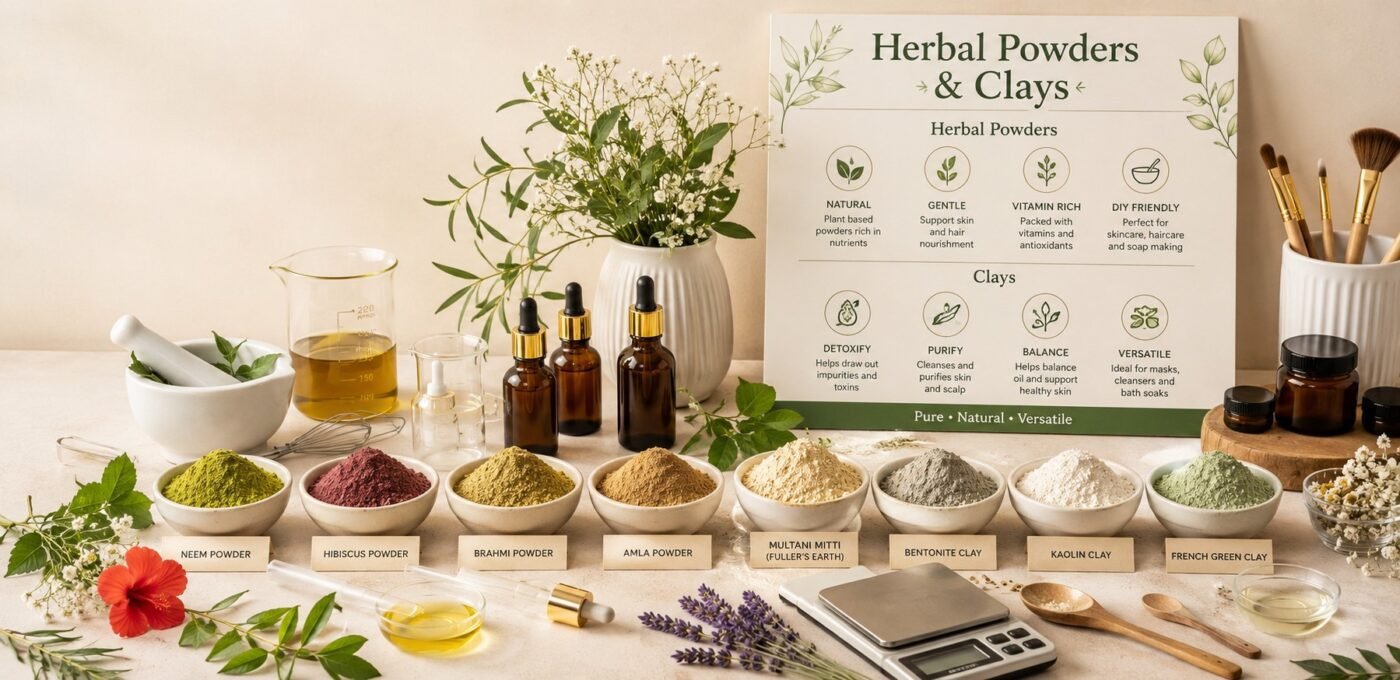
Herbal Powders & Clays
Jun
Herbal Powders & Clays
Learn how to choose and use herbal powders and cosmetic clays in DIY soap, face masks, ubtan, scrubs, bath powders, hair care, body care, and natural-style cosmetic formulations with beginner-friendly tips and product ideas.
Quick Answer
Herbal powders and cosmetic clays are used in DIY cosmetics for color, texture, exfoliation, product theme, oil-absorbing feel, and natural skincare appeal. Clays work well in masks, soaps, scrubs, and bath products, while herbal powders are popular in ubtan, hair care, soap, masks, and traditional cosmetic-style products.
Table of Contents
What Are Herbal Powders and Clays?
Herbal powders are finely ground plant-based powders used in cosmetic-style products for natural color, texture, traditional product appeal, and functional product feel. Examples include hibiscus powder, rose petal powder, orange peel powder, neem powder, aloe vera powder, amla powder, reetha powder, shikakai powder, indigo powder, aritha powder, ubtan powders, and many other botanical powders.
Cosmetic clays are mineral-rich fine powders used in masks, soaps, scrubs, bath products, and skincare-style formulas for color, texture, oil-absorbing feel, slip, and natural product positioning. Common examples include kaolin clay, French green clay, bentonite clay, rhassoul clay, multani mitti, Brazilian purple clay, red clay, and yellow clay.
Both herbal powders and clays can make a DIY product look premium and natural, but they must be chosen carefully. Particle size, color stability, skin feel, water absorption, pH, odor, and product compatibility all matter.
For herbal powders, cosmetic clays, soap bases, carrier oils, essential oils, fragrance oils, jars, bottles, and DIY cosmetic raw materials, visit Jindeal.com.
Benefits in DIY Cosmetic Products
Herbal powders and clays are popular because they help create natural-style, handmade, traditional, spa, herbal, and premium product concepts.
Cosmetic and product-making benefits include:
- Natural color and earthy product appearance
- Soft exfoliating or polishing feel depending on particle size
- Oil-absorbing feel in masks and cleansing products
- Good product theme for ubtan, herbal soap, and face masks
- Useful in dry mask powders and bath powders
- Can add texture and visual identity to handmade soap
- Supports natural, ayurvedic-style, spa, and herbal product positioning
- Clays can improve slip and creamy feel in masks
- Herbal powders can add botanical label appeal
- Great for low-MOQ DIY products and small batch handmade cosmetics
Herbal Powder & Clay Selection Chart
This beginner-friendly chart helps you select common herbal powders and clays for DIY products.
| Ingredient | Best Product Uses | Product Feel / Benefit | Beginner Note |
|---|---|---|---|
| Kaolin Clay | Face masks, soap, scrubs, bath powders | Soft, gentle, creamy clay feel | Good beginner clay for many skin-feel products |
| French Green Clay | Masks, soaps, oily-skin themed products | Green color, strong clay identity | Use carefully; can feel drying if overused |
| Bentonite Clay | Masks, foot products, cleansing products | High absorption and thick texture | Hydrates strongly and can thicken formulas |
| Rhassoul Clay | Hair masks, face masks, soap, scrubs | Smooth mineral clay feel | Popular in premium spa products |
| Multani Mitti | Face packs, ubtan, masks, body packs | Traditional clay feel | Best in rinse-off or dry powder formats |
| Rose Petal Powder | Ubtan, masks, soap, bath powders | Floral product theme and soft pink-brown tone | Color and aroma may fade in soap |
| Hibiscus Powder | Hair care, soap, masks, bath powders | Botanical red-purple tone and hair-care theme | Can change color depending on pH |
| Orange Peel Powder | Scrubs, ubtan, soap, masks | Citrus theme and mild scrub feel | Use fine grade to avoid rough texture |
| Neem Powder | Soap, masks, scalp-care themed products | Green herbal product theme | Strong herbal smell; use carefully |
| Amla Powder | Hair masks, herbal hair powders, soap | Traditional hair-care product appeal | Can darken or change product color |
| Reetha / Aritha Powder | Hair wash powders, shampoo bars, herbal cleansers | Traditional cleansing theme | Rinse-off use is more suitable |
| Shikakai Powder | Hair wash powder, hair masks, shampoo products | Traditional herbal hair-care theme | Use fine powder and avoid eye contact |
How to Use Herbal Powders and Clays
1. In Face Masks
Clays and herbal powders are commonly used in dry face mask powders. Customers can mix the powder with water, rose water, aloe vera juice, hydrosol, milk, curd, or other suitable liquid just before use. A dry powder format is easier to preserve than a pre-mixed wet mask.
2. In Ubtan
Ubtan-style powders often include herbal powders, clays, grain powders, flower powders, and mild exfoliating powders. Use fine powder to avoid harsh skin feel.
3. In Soap
Herbal powders and clays can be added to melt and pour soap or handmade soap for natural color, texture, and label appeal. Use small amounts first because powders can make soap gritty or reduce lather if overused.
4. In Scrubs
Fine herbal powders and clays can be used in body scrubs, foot scrubs, and polish-style products. Avoid rough powders for face scrubs.
5. In Hair Care
Amla, hibiscus, shikakai, reetha, aritha, bhringraj, indigo, and similar powders are popular in traditional hair-care themed products. They are best used in rinse-off hair masks, hair wash powders, or herbal scalp-care products.
6. In Bath Powders
Herbal powders and clays can create spa-style bath powders. Use fine powder and test for skin feel, color transfer, and drain performance.
7. In Body Wraps and Packs
Clays like kaolin, multani mitti, bentonite, and rhassoul can be used in body pack concepts. Keep product claims cosmetic and sensory-focused.
Beginner Formula Ideas
| Product Idea | Simple Ingredient Direction | Best For |
|---|---|---|
| Basic Clay Face Mask Powder | Kaolin clay + rose powder + small amount of aloe vera powder | Gentle dry mask concept |
| Green Clay Mask Powder | French green clay + kaolin clay + neem powder | Oily-skin themed rinse-off mask |
| Herbal Ubtan Powder | Orange peel powder + rose powder + multani mitti + fine grain powder | Traditional body and face ubtan concept |
| Hair Mask Powder | Amla powder + hibiscus powder + shikakai powder + aloe vera powder | Traditional hair-care themed product |
| Clay Soap Bar | Melt and pour soap base + kaolin clay + fragrance/essential oil | Natural-look soap bar |
| Rose Bath Powder | Rose powder + kaolin clay + oatmeal-style powder + mild fragrance | Soft floral bath product |
Common Mistakes
1. Using Food or Industrial Grade Powder
Use cosmetic-grade powders and clays for cosmetic products.
2. Adding Too Much Powder in Soap
Too much powder can make soap gritty, dull, or weak in lather.
3. Making Wet Masks Without Preservative
Water-containing masks need proper preservation if stored.
4. Using Rough Powder on Face
Coarse powders can feel harsh on face skin. Use fine powders.
5. Expecting Bright Color from Herbs
Herbal powder colors are usually muted and may fade or change.
6. Ignoring pH Color Change
Some herbal powders change color in high-pH soap or alkaline formulas.
7. Not Testing Smell
Some herbal powders have strong natural smell that can affect final product aroma.
8. Using Too Much Clay in Creams
Clay can thicken, dry, destabilize, or make creams feel heavy if overused.
9. Not Checking Staining
Some powders and clays may stain towels, skin, or tubs if used heavily.
10. Making Medical Claims
Do not claim herbal powders or clays cure acne, pigmentation, dandruff, infection, or disease.
Expert Tips
- Use cosmetic-grade herbal powders and clays only.
- Choose fine powder for smoother skin feel.
- Start with small amounts in soap and creams.
- Use kaolin clay for gentle beginner mask and soap products.
- Use French green clay for stronger clay mask identity.
- Use rose, hibiscus, orange peel, aloe, neem, amla, reetha, and shikakai for herbal product themes.
- Keep dry masks dry and pack in moisture-safe packaging.
- Use preservatives for stored water-based masks, creams, gels, or lotions.
- Test color, smell, texture, staining, and stability before selling.
- Avoid medical claims and keep wording cosmetic-safe.
- Store powders in dry airtight containers away from moisture.
- Buy herbal powders, cosmetic clays, soap bases, carrier oils, jars, bottles, and DIY raw materials from Jindeal.com.
FAQ
1. What are herbal powders used for in cosmetics?
Herbal powders are used for natural color, texture, botanical product theme, ubtan, masks, soap, hair care, bath powders, and scrubs.
2. What are cosmetic clays used for?
Cosmetic clays are used in face masks, soap, scrubs, bath products, body packs, and natural skincare-style formulas for texture, color, and oil-absorbing feel.
3. Which clay is best for beginners?
Kaolin clay is a good beginner clay because it is soft, easy to use, and suitable for many cosmetic-style products.
4. Can I use herbal powders in melt and pour soap?
Yes, but use small amounts and test first because powders can change color, texture, aroma, and lather.
5. Can I use clays in soap?
Yes. Clays like kaolin, French green clay, rhassoul, and bentonite are popular in soap for color and natural texture.
6. Do dry clay masks need preservatives?
Dry powder masks usually do not need water-phase preservatives if kept completely dry. Wet stored masks need proper preservation.
7. Can herbal powders change color in soap?
Yes. Many herbal powders can fade, darken, or change color depending on soap base, pH, fragrance, heat, and storage.
8. Can clays dry the skin?
Some clays can feel drying if used too much or left on too long. Product design and usage instructions matter.
9. Which powders are used for hair care?
Amla, hibiscus, shikakai, reetha, aritha, bhringraj, indigo, and aloe vera powders are popular in hair-care themed products.
10. Which powders are used for ubtan?
Rose powder, orange peel powder, sandalwood-style powders, multani mitti, turmeric-style powders, and fine grain powders are commonly used in ubtan concepts.
11. Can I use herbal powders in creams?
Yes, but use carefully. Powders can make creams gritty, unstable, or difficult to preserve if not formulated properly.
12. Can clays be used in bath products?
Yes. Clays can be used in bath powders, bath soaks, and bath product concepts, but test texture, color release, and tub staining.
13. Can herbal powders cure acne or pigmentation?
Cosmetic products should not claim to cure acne, pigmentation, infection, or skin disease. Keep claims cosmetic and sensory-focused.
14. How should herbal powders and clays be stored?
Store them in dry, airtight containers away from moisture, sunlight, heat, and contamination.
15. Where can I buy herbal powders and cosmetic clays?
You can buy herbal powders, cosmetic clays, soap bases, carrier oils, essential oils, jars, bottles, and DIY cosmetic raw materials from Jindeal.com.
Final Words
Herbal powders and clays are excellent ingredients for natural-style DIY cosmetics, soaps, masks, ubtan, scrubs, bath powders, and hair care products. They add color, texture, product story, and premium handmade appeal.
Use cosmetic-grade powders, test small batches, avoid overuse, preserve water-based products correctly, and keep claims cosmetic-safe. For herbal powders, cosmetic clays, soap bases, carrier oils, jars, bottles, and DIY raw materials, visit Jindeal.com.
Shop Herbal Powders & Clays on Jindeal.com
Buy kaolin clay, French green clay, rhassoul clay, rose powder, hibiscus powder, aloe vera powder, amla powder, shikakai powder, soap bases, jars, pouches, and DIY cosmetic ingredients from Jindeal.com.
