
Uncategorized
Tea Tree Oil Uses for Skin and Hair
Jun
Tea Tree Oil Uses for Skin and Hair
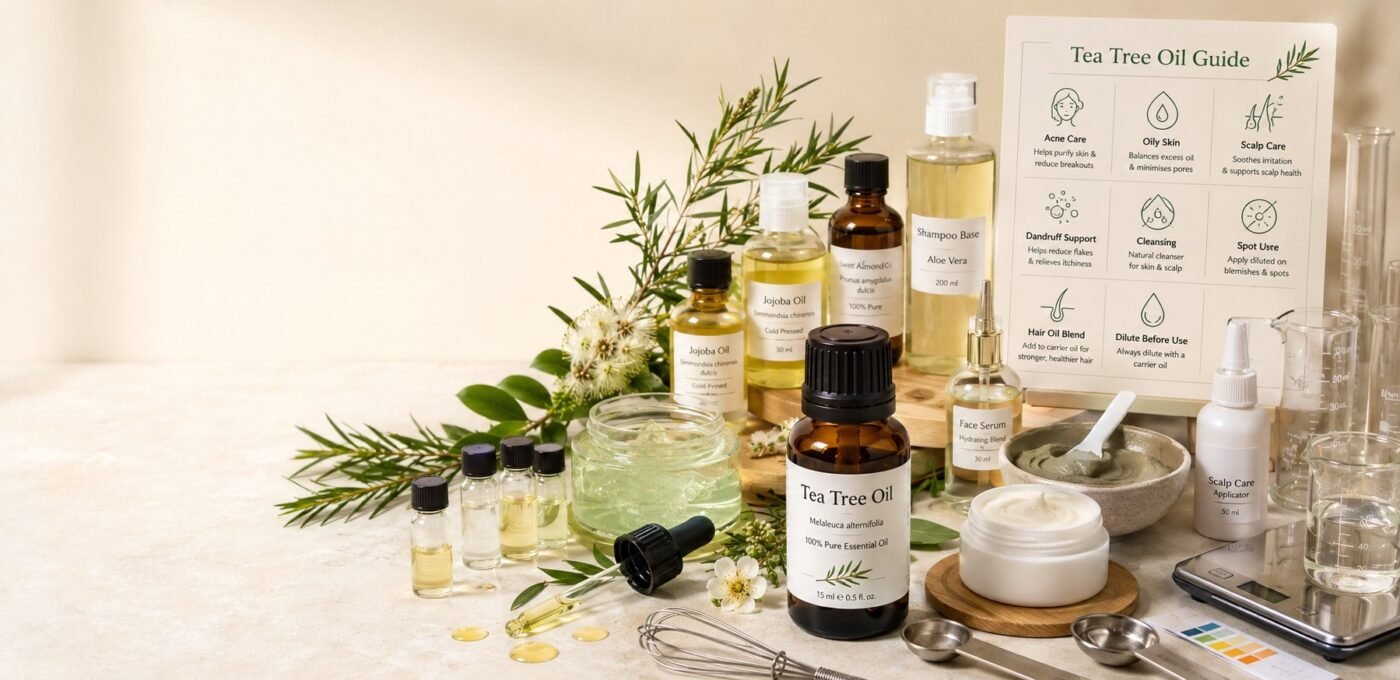
Learn how tea tree essential oil is used in DIY skincare, hair care, handmade soap, shampoo, scalp oil, face wash, foot care, body wash, and cosmetic products with safe dilution, formulation tips, and beginner-friendly product ideas.
Quick Answer
Tea tree oil is popular in skin and hair care products because of its strong fresh herbal aroma and clean-feel product positioning. It is commonly used in soap, face wash, shampoo, scalp oil, foot care, and body wash. Always dilute tea tree oil properly and avoid medical treatment claims.
Table of Contents
What Is Tea Tree Oil?
Tea tree oil is an essential oil with a sharp, fresh, herbal, medicinal-style aroma. It is widely used in handmade soaps, face cleansers, shampoos, scalp oils, foot care products, body wash, and clean-feel cosmetic formulas.
In cosmetic formulation, tea tree oil is mainly used for aroma, freshness, product positioning, and clean skincare or hair care themes. It is especially popular in products designed for oily-skin feel, scalp-care themes, and refreshing cleansing products.
Tea tree oil is strong and concentrated. It should not be used directly on skin or scalp without proper dilution in a carrier oil, soap base, shampoo base, lotion base, or other suitable cosmetic formula.
For tea tree oil, carrier oils, soap bases, shampoo ingredients, preservatives, jars, bottles, and DIY cosmetic raw materials, visit Jindeal.com.
Tea Tree Oil Benefits for Cosmetic Products
Tea tree oil gives products a clean, herbal, refreshing identity. It is often selected for formulas where customers expect a fresh, clarifying, scalp-care, foot-care, or active herbal theme.
Cosmetic and aroma-focused benefits include:
- Fresh herbal aroma for clean-feel products
- Popular in oily-skin themed cosmetic products
- Common in scalp-care and hair-cleansing products
- Good aroma choice for foot care products
- Works well in handmade soap and body wash
- Supports fresh, herbal, active, and spa-style product positioning
- Blends well with lavender, rosemary, eucalyptus, peppermint, lemon, and lemongrass
- Useful in shampoo, face wash, cleansing bar, and rinse-off formulas
- Good for deodorizing-style cosmetic and bath product themes
- Strong aroma, so small amounts can be enough
Tea Tree Oil Usage Chart
This chart gives beginner-friendly product ideas. Always check supplier-recommended usage limits for the exact tea tree oil and product type.
| Product Type | How Tea Tree Oil Helps | Beginner Note | Safety Reminder |
|---|---|---|---|
| Face Wash | Adds fresh clean herbal aroma | Better in rinse-off formulas than strong leave-on use | Avoid eyes and use face-safe level |
| Handmade Soap | Creates active herbal cleansing theme | Works well with clear or white soap base | Use soap-safe level |
| Shampoo | Adds scalp-care style aroma and fresh hair product appeal | Blend with rosemary or peppermint for fresh profile | Rinse well and avoid eyes |
| Scalp Oil | Adds herbal aroma to carrier oil blends | Dilute in coconut, jojoba, almond, or olive oil | Patch test before scalp use |
| Foot Care | Adds strong fresh deodorizing-style aroma | Good for foot soaks, scrubs, and creams | Do not use undiluted |
| Body Wash | Fresh clean aroma for active body care | Use with eucalyptus, lemon, or lemongrass | Use rinse-off safe level |
| Body Butter | Herbal aroma for targeted body care theme | Use very carefully because it is leave-on | Follow leave-on safety guidance |
| Diffuser Blend | Fresh herbal room aroma | Blend with eucalyptus, lemon, lavender, or peppermint | Diffuse safely and avoid overuse |
Step-by-Step Usage Guide
Step 1: Choose the Product Type
Tea tree oil is often easier for beginners in rinse-off products such as soap, face wash, shampoo, and body wash. Leave-on products like face oil, body butter, scalp oil, and creams need more caution.
Step 2: Check Safe Usage Limit
Tea tree oil can be strong on skin and scalp. Always follow supplier usage guidance for your specific product type and avoid overuse.
Step 3: Dilute Correctly
Never apply tea tree oil directly to skin or scalp. Dilute it in carrier oils, soap base, shampoo base, face wash base, or another suitable cosmetic base.
Step 4: Add at the Correct Stage
For melt and pour soap, add tea tree oil after the base melts and cools slightly. For shampoo or body wash, add during the fragrance phase and mix gently. For oil blends, add directly to the carrier oil and mix well.
Step 5: Avoid Eye Area
Tea tree oil has a strong aroma and can be uncomfortable near the eyes. Avoid eye-area products unless professionally formulated.
Step 6: Patch Test
Patch test finished products before regular use, especially scalp oil, face products, body butter, and leave-on products.
Step 7: Store Properly
Store tea tree oil in a tightly closed dark bottle away from heat, sunlight, and air exposure to maintain aroma quality.
Step 8: Keep Claims Cosmetic
Use safe wording such as fresh herbal aroma, clean-feel product, scalp-care theme, foot-care theme, and refreshing cleansing product. Avoid disease-treatment claims.
Common Mistakes
1. Applying Tea Tree Oil Directly
Tea tree oil should be diluted before use on skin or scalp.
2. Using Too Much in Face Products
Face products need extra caution. Too much tea tree oil can irritate skin.
3. Claiming It Cures Acne or Dandruff
Cosmetic products should not make medical treatment claims.
4. Using It as a Preservative
Tea tree oil is not a complete preservative for water-based cosmetics.
5. Adding at Very High Heat
High heat can reduce aroma quality. Add at the correct stage.
6. Not Patch Testing
Tea tree oil can be strong for some users. Patch testing is important.
7. Using It Near Eyes
Avoid eye area and mucous membranes.
8. Using Old Oxidized Oil
Old essential oil may smell unpleasant and can increase irritation risk.
9. Adding It to Baby Products
Baby products need professional formulation and extra safety care.
10. Selling Without Formula Records
Keep supplier details, batch number, usage percentage, and testing notes for products you sell.
Expert Tips
- Use tea tree oil mainly for fresh herbal aroma and clean-feel product themes.
- Start with rinse-off products like soap, shampoo, and face wash.
- Dilute properly before skin or scalp use.
- Blend tea tree oil with lavender for a softer aroma.
- Blend with rosemary or peppermint for hair care themes.
- Blend with eucalyptus or lemon for fresh body wash and diffuser blends.
- Avoid using high amounts in face products.
- Do not use tea tree oil as a preservative.
- Patch test finished products.
- Store in dark airtight bottles away from heat and sunlight.
- Keep product claims cosmetic and aroma-focused.
- Buy tea tree oil, carrier oils, soap bases, shampoo ingredients, jars, bottles, and DIY raw materials from Jindeal.com.
FAQ
1. What is tea tree oil used for in cosmetics?
Tea tree oil is used for fresh herbal aroma and clean-feel product themes in soap, face wash, shampoo, scalp oil, body wash, foot care, and diffuser blends.
2. Can tea tree oil be applied directly to skin?
No. Tea tree oil should be diluted in a carrier oil or cosmetic base before skin use.
3. Can tea tree oil be used on hair?
Yes, it can be used in properly diluted hair oil, shampoo, and scalp-care themed products. Avoid eyes and patch test first.
4. Can tea tree oil be used in shampoo?
Yes. It is commonly used in shampoo formulas for a fresh herbal scalp-care product theme.
5. Can tea tree oil be used in soap?
Yes. Tea tree oil works well in handmade soap and melt and pour soap when used at a soap-safe level.
6. Is tea tree oil good for face products?
Tea tree oil can be used in face products only at safe low levels. Beginners may prefer rinse-off products like face wash instead of leave-on face oil.
7. Is tea tree oil a preservative?
No. Tea tree oil is not a complete preservative. Water-based cosmetics still need a suitable broad-spectrum preservative.
8. Can tea tree oil cure acne?
Cosmetic products should not claim to cure acne or any medical condition. Tea tree oil can be used for a clean-feel skincare product theme.
9. Can tea tree oil cure dandruff?
Do not make medical treatment claims. Tea tree oil can be used in scalp-care themed shampoo or hair oil formulas when diluted properly.
10. What oils blend well with tea tree oil?
Tea tree oil blends well with lavender, rosemary, peppermint, eucalyptus, lemon, lemongrass, cedarwood, and orange.
11. Which carrier oil is best with tea tree oil?
Jojoba oil, sweet almond oil, coconut oil, olive oil, and grapeseed oil are commonly used carrier oils depending on product type.
12. Can tea tree oil irritate skin?
Yes. It can irritate some users, especially if used too strong or undiluted. Always patch test finished products.
13. Can tea tree oil be used in foot care?
Yes. Tea tree oil is popular in foot-care themed scrubs, soaks, soaps, and creams when diluted properly.
14. How should tea tree oil be stored?
Store tea tree oil in a tightly closed dark bottle away from heat, sunlight, and air exposure.
15. Where can I buy tea tree oil?
You can buy tea tree oil, carrier oils, soap bases, shampoo ingredients, preservatives, bottles, jars, and DIY cosmetic raw materials from Jindeal.com.
Final Words
Tea tree oil is a strong, fresh, herbal essential oil that works well in clean-feel skin and hair care products. It is especially popular in soap, face wash, shampoo, scalp oil, foot care, body wash, and diffuser blends.
Use tea tree oil carefully, dilute properly, patch test finished products, and keep claims cosmetic and aroma-focused. For tea tree oil, carrier oils, soap bases, shampoo ingredients, bottles, jars, and DIY cosmetic raw materials, visit Jindeal.com.
Make Tea Tree Oil Products with Jindeal.com
Shop tea tree oil, carrier oils, soap bases, shampoo ingredients, preservatives, amber bottles, jars, and DIY cosmetic-making ingredients from Jindeal.com.
