
Uncategorized
Lavender Essential Oil Uses and Benefits
Jun
Lavender Essential Oil Uses and Benefits
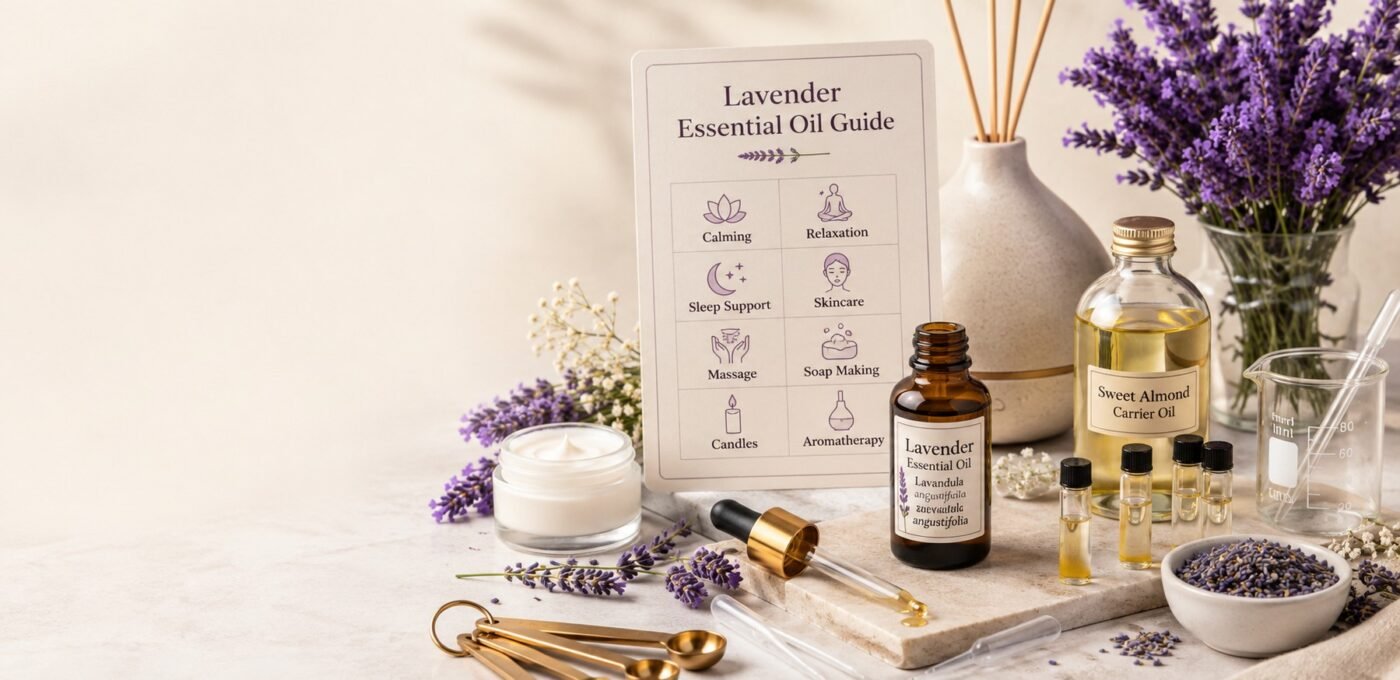
Learn how to use lavender essential oil in DIY cosmetics, handmade soap, candles, diffuser blends, massage oils, body butter, bath salts, hair care, and skincare-style products with beginner-friendly safety and formulation guidance.
Quick Answer
Lavender essential oil is one of the most popular essential oils for DIY cosmetics because of its soft floral aroma, calming product theme, and wide use in soap, bath products, body oils, massage blends, candles, and diffusers. It should always be diluted properly and used within supplier-recommended safe limits.
Table of Contents
What Is Lavender Essential Oil?
Lavender essential oil is an aromatic oil extracted from lavender flowers. It has a soft, floral, herbal, slightly sweet aroma and is widely used in cosmetic, soap, candle, diffuser, bath, massage, and wellness-style product formulations.
In DIY cosmetic making, lavender essential oil is mainly used for fragrance, product theme, and sensory appeal. It is popular in handmade soap, body butter, massage oil, bath salts, face oil, hair oil, pillow mist-style products, aroma blends, and spa-style formulations.
Lavender essential oil is beginner-friendly compared to many strong essential oils, but it is still concentrated and should not be applied directly to skin without dilution.
For lavender essential oil, carrier oils, fragrance oils, soap bases, candle wax, diffuser base, cosmetic jars, bottles, and DIY cosmetic raw materials, visit Jindeal.com.
Lavender Essential Oil Benefits
Lavender essential oil is valued for its soft aroma, natural product appeal, and easy blending ability. It works well alone and also blends beautifully with citrus, floral, herbal, woody, minty, and resinous essential oils.
Cosmetic and aroma-focused benefits include:
- Soft floral aroma for premium handmade products
- Popular calming and relaxing product theme
- Good beginner essential oil for soap and bath products
- Works well in body oil and massage oil blends
- Pairs well with carrier oils like sweet almond, jojoba, and coconut oil
- Useful in body butter and balm formulas when diluted correctly
- Good aroma choice for candles, diffuser blends, and wax melts
- Popular in handmade soap and melt and pour soap
- Can support spa, sleep-time, floral, herbal, and luxury product positioning
- Blends well with orange, lemon, rosemary, peppermint, cedarwood, geranium, and frankincense
- Suitable for many product themes when supplier safety limits are followed
- Creates strong label appeal for beginner DIY cosmetic products
Lavender Essential Oil Usage Chart
This chart gives beginner-friendly product ideas. Always follow supplier-recommended usage levels and product suitability guidelines for your exact lavender essential oil.
| Product Type | How Lavender EO Helps | Beginner Note | Safety Reminder |
|---|---|---|---|
| Melt and Pour Soap | Adds soft floral aroma and spa-style appeal | Add after soap base melts and cools slightly | Use soap-safe level |
| Body Butter | Adds relaxing floral scent to rich body care | Dilute properly in the oil phase | Use leave-on safe limit |
| Massage Oil | Creates soothing aroma and spa theme | Blend with sweet almond, jojoba, or coconut oil | Patch test before use |
| Bath Salts | Adds floral aroma to bath experience | Disperse properly before adding to bath products | Avoid direct undiluted oil floating on bath water |
| Face Oil | Adds light floral scent and premium feel | Use very low level or skip for sensitive skin | Face products need extra caution |
| Hair Oil | Adds herbal floral aroma to scalp and hair oil blends | Blend into carrier oil | Avoid eyes and patch test |
| Candles | Adds floral herbal aroma to natural candle themes | Test scent throw in chosen wax | Check candle compatibility |
| Diffuser Blends | Creates calm floral aroma environment | Blend with citrus, wood, or herb notes | Use diffuser safely and avoid overuse |
Step-by-Step Usage Guide
Step 1: Choose the Product Type
Decide whether you are making soap, body butter, massage oil, hair oil, face oil, bath salts, candle, diffuser blend, scrub, or lotion. Product type decides safe usage and mixing method.
Step 2: Check Supplier Usage Limit
Every essential oil should be used according to supplier safety guidelines. Soap, candle, diffuser, and leave-on skincare products can have different usage limits.
Step 3: Dilute Properly
Do not apply lavender essential oil directly to skin. Dilute it in a suitable carrier oil or cosmetic base. For commercial formulas, measure by weight instead of counting drops.
Step 4: Add at the Right Stage
For body butter, oils, and creams, lavender essential oil is usually added during the cool-down stage. For melt and pour soap, add after the soap base is melted and slightly cooled. For candles, add according to wax and fragrance-loading method.
Step 5: Mix Properly
Mix thoroughly so the lavender essential oil is evenly distributed in the product. Poor mixing can create uneven aroma and irritation risk.
Step 6: Patch Test
Patch test the finished product before regular use, especially leave-on body care, face oil, massage oil, and hair oil products.
Step 7: Store Correctly
Store lavender essential oil in a tightly closed dark bottle away from heat, sunlight, and air exposure. This helps maintain aroma quality.
Step 8: Keep Claims Cosmetic
Use words like floral aroma, relaxing product theme, spa-style fragrance, calming scent experience, and premium handmade appeal. Avoid medical treatment claims.
Common Mistakes
1. Applying Directly to Skin
Lavender essential oil should be diluted before topical use.
2. Using Too Much
Too much essential oil can cause irritation, strong smell, or formula instability.
3. Using It as a Preservative
Lavender essential oil is not a complete preservative for water-based cosmetics.
4. Adding at Very High Heat
High heat can reduce aroma quality. Add at the correct stage for the product.
5. Not Checking Product Suitability
Usage in soap, candle, face oil, body butter, and diffuser blends is not the same.
6. Not Patch Testing
Even popular essential oils can irritate some users.
7. Making Medical Claims
Avoid claiming lavender essential oil cures anxiety, burns, acne, sleep disorders, or skin disease in cosmetic content.
8. Using Old Oxidized Oil
Old essential oils may smell weak or unpleasant and can increase irritation risk.
9. Using It Near Eyes
Avoid eye area and mucous membranes.
10. Selling Without Records
Keep supplier details, batch number, formula percentage, and testing notes for products you sell.
Expert Tips
- Use lavender essential oil for soft floral aroma and spa-style product appeal.
- Dilute properly before skin use.
- Use sweet almond oil or jojoba oil for massage and body oil blends.
- Add lavender essential oil during cool-down stage in cosmetics.
- For melt and pour soap, add after the base cools slightly.
- For candles, test scent throw and wax compatibility.
- Blend lavender with orange, lemon, rosemary, geranium, cedarwood, or frankincense.
- Patch test finished products.
- Store in dark airtight bottles away from heat and sunlight.
- Do not use lavender essential oil as a preservative.
- Keep claims aroma-focused and cosmetic-safe.
- Buy lavender essential oil, carrier oils, soap bases, candle wax, diffuser base, jars, bottles, and DIY raw materials from Jindeal.com.
FAQ
1. What is lavender essential oil used for?
Lavender essential oil is used for aroma, soap making, candles, diffusers, massage oils, body butter, bath products, hair oils, and skincare-style DIY products.
2. Can lavender essential oil be applied directly to skin?
It is better to dilute lavender essential oil in a carrier oil or cosmetic base before skin use.
3. Can I use lavender essential oil in soap?
Yes. Lavender essential oil is popular in melt and pour soap and handmade soap for its soft floral aroma.
4. Can I use lavender essential oil in body butter?
Yes. Add it at a safe leave-on level and mix well during the cool-down or whipping stage.
5. Can I use lavender essential oil in face serum?
Yes, but use very carefully at a low face-safe level. Beginners with sensitive skin may prefer fragrance-free serum.
6. Is lavender essential oil a preservative?
No. Lavender essential oil is not a complete preservative. Water-based cosmetics still need a proper broad-spectrum preservative.
7. Can lavender essential oil be used in candles?
Yes, but scent throw depends on wax type, temperature, and formula. Always test candle performance.
8. What blends well with lavender essential oil?
Lavender blends well with orange, lemon, bergamot, rosemary, peppermint, geranium, cedarwood, frankincense, and eucalyptus.
9. Can lavender essential oil be used in hair oil?
Yes. It can be added to carrier oil blends for hair oil aroma and product appeal. Avoid eyes and patch test.
10. Can lavender essential oil irritate skin?
Yes, it can irritate some users, especially if used too high or undiluted. Always patch test finished products.
11. How should lavender essential oil be stored?
Store it in a tightly closed dark bottle away from sunlight, heat, and air exposure.
12. Can I use lavender essential oil in bath salts?
Yes, but disperse it properly with a suitable carrier or solubilizing system so undiluted oil does not float on bath water.
13. Is lavender essential oil safe for baby products?
Baby products need extra safety care and professional formulation. Avoid using essential oils in baby products unless properly formulated and checked.
14. Can I sell lavender essential oil products?
Yes, but use safe usage levels, proper labeling, product testing, batch records, and avoid medical claims.
15. Where can I buy lavender essential oil?
You can buy lavender essential oil, carrier oils, soap bases, candle wax, diffuser base, bottles, jars, and DIY cosmetic raw materials from Jindeal.com.
Final Words
Lavender essential oil is a versatile beginner-friendly essential oil for soap, bath products, body butter, massage oil, candles, diffusers, hair oils, and skincare-style DIY products. It gives a soft floral aroma and premium spa-style product appeal.
Use it safely, dilute properly, patch test finished products, and avoid medical claims. For lavender essential oil, carrier oils, soap bases, candle wax, diffuser base, jars, bottles, and DIY cosmetic raw materials, visit Jindeal.com.
Make Lavender Products with Jindeal.com
Shop lavender essential oil, carrier oils, soap bases, candle wax, diffuser base, jars, bottles, and DIY cosmetic-making ingredients from Jindeal.com.
