
Uncategorized
Best Carrier Oils for Different Skin Types
Jun
Best Carrier Oils for Different Skin Types
Learn how to choose carrier oils for dry skin, oily skin, sensitive skin, mature skin, combination skin, normal skin, body care, hair care, massage oils, face oils, body butters, balms, and DIY skincare formulations.
Quick Answer
The best carrier oil depends on skin type and product use. Dry skin usually prefers richer oils like olive oil, avocado oil, and sweet almond oil. Oily skin often prefers lighter oils like jojoba and grapeseed. Sensitive skin needs simple, gentle oils. Always patch test and avoid medical claims in cosmetic products.
Table of Contents
What Are Carrier Oils?
Carrier oils are vegetable oils used in cosmetic and skincare formulations. They are called carrier oils because they can carry or dilute essential oils, fragrance oils, oil-soluble ingredients, and other cosmetic actives in oil-based formulas.
Carrier oils are used in face oils, body oils, hair oils, body butter, lotions, creams, balms, salves, lip balms, massage oils, scrubs, soaps, and many DIY cosmetics. They affect skin feel, spreadability, absorption, richness, shine, texture, and formula cost.
Popular carrier oils include sweet almond oil, jojoba oil, grapeseed oil, olive oil, coconut oil, castor oil, sunflower oil, sesame oil, apricot kernel oil, avocado oil, argan oil, and flax seed oil.
For carrier oils, essential oils, fragrance oils, cosmetic butters, vitamin E oil, emulsifying wax, jars, bottles, and DIY cosmetic raw materials, visit Jindeal.com.
What Causes Beginner Confusion?
Beginners often think every oil works the same, but carrier oils differ in texture, heaviness, absorption feel, odor, color, stability, price, and product suitability.
Common confusion happens because beginners:
- Choose oil only by popularity instead of skin feel
- Use heavy oils on oily-skin formulas
- Use very light oils when richer care is needed
- Ignore odor, color, and shelf life of oils
- Use essential oils directly without carrier oil dilution
- Use too much oil in lotion formulas
- Do not add antioxidants to oil-rich products when needed
- Do not patch test new oils
- Make medical claims for cosmetic oils
- Choose expensive oils without costing the final product
- Do not check supplier grade and cosmetic suitability
- Store oils in heat and sunlight
The right oil is not always the most expensive oil. It is the oil that matches your product type, skin feel, texture goal, customer expectation, and formula stability.
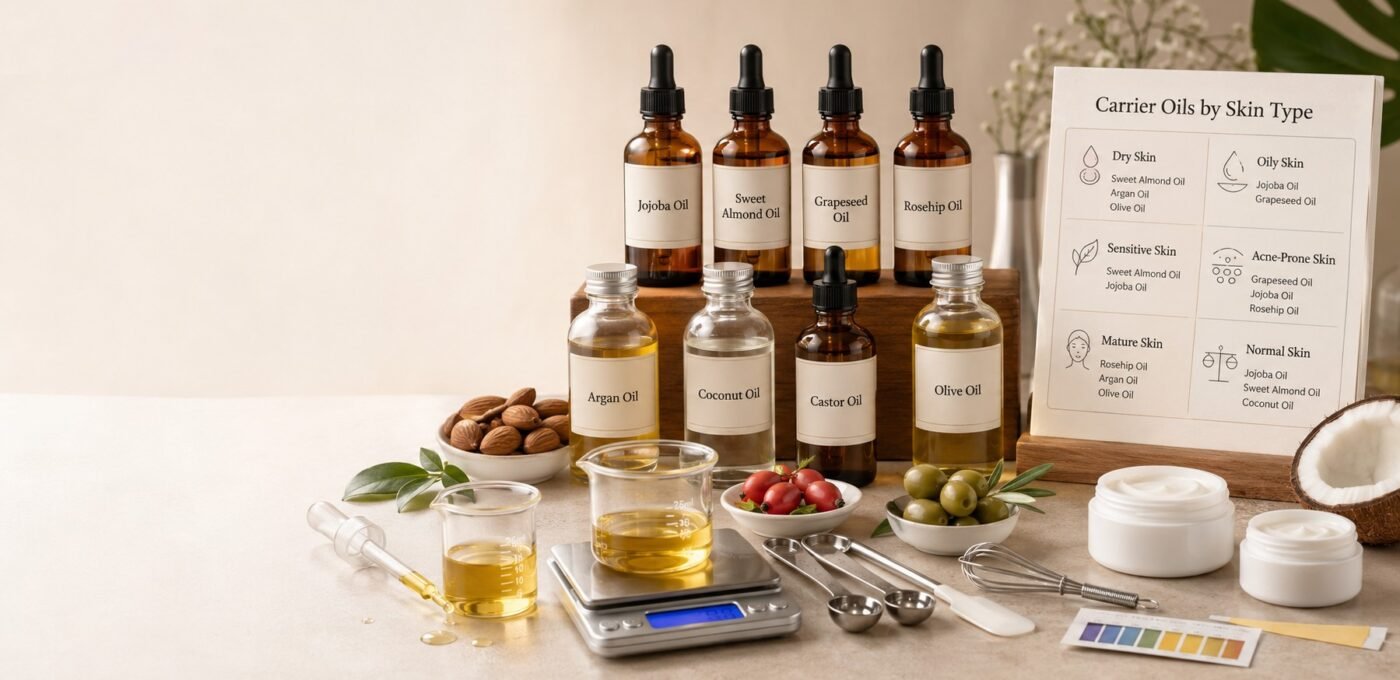
Carrier Oil Selection Chart
This beginner-friendly chart helps you choose carrier oils by skin type and product use. Individual skin response can vary, so always patch test.
| Skin Type / Use | Good Carrier Oil Options | Texture Feel | Best Product Types |
|---|---|---|---|
| Dry Skin | Sweet almond oil, olive oil, avocado oil, sesame oil | Medium to rich | Body butter, body oil, cream, balm, massage oil |
| Oily Skin | Jojoba oil, grapeseed oil, sunflower oil | Light to medium | Face oil, light lotion, serum-style oil blend |
| Sensitive Skin | Jojoba oil, sunflower oil, sweet almond oil | Gentle, simple, balanced | Minimal face oil, body oil, baby-style body care |
| Mature Skin | Argan oil, avocado oil, sweet almond oil, jojoba oil | Premium, nourishing feel | Face oil, night oil, cream, body butter |
| Combination Skin | Jojoba oil, grapeseed oil, sweet almond oil | Balanced and non-heavy | Face oil, lightweight lotion, body oil |
| Hair Care | Coconut oil, castor oil, olive oil, sesame oil, argan oil | Light to heavy depending on oil | Hair oil, scalp oil, pre-wash oil, hair mask |
| Massage Oil | Sweet almond oil, sesame oil, olive oil, sunflower oil | Good glide | Massage blends, body oil, spa oil |
Step-by-Step Choosing Guide
Step 1: Decide the Product Type
First decide whether you are making a face oil, body oil, hair oil, massage oil, body butter, lotion, cream, balm, scrub, soap, or lip care product. The best oil changes by product type.
Step 2: Match Oil Weight to Skin Type
Light oils are better for fast-absorbing formulas and oily-skin products. Rich oils are better for dry-skin body care, winter products, massage oils, and balms.
Step 3: Start with Simple Blends
Beginners should start with 1 to 3 carrier oils instead of mixing too many oils. Simple blends are easier to test and improve.
Step 4: Check Odor and Color
Some carrier oils have stronger natural odor or color. This can affect fragrance choice, product look, and customer acceptance.
Step 5: Consider Shelf Life
Some oils oxidize faster than others. Store oils in cool, dark conditions and consider adding Vitamin E oil as antioxidant support for oil-rich products.
Step 6: Use Carrier Oil to Dilute Essential Oils
Essential oils are concentrated and should not be applied directly to skin. Carrier oils help dilute them safely in massage oils, body oils, and skincare blends.
Step 7: Test Skin Feel
Apply a small amount of finished product and check spreadability, absorption, greasiness, shine, odor, and after-feel. The best oil should match your product goal.
Step 8: Patch Test
Patch test new oils and finished products before regular use. This is especially important for sensitive skin products and essential oil blends.
Step 9: Calculate Cost
Premium oils like argan oil may improve label appeal but increase cost. For commercial products, balance performance, marketing, and final selling price.
Step 10: Store Oils Correctly
Keep carrier oils away from sunlight, heat, air exposure, and moisture. Use clean, dry bottles and close caps tightly after use.
Common Mistakes
1. Using Heavy Oil for Every Skin Type
Heavy oils may feel greasy in face products or oily-skin formulas.
2. Using Essential Oils Without Dilution
Essential oils should be diluted in carrier oils or formulas at safe usage levels.
3. Making Medical Claims
Carrier oils are cosmetic ingredients. Avoid claims like curing acne, eczema, or diseases.
4. Not Patch Testing
Even natural oils can irritate some users. Patch testing is important.
5. Ignoring Oil Odor
Strong-smelling oils can affect final fragrance and product appeal.
6. Using Too Many Oils Together
Complex blends are harder to troubleshoot. Start simple.
7. Not Checking Shelf Life
Old or oxidized oils can smell bad and reduce product quality.
8. Storing Oils in Heat
Heat and sunlight can reduce oil quality faster.
9. Using Non-Cosmetic Grade Oils
Use cosmetic-grade or supplier-confirmed oils for skincare making.
10. Copying Formulas Without Testing
Always test texture, skin feel, scent, stability, and packaging before selling.
Expert Tips
- Choose carrier oil based on skin feel, not only trend.
- Use jojoba or grapeseed oil for lighter face oil blends.
- Use sweet almond oil for balanced body care and massage products.
- Use olive, avocado, or sesame oil for richer dry-skin body products.
- Use coconut oil and castor oil carefully in hair oil blends because they can feel heavy.
- Add Vitamin E oil to support oil freshness in oil-rich products.
- Use carrier oils to dilute essential oils safely.
- Store oils in cool, dark conditions.
- Make small test batches before bulk production.
- Patch test finished products.
- Keep product claims cosmetic and safe.
- Buy carrier oils, essential oils, vitamin E oil, cosmetic butters, jars, and DIY raw materials from Jindeal.com.
FAQ
1. What are carrier oils?
Carrier oils are vegetable oils used in cosmetic formulas to soften, dilute, improve spreadability, and carry oil-soluble ingredients.
2. Which carrier oil is best for dry skin?
Sweet almond oil, olive oil, avocado oil, and sesame oil are commonly used in richer dry-skin body care formulas.
3. Which carrier oil is best for oily skin?
Jojoba oil, grapeseed oil, and sunflower oil are popular lightweight options for oily-skin cosmetic formulas.
4. Which carrier oil is best for sensitive skin?
Simple oils like jojoba oil, sunflower oil, and sweet almond oil are commonly used in gentle formulations, but patch testing is still important.
5. Which carrier oil is best for mature skin?
Argan oil, avocado oil, jojoba oil, and sweet almond oil are popular choices for premium mature-skin cosmetic blends.
6. Which carrier oil is best for hair oil?
Coconut oil, castor oil, olive oil, sesame oil, and argan oil are common in hair oil blends depending on desired texture.
7. Can I apply carrier oil directly to skin?
Many carrier oils can be applied directly, but patch testing is recommended, especially for sensitive skin.
8. Can carrier oils dilute essential oils?
Yes. Carrier oils are commonly used to dilute essential oils for safer topical use.
9. Is coconut oil good for all skin types?
Coconut oil can feel heavy for some skin types, especially face products. It is often better for body care, hair care, and balms.
10. Is castor oil good for face products?
Castor oil is thick and sticky, so it is usually used in smaller amounts or specific formulas rather than as the main face oil.
11. Can I mix different carrier oils?
Yes. Blending oils can improve texture, feel, cost, and product performance. Start with simple blends.
12. Do carrier oils need preservatives?
Oil-only products usually do not need water-phase preservatives, but they should be made hygienically and may benefit from antioxidants like Vitamin E oil.
13. How should carrier oils be stored?
Store carrier oils in closed containers away from heat, sunlight, moisture, and air exposure.
14. Can carrier oils expire?
Yes. Carrier oils can oxidize and become rancid over time. Check smell, color, supplier shelf life, and storage conditions.
15. Where can I buy carrier oils for cosmetics?
You can buy sweet almond oil, jojoba oil, olive oil, grapeseed oil, coconut oil, castor oil, vitamin E oil, essential oils, jars, bottles, and DIY cosmetic raw materials from Jindeal.com.
Final Words
The best carrier oil depends on skin type, product type, texture goal, and customer preference. Light oils work well for face and oily-skin formulas, while richer oils are better for dry-skin body care, massage, balms, and body butters.
Start with simple blends, patch test, store oils properly, and keep claims cosmetic. For carrier oils, essential oils, vitamin E oil, butters, jars, bottles, and DIY cosmetic raw materials, visit Jindeal.com.
Choose the Right Carrier Oils with Jindeal.com
Shop sweet almond oil, jojoba oil, olive oil, grapeseed oil, coconut oil, castor oil, vitamin E oil, essential oils, cosmetic butters, jars, bottles, and DIY cosmetic ingredients from Jindeal.com.
