
Uncategorized
Soap Shelf Life Guide
Jun
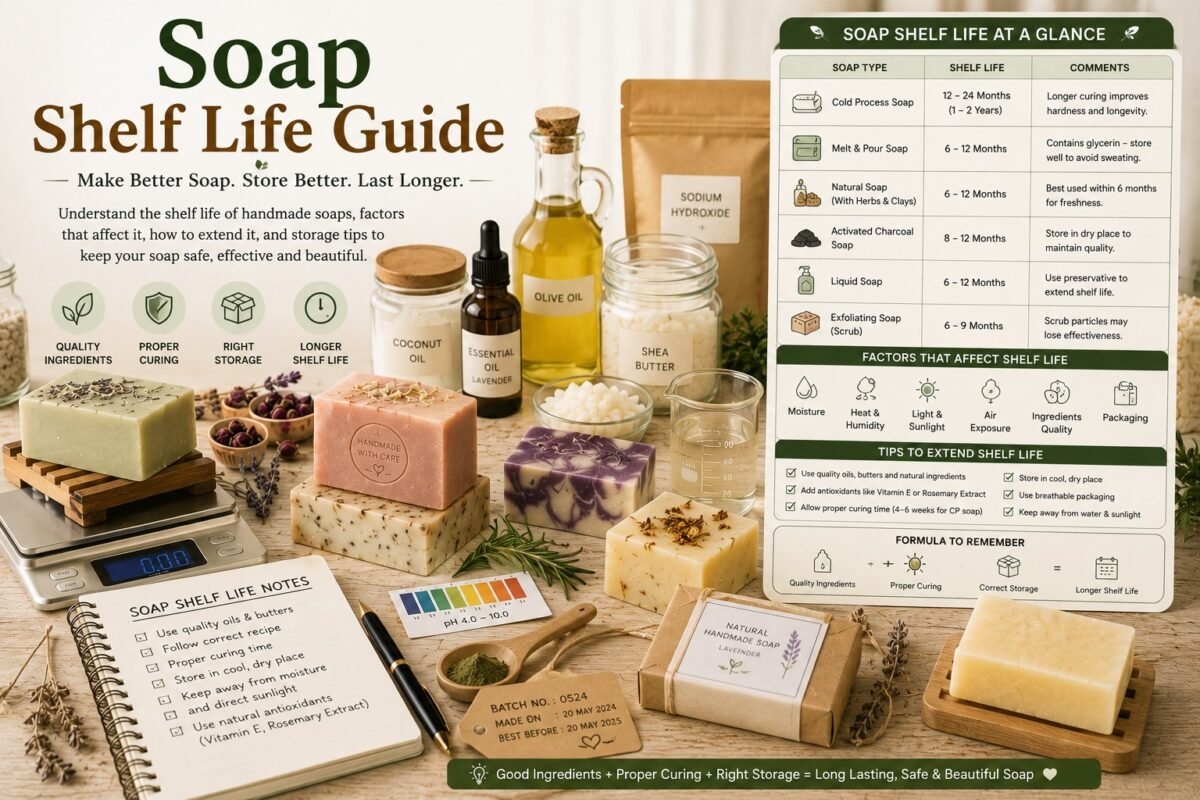
Soap Shelf Life Guide
Learn how long handmade soap, melt and pour soap, glycerin soap, goat milk soap, herbal soap, clay soap, charcoal soap, and fragrance soaps can last, plus how to store, pack, label, and test soap for better shelf appearance.
Quick Answer
Most well-made melt and pour soaps can stay visually good for several months when packed and stored properly, but the exact shelf life depends on soap base quality, fragrance oil, essential oil, added oils, herbal powders, clays, colorants, humidity, packaging, and storage temperature. For handmade soap business use, always test each formula for sweating, fragrance fading, color change, softness, rancid smell, packaging damage, and shelf appearance before deciding the final best-before period.
Table of Contents
What Soap Shelf Life Means
Soap shelf life means how long a soap bar remains acceptable in appearance, fragrance, texture, hardness, color, lather, and packaging condition during storage. For handmade soap sellers, shelf life is not only about whether the soap can still be used; it is also about whether it still looks fresh and premium for customers.
Melt and pour soap can be sensitive to humidity because many soap bases contain glycerin, which attracts moisture. Herbal soaps can change color over time. Fragrance soaps can lose aroma. Soaps with extra oils can become soft or develop rancid smell if too much oil or unstable oil is used.
For soap bases, fragrance oils, essential oils, mica colors, clays, herbal powders, silicone molds, soap boxes, and packaging, visit Jindeal.com.
Soap Shelf Life Chart
This chart gives beginner-friendly planning guidance. Actual shelf life depends on your formula, raw material quality, packaging, humidity, and storage conditions.
| Soap Type | Typical Shelf Planning | Main Risk | Best Storage Tip |
|---|---|---|---|
| Clear Melt and Pour Soap | Several months with good packaging | Sweating, fragrance fading, scratches | Wrap properly and keep away from humidity |
| White Melt and Pour Soap | Several months with good packaging | Yellowing, fragrance fading, sweating | Store cool, dry, and away from sunlight |
| Goat Milk Soap Base | Test carefully before long shelf claim | Color change, fragrance change, sweating | Use airtight packaging and cool storage |
| Shea Butter Soap Base | Good if not overloaded with oils | Softness, sweating, fragrance fading | Keep additives low and pack well |
| Herbal Powder Soap | Needs formula-specific testing | Color browning, gritty texture, botanical fading | Use fine dry powders and avoid moisture |
| Clay Soap | Generally stable when packed properly | Dry feel, low lather if overused, powder specks | Disperse clay and keep formula balanced |
| Charcoal Soap | Good when color level is controlled | Black foam, staining, dull look | Use charcoal in small measured quantity |
| High-Oil Soap | Shorter shelf planning recommended | Softness, sweating, rancid smell | Avoid excess carrier oil in melt and pour soap |
| Essential Oil Soap | Needs aroma-retention testing | Fragrance fading, oxidation, discoloration | Use safe levels and airtight packaging |
What Affects Soap Shelf Life
Best Storage Conditions
Soap storage has a big effect on shelf life. Handmade soap should be protected from heat, humidity, direct sunlight, dust, and strong odors.
| Storage Factor | Best Practice | What Happens If Ignored |
|---|---|---|
| Humidity | Keep soap in a dry place | Sweating, sticky packaging, label damage |
| Heat | Store away from high temperature | Soft soap, sweating, fragrance loss |
| Sunlight | Avoid direct sunlight | Color fading, fragrance fading, yellowing |
| Dust | Keep soap wrapped or boxed | Dirty surface and poor shelf look |
| Strong Odors | Store away from strong fragrance or chemicals | Soap fragrance may mix or change |
| Stacking | Avoid heavy pressure on soft soap | Dents, shape damage, label marks |
- Store soap in a cool, dry, clean place.
- Keep packed soap away from sunlight and heat.
- Do not store soap near open fragrance bottles or strong chemicals.
- Use dehumidifier or dry room storage in humid weather if possible.
- Keep batch-wise inventory and sell older batches first.
Best Packaging for Soap Shelf Life
Packaging protects soap from moisture, dust, fragrance loss, scratches, and customer handling. Melt and pour soap especially needs good packaging because it can sweat in humid conditions.
| Packaging Type | Best For | Benefit | Limitations |
|---|---|---|---|
| Shrink Wrap | Melt and pour soap | Reduces moisture exposure and scratches | Needs neat sealing for premium look |
| Soap Box | Premium handmade soap | Improves gift value and branding | May need inner wrap for melt and pour soap |
| Butter Paper Wrap | Natural-style soap | Handmade and eco-style look | Less moisture protection than shrink wrap |
| Label Sleeve | Cold process style or wrapped soap | Clean branding and lower cost | Does not fully protect from humidity |
| Plastic Pouch | Budget soap packaging | Good moisture and dust protection | May look less premium without label design |
| Gift Box | Soap sets and hampers | Premium presentation | Higher cost; include in pricing |
Signs Soap Has Gone Bad
Discard or do not sell soap if it shows strong negative changes during storage testing.
| Warning Sign | Possible Cause | Action |
|---|---|---|
| Rancid or bad smell | Oil oxidation, unstable additive, poor storage | Do not sell |
| Sticky or wet surface | Humidity, sweating, excess fragrance | Improve formula, packaging, and storage |
| Major color change | Fragrance discoloration, herbal powder fading, sunlight | Test color stability and revise label images |
| Soft or oily soap | Too much oil/fragrance/liquid or poor formula balance | Reduce additives in next batch |
| Powder spots or rough texture | Undispersed clay/herbs/mica | Disperse powders properly |
| Label peeling or wet box | Sweating or poor packaging material | Change packaging and label material |
| Visible contamination | Poor handling, moisture, dirty storage | Do not sell; review hygiene process |
Soap Shelf Life Testing Checklist
Use this simple checklist before deciding the best-before period for your handmade soap.
| Test Area | What to Check | Suggested Check Time | Record Result |
|---|---|---|---|
| Sweating | Moisture droplets, sticky wrap, wet box | 24 hours, 7 days, 15 days, 30 days | Pass / needs improvement |
| Fragrance | Aroma strength and change | 7 days, 15 days, 30 days, 60 days | Strong / medium / weak |
| Color | Fading, browning, bleeding, yellowing | 15 days, 30 days, 60 days | Stable / changed |
| Hardness | Softness, bending, dents | After packing and storage | Firm / soft |
| Lather | Foam and rinse feel | After storage period | Good / reduced |
| Packaging | Label peeling, box damage, wrap sticking | 7 days, 30 days, 60 days | Good / needs change |
| Storage Condition | Heat, humidity, sunlight exposure | Ongoing | Record room condition |
Labeling and Best-Before Tips
For handmade soap business, label information should be clear and professional. The final label format depends on product category and applicable local rules, but good batch tracking is always helpful.
| Label Item | Why Add It | Example |
|---|---|---|
| Product Name | Identifies soap type | Ubtan D-Tan Handmade Soap |
| Net Weight | Customer clarity | 100 g |
| Batch Number | Quality tracking | UBT-0626-01 |
| Manufacturing Date | Inventory and freshness tracking | MFG: Jun 2026 |
| Best Before | Customer usage guidance | Best before 6 months from MFG after testing |
| Storage Instruction | Helps maintain quality | Store in cool, dry place away from sunlight |
| Usage Instruction | Improves customer experience | Keep soap dry between uses |
| Business Details | Customer support and trust | Brand name, website, customer care |
Common Soap Shelf Life Mistakes
1. Giving Shelf Life Without Testing
Do not print long best-before periods without testing your exact formula and packaging.
2. Adding Too Much Oil
Extra oil can make melt and pour soap soft, oily, and more likely to develop quality issues.
3. Using Too Much Fragrance
High fragrance load can cause sweating, softness, and fragrance leakage appearance.
4. Ignoring Humidity
Glycerin-rich soap can sweat badly in humid weather without good packaging.
5. Poor Packaging
Open boxes, weak wraps, and poor labels can reduce shelf appearance quickly.
6. Using Coarse Herbal Powders
Coarse powders can look rough, feel gritty, and change color during storage.
7. Storing Near Heat or Sunlight
Heat and sunlight can fade colors, weaken fragrance, and make soap sweat.
8. Not Rotating Inventory
Sell older batches first and avoid mixing fresh and old stock without batch tracking.
9. Ignoring Label Damage
If labels peel or boxes become wet, customers may think the product is old or poor quality.
10. Making Medical Claims
Do not claim soap cures acne, eczema, pigmentation, infection, dandruff, hair fall, or any disease. Use cosmetic-safe wording.
FAQ
1. How long does handmade soap last?
It depends on the soap type, formula, fragrance, additives, packaging, and storage. Always test your exact soap before deciding the best-before period.
2. How long does melt and pour soap last?
Melt and pour soap can stay visually good for several months if packed and stored properly, but humidity and fragrance can affect shelf appearance.
3. Why does melt and pour soap sweat?
Many glycerin soap bases attract moisture from air, especially in humid weather or poor packaging.
4. Does soap expire?
Soap can lose fragrance, change color, become soft, smell rancid, sweat, or look old over time. Do not sell soap that looks or smells bad.
5. How do I increase soap shelf life?
Use quality soap base, avoid excess oils and fragrance, pack properly, store in cool dry conditions, and test your formula.
6. Can herbal soap change color?
Yes. Herbal powders can fade, brown, or change shade in soap over time.
7. Can fragrance oil reduce soap shelf life?
Some fragrance oils can discolor, fade, or cause sweating if used too much or if not compatible with the base.
8. What is the best packaging for melt and pour soap?
Shrink wrap or moisture-resistant inner wrap with an outer soap box works well for many melt and pour soaps.
9. Should soap be stored in the fridge?
Regular storage in a cool, dry place is usually better. Fridge storage can create condensation when soap returns to room temperature.
10. Why did my soap smell bad after storage?
Bad smell may come from rancid oils, unstable additives, poor storage, or contamination. Do not sell soap with unpleasant rancid odor.
11. Can I add preservatives to melt and pour soap?
Melt and pour soap base is already manufactured as a finished base. Usually shelf issues are managed through formula balance, packaging, and storage rather than adding preservative separately.
12. How do I label soap shelf life?
Use manufacturing date, batch number, and a tested best-before period. Also add storage instructions.
13. Can soap cure skin problems if stored well?
No. Soap should not make medical claims. It can be described as cleansing, aromatic, handmade, herbal-inspired, luxury, spa-style, or gifting soap.
14. How often should I check stored soap stock?
Check batches regularly for sweating, fragrance, color, packaging, hardness, and shelf appearance.
15. Where can I buy soap making supplies?
You can buy soap bases, fragrance oils, essential oils, mica colors, clays, herbal powders, silicone molds, and packaging from Jindeal.com.
Final Words
Soap shelf life depends on the full product system: soap base, fragrance, color, additives, packaging, humidity, storage, and handling. A soap may look perfect on day one but sweat, fade, soften, or lose fragrance after a few weeks if the formula or packaging is not stable.
Test every soap formula, keep batch records, store properly, and choose moisture-resistant packaging. For soap bases, fragrance oils, colors, clays, herbal powders, molds, and packaging, visit Jindeal.com.
Shop Soap Making Supplies on Jindeal.com
Buy melt and pour soap bases, fragrance oils, essential oils, soap colors, mica, cosmetic clays, herbal powders, silicone molds, soap boxes, and packaging materials from Jindeal.com.