
Uncategorized
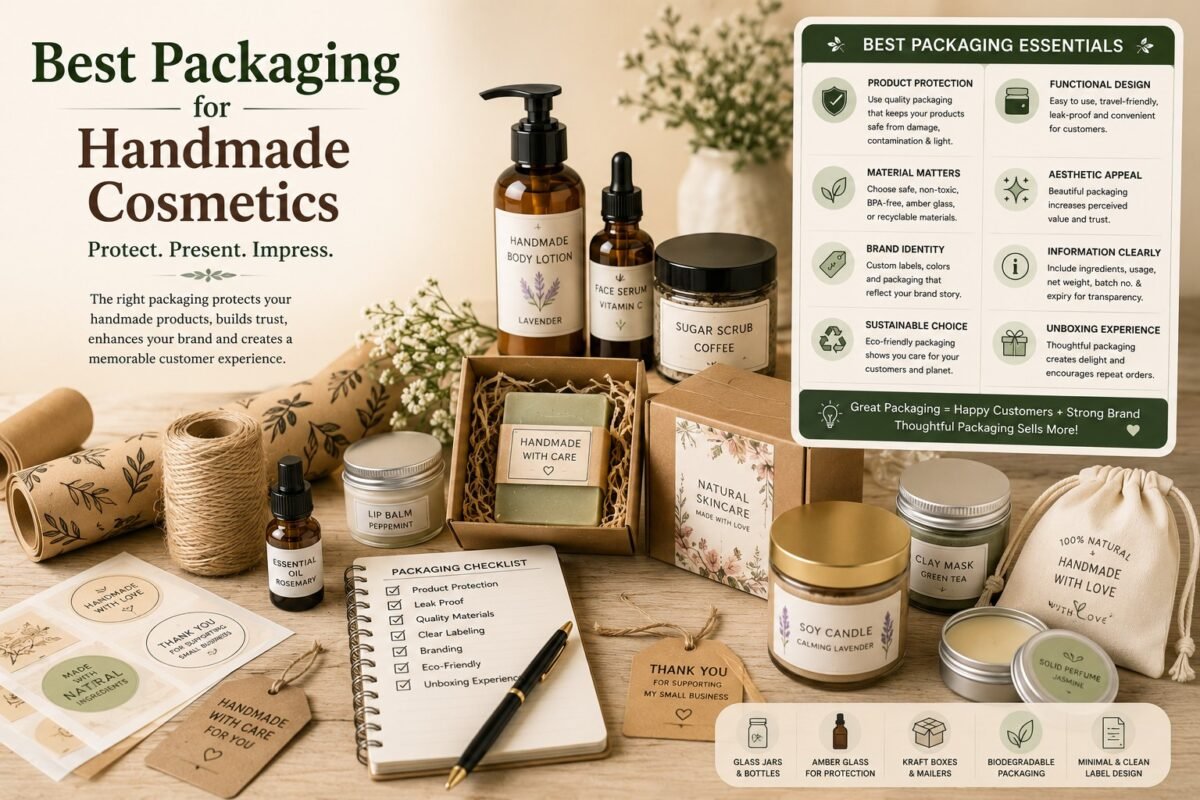
Best Packaging for Handmade Cosmetics
Jun
Best Packaging for Handmade Cosmetics
Choose the right packaging for handmade cosmetics, skincare, soap, body butter, hair oil, face serum, scrubs, clays, herbal powders, bath products, and small cosmetic business products.
Quick Answer
The best packaging for handmade cosmetics depends on product type. Use jars for creams, body butter and scrubs; dropper bottles for serums and facial oils; pump bottles for lotions and liquid products; pouches or wide-mouth jars for dry clays and powders; soap boxes or shrink wrap for handmade soap; and amber bottles for light-sensitive oils. Good packaging should protect the product, prevent leakage, look premium, support labeling, and survive shipping.
Table of Contents
Why Cosmetic Packaging Matters
Packaging is not only for looks. It protects the formula from air, light, moisture, contamination, leakage, and shipping damage. For handmade cosmetics, packaging also builds trust because customers judge quality from the first look of the jar, bottle, label, seal, and box.
Wrong packaging can cause leakage, label peeling, product oxidation, contamination, moisture entry, broken bottles, damaged soap, and poor customer experience. Correct packaging improves shelf appearance, product safety, repeat orders, and brand value.
For cosmetic jars, bottles, pouches, soap boxes, labels, fragrance oils, oils, clays, herbal powders, soap bases, and DIY raw materials, visit Jindeal.com.
Main Types of Cosmetic Packaging
Best Packaging by Product Type
Use this chart to select beginner-friendly packaging for common handmade cosmetic products.
| Product Type | Best Packaging | Why It Works | Extra Tip |
|---|---|---|---|
| Body Butter | Wide-mouth PET/PP jar or glass jar | Easy to scoop thick texture | Add inner seal or shrink band for premium look |
| Face Serum | Amber glass dropper bottle | Premium look and controlled drop dispensing | Use label that resists oil stains |
| Hair Oil | Amber bottle, flip-top bottle, or nozzle bottle | Easy controlled application | Check cap leakage during shipping |
| Essential Oil | Amber glass bottle with dropper insert | Protects aroma oil from light exposure | Use tamper-evident cap when possible |
| Fragrance Oil | HDPE/PET bottle or amber bottle | Good for aroma raw material packaging | Check fragrance compatibility with plastic |
| Body Scrub | Wide-mouth jar | Easy scooping and mixing | Water exposure risk requires caution and preservation if wet |
| Clay Mask Powder | Stand-up pouch or wide-mouth jar | Keeps dry powders easy to use | Protect from moisture |
| Herbal Powder | Pouch, jar, or refill pack | Economical and light weight | Add moisture barrier and clear label |
| Melt and Pour Soap | Shrink wrap + soap box | Protects from moisture and improves shelf value | Pack soon after cooling to reduce sweating |
| Bath Salt | Pouch, jar, or PET bottle | Protects dry salt blend | Use moisture-resistant packaging |
| Lotion | Pump bottle or airless bottle | Easy hygienic dispensing | Use preserved formula and test pump compatibility |
| Lip Balm | Lip balm tube or small jar | Easy application and portability | Use suitable lip-safe ingredients and labels |
Packaging Material Guide
Every packaging material has strengths and limitations. Choose based on product texture, oil content, water content, light sensitivity, price, shipping, and premium positioning.
| Material | Best For | Advantages | Limitations |
|---|---|---|---|
| Glass | Serums, oils, luxury creams, essential oils | Premium look, good barrier, recyclable feel | Breakable and heavier for shipping |
| Amber Glass | Essential oils, carrier oils, serums | Helps protect light-sensitive ingredients | Higher cost and breakage risk |
| PET Plastic | Lotions, oils, gels, scrubs, shampoos | Clear, lightweight, good presentation | Compatibility testing needed with fragrance/oils |
| HDPE Plastic | Raw materials, oils, shampoos, conditioners | Strong, flexible, good for shipping | Less premium look than glass |
| PP Jar | Body butter, scrubs, creams, powders | Lightweight, durable, easy to use | Can look basic without good label |
| Aluminium Tin | Balms, solid perfume, wax products | Lightweight and premium craft look | Not suitable for every wet or acidic formula |
| Stand-Up Pouch | Clays, herbal powders, bath salts, refills | Economical, lightweight, easy storage | Needs good sealing and moisture protection |
| Kraft Box | Soap, gift cosmetics, candles | Natural handmade look | Needs inner product protection |
Labeling and Branding Tips
A professional label helps customers understand the product and trust the brand. Handmade cosmetic labels should be clean, readable, and moisture-resistant.
| Label Element | What to Add | Why Important |
|---|---|---|
| Product Name | Rose Body Butter, Lavender Soap, Herbal Clay Mask | Makes product easy to identify |
| Net Quantity | 50 g, 100 g, 120 ml, 250 ml | Important for customer clarity |
| Ingredient List | Main ingredients or complete ingredient list as required | Builds trust and supports compliance |
| Usage Direction | How to use the product correctly | Reduces customer confusion |
| Storage Direction | Store in cool, dry place away from sunlight | Helps protect product quality |
| Batch Number | Unique batch code | Helps tracking and quality control |
| MFG / Best Before | Manufacturing date and suggested shelf period | Important for product management |
| Business Details | Brand name, address, website, customer care | Builds trust and customer support access |
Shipping and Leakage Protection
Online cosmetic selling needs stronger packaging than offline shelf selling. Products must survive courier handling, temperature change, pressure, leakage risk, and rough movement.
For Oils and Serums
- Use tight caps, dropper caps, or inner plugs.
- Test bottles upside down for leakage.
- Use shrink band or tape seal around cap if needed.
- Wrap glass bottles with bubble wrap or paper cushioning.
For Jars and Creams
- Use inner liner or wad inside cap.
- Do not overfill; leave headspace.
- Test in heat and during shaking.
- Use outer box for premium and shipping protection.
For Dry Powders and Clays
- Use moisture-resistant pouches or jars.
- Seal properly to prevent powder leakage.
- Add scoop only if hygiene and packaging allow.
- Keep away from humidity during storage.
For Soap
- Wrap melt and pour soap properly to reduce sweating.
- Use soap box for premium look.
- Protect from high heat during storage and delivery.
- Use batch label and storage instruction.
Common Packaging Mistakes
1. Choosing Packaging Only by Looks
Beautiful packaging can still fail if it leaks, reacts with the product, breaks in shipping, or peels labels.
2. Using Wrong Jar for Wet Products
Wet scrubs, lotions, and creams need proper packaging and preservation. Do not use open, loose, or weak jars.
3. No Leakage Test
Always test bottles and jars upside down, during shaking, and in warm conditions before shipping.
4. Poor Label Adhesion
Oil-based products can stain labels. Use suitable label material and test before bulk printing.
5. No Inner Seal
For oils, creams, powders, and premium products, seals improve trust and reduce leakage risk.
6. Overfilling Containers
Overfilled jars and bottles can leak during shipping or temperature change.
7. Ignoring Product Compatibility
Essential oils, fragrance oils, and high-oil products can affect some plastics, caps, liners, or labels.
8. Weak Courier Packaging
Cosmetic products need outer box, filler, tape, and protection from breakage or leakage.
9. Missing Storage Instructions
Customers should know how to store handmade products, especially soaps, oils, clays, and water-based products.
10. Making Medical Claims on Packaging
Do not claim products cure acne, eczema, dandruff, hair fall, pigmentation, infection, or disease. Use cosmetic-safe wording.
FAQ
1. What is the best packaging for handmade cosmetics?
The best packaging depends on product type. Use jars for creams and scrubs, dropper bottles for serums, pump bottles for lotions, pouches for dry powders, and soap boxes or shrink wrap for soap.
2. What packaging is best for body butter?
Wide-mouth PET, PP, or glass jars are best because body butter is thick and needs easy scooping.
3. What packaging is best for face serum?
Amber glass dropper bottles are popular for face serums and facial oils because they look premium and allow controlled dispensing.
4. What packaging is best for hair oil?
Amber bottles, flip-top bottles, or nozzle bottles work well for hair oil. Always test cap leakage.
5. What packaging is best for dry clay masks?
Stand-up pouches or wide-mouth jars work well. The main goal is to keep moisture out.
6. What packaging is best for handmade soap?
Shrink wrap, butter paper, soap box, and sleeve packaging are common. Melt and pour soap needs protection from moisture.
7. Is glass better than plastic for cosmetics?
Glass looks premium and offers good barrier properties, but it is heavier and breakable. Plastic is lighter and better for shipping, but compatibility testing is needed.
8. Why do labels peel from cosmetic bottles?
Labels may peel due to oil, moisture, curved bottles, poor adhesive, or wrong label material.
9. How do I prevent bottle leakage?
Use good caps, liners, inner plugs, shrink bands, headspace, and upside-down leakage testing before shipping.
10. Do handmade cosmetics need labels?
Yes. Labels help customers understand product name, weight, ingredients, use, storage, batch number, and business details.
11. Should I use tamper seals?
Tamper seals, shrink bands, and inner seals improve customer confidence and reduce leakage risk.
12. Can I use food jars for cosmetics?
Use packaging suitable for cosmetic products and test compatibility. Food jars may not always work for oils, fragrance, creams, or shipping.
13. What packaging is best for online selling?
Use leak-tested inner packaging, strong outer box, protective filler, clear labels, and shipping-safe closures.
14. Can packaging claim a product cures skin problems?
No. Avoid medical claims. Use cosmetic-safe wording such as cleansing, moisturizing feel, aromatic, spa-style, handmade, herbal-inspired, and gifting.
15. Where can I buy cosmetic packaging?
You can buy cosmetic jars, bottles, pouches, labels, soap packaging, oils, clays, herbal powders, soap bases, fragrance oils, and DIY raw materials from Jindeal.com.
Final Words
The best packaging for handmade cosmetics protects the product, supports shelf life, prevents leakage, improves customer trust, and makes your brand look professional. Choose packaging based on product type, texture, oil content, water content, light sensitivity, label requirement, and shipping method.
Test every jar, bottle, cap, pouch, label, and box before bulk production. For cosmetic packaging, jars, bottles, pouches, soap boxes, raw materials, oils, clays, herbal powders, and DIY supplies, visit Jindeal.com.
Shop Cosmetic Packaging on Jindeal.com
Buy cosmetic jars, bottles, pouches, soap packaging, labels, oils, clays, herbal powders, soap bases, fragrance oils, essential oils, and DIY cosmetic raw materials from Jindeal.com.