
Soap Base, Uncategorized
Melt and Pour Soap Calculator
Jun
Melt and Pour Soap Calculator
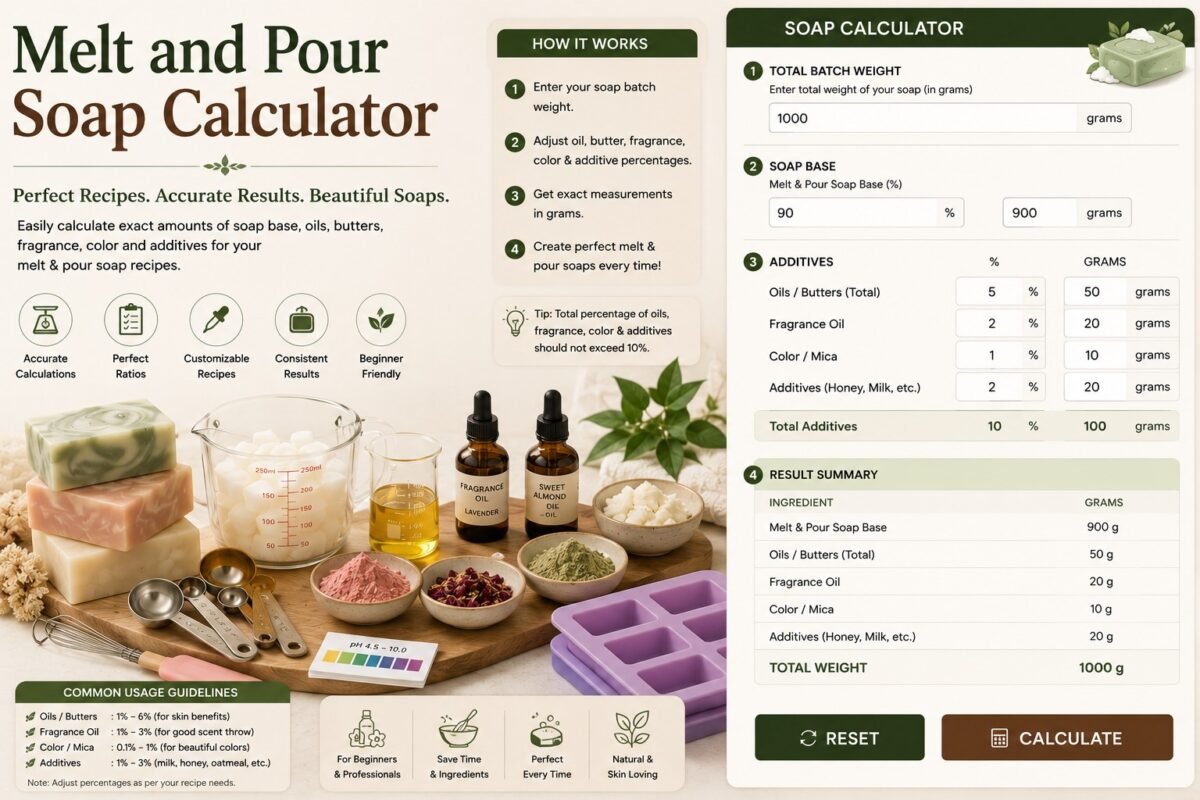
Calculate soap base, fragrance oil, essential oil, color, clay, herbal powder, and cost for melt and pour soap making. This beginner-friendly calculator helps DIY makers create accurate small batches and reduce wastage.
Quick Answer
A melt and pour soap calculator helps you calculate how much soap base, fragrance, color, clay, herbal powder, and packaging cost you need for each batch. Enter total soap weight and percentage usage to get exact grams for your formula. Always follow supplier safe usage limits for fragrance and essential oils.
Table of Contents
Melt and Pour Soap Calculator
Use this calculator to estimate your melt and pour soap formula. Enter your total final soap batch weight and percentage for fragrance, color, clay, and herbal powder.
Your Soap Formula Result
Enter values and click calculate.
How the Calculator Works
The calculator uses percentage-based soap formulation. You enter total final soap batch weight, and the calculator calculates each ingredient in grams.
Example: If your batch is 1000 g and fragrance oil is 2%, then fragrance oil needed is 20 g.
For melt and pour soap, your formula normally starts with soap base as the main ingredient. Fragrance, color, clay, and herbal powders are added in small amounts. Too much additive can reduce lather, create sweating, make soap soft, or cause gritty texture.
For soap bases, fragrance oils, essential oils, cosmetic clays, herbal powders, colors, mica, molds, packaging, and DIY soap making raw materials, visit Jindeal.com.
Recommended Usage Chart
This chart gives beginner-friendly starting points. Always check the supplier’s recommended usage level and test your batch.
| Ingredient | Beginner Starting Range | Best Use | Important Note |
|---|---|---|---|
| Fragrance Oil | 1% to 3% | Scented melt and pour soap | Follow supplier limit; too much may cause sweating or irritation risk |
| Essential Oil | 0.5% to 2% | Natural aroma soap themes | Use safe limits; strong oils need extra care |
| Mica / Cosmetic Color | 0.1% to 0.5% | Colorful soap bars | Too much may bleed, stain, or create colored foam |
| Clay | 0.5% to 2% | Kaolin, French Green Clay, Multani Mitti soap | Disperse first to avoid lumps |
| Herbal Powder | 0.5% to 2% | Rose, hibiscus, orange peel, red sandalwood soap | Color may fade, brown, or feel gritty |
| Carrier Oil | 0.5% to 1% | Luxury soap themes | Too much oil can make soap soft or reduce lather |
| Vitamin E Oil | 0.2% to 0.5% | Premium label appeal | Use small amount only |
Soap Batch Examples
| Batch Size | Fragrance at 2% | Color at 0.3% | Clay/Powder at 1% | Approx. Base Needed |
|---|---|---|---|---|
| 500 g | 10 g | 1.5 g | 5 g | 483.5 g |
| 1000 g | 20 g | 3 g | 10 g | 967 g |
| 2000 g | 40 g | 6 g | 20 g | 1934 g |
| 5000 g | 100 g | 15 g | 50 g | 4835 g |
Example 1: Rose Clay Soap
For 1 kg batch: 967 g soap base + 20 g rose fragrance oil + 3 g pink mica + 10 g kaolin clay or rose powder.
Example 2: Green Clay Soap
For 1 kg batch: 967 g soap base + 20 g tea tree or herbal fragrance + 3 g green mica + 10 g French Green Clay.
Example 3: Ubtan Soap
For 1 kg batch: 967 g white soap base + 20 g sandalwood/ubtan fragrance + 3 g yellow/orange color + 10 g Multani Mitti or red sandalwood powder.
Soap Costing Formula
The calculator gives a basic cost estimate, but final selling price must include all hidden expenses.
| Cost Item | Include This | Why Important |
|---|---|---|
| Soap Base | Clear, white, goat milk, shea butter, aloe vera base | Main raw material cost |
| Fragrance / Essential Oil | Rose, sandalwood, lavender, lemon, mogra, coffee, tea tree | Major product appeal and cost |
| Colors / Additives | Mica, clay, herbal powder, vitamin E, carrier oil | Improves product theme and look |
| Packaging | Soap wrap, box, label, sticker, ribbon, pouch | Builds brand value |
| Labor | Melting, pouring, cleaning, cutting, packing | Your time has cost |
| Wastage | Spillage, trimming, damaged bars, testing loss | Must be added for real pricing |
| Selling Cost | Marketplace fee, payment gateway, ads, samples | Important for online selling |
| Shipping Material | Courier box, filler, tape, invoice, outer label | Needed for safe delivery |
Common Mistakes
1. Adding Too Much Fragrance
Excess fragrance can cause sweating, softness, poor setting, or skin-safety issues.
2. Not Measuring by Weight
Use grams and a digital scale. Spoon measurements are not accurate for repeat production.
3. Adding Too Much Clay or Powder
Too much powder can make soap gritty, dull, or weak in lather.
4. Using Non-Cosmetic Colors
Use cosmetic-grade soap-safe colors only.
5. Heating Soap Base Too Much
Overheating can cause moisture loss, bubbles, skin formation, and poor finish.
6. Not Testing Fragrance Compatibility
Some fragrances can affect color, sweating, or final soap smell.
7. Ignoring Packaging Cost
Packaging can be a large part of soap cost, especially for premium soaps.
8. Not Recording Formula
Write every batch formula so you can repeat good results.
9. Making Medical Claims
Do not claim soap cures acne, eczema, pigmentation, infection, or skin disease.
10. Selling Without Shelf Testing
Check sweating, fragrance loss, color fading, cracking, and packaging performance before selling.
Expert Tips
- Always measure ingredients by weight in grams.
- Start with small test batches before making bulk soap.
- Use supplier recommended safe limits for fragrance and essential oils.
- Disperse clay, mica, and herbal powders before adding to soap base.
- Use cosmetic-grade colors, clays, and powders only.
- Keep fragrance percentage moderate for better soap stability.
- Record every formula and batch result.
- Add packaging, wastage, labor, and profit before final pricing.
- Test soap for sweating, fragrance retention, color stability, and lather.
- Keep claims cosmetic-safe and avoid treatment claims.
- Buy soap bases, fragrance oils, essential oils, clays, herbal powders, colors, mica, molds, and packaging from Jindeal.com.
FAQ
1. What is a melt and pour soap calculator?
It is a tool that calculates soap base, fragrance, color, clay, herbal powder, and approximate cost based on your batch size and usage percentage.
2. How much fragrance oil should I add to melt and pour soap?
A beginner starting range is often 1% to 3%, but always follow the supplier recommended limit for that fragrance and product type.
3. How much fragrance oil for 1 kg soap base?
At 2%, use 20 g fragrance oil for a 1 kg final soap batch. Adjust only after checking supplier limits and testing.
4. Can I use essential oils in melt and pour soap?
Yes, essential oils can be used, but they must be used safely and within suitable usage levels.
5. How much mica should I add to soap?
Start low, around 0.1% to 0.5%, and increase only after testing color, foam, and staining.
6. Can I add clay to melt and pour soap?
Yes. Kaolin Clay, French Green Clay, Multani Mitti, Rhassoul Clay, and Bentonite Clay can be used in small amounts.
7. Can I add herbal powder to soap?
Yes, but use fine cosmetic-grade powder and small quantities. Herbal powders may change color or feel gritty.
8. Why is my soap sweating?
Soap can sweat due to humidity, high glycerin content, excess fragrance, poor packaging, or storage conditions.
9. Why is my soap soft?
Soap may become soft if too much oil, fragrance, liquid, or additive is added, or if the base is overheated.
10. Should I include packaging in soap costing?
Yes. Packaging, label, labor, wastage, and selling costs must be included for correct pricing.
11. How many 100 g bars can I make from 1 kg soap?
From 1 kg final soap batch, you can make about 10 bars of 100 g each, depending on wastage and mold filling.
12. Can melt and pour soap cure acne?
No. Do not make medical claims. Soap can be described as cleansing, fragrance, beauty, gifting, herbal, or spa-style product.
13. Can I sell melt and pour soap?
Yes, but before selling commercially, check cosmetic manufacturing, labeling, GST, packaging, and local business requirements.
14. Which soap base is best for beginners?
Clear soap base and white soap base are good beginner options. Goat milk, shea butter, and aloe vera bases are good premium options.
15. Where can I buy soap making supplies?
You can buy melt and pour soap bases, fragrance oils, essential oils, clays, herbal powders, colors, mica, molds, and packaging from Jindeal.com.
Final Words
A melt and pour soap calculator helps you make accurate, repeatable, and profitable soap batches. It reduces wastage, improves formula control, and helps you calculate pricing before production.
Use cosmetic-grade ingredients, follow safe usage limits, test small batches, keep batch records, and add packaging and labor cost before pricing. For soap bases, fragrance oils, clays, herbal powders, colors, molds, and packaging, visit Jindeal.com.
Shop Melt and Pour Soap Supplies on Jindeal.com
Buy melt and pour soap bases, fragrance oils, essential oils, cosmetic clays, herbal powders, soap colors, mica, silicone molds, and packaging materials from Jindeal.com.