
Uncategorized
How to Use Vitamin E Oil in Cosmetics
Jun
How to Use Vitamin E Oil in Cosmetics
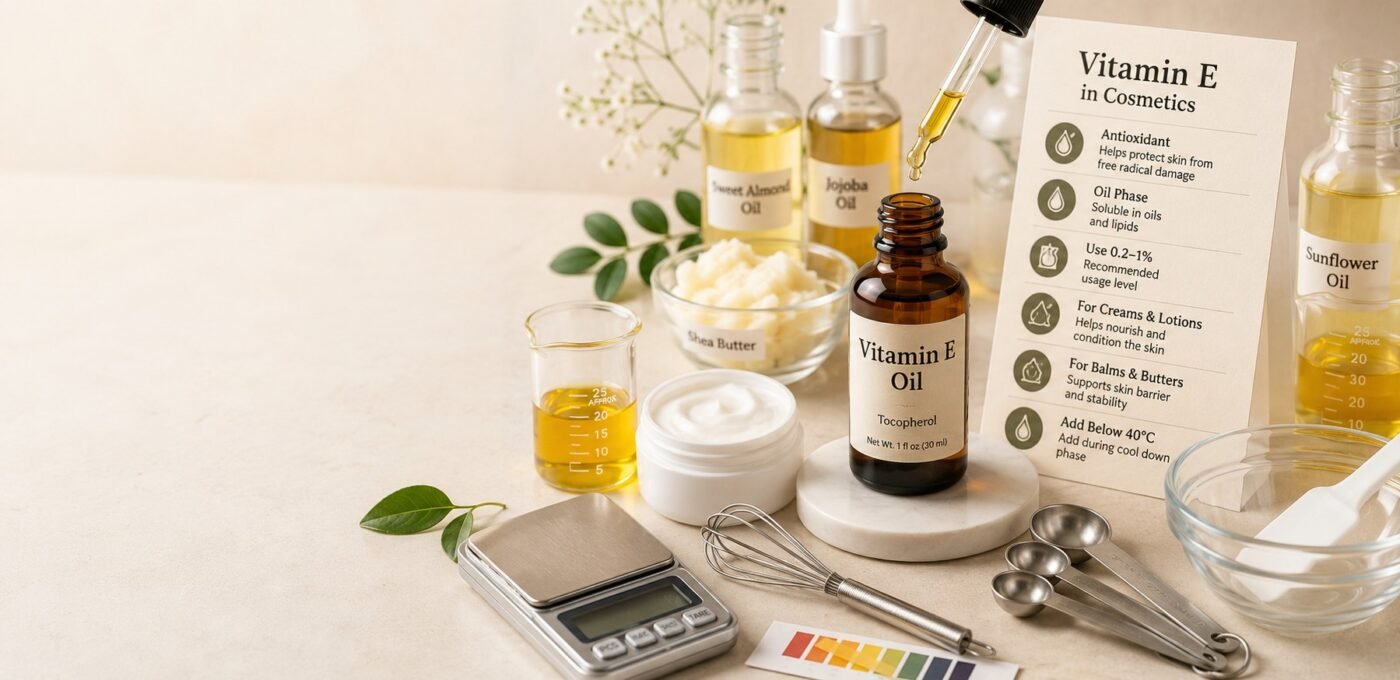
Learn how to use Vitamin E oil in DIY skincare, body butter, carrier oil blends, balms, creams, lotions, soaps, hair oils, lip care, and handmade cosmetics with the right percentage, stage, and safety understanding.
Quick Answer
Vitamin E oil is mainly used in cosmetics as an antioxidant to help slow oxidation of oils and improve product freshness. It is not a complete preservative for water-based products. Use it in small amounts in oil-based formulas, body butters, balms, creams, lotions, soaps, and carrier oil blends.
Table of Contents
What Is Vitamin E Oil?
Vitamin E oil is a popular cosmetic ingredient used in skincare and hair care formulations. It is commonly added to oil-based products, creams, lotions, body butters, balms, lip care, massage oils, and soap formulas.
In cosmetic formulation, Vitamin E oil is mainly valued as an antioxidant for oils. It helps slow down oxidation and rancidity in oil-rich products. It may also improve product feel and marketing appeal, but it should not be treated as a full preservative.
The most important beginner point is this: Vitamin E oil does not protect water-based products from bacteria, yeast, and mold. If your formula contains water, aloe juice, hydrosol, floral water, gel, or any water-based ingredient, you still need a suitable broad-spectrum preservative.
For Vitamin E oil, carrier oils, cosmetic butters, emulsifying wax, preservatives, fragrance oils, essential oils, jars, bottles, and DIY cosmetic raw materials, visit Jindeal.com.
What Causes Beginner Confusion?
Many DIY cosmetic makers confuse antioxidants with preservatives. Vitamin E oil helps protect oils from oxidation, but it does not preserve water-based cosmetics from microbial contamination.
Common confusion happens because beginners:
- Think Vitamin E oil is a preservative
- Add Vitamin E oil to lotion but skip real preservative
- Use too much Vitamin E oil and make formulas sticky or heavy
- Add it at high heat instead of cool-down stage
- Use it to fix already rancid oils
- Expect it to increase shelf life like a preservative
- Use it without measuring by weight
- Use capsule oil without checking cosmetic suitability
- Do not understand antioxidant vs preservative difference
- Make large batches without stability testing
Vitamin E oil is useful, but only when used for the right purpose and at the right level.
Vitamin E Oil Usage Chart
This beginner chart gives general cosmetic use guidance. Always follow your supplier’s recommended usage rate for the exact Vitamin E oil grade you purchase.
| Product Type | How Vitamin E Oil Helps | Beginner Usage Direction | Important Note |
|---|---|---|---|
| Body Butter | Supports oil freshness and premium skin feel | Use in small percentage during cool-down/whipping stage | Does not replace preservative if water is added |
| Balms & Salves | Helps slow oxidation of oils | Add after melting, when mixture cools slightly | Do not overheat |
| Carrier Oil Blends | Helps protect oil blend freshness | Mix directly into oil blend | Use clean, dry bottle |
| Lotions & Creams | Supports oil phase freshness | Add in cool-down phase | Still needs preservative because product contains water |
| Lip Balm | Improves oil stability and label appeal | Add after wax and oils melt, before filling | Use small amount to avoid stickiness |
| Soap Making | Can be added for label appeal and oil support | Use according to soap formula requirement | Do not expect preservative action |
| Hair Oil | Supports oil freshness and product feel | Blend into carrier oils | Store away from heat and sunlight |
Step-by-Step Usage Guide
Step 1: Decide Why You Are Adding Vitamin E Oil
Use Vitamin E oil to support oil freshness, improve product feel, and add label appeal. Do not use it as the only preservation system for water-based cosmetics.
Step 2: Check Product Type
If your product is oil-only, Vitamin E oil can be useful as an antioxidant. If your product contains water, you still need a proper preservative system in addition to Vitamin E oil.
Step 3: Use the Supplier Recommended Percentage
Different Vitamin E oil grades may have different recommended usage levels. Always check the supplier’s specification and use a digital scale for accurate measurement.
Step 4: Add at the Correct Stage
Vitamin E oil is usually added during cool-down or after melting oils and butters, when the mixture is not too hot. Avoid prolonged heating because heat can reduce ingredient quality.
Step 5: Mix Properly
Mix Vitamin E oil thoroughly into the oil phase or final product so it spreads evenly throughout the formula. Poor mixing may create uneven performance and texture.
Step 6: Use Clean and Dry Packaging
For oil blends, balms, and body butters, use clean and dry jars or bottles. Water contamination can reduce product quality and may introduce microbial risk.
Step 7: Store Away from Heat and Sunlight
Store Vitamin E oil and finished products away from heat, sunlight, and air exposure. Use airtight containers where possible to protect oils from oxidation.
Step 8: Test Small Batches
Make small batches first. Check color, smell, texture, separation, greasiness, stickiness, and stability over time before making large batches.
Step 9: Use Real Preservative When Needed
For lotions, creams, gels, shampoos, conditioners, toners, face wash, and any water-based product, use a suitable broad-spectrum preservative along with correct pH and hygiene.
Step 10: Label Correctly
If selling, label ingredients properly and avoid claiming Vitamin E oil as a preservative unless supported by proper regulatory and formulation documentation.
Common Mistakes
1. Calling Vitamin E Oil a Preservative
Vitamin E oil is mainly an antioxidant and does not protect water-based products from bacteria, yeast, and mold.
2. Skipping Preservative in Lotion
Lotions and creams contain water, so they need a proper broad-spectrum preservative.
3. Using Too Much Vitamin E Oil
Too much can make products sticky, heavy, oily, or unpleasant.
4. Adding at High Heat
High heat can reduce ingredient quality. Add during cool-down or lower-temperature stage.
5. Using It to Fix Rancid Oils
Vitamin E oil may slow oxidation, but it cannot fix oils that are already rancid.
6. Not Measuring by Weight
Use a digital scale for accurate and repeatable formulas.
7. Using Capsule Oil Without Checking Grade
Capsule oil may contain other ingredients and may not be suitable for cosmetic formulation.
8. Ignoring Product pH and Preservation
Water-based products need pH and preservative checks. Vitamin E does not solve this.
9. Storing in Heat or Sunlight
Heat, sunlight, and oxygen can reduce oil quality over time.
10. Selling Without Stability Testing
Always test texture, smell, color, and stability before selling products with Vitamin E oil.
Expert Tips
- Use Vitamin E oil mainly as antioxidant support for oils.
- Do not use Vitamin E oil as the only preservative in lotions or creams.
- Use supplier-recommended usage percentage.
- Measure Vitamin E oil by weight using a digital scale.
- Add during cool-down stage instead of high heat.
- Use clean, dry packaging for oil-based products.
- Store Vitamin E oil away from sunlight and heat.
- Pair Vitamin E oil with carrier oils, butters, balms, body butters, and oil blends.
- Use a real preservative for water-based products.
- Test small batches before bulk production.
- Avoid medical or treatment claims on cosmetic products.
- Buy Vitamin E oil, carrier oils, butters, emulsifiers, preservatives, jars, and DIY cosmetic raw materials from Jindeal.com.
FAQ
1. What is Vitamin E oil used for in cosmetics?
Vitamin E oil is mainly used as antioxidant support for oils and to improve product feel and label appeal.
2. Is Vitamin E oil a preservative?
No. Vitamin E oil is not a complete preservative for water-based products. It does not protect against bacteria, yeast, and mold.
3. Can I use Vitamin E oil in body butter?
Yes. Vitamin E oil is commonly used in oil-based body butter formulas to support oil freshness.
4. Can I use Vitamin E oil in lotion?
Yes, but lotion still needs a suitable preservative because it contains water.
5. Can Vitamin E oil replace preservative?
No. It cannot replace a broad-spectrum preservative in lotions, creams, gels, shampoos, or water-containing products.
6. How much Vitamin E oil should I use?
Use the percentage recommended by your supplier for the exact grade. Measure by weight for accuracy.
7. When should I add Vitamin E oil?
Add it during cool-down stage or after oils and butters have melted and cooled slightly.
8. Can Vitamin E oil be heated?
Avoid prolonged high heat. It is better to add it at lower temperature during cool-down.
9. Can I use Vitamin E capsules in cosmetics?
Capsules may contain other ingredients and may not be ideal for formulation. Cosmetic-grade Vitamin E oil is preferred.
10. Can Vitamin E oil fix rancid oils?
No. It may slow oxidation in fresh oils, but it cannot fix oils that are already rancid.
11. Can I use Vitamin E oil in lip balm?
Yes. It is commonly used in lip balm formulas in small amounts.
12. Can I use Vitamin E oil in soap?
Yes, it can be included in soap formulas, but it should not be used as a preservative.
13. Can too much Vitamin E oil make products sticky?
Yes. Too much can make formulas feel heavy, sticky, or oily.
14. How should Vitamin E oil be stored?
Store it in a closed container away from heat, sunlight, and air exposure.
15. Where can I buy Vitamin E oil for cosmetics?
You can buy Vitamin E oil, carrier oils, butters, emulsifiers, preservatives, fragrance oils, essential oils, jars, bottles, and DIY cosmetic raw materials from Jindeal.com.
Final Words
Vitamin E oil is a useful cosmetic ingredient for oil-based products, body butters, balms, lip care, creams, lotions, and oil blends. Its main role is antioxidant support for oils, not microbial preservation.
Use it in small, measured amounts, add it at the correct stage, store it properly, and always use a real preservative for water-containing cosmetics. For Vitamin E oil, carrier oils, butters, emulsifiers, preservatives, jars, bottles, fragrances, and DIY cosmetic raw materials, visit Jindeal.com.
Use Vitamin E Oil Correctly with Jindeal.com
Shop Vitamin E oil, carrier oils, cosmetic butters, emulsifying wax, preservatives, fragrance oils, essential oils, jars, bottles, and DIY cosmetic ingredients from Jindeal.com.
