
Uncategorized
Beginner’s Guide to Cosmetic Ingredients
Jun
Beginner’s Guide to Cosmetic Ingredients
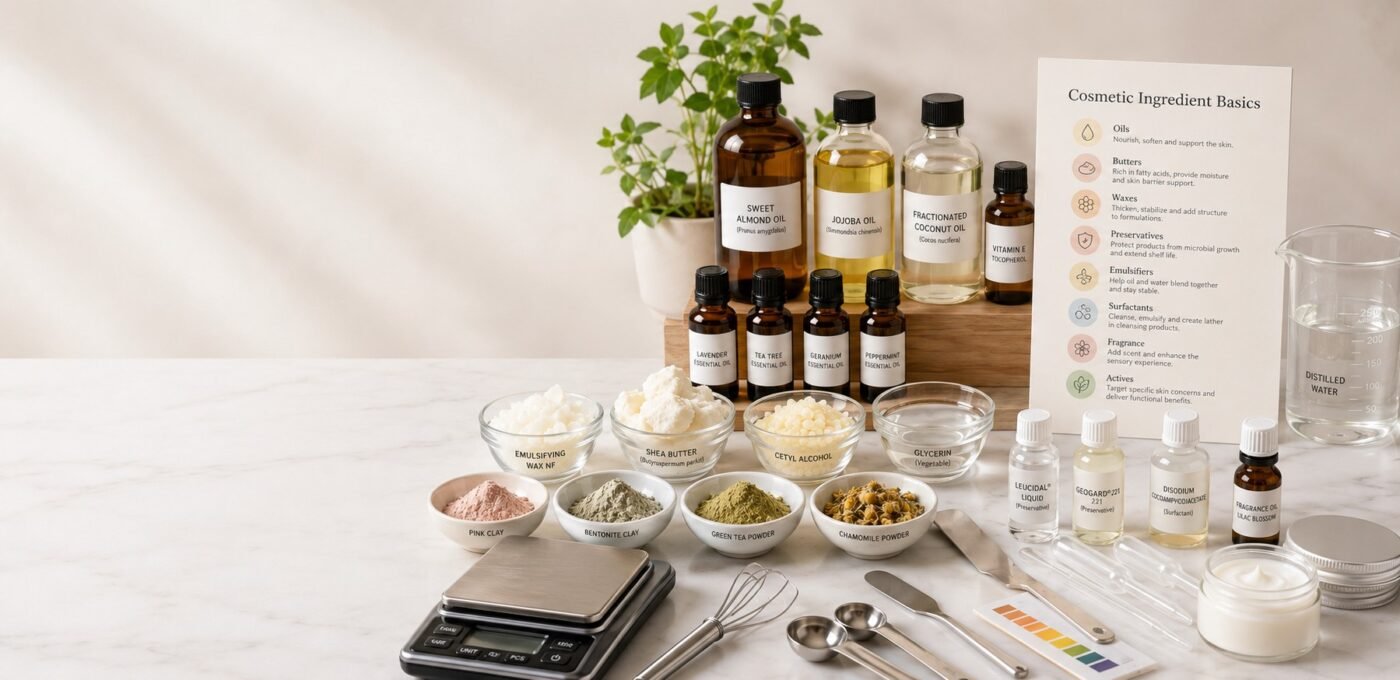
Learn the basic cosmetic ingredients used in DIY skincare, handmade cosmetics, soaps, body butters, lotions, scrubs, face masks, hair care products, and bath products — with simple explanations for beginners.
Quick Answer
Cosmetic ingredients are raw materials used to make skincare and personal care products. Beginners should understand the role of each ingredient: oils soften, butters add richness, emulsifiers combine oil and water, preservatives protect water-based products, humectants attract moisture, clays absorb oil, and fragrances add aroma.
Table of Contents
What Are Cosmetic Ingredients?
Cosmetic ingredients are the raw materials used to make products like lotions, creams, body butters, soaps, face masks, scrubs, shampoos, conditioners, lip balms, hair oils, bath salts, and body oils.
Each ingredient has a job. Some ingredients give texture, some add moisture feel, some help oil and water mix, some improve shelf life, some add aroma, and some create color or product appeal.
A beginner should not choose ingredients only because they sound natural or popular. The most important thing is to understand ingredient function, safe usage, compatibility, pH, shelf life, and product type.
For cosmetic raw materials, carrier oils, butters, preservatives, emulsifiers, fragrance oils, essential oils, clays, herbal powders, jars, bottles, soap bases, and DIY ingredients, visit Jindeal.com.
What Causes Beginner Confusion?
New formulators often get confused because cosmetic ingredients look similar but work very differently. For example, vitamin E is not a preservative for lotions, beeswax is not a complete emulsifier, and essential oils are not safe to add without limits.
Common confusion happens because beginners:
- Do not know the difference between oil-based and water-based products
- Use ingredients without checking safe usage rate
- Think natural ingredients are always safe at any quantity
- Use vitamin E as a preservative for water-based products
- Use essential oils without dilution knowledge
- Add water to products without preservative
- Use beeswax instead of emulsifying wax in lotion
- Ignore pH in cleansers, lotions, gels, and actives
- Use too much clay or powder in masks and scrubs
- Do not test stability before selling
- Copy recipes without understanding ingredient roles
- Make large batches before testing small samples
Learning ingredient categories first makes DIY cosmetic formulation easier, safer, and more professional.
Cosmetic Ingredient Categories Chart
This chart explains the main ingredient categories every beginner should know.
| Ingredient Category | Common Examples | Main Purpose | Used In |
|---|---|---|---|
| Carrier Oils | Sweet almond oil, jojoba oil, olive oil, grapeseed oil, coconut oil | Softness, glide, nourishment feel | Body oils, body butter, balms, hair oils, lotions |
| Butters | Shea butter, cocoa butter, mango butter | Richness, thickness, creaminess | Body butter, balms, creams, lip care |
| Emulsifiers | Emulsifying wax, lotion emulsifiers | Mix oil and water together | Lotions, creams, conditioners |
| Preservatives | Broad-spectrum cosmetic preservatives | Protect water-based products from microbes | Lotions, creams, gels, shampoo, conditioner |
| Humectants | Glycerin, propanediol, aloe ingredients | Attract water and improve skin feel | Lotions, gels, cleansers, creams |
| Thickeners | Xanthan gum, cetyl alcohol, stearic acid | Improve thickness and stability | Lotions, creams, gels, conditioners |
| Clays & Powders | French green clay, kaolin clay, rhassoul clay, arrowroot powder | Texture, oil absorption, skin feel | Face masks, scrubs, soaps, body butter |
| Fragrance & Essential Oils | Fragrance oils, lavender EO, rosemary EO, peppermint EO | Aroma and product appeal | Soap, candles, body butter, scrubs, lotions |
| Soap Bases | Clear soap base, white soap base, goat milk soap base | Ready base for melt and pour soap | Handmade soap |
Step-by-Step Beginner Guide
Step 1: Decide Product Type First
Before buying ingredients, decide what you want to make: soap, lotion, body butter, scrub, face mask, hair oil, balm, shampoo, conditioner, or gel. Different products need different ingredient systems.
Step 2: Understand Oil-Based vs Water-Based
Oil-based products contain oils, butters, and waxes. Water-based products contain water, aloe juice, hydrosol, floral water, gel, or water-soluble ingredients. Water-based products need a preservative system.
Step 3: Learn Carrier Oils
Carrier oils are used to soften, dilute, moisturize-feel, and improve spreadability. Sweet almond oil is popular for body care, jojoba oil feels light and premium, olive oil is rich, and grapeseed oil feels lighter.
Step 4: Learn Butters
Shea butter gives creamy richness, cocoa butter adds firmness, and mango butter gives a smooth lighter feel. The butter ratio controls whether a product is soft, hard, rich, or fluffy.
Step 5: Learn Emulsifiers
Emulsifiers help oil and water mix into a stable lotion or cream. If your product contains both oil and water, you need a proper emulsifier. Beeswax alone is usually not enough for stable lotion.
Step 6: Learn Preservatives
Any water-containing product needs a suitable broad-spectrum preservative. Vitamin E oil is not a preservative for lotions. Essential oils are not enough to preserve water-based cosmetics.
Step 7: Learn Humectants
Humectants like glycerin help attract water and improve skin feel. Too much glycerin can feel sticky, so it should be used at a suitable level.
Step 8: Learn Thickeners and Stabilizers
Thickeners like xanthan gum, cetyl alcohol, and stearic acid help improve texture, thickness, and stability in lotions, creams, gels, and conditioners.
Step 9: Learn Clays and Herbal Powders
Clays and powders are used in face masks, scrubs, soaps, and ubtan-style products. They add texture, color, and oil-absorbing feel. They should be used carefully to avoid dryness or rough texture.
Step 10: Learn Fragrance and Essential Oils
Fragrance oils and essential oils add aroma, but they must be used within safe limits. Leave-on products like lotion and body butter need lower and safer usage than rinse-off products like soap.
Step 11: Learn pH Basics
pH matters in lotions, gels, cleansers, shampoos, conditioners, preservatives, and some actives. Use pH strips or a pH meter when making water-based products.
Step 12: Make Small Test Batches
Start with small test batches before making large quantities. Test texture, smell, pH, separation, stability, color, skin feel, and packaging compatibility.
Common Mistakes
1. Buying Ingredients Without a Product Plan
Choose product type first, then buy ingredients according to formula needs.
2. Thinking Natural Means Always Safe
Natural ingredients also need safe usage limits and testing.
3. Adding Water Without Preservative
Water-based products need a proper preservative system.
4. Using Vitamin E as a Preservative
Vitamin E is mainly an antioxidant for oils, not a full preservative for lotions.
5. Using Essential Oils Without Dilution
Essential oils are concentrated and must be used carefully.
6. Using Beeswax Instead of Emulsifying Wax
Beeswax does not replace a proper emulsifier for lotion.
7. Ignoring pH
pH affects preservative performance, skin feel, and formula stability.
8. Adding Too Many Ingredients
Simple formulas are easier to test and improve.
9. Making Big Batches First
Always test small batches before bulk production.
10. Selling Without Testing
Cosmetic products should be stable, safe, preserved if needed, and properly labeled before selling.
Expert Tips
- Start with simple formulas before using advanced actives.
- Learn ingredient function before using it.
- Measure ingredients by weight using a digital scale.
- Use distilled water for water-based cosmetics.
- Use preservatives for lotions, creams, gels, and shampoos.
- Do not treat vitamin E as a full preservative.
- Use essential oils only within safe limits.
- Check pH for water-based products.
- Make small test batches first.
- Keep formula notes and batch records.
- Use clean jars, bottles, tools, and workspace.
- Buy cosmetic raw materials, oils, butters, emulsifiers, preservatives, fragrances, clays, powders, jars, and bottles from Jindeal.com.
FAQ
1. What are cosmetic ingredients?
Cosmetic ingredients are raw materials used to make skincare, hair care, soap, bath, and personal care products.
2. Which cosmetic ingredients should beginners buy first?
Beginners can start with carrier oils, butters, glycerin, emulsifying wax, preservative, fragrance oil, clays, soap base, jars, and basic tools depending on the product type.
3. What is a carrier oil?
A carrier oil is a skin-friendly oil used in body oils, lotions, body butters, balms, hair oils, and massage products.
4. What is the difference between oil and butter?
Oils are liquid or soft at room temperature, while butters are thicker and help add richness and firmness.
5. What is an emulsifier?
An emulsifier helps oil and water mix together in products like lotions and creams.
6. What is a preservative?
A preservative helps protect water-containing cosmetic products from bacteria, yeast, and mold.
7. Is vitamin E a preservative?
No. Vitamin E is mainly an antioxidant for oils and does not preserve water-based products.
8. Do body butters need preservatives?
Oil-only body butters usually do not need water-phase preservatives, but they should be made and stored hygienically.
9. Do lotions need preservatives?
Yes. Lotions contain water and need a suitable broad-spectrum preservative.
10. Can I use essential oils in cosmetics?
Yes, but essential oils are concentrated and must be used within safe limits for the product type.
11. What are clays used for?
Clays are used in face masks, soaps, scrubs, and cleansing products for texture, color, and oil-absorbing feel.
12. What are herbal powders used for?
Herbal powders are used in ubtan, face masks, soaps, hair masks, scrubs, and natural cosmetic products.
13. Why is pH important in cosmetics?
pH affects preservative performance, product stability, skin feel, and ingredient compatibility.
14. Can beginners sell handmade cosmetics?
Beginners should first learn formulation, preservation, hygiene, labeling, testing, and applicable cosmetic rules before selling.
15. Where can I buy cosmetic raw materials?
You can buy carrier oils, butters, emulsifiers, preservatives, fragrance oils, essential oils, clays, powders, soap bases, jars, bottles, and DIY cosmetic ingredients from Jindeal.com.
Final Words
Cosmetic ingredients become easy to understand when you learn their function. Oils soften, butters add richness, emulsifiers mix oil and water, preservatives protect water-based products, humectants improve skin feel, thickeners improve texture, and clays or powders add product character.
Start simple, measure properly, test small batches, and learn safety basics before selling. For cosmetic raw materials, oils, butters, emulsifiers, preservatives, fragrances, clays, powders, jars, bottles, and soap bases, visit Jindeal.com.
Start Cosmetic Making with Jindeal.com
Shop carrier oils, cosmetic butters, emulsifying wax, preservatives, fragrance oils, essential oils, clays, herbal powders, soap bases, jars, bottles, and DIY cosmetic raw materials from Jindeal.com.
