
Uncategorized
How to Choose the Right Diffuser Base for Fragrance Oils
Choosing the right diffuser base is one of the most important steps in making a high-quality reed diffuser. The base helps carry fragrance through the reeds and release it gradually into the surrounding air.
A suitable base can improve fragrance diffusion, evaporation performance and overall product quality. However, not every solvent or fragrance oil works well together.

1. Understand Different Types of Diffuser Bases
1. Commercial Reed Diffuser Base
A ready-made diffuser base is designed specifically for reed diffusers. It is a convenient option for beginners and small businesses.
2. Augeo-Type Diffuser Bases
Some commercially available diffuser bases use Augeo-type solvents. These are designed for fragrance applications, but compatibility and performance depend on the specific product grade.
3. Alcohol-Based Bases
Certain specialised alcohol-based systems can be used in fragrance applications. However, evaporation may be faster, and flammability and material compatibility must be considered.
4. Other Specialised Solvent Systems
Some manufacturers offer alternative diffuser solvents. Always check whether the product is specifically designed for reed diffusers rather than assuming any fragrance solvent will work.
2. Important Factors When Choosing a Diffuser Base
Consider these points before purchasing:
- Fragrance compatibility: The base should mix uniformly with your selected fragrance oil.
- Evaporation rate: A suitable evaporation rate helps balance fragrance release and product lifespan.
- Viscosity: The liquid should move through compatible reeds effectively.
- Clarity: Check for cloudiness, separation or sediment.
- Material compatibility: Test the base with the bottle, cap, stopper and reeds.
- Safety documentation: Review the SDS, technical data sheet and supplier recommendations.
3. Test Your Diffuser Formula
Before preparing a large batch:
- Make a small trial mixture.
- Observe whether the liquid remains uniform.
- Fill a compatible diffuser bottle.
- Insert the recommended reeds.
- Monitor fragrance strength and evaporation.
- Check for leakage and material damage.
4. Common Mistakes to Avoid
- Using water as a substitute for diffuser base.
- Using cooking oil or ordinary carrier oil.
- Adding excessive fragrance oil.
- Ignoring supplier-recommended fragrance limits.
- Using incompatible reeds or containers.
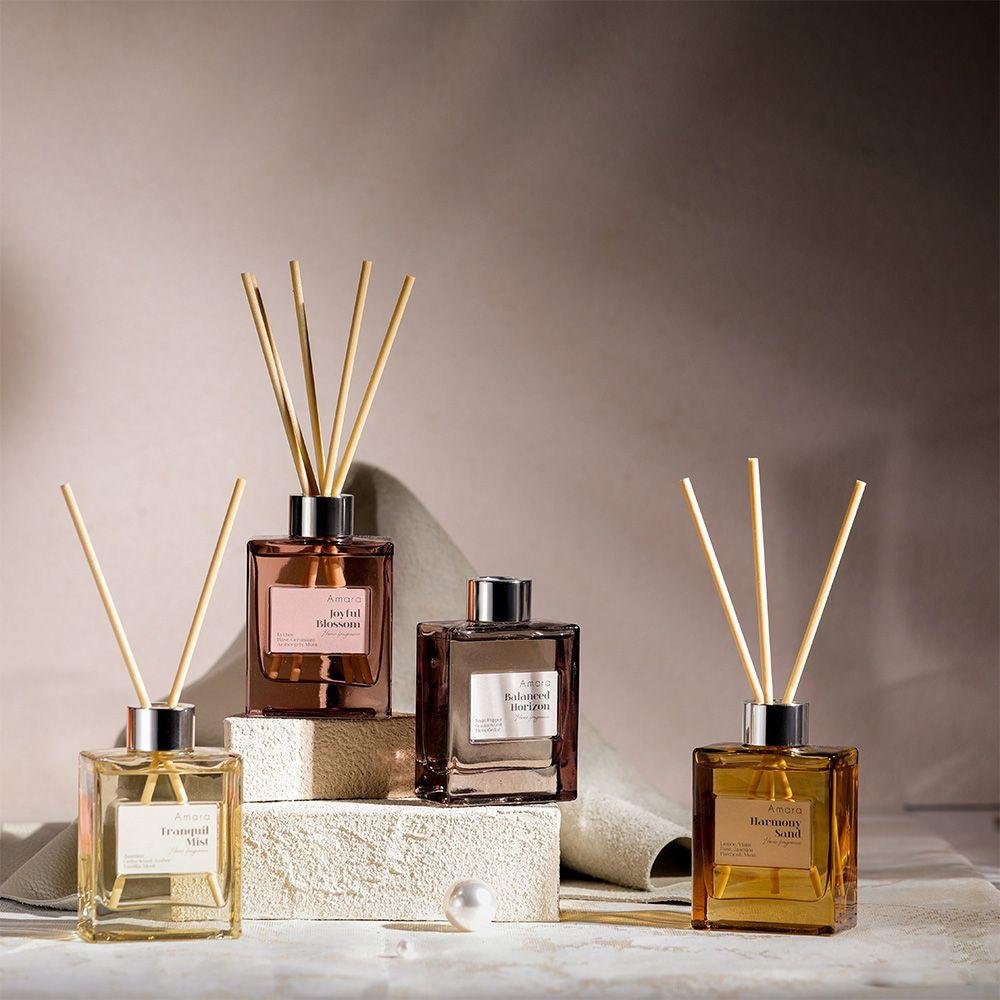
5. Start Your Reed Diffuser Business
Choose reliable diffuser bases, quality fragrance oils and attractive glass bottles to develop your own home-fragrance collection.
Always follow supplier specifications and applicable IFRA guidance. Test stability, performance and finished-product safety before commercial sale.
