
Uncategorized
Best Melt and Pour Soap Additives: How to Use Oils, Clays, Herbal Powders and Extracts 🧼🌿
Melt and pour soap making is an easy way to create attractive handmade soaps at home. By adding suitable oils, clays, herbal powders and cosmetic extracts, you can customise the soap’s colour, texture and appearance.
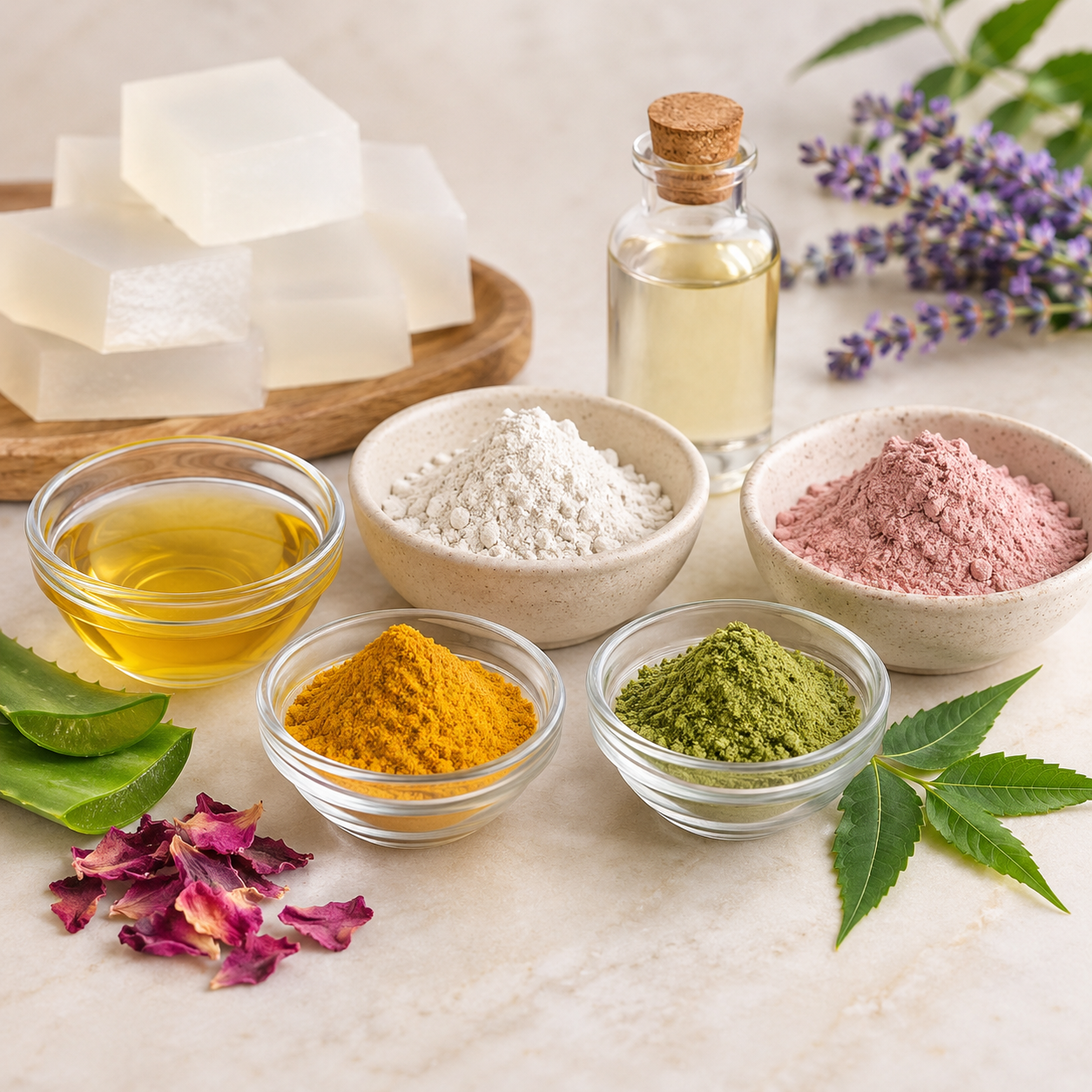
🧴 1. Carrier Oils
Popular choices include sweet almond oil, jojoba oil, coconut oil and olive oil. They can add a conditioning feel, but too much extra oil may make soap soft, reduce lather or affect its performance. Start with small test batches and follow your soap base supplier’s guidance.
🌈 2. Cosmetic Clays
- Kaolin clay: Gives soap a smooth, creamy appearance.
- Bentonite clay: Adds a distinctive clay texture.
- Rose clay: Creates attractive pink shades.
- Multani mitti: Can be used in carefully tested decorative formulations.
Disperse clay in a little suitable liquid or glycerin before adding it to the melted base to help reduce lumps.
🌿 3. Herbal Powders
Try cosmetic-grade turmeric, neem, rose, sandalwood or beetroot powder for natural-looking colours and botanical designs. Use finely powdered materials in small quantities because larger amounts can make soap gritty or affect its appearance.
💧 4. Cosmetic Extracts
Choose extracts specifically suitable for your soap base. Water-based extracts may affect the base’s stability, so check compatibility and supplier recommendations before adding them.
🪄 5. How to Add Additives
- Cut the soap base into small cubes.
- Melt gently according to the supplier’s instructions.
- Pre-disperse powders to avoid lumps.
- Add compatible additives and mix gently.
- Pour into silicone moulds and allow to set.
⚠️ Important Tips
Avoid adding fresh herbs, fruit or other wet ingredients. Test each combination for sweating, texture, fragrance, lather and stability. Use cosmetic-grade ingredients and follow recommended usage limits.
🛍️ Find Soap-Making Supplies at JINDEAL
Explore melt and pour soap bases, carrier oils, clays, herbal powders and cosmetic ingredients at JINDEAL. Experiment with small batches and create your own handmade soap collection!
